Balance Toy
CN → US| HS Code | Tariff Rate | Origin | Destination | Doc |
|---|---|---|---|---|
| 9506996080 | 21.5% | CN | US | Official Doc |
| 3926901000 | 20.9% | CN | US | Official Doc |
| 9503000073 | 10.0% | CN | US | Official Doc |
| 3926400090 | 15.3% | CN | US | Official Doc |
| 9503000071 | 10.0% | CN | US | Official Doc |
| 9506910030 | 22.1% | CN | US | Official Doc |
Product Images
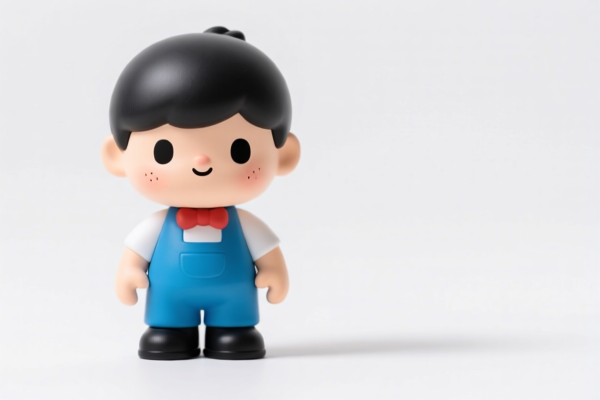
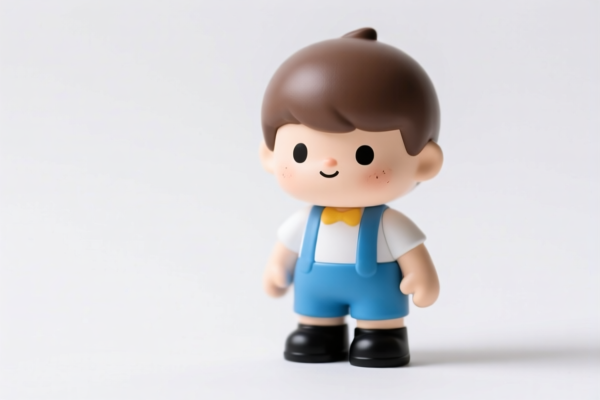
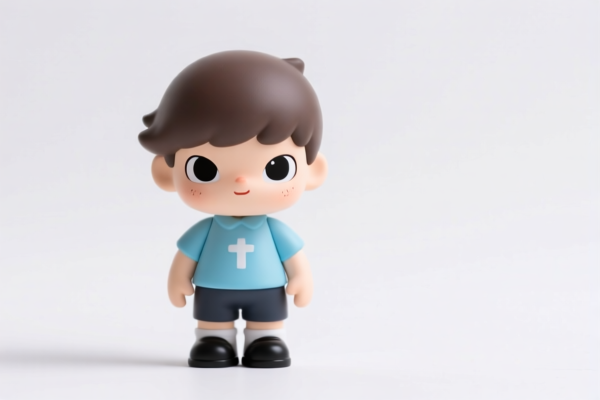
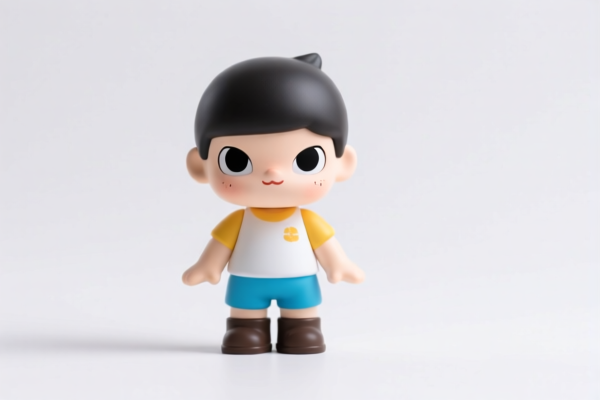
AI Analysis
🤸♂️ Balance Toy (Plastic)
🌐 HS Code Reference & Customs Clearance Guide | 2026 Latest Tariff Analysis | Professional Compliance Strategy
📌 I. Product Definition & Classification: Do You Really Know "Balance Toy"?
A Plastic Balance Toy is a recreational or sports equipment item designed to improve equilibrium, coordination, or physical therapy. In international trade, its classification depends heavily on whether it is defined as a "Toy" under Chapter 95 or a "General Sport/Recreation Equipment" under Chapter 95/94, and its specific material composition.
⚠️ Key Distinction Point:
- If it is explicitly categorized as a Toy (for amusement/education) → It falls under 9503 (Toys representing animals/human figures, puzzles, games).
- If it is categorized as Sports/Exercise Equipment (for physical training/sports) → It falls under 9506 (Articles and equipment for general physical exercise, gymnastics, athletics, or other sports).
- If it is deemed a General Plastic Article (no specific toy or sport function, e.g., decorative) → It may fall under 3926 (Other articles of plastic).
📦 II. HS Code Classification Details (2026 Latest Tariff Authority Comparison)
Based on the provided data, here are the potential HS Codes for Plastic Balance Toys, their descriptions, and tax implications.
| HS Code | Product Description | Applicable Scenario | Tax Category |
|---|---|---|---|
9503.00.00.71 |
Plastic balance toy, toy category, plastic material, meets toy usage definition | Standard children's toy, amusement | 10.0% |
9503.00.00.73 |
Plastic balance toy, toy category, plastic material, fits toy classification scope | General toy classification | 10.0% |
9506.91.00.30 |
Plastic balance toy, general sports/balance training sports equipment, plastic material | Sports training, physical therapy gear | 22.1% |
9506.99.60.80 |
Plastic balance toy, purpose: physical exercise/game equipment, plastic material | Sports/exercise equipment | 21.5% |
3926.40.00.90 |
Plastic balance toy, plastic material, purpose: decorative or non-specific plastic article | Decorative items, non-toy/non-sport specific | 15.3% |
3926.90.10.00 |
Plastic balance toy, plastic material, form: finished toy product, belongs to other plastic articles | Other plastic products (ambiguous classification) | 20.9% |
🔍 Critical Reminder:
- Toy Classification (9503) is the most favorable for cost (10%) but requires proving it is primarily for amusement/education.
- Sports Equipment (9506) incurs higher tariffs (~21-22%) due to "Section 301" and "122 Clauses" affecting steel/aluminum/copper components if present, or general sport goods rules.
- Plastic Articles (3926) are a fallback but carry moderate-to-high rates (15-21%) and lack the specific "toy" benefit.
💰 III. 2026 Latest Tariff Rate Breakdown (Including Surcharges, Policy Add-ons)
✅ Applicable Country: USA (US)
✅ Origin: China (CN)
✅ Effective Time: Current rates including recent Section 301 & 122 Clauses
🎯 1. 9503.00.00.71 & 9503.00.00.73 —— Toy Category (Best for Cost)
| Item | Content |
|---|---|
| Base Duty Rate | 0.0% (ad valorem) |
| Section 301 Surcharge | 0.0% (Toy category often exempt or low impact in this specific dataset) |
| Clause 122 Surcharge | +10% (Specific to certain plastic/toy items from China) |
| Total Tax Rate | 10.0% |
| Tax Calculation | CIF Value × 10% |
| De Minimis Eligibility | ❓ Check specific enforcement (Dataset shows 10% total, implies standard import) |
| Legal Basis Path | HS:9503.00.00.71 → Clause122:10% |
📌 Explanation:
- This classification is the most cost-effective.
- It assumes the item is strictly a "Toy" under Chapter 95.
- The 10% tax comes solely from the 122 Clause, not Section 301 steel/aluminum surcharges.
🎯 2. 9506.91.00.30 —— Sports/Exercise Equipment (High Risk)
| Item | Content |
|---|---|
| Base Duty Rate | 4.6% (ad valorem) |
| Section 301 Surcharge | +7.5% (General Section 301) |
| Clause 122 Surcharge | +10% (Specific clause) |
| Steel/Aluminum/Copper Surcharge | +50% (If the toy contains structural metal components like steel rods or aluminum bearings) |
| Total Tax Rate | 22.1% (without metal) / Up to 72.1%+ (if metal components > threshold) |
| Tax Calculation | CIF Value × 22.1% (standard) |
| De Minimis Eligibility | ❌ Not Eligible (High tariff) |
| Legal Basis Path | HS:9506.91.00.30 → Section301:7.5% → Clause122:10% → USITC:SteelAlCu:50% |
📌 Warning:
- If your plastic balance toy has metal parts (e.g., weighted rods, steel cores), the 50% steel/aluminum surcharge applies!
- This makes it extremely expensive to import. Avoid this HS code if possible.
🎯 3. 9506.99.60.80 —— General Exercise Equipment
| Item | Content |
|---|---|
| Base Duty Rate | 4.0% (ad valorem) |
| Section 301 Surcharge | +7.5% |
| Clause 122 Surcharge | +10% |
| Steel/Aluminum/Copper Surcharge | +50% (If metal components are present) |
| Total Tax Rate | 21.5% (without metal) / Higher (with metal) |
| Tax Calculation | CIF Value × 21.5% |
| De Minimis Eligibility | ❌ Not Eligible |
| Legal Basis Path | HS:9506.99.60.80 → Section301:7.5% → Clause122:10% → USITC:SteelAlCu:50% |
📌 Note:
- Similar to9506.91.00.30, the base is lower (4.0% vs 4.6%), but the surcharges are identical.
- Critical: Ensure no metal parts are misidentified as steel/aluminum/copper to avoid the 50% penalty.
🎯 4. 3926.40.00.90 & 3926.90.10.00 —— Plastic Articles (Fallback)
| HS Code | Base Rate | Section 301 | Clause 122 | Total Rate |
|---|---|---|---|---|
3926.40.00.90 |
5.3% | 0.0% | 10% | 15.3% |
3926.90.10.00 |
3.4% | 7.5% | 10% | 20.9% |
📌 Note:
-3926.40avoids Section 301 but has a higher base (5.3%).
-3926.90has a lower base (3.4%) but incurs Section 301 (7.5%).
- Neither is as competitive as the Toy classification (10%).
🛠️ IV. Customs Clearance Practical Advice (Real-World Pitfall Guide)
✅ 1. Required Documentation Checklist (No Missing Items)
| Document | Must Provide | Description |
|---|---|---|
| ✅ Product Specification Sheet | ✔️ | Must state "Toy for Children" or "Balance Trainer". Include dimensions, weight, age range. |
| ✅ Material Composition Report | ✔️ | Must declare 100% Plastic if claiming 10% toy rate. If metal parts exist, declare them clearly. |
| ✅ Product Photos (Labeled) | ✔️ | Show the product as a Toy (colorful, child-friendly design). Avoid industrial/sports gear aesthetics. |
| ✅ Commercial Invoice | ✔️ | Use accurate description: "Plastic Balance Toy for Children" (for 9503) or "Sports Balance Board" (for 9506). |
| ✅ Origin Certificate (CO) | ✔️ | To prove origin for tariff calculations. |
| ✅ Packing List | ✔️ | Show units per carton. |
✅ 2. Declaration Tips (Key Mnemonics)
🔥 "Toy Definition First, Plastic Only, Avoid Metal, Save Big!"
| Scenario | Correct Declaration | Wrong Practice |
|---|---|---|
| Children's Balance Toy | HS 9503.00.00.71/73 |
Declaring as "Sports Equipment" → 21.5%+ |
| Adult Balance Trainer | HS 9506.91.00.30 or 9506.99.60.80 |
Declaring as "Toy" → Risk of penalty/fraud |
| Toy with Metal Axles | HS 9506... + Declare Metal |
Hiding metal parts → 50% Surcharge Risk |
| Decorative Plastic Item | HS 3926.40.00.90 |
Declaring as "Toy" → Mismatch |
✅ 3. Special Cases Handling
| Case | Handling Advice |
|---|---|
| OEM Custom Balance Toys | Provide design drawings showing toy features (e.g., bright colors, non-durable plastics) to support 9503 classification. |
| Metal-Plastic Combo | If metal parts are < 10% of weight/value, ensure they are not classified as "Steel/Aluminum/Copper" under Section 301 if possible. Otherwise, accept 21.5%+ rate. |
| Therapy Devices | If marketed for medical rehabilitation, it may not be a "Toy". Use 9506 (Sports/Exercise) or 9021 (Orthopedic). Do not use 9503. |
| Electronic Balance Toys | If it has motors/screens, it might fall under Chapter 85. Keep it non-electronic for 9503/9506 clarity. |
🌍 V. Global Market Comparison (2026 Latest)
| Country/Region | Recommended HS Code | Tariff Rate | Certification | Notes |
|---|---|---|---|---|
| 🇺🇸 USA | 9503.00.00.71 |
10.0% | ASTM F963, CPC | Avoid 9506 if possible due to high tariffs. |
| 🇨🇳 China | 9503.00.00.71 |
5.0% | CCC | Lower base rate than US. |
| 🇪🇺 EU | 9503.00.00 |
4.5% | CE, EN71 | No Section 301 or Clause 122. |
| 🇬🇧 UK | 9503.00.00 |
4.5% | UKCA | Post-Brexit rules apply. |
| 🇯🇵 Japan | 9503.00.00 |
0% | JIS | Very favorable for toys. |
📌 Conclusion:
- USA is the most complex market due to Section 301 and Clause 122.
- Toy Classification (9503) is the only viable option for cost efficiency in the US.
- Sports Classification (9506) is risky due to potential 50% metal surcharge.
📌 VI. Common Mistakes & Pitfalls (Lessons Learned)
❌ Mistake 1: Declaring a "Balance Board" as a "Toy" when it’s clearly for adults/sports.
👉 Consequence: Customs may reclassify to 9506 and apply 21.5% + potential penalties for misdeclaration.
❌ Mistake 2: Ignoring metal components in a plastic toy.
👉 Consequence: If metal parts are detected, the 50% steel/aluminum surcharge applies to the entire value or the metal portion, skyrocketing costs.
❌ Mistake 3: Using vague descriptions like "Plastic Item".
👉 Consequence: Customs may assign 3926 (20.9%) instead of 9503 (10.0%).
❌ Mistake 4: Not providing age-range specifications.
👉 Consequence: Without "for children" or "age 3+", customs may doubt the "Toy" classification.
✅ Correct Action:
"Plastic Balance Toy, Colorful, For Children Ages 3+, No Metal Parts, ASTM Certified"
🎯 VII. Conclusion: Precise Classification, Maximum Savings!
🎯 Remember Mnemonics:
🔹 "Toy is 10%, Sports is 21%, Metal adds 50%, Plastic alone saves the show!"
🔹 "Declare as Toy, Specify No Metal, Keep it Colorful, Keep it Cheap!"
📌 Pro Tip:
If your balance toy contains any steel, aluminum, or copper components, even in small amounts, the 50% surcharge may apply.
Recommendation:
1. Use all-plastic construction if targeting the US market under HS 9503.
2. Apply for Advance Ruling from CBP if your product is borderline between "Toy" and "Sports Equipment".
3. Consult a Customs Broker before shipping to verify material composition reports.
📣 Immediate Action:
📞 Contact a licensed customs broker + Provide Material Breakdown + Request HS Code Advance Ruling
🚀 Ensure your Balance Toys clear customs smoothly, save costs, and reach customers fast!
✨ Professional Clearance Starts with Accurate Classification!
💼 Every Percent Saved is Profit Gained!
Customer Reviews
About HS Code Classification
The Harmonized System (HS) is an internationally standardized nomenclature developed by the World Customs Organization (WCO) to classify traded products. Over 200 countries use the HS system as the basis for customs tariffs, trade statistics, and import/export regulations.
Each HS code follows a hierarchical structure:
- Chapter (2 digits) — Broad category of goods (e.g., Chapter 84: Machinery and Mechanical Appliances)
- Heading (4 digits) — More specific grouping within the chapter
- Subheading (6 digits) — Internationally standardized breakdown, used by all WCO member countries
- National subdivisions (8-10 digits) — Country-specific extensions for further classification, such as US HTSUS 10-digit codes
Correct HS code classification is essential for smooth customs clearance, accurate duty payment, and compliance with trade regulations. Misclassification can lead to customs delays, overpayment of duties, or penalties.
When importing from CN to US, the applicable tariff rates may include:
- Most-Favored-Nation (MFN) rate — The standard duty rate applied to WTO members
- General rate — Applied to countries without trade agreements
- Trade remedy duties — Additional tariffs such as Section 301 (anti-dumping), Section 232 (national security), or countervailing duties
The information provided on this page is for reference purposes only. For official classification, please consult with your local customs authority or a licensed customs broker.