Ball Screw
CN → USProduct Images
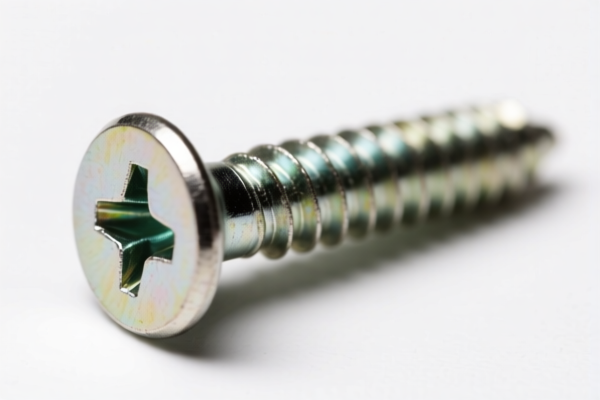
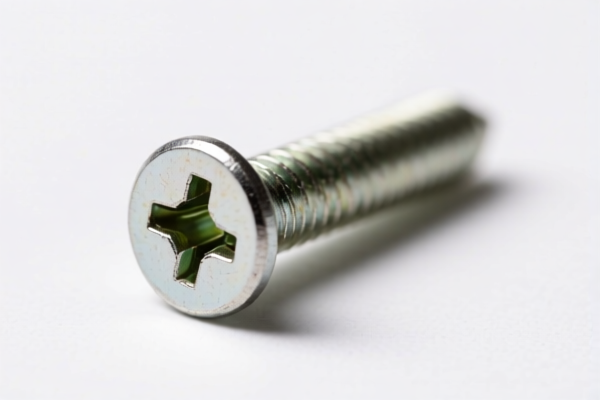
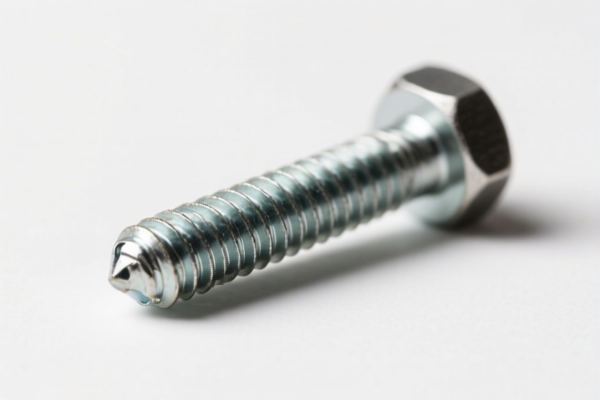
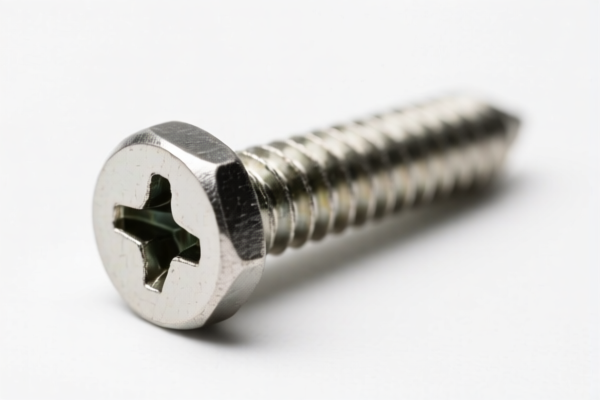
AI Analysis
⚙️ Ball Screw (滚珠丝杠)
🌐 HS Code Reference & Customs Clearance Guide | 2026 Latest Tariff Analysis | Professional Clearance Strategy
📌 Part 1: Product Definition & Classification: Do You Truly Understand the "Ball Screw"?
A Ball Screw is a mechanical linear actuator that translates rotational motion into linear motion with minimal friction using recirculating balls between the nut and the screw shaft. It is a critical component in precision machinery, including CNC machines, robotics, semiconductor manufacturing equipment, and aerospace systems.
In international trade, it is strictly categorized based on its function and structure. It is not a simple "shaft" or "bolt," but a transmission device.
⚠️ Key Distinction:
- If it is a complete ball screw assembly (shaft + nut + recirculating balls) used for linear motion transmission → Classified under 8483.
- If it is a raw screw shaft without the nut or ball return mechanism (often used for general machining) → May fall under 7318 (Screws/Bolts/Spindles).
- If it is a ball nut only → Classified under 8483.
- Crucial Note: Most complete "Ball Screw Units" are classified as parts of machines or transmission devices, not fasteners.
📦 Part 2: HS Code Classification Details (2026 Latest Tariff Authority Comparison)
| HS Code | Product Description | Applicable Scenario | Key Identification Feature |
|---|---|---|---|
| 8483.40.90.40 | Ball screws and nuts, not elsewhere specified | Precision CNC machines, robotics, linear actuators | Complete assembly (Screw + Nut + Balls); High precision; Threaded. |
| 8483.40.90.80 | Other transmission shafts, cranks, etc. | Less precise transmission rods, specialized industrial shafts | May apply if the ball screw is part of a larger, non-standard transmission unit not specifically listed. |
| 7318.16.00.00 | Screw hooks, eye bolts, and other threaded articles | Raw screw rods, threaded bars without ball nut mechanism | No ball nut; Just a threaded metal rod. Often used for general purpose, not precision motion control. |
| 8483.90.00.00 | Parts of gears, pulleys, ball screws, etc. (Other parts) | Replacement ball nuts, spare screw shafts sold separately | Component only (e.g., just the nut or just the shaft). |
| 8466.93.00.00 | Parts suitable for use solely or principally with machine tools working by removing materials | CNC machine tool accessories | If the ball screw is bundled as a spare part for a specific CNC machine, it might be grouped under machine tool parts (depends on declaration strategy). |
🔍 Critical Reminder:
- Do NOT classify under 7318 (Fasteners) if the product includes the ball nut and recirculating balls. This is a common and costly error. The USITC and customs authorities treat complete ball screw assemblies as precision transmission components (8483), not simple screws.
- If you declare a "Ball Screw" as a "Threaded Rod" (7318), you risk reclassification, penalties, and duty retroactivity.
💰 Part 3: 2026 Latest Tariff Rate Details (Including Surtaxes & Policy Add-ons)
✅ Applicable Country: United States (US)
✅ Country of Origin: China (CN)
✅ Effective Date: November 10, 2025 (For subsequent imports)
🎯 1. 8483.40.90.40 —— Ball Screws and Nuts (Precision Transmission)
| Item | Detail |
|---|---|
| Base Tariff Rate | 3.4% (ad valorem) |
| USITC Surtax (Section 301) | +25% (Based on USITC Footnote 9903.88.01 / List 4B) |
| IEEPA Surtax | +10% (Targeting China/HK products, effective Nov 10, 2025) |
| Total Tariff Rate | 38.4% |
| Tax Calculation | CIF Value × 38.4% |
| De Minimis Exemption Eligible | ❌ No (deny_de_minimis) |
| Legal Authority Path | IEEPA:9903.01.25 → IEEPA:9903.01.24 → USITC:8483.40.90.40 → FOOTNOTE:9903.88.01 |
📌 Explanation:
- The 25% Section 301 surtax applies to many mechanical transmission components from China.
- The 10% IEEPA surtax is a new layer added in late 2025 for Chinese-origin goods.
- Total 38.4% is a significant cost factor. Precision ball screws are high-value items, so even a small percentage adds up.
- Do NOT assume it qualifies for de minimis (Section 321); it is explicitly denied.
🎯 2. 7318.16.00.00 —— Threaded Articles (If Misclassified or Raw Rods)
| Item | Detail |
|---|---|
| Base Tariff Rate | 5.3% |
| USITC Surtax (Section 301) | +7.5% (Many steel articles are on List 4A) |
| IEEPA Surtax | +10% |
| Total Tariff Rate | 22.8% |
| Tax Calculation | CIF Value × 22.8% |
| De Minimis Exemption Eligible | ❌ No |
| Legal Authority Path | IEEPA:9901.25 → IEEPA:9903.01.24 → USITC:7318.16.00.00 → FOOTNOTE:9903.88.01 |
📌 Warning:
- While the rate seems lower (22.8% vs 38.4%), misclassifying a precision ball screw as a simple threaded rod is illegal. Customs audits often find that products declared under 7318.16.00 actually meet the technical definition of 8483.40.90.40.
- Risk: Back duties, fines, and potential seizure.
🛠️ Part 4: Customs Clearance Practical Advice (Real-World Pitfall Guide)
✅ 1. Required Documentation Checklist (Non-Negotiable)
| Document | Must Provide? | Description |
|---|---|---|
| ✅ Technical Datasheet | ✔️ | Must specify: Lead, Diameter, Precision Grade (C0-C10), Length, Load Capacity. |
| ✅ Product Photos | ✔️ | Clear images of the screw thread, nut, and ball return mechanism. |
| ✅ Circuit Diagram/Structure Drawings | ✔️ | To prove it is a transmission device, not a fastener. |
| ✅ Commercial Invoice | ✔️ | Description: "Ball Screw Assembly, Model XYZ, Precision Grade C7, for CNC Machine Use." |
| ✅ Packing List | ✔️ | Detail contents: Screw shaft, Nut, Seals, Lubrication. |
| ✅ Country of Origin Certificate | ✔️ | Critical for applying correct surtax rates. |
| ✅ FCC/CE Certificates | Optional | Not always required for mechanical parts, but good for credibility. |
✅ 2. Declaration Tips (Key Mantra)
🔥 "Do not call it a 'Screw' or 'Rod'; Call it 'Ball Screw Assembly' or 'Transmission Component'!"
| Scenario | Correct Declaration | Incorrect Declaration |
|---|---|---|
| Complete Ball Screw (Shaft + Nut) | 8483.40.90.40 - "Ball Screw Assembly" |
7318.16.00.00 - "Threaded Rod" → High Risk |
| Ball Nut Only | 8483.90.00.00 - "Parts of Ball Screws" |
7318.16.00.00 - "Nut" → Risk |
| Raw Screw Shaft (No Nut) | 7318.16.00.00 - "Threaded Steel Rod" |
8483.40.90.40 - "Ball Screw" → Misclassification |
| Complete Linear Actuator (Motor + Screw) | 8479.50.00.00 - "Industrial Robots/Actuators" |
8483.40.90.40 - "Ball Screw" → May Underdeclare |
📌 Strategic Note:
- If the product is a Linear Actuator (Motor + Ball Screw + Housing), it may be classified under 8479.50.00.00 (Other machines with self-acting work). This could change the tariff profile.
- Always declare the specific function: "For use in CNC Machine Tools" or "For Semiconductor Manufacturing Equipment."
✅ 3. Special Circumstances Handling
| Situation | Handling Advice |
|---|---|
| OEM Custom Ball Screws | Provide customer order + design specs. Ensure description matches the technical specs to avoid "generic" classification. |
| Sold as Spare Parts | Declare as "Parts for [Specific Machine Model]" under 8483.90.00.00 or 8466.93.00.00. This may allow for more accurate duty assessment if the main machine has different rates. |
| Origin from Vietnam/Mexico | Apply for IEEPA Exemption if eligible. Tariff could drop to 0%~5%. Require valid Certificate of Origin. |
| High-Precision (C0-C3) | Emphasize "High Precision" in declaration. Customs may scrutinize more, but correct classification prevents penalties. |
🌍 Part 5: Global Market Comparison (2026 Latest)
| Country/Region | Recommended HS Code | Tariff (China Origin) | Certification | Notes |
|---|---|---|---|---|
| 🇺🇸 USA | 8483.40.90.40 |
38.4% | None specific | High due to Section 301 + IEEPA. |
| 🇨🇳 China | 8483.40.90.40 |
5% | None | No surtaxes. |
| 🇪🇺 EU | 8483.40.90 |
0% | CE (if part of machine) | No surtaxes. FTA opportunities with some countries. |
| 🇦🇺 Australia | 8483.40.90 |
5% | RCM (if electrical) | No surtaxes. |
| 🇯🇵 Japan | 8483.40.90 |
0% | PSE (if electrical) | No surtaxes. |
📌 Conclusion:
- The US is the most expensive market for Chinese ball screws due to layered surtaxes.
- Diversification: Consider sourcing from or assembling in Vietnam, Thailand, or Mexico to leverage IEEPA exemptions or USMCA benefits.
📌 Part 6: Common Mistakes & Pitfall Guide (Blood & Tears Lessons)
❌ Mistake 1: Declaring a "Ball Screw" as a "Bolt" or "Threaded Rod" (7318)
👉 Consequence: Customs rejects, reclassifies to 8483, charges back duties + penalties.
👉 Correct: It is a precision transmission component, not a fastener.
❌ Mistake 2: Omitting the "Nut" in the description
👉 Consequence: If the nut is included, declaring only "Screw" is incomplete. Customs may question the value or classification.
👉 Correct: "Ball Screw Assembly (Screw + Nut + Balls)"
❌ Mistake 3: Not specifying Precision Grade
👉 Consequence: Customs may assign a higher duty rate due to uncertainty.
👉 Correct: Specify "C7 Precision" or similar.
❌ Mistake 4: Assuming De Minimis (Section 321) applies
👉 Consequence: Shipments under $800 are seized or returned because 8483 items are excluded from de minimis relief when originating from China.
👉 Correct: Pay full duties even for small samples.
✅ Correct Declaration Example:
"Ball Screw Assembly, Model LM1006, 10mm Diameter, 6mm Lead, Precision Grade C7, Including Nut and Balls, for CNC Lathe Machine, Made in China"
🎯 Part 7: Conclusion: Precision Classification, Profit Preservation!
🎯 Remember the Mantra:
🔹 "Not a screw, not a rod! It's a transmission component!"
🔹 "HS 8483, duty 38.4%, no de minimis, think before you ship!"
🔹 "If it rolls balls, it goes in 8483, not 7318!"
📌 Pro Tip:
If your ball screws are assembled in Vietnam or Mexico, you may qualify for IEEPA Exemption or USMCA Zero Tariff.
Always apply for an Advance Ruling from US Customs and Border Protection (CBP) if the value is high or the product is ambiguous.
📣 Immediate Action:
📞 Contact a licensed customs broker.
📷 Provide high-resolution photos of the ball nut and recirculating balls.
🚀 Ensure your commercial invoice clearly states "Ball Screw Assembly" to avoid costly reclassification.
✨ Professional clearance starts with accurate classification!
💼 Every percentage point matters in precision engineering trade!
Customer Reviews
About HS Code Classification
The Harmonized System (HS) is an internationally standardized nomenclature developed by the World Customs Organization (WCO) to classify traded products. Over 200 countries use the HS system as the basis for customs tariffs, trade statistics, and import/export regulations.
Each HS code follows a hierarchical structure:
- Chapter (2 digits) — Broad category of goods (e.g., Chapter 84: Machinery and Mechanical Appliances)
- Heading (4 digits) — More specific grouping within the chapter
- Subheading (6 digits) — Internationally standardized breakdown, used by all WCO member countries
- National subdivisions (8-10 digits) — Country-specific extensions for further classification, such as US HTSUS 10-digit codes
Correct HS code classification is essential for smooth customs clearance, accurate duty payment, and compliance with trade regulations. Misclassification can lead to customs delays, overpayment of duties, or penalties.
When importing from CN to US, the applicable tariff rates may include:
- Most-Favored-Nation (MFN) rate — The standard duty rate applied to WTO members
- General rate — Applied to countries without trade agreements
- Trade remedy duties — Additional tariffs such as Section 301 (anti-dumping), Section 232 (national security), or countervailing duties
The information provided on this page is for reference purposes only. For official classification, please consult with your local customs authority or a licensed customs broker.