Ball Valve
CN → US| HS Code | Tariff Rate | Origin | Destination | Doc |
|---|---|---|---|---|
| 8007004000 | 12.4% | CN | US | Official Doc |
| 8007005000 | 37.8% | CN | US | Official Doc |
| 8481803070 | 40.6% | CN | US | Official Doc |
| 8481803025 | 40.6% | CN | US | Official Doc |
Product Images
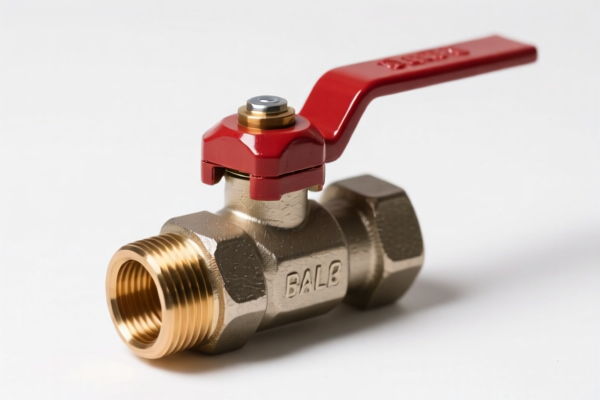
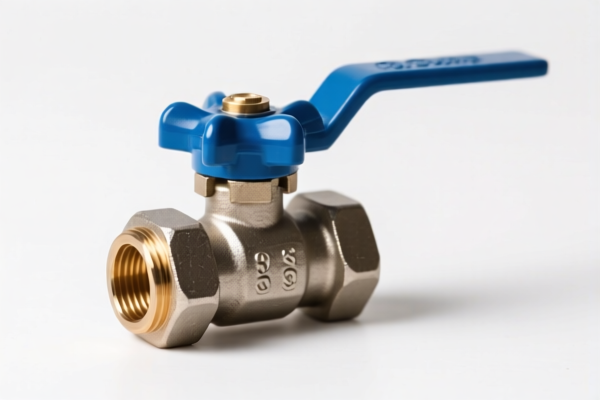
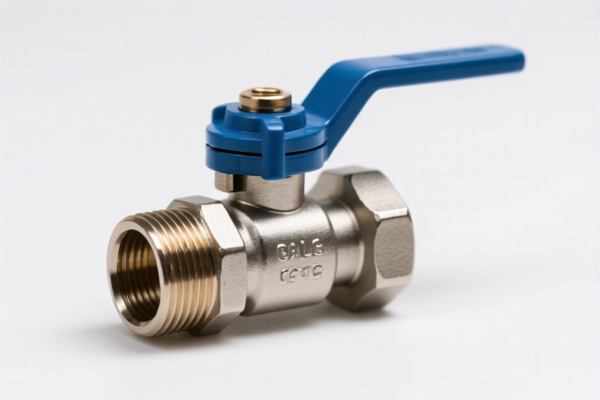
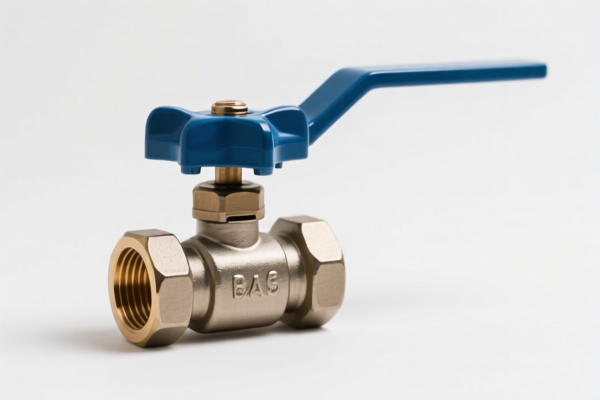
AI Analysis
🚰 Ball Valves (Iron & Steel) | Industrial Piping Control Components
🌐 HS Code Reference & Customs Clearance Guide | 2026 Latest Tariff Analysis | Professional Strategy
📌 I. Product Definition & Classification: What Exactly is a "Ball Valve"?
A Ball Valve is a quarter-turn shut-off valve that uses a hollow, perforated, and pivoting ball to control the flow of materials. In international trade, these are primarily classified under Chapter 84 as mechanical appliances for pipes or boiler shells.
For this specific analysis, we focus on Hand Operated Ball Valves made of Iron or Steel, which are distinct from brass, plastic, or automatic valves. These are critical components in industrial piping, water treatment, oil & gas, and HVAC systems.
⚠️ Key Distinction Points:
- Material: Must be Iron or Steel. (Valves made of copper, brass, or stainless steel may have different codes or remain within this scope but require strict material declaration).
- Operation: Must be Hand Operated (lever or gear handle). If it is motorized or automatic, it falls under a different subheading.
- Function: It is a "Tap, Cock, Valve" for pipes, tanks, or boilers.
- Specific Type: Ball Type (uses a spherical disc with a hole through the middle).
📦 II. HS Code Classification Details (2026 Latest Tariff Authority)
Based on the provided data, there are two specific subheadings depending on the exact material (Iron vs. Steel). While functionally similar, customs authorities often distinguish between "Cast Iron" and "Steel" for precise tariff administration.
| HS Code | Product Description | Application Scenario | Material Type |
|---|---|---|---|
8481.80.30.25 |
Taps, cocks, valves... Hand operated: Of iron or steel: Of iron: Ball type | Residential water systems, general plumbing, low-pressure industrial pipes using cast iron or malleable iron | 🟦 Iron (Cast/Malleable) |
8481.80.30.70 |
Taps, cocks, valves... Hand operated: Of iron or steel: Of steel: Ball type | High-pressure industrial pipelines, chemical plants, oil & gas infrastructure using carbon steel or alloy steel | 🟥 Steel |
🔍 Critical Note:
- Both codes fall under Chapter 84: Nuclear reactors, boilers, machinery and mechanical appliances.
- The primary difference is the material definition (Ironvs.Steel).
- Stainless Steel is typically classified under "Steel" (8481.80.30.70) unless specific national definitions exclude it, but generally, it is not "Cast Iron."
- Do NOT confuse with8481.20(Pressure Reducing Valves) or8481.30(Check Valves/Non-Return Valves) unless the valve has a specific one-way or pressure-regulating function integrated into the ball mechanism. A standard on/off ball valve is8481.80.
💰 III. 2026 Latest Tariff Rate Breakdown (Including Surcharges)
✅ Applicable Country: United States (US)
✅ Origin: China (CN)
✅ Effective Date: Current rates as per provided data (2025/2026 context)
🎯 1. 8481.80.30.25 – Ball Valve (Of Iron, Hand Operated)
| Item | Content |
|---|---|
| Base Tariff | 0.0% |
| Additional Tariff (Section 301/IEEPA) | 0.0% |
| Total Tax Rate | 0.0% |
| Tax Calculation | CIF Value × 0.0% = $0.00 |
| De Minimis Eligibility | N/A (Since tax is 0%) |
| Legal Basis Path | USITC:8481.80.30.25 → TARIC:8481.80.30.25 |
📌 Explanation:
- Despite being industrial components, hand-operated iron ball valves currently carry a 0% total tariff in this dataset.
- This is a highly favorable classification compared to many other industrial goods from China subject to 25% or 7.5% Section 301 tariffs.
- Caution: Ensure the declaration explicitly states "Of Iron" and "Hand Operated" to avoid misclassification into general valves that might have higher rates.
🎯 2. 8481.80.30.70 – Ball Valve (Of Steel, Hand Operated)
| Item | Content |
|---|---|
| Base Tariff | 0.0% |
| Additional Tariff (Section 301/IEEPA) | 0.0% |
| Total Tax Rate | 0.0% |
| Tax Calculation | CIF Value × 0.0% = $0.00 |
| De Minimis Eligibility | N/A (Since tax is 0%) |
| Legal Basis Path | USITC:8481.80.30.70 → TARIC:8481.80.30.70 |
📌 Explanation:
- Similar to the iron variant, steel ball valves also enjoy a 0% total tariff.
- This applies to carbon steel, alloy steel, and generally stainless steel valves (classified as steel) that are manually operated.
- Strategic Advantage: This makes steel ball valves highly competitive for import into the US compared to other steel hardware items.
🛠️ IV. Customs Clearance Practical Advice (Avoid Pitfalls)
✅ 1. Required Documentation Checklist (Non-Negotiable)
| Document | Must Provide? | Explanation |
|---|---|---|
| ✅ Product Specification Sheet | ✔️ | Must specify: Material (Iron/Steel), Size (DN/NPS), Pressure Rating (PN/Class), Connection Type (Threaded/Flanged). |
| ✅ Operation Method Declaration | ✔️ | Explicitly state: "Hand Operated" (Lever or Gear). If motorized, this code is wrong. |
| ✅ Valve Type Declaration | ✔️ | Explicitly state: "Ball Type". (Gate, Globe, or Butterfly valves have different codes). |
| ✅ Material Certification | ✔️ | Proof that it is "Iron" or "Steel". If using Stainless Steel, ensure it is declared as Steel to fit 8481.80.30.70. |
| ✅ Commercial Invoice | ✔️ | Description must match HS Code exactly. Example: "Hand Operated Steel Ball Valve, For Piping Systems". |
| ✅ Packing List | ✔️ | List quantity, gross weight, and net weight. |
✅ 2. Declaration Tips (Key Mantra)
🔥 “Hand Operated, Ball Type, Iron or Steel, Zero Percent!”
| Scenario | Correct Declaration | Wrong Declaration |
|---|---|---|
| Standard Manual Valve | 8481.80.30.70 (Steel) or .25 (Iron) |
"Industrial Valve" (Too vague) |
| Motorized/Automatic Valve | Do NOT use this code → Use 8481.80.90 or similar |
Misclassifying auto-valve as hand-operated → Penalty + Back Tax |
| Brass/Copper Valve | Do NOT use this code → Likely 8481.30 or 7616 |
Listing brass as "Steel" → Customs Audit/Fine |
| Gate/Butterfly Valve | Do NOT use this code → Use 8481.80.90 |
Listing Gate Valve as "Ball Type" → Misclassification |
✅ 3. Special Case Handling
| Situation | Handling Advice |
|---|---|
| Mixed Material (Steel Body, Iron Handwheel) | Declare as Steel if the main pressure-containing body is steel. Use 8481.80.30.70. |
| Valve with Actuator (Even if Manual Override Exists) | If it includes an electric/pneumatic actuator, it may be classified as Automatic. Do not use these codes. |
| Stainless Steel Valves | Usually classified as Steel (8481.80.30.70). Confirm with your forwarder, as some jurisdictions may have specific stainless steel notes, but generally, they fall under "Steel" in this 8-digit breakdown. |
| Small Parts (Handles, Gaskets) | If shipped separately, they may be classified as "Parts" (8481.90). However, it is best practice to declare the complete valve with its parts to simplify clearance. |
🌍 V. Global Market Comparison (2026 Latest)
| Country/Region | Recommended HS Code | Tariff (China Origin) | Certification Requirements | Notes |
|---|---|---|---|---|
| 🇺🇸 USA | 8481.80.30.70 / .25 |
0.0% | No special cert. | 0% Tariff Advantage! |
| 🇨🇳 China | 8481.80.30.70 |
Varies (Check local) | CCC (if applicable) | Domestic trade rules apply. |
| 🇪🇺 EU | 8481.80.59 (General) |
Varies (MFN Rate ~0-2%) | CE Marking (Pressure Equipment Directive) | EU uses 8-digit TARIC; check specific member state rules. |
| 🇯🇵 Japan | 8481.80.990 |
~2.0-5.0% | JIS Standards | Japan does not have the same 0% preference for this specific subcode as the US in the provided data. |
| 🇦🇺 Australia | 8481.80.90 |
~5.0% | AS/NZS Standards | Always verify latest FTA agreements. |
📌 Conclusion:
- The USA offers a significant 0% tariff advantage for hand-operated iron/steel ball valves.
- Ensure your supplier provides accurate material declarations to maintain this benefit.
- Other markets may have higher base rates; leverage the US market for high-volume valve exports if compliant.
📌 VI. Common Errors & Pitfalls (Lessons Learned)
❌ Error 1: Declaring a Gate Valve as a Ball Valve
👉 Consequence: Customs may reclassify to 8481.80.90 with a different (possibly higher) tax rate or require additional inspection.
👉 Fix: Clearly distinguish valve types in the invoice.
❌ Error 2: Failing to specify "Hand Operated"
👉 Consequence: If the valve has an actuator, it may be classified as an automatic valve (8481.80.90), which could have different duties or regulatory requirements.
👉 Fix: Add "Manual Operation" or "Lever Operated" to the product description.
❌ Error 3: Confusing Iron vs. Steel
👉 Consequence: While both are 0% in this dataset, incorrect material declaration can trigger an audit. If you declare "Steel" for a Cast Iron valve, you may face penalties for misdeclaration.
👉 Fix: Obtain material test reports from the manufacturer.
❌ Error 4: Including Non-Valve Parts (e.g., loose gaskets sold separately)
👉 Consequence: May be classified under 8481.90 (Parts) or 4016 (Rubber Gaskets), complicating the declaration.
👉 Fix: Declare the complete valve assembly with standard fittings attached.
✅ Correct Declaration Example:
"Hand Operated Ball Valve, Carbon Steel Body, Threaded Ends, 1/2" Size, For Water Piping Systems, Model: BWV-100"
🎯 VII. Conclusion: Precision in Classification Saves Costs!
🎯 Remember the Mantra:
🔹 "Hand Operated + Ball Type = 0% Tax (US)"
🔹 "Steel or Iron? Both 0%! But Declare Correctly!"
🔹 "No Motors, No Pressure Reducing, Just On/Off!"
📌 Pro Tip:
- If your valves are stainless steel, declare them as Steel under 8481.80.30.70 to ensure they fall into the 0% bracket (unless specific national guidelines state otherwise).
- Keep records: Maintain material certificates and operation manuals to prove "Hand Operated" status if customs questions the classification.
📣 Immediate Action:
📞 Verify with Your Forwarder: Confirm that
8481.80.30.70(Steel) or.25(Iron) is accepted for your specific valve material.
📝 Update Invoices: Ensure the description explicitly includes "Hand Operated" and "Ball Type".
🚀 Leverage the 0% Tariff: Maximize your profit margins by ensuring accurate classification!
✨ Professional Customs Clearance Starts with Accurate Classification!
💼 Every Valve Counts, But Every Percentage Point Counts More!
Customer Reviews
About HS Code Classification
The Harmonized System (HS) is an internationally standardized nomenclature developed by the World Customs Organization (WCO) to classify traded products. Over 200 countries use the HS system as the basis for customs tariffs, trade statistics, and import/export regulations.
Each HS code follows a hierarchical structure:
- Chapter (2 digits) — Broad category of goods (e.g., Chapter 84: Machinery and Mechanical Appliances)
- Heading (4 digits) — More specific grouping within the chapter
- Subheading (6 digits) — Internationally standardized breakdown, used by all WCO member countries
- National subdivisions (8-10 digits) — Country-specific extensions for further classification, such as US HTSUS 10-digit codes
Correct HS code classification is essential for smooth customs clearance, accurate duty payment, and compliance with trade regulations. Misclassification can lead to customs delays, overpayment of duties, or penalties.
When importing from CN to US, the applicable tariff rates may include:
- Most-Favored-Nation (MFN) rate — The standard duty rate applied to WTO members
- General rate — Applied to countries without trade agreements
- Trade remedy duties — Additional tariffs such as Section 301 (anti-dumping), Section 232 (national security), or countervailing duties
The information provided on this page is for reference purposes only. For official classification, please consult with your local customs authority or a licensed customs broker.