Bamboo Charcoal Deodorizer
CN → US| HS Code | Tariff Rate | Origin | Destination | Doc |
|---|---|---|---|---|
| 4402100000 | 35.0% | CN | US | Official Doc |
| 4402900100 | 35.0% | CN | US | Official Doc |
| 3802100050 | 39.8% | CN | US | Official Doc |
| 3802905000 | 39.8% | CN | US | Official Doc |
| 3926909989 | 22.8% | CN | US | Official Doc |
| 3926909905 | 22.8% | CN | US | Official Doc |
Product Images
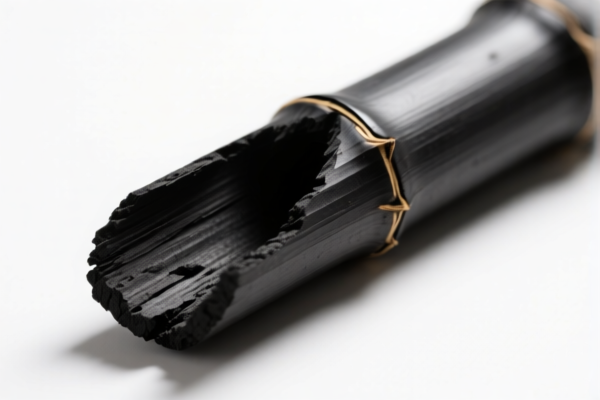
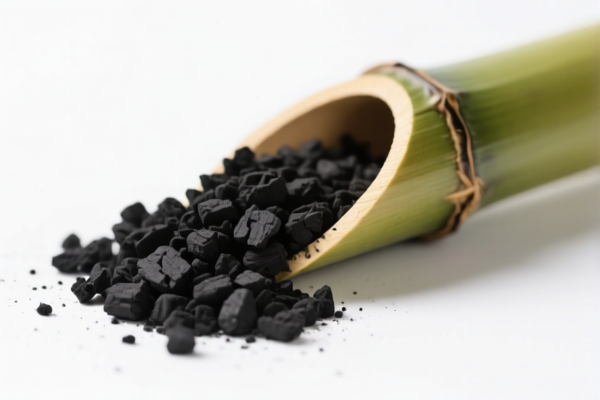
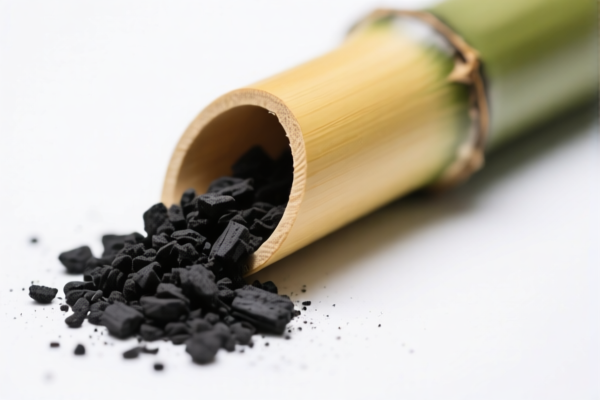

AI Analysis
🎋 Bamboo Charcoal Deodorizer (Activated Carbon Filter)
🌐 HS Code Reference & Customs Clearance Guide | 2024-2025 Latest Tariff Analysis | Professional Strategy
📌 I. Product Definition & Classification: Do You Really Understand "Bamboo Charcoal Deodorizer"?
Bamboo charcoal deodorizers are porous filtration products used to absorb odors, moisture, and harmful gases (e.g., formaldehyde, VOCs) in homes, vehicles, and industrial settings. They are made from bamboo processed into charcoal and often activated.
Two Critical Scenarios: 1. Raw/Unactivated Bamboo Charcoal: Simply agglomerated bamboo charcoal without chemical activation. 2. Activated Bamboo Charcoal: Chemically or thermally treated to increase surface area, significantly enhancing absorption.
⚠️ Key Classification Distinction:
- If the product is non-activated (just carbonized bamboo, even if shaped into bricks or bags) → Classify under Heading 4402 (Wood Charcoal).
- If the product is activated (chemically treated for deodorizing properties) → Classify under Heading 3802 (Activated Carbon).
📦 II. HS Code Classification Details (Based on Your Provided Data)
| HS Code | Product Description | Scenario | Tax Rate (Total) | Tax Detail |
|---|---|---|---|---|
| 4402.10.00.00 | Bamboo Charcoal (Wood charcoal, including shell/nut charcoal, agglomerated or not, of bamboo) | Raw or agglomerated bamboo charcoal used as deodorizer without activation. | 25.0% | Base: 0.0% + Additional: 25.0% |
| 4402.90.01.00 | Other Wood Charcoal (Non-bamboo, but used as deodorizer) | Note: If your product claims "Bamboo" but fails specific bamboo specs, it might fall here. | 25.0% | Base: 0.0% + Additional: 25.0% |
| 3802.10.00.50 | Activated Carbon Other (Activated carbon, whether or not agglomerated, excluding specific uses) | Activated bamboo charcoal specifically for deodorizing/filtration. | 29.8% | Base: 4.8% + Additional: 25.0% |
| 3802.90.50.00 | Activated Carbon Other (Other activated natural mineral products/animal black) | Specific niche: Rarely applies to bamboo, usually for non-standard activated products. | 0.0% | Base: 0.0% + Additional: 0.0% |
🔍 Critical Insight:
- "Activated" vs. "Non-Activated" is the Make-or-Break:
- If you can prove it is activated (via COA/Technical Data Sheet), you get 3802.10.00.50 (29.8% total).
- If it is raw charcoal (just carbonized), you get 4402.10.00.00 (25.0% total).
- Warning: Some sellers mislabel "Activated Carbon" as "Bamboo Charcoal" to avoid the 4.8% base tax, but customs may reclassify if testing shows activation. - Plastic Accessories: If your deodorizer comes with plastic bags or rubber bands (headings 39), those might be classified separately under 3926.90.99 (12.8% for general plastic, 0% for elastic bands) if declared as accessories.
💰 III. Tariff Rate Breakdown (Detailed Tax Clauses)
✅ Applicable Jurisdiction: Global/US Trade Framework (Based on provided "Additional" tax logic)
✅ Origin: Likely China (CN) implied by the "Additional" tax structure.
✅ Effective Date: Current Trade Policies.
🎯 1. HS Code 4402.10.00.00 —— Bamboo Charcoal (Non-Activated)
The most common classification for traditional bamboo deodorizers.
| Item | Detail |
|---|---|
| Product Name | Bamboo Charcoal (Agglomerated or Loose) |
| Base Tariff | 0.0% (Free trade agreement friendly or zero-rated raw material) |
| Additional Tariff | 25.0% (Section 301 / IEEPA Add-on for "Other" wood charcoal) |
| Total Tax Rate | 25.0% |
| Tax Calculation | CIF Value × 25.0% |
| De Minimis Exemption | ❌ No (Goods > $800 usually subject to full tariff; low-value shipments may face scrutiny) |
📌 Interpretation:
- The 0% Base is standard for raw charcoal in many trade regimes.
- The 25% Additional Tax is the "penalty" tariff often applied to Chinese goods under Section 301.
- Risk: If the deodorizer is "activated" but declared as "raw charcoal," customs may reclassify to 3802 and apply 29.8%.
🎯 2. HS Code 3802.10.00.50 —— Activated Carbon (Deodorizer Grade)
For high-performance, chemically treated charcoal.
| Item | Detail |
|---|---|
| Product Name | Activated Carbon (Non-wood based or specific activation) |
| Base Tariff | 4.8% (Standard MFN rate for chemical products) |
| Additional Tariff | 25.0% (Same Section 301/Add-on) |
| Total Tax Rate | 29.8% |
| Tax Calculation | CIF Value × 29.8% |
| De Minimis Exemption | ❌ No |
📌 Interpretation:
- The 4.8% Base is the only difference from raw charcoal.
- The 25% Additional remains.
- Total: 29.8% is slightly higher than raw charcoal (25%), but Activated Carbon commands a higher market value and performance, often justifying the extra cost.
🛠️ IV. Customs Clearance Practical Advice (Avoid Pitfalls)
✅ 1. Documentation Checklist (Must-Have)
| Document | Requirement | Why It Matters |
|---|---|---|
| ✅ Certificate of Analysis (COA) | CRITICAL | Must explicitly state "Activated Carbon" (if applicable) or "Bamboo Charcoal" to prove chemical state. |
| ✅ Product Photos | ✔️ | Show the product in packaging; distinguish between black "charcoal" vs. shiny "activated" granules. |
| ✅ Material Safety Data Sheet (MSDS) | ✔️ | Proves chemical treatment (activation) if claiming 3802. |
| ✅ Commercial Invoice | ✔️ | Must use exact HS Code description: "Bamboo Charcoal Deodorizer (Activated)" or "Raw Bamboo Charcoal Block". |
| ✅ Packing List | ✔️ | Clearly separate any plastic bags or rubber bands if they are sold separately. |
✅ 2. Declaration Strategy (The "Golden Rule")
🔥 Rule: "Know Your Carbon State, Declare Your Tax Base!"
| Situation | Correct Declaration | Wrong Declaration | Consequence |
|---|---|---|---|
| Product is Activated | HS Code 3802.10.00.50 | Declare as "Bamboo Charcoal" (4402) | Reclassification Risk: Customs may inspect, find activation, charge 29.8% + fines. |
| Product is Raw/Agglomerated | HS Code 4402.10.00.00 | Declare as "Activated Carbon" (3802) | Overpayment: Pay 29.8% instead of 25.0% (unnecessary cost). |
| Plastic Bag Included | Declare 3926.90.99 (if significant) | Hide in main HS Code | Under-declaration: Penalty for misclassifying accessories. |
✅ 3. Special Cases & Handling
| Case | Strategy |
|---|---|
| "Bamboo Charcoal" bags with plastic wrappers | Declare the charcoal as 4402 or 3802, and the plastic bag as 3926.90.99 (12.8% tax) if the value is significant. If negligible, include in the main HS Code. |
| "Elastic Bands" holding the charcoal | If the bands are 100% plastic, they fall under 3926.90.99.05 (0% tax). Ensure they are not declared as part of the charcoal mass. |
| Mixed Materials (Charcoal + Cloth Pouch) | If the pouch is fabric (textile), it might be separate. If plastic, treat as 3926. |
🌍 V. Market Comparison (2024-2025 Trends)
| Market | Recommended HS Code | Effective Tax Rate | Key Requirement |
|---|---|---|---|
| 🇺🇸 USA | 4402.10.00.00 (Raw) or 3802.10.00.50 (Activated) | 25.0% or 29.8% | Strict "Country of Origin" labeling; "Additional Tariff" applies to CN origin. |
| 🇪🇺 EU | 4402 or 3802 | ~0-6% | No Section 301; Base tariff only. |
| 🇨🇳 China (Export) | 4402.10.00.00 | 0% (Export tax) | Check for export quotas on bamboo products. |
📌 Conclusion:
- The 25% Additional Tariff is the dominant cost driver for US imports.
- Activated Carbon (3802) is slightly more expensive (29.8%) than Raw Charcoal (25.0%), but offers better performance.
- Plastic accessories (rubber bands) can be tax-free if declared correctly under 3926.90.99.05.
📌 VI. Common Errors & Pitfalls (Learn from Mistakes)
❌ Error 1: Declaring Activated Carbon as "Bamboo Charcoal" to save 4.8% base tax.
👉 Result: Customs lab test proves activation → 29.8% tax applied + penalty.
❌ Error 2: Ignoring the plastic packaging in the declaration.
👉 Result: If the plastic value is high, it may be reclassified as a "plastic article" (12.8%) retroactively.
❌ Error 3: Confusing "Bamboo" with "Wood" (Other).
👉 Result: 4402.90.01.00 (Other wood) also has 25%, but specific bamboo documentation (4402.10) is required for proper verification.
✅ Pro Tip:
Always provide a COA/Technical Spec Sheet stating:
"Activated Surface Area: >800 m²/g" (for 3802) OR "Carbon Content: >90%, Non-Activated" (for 4402).
🎯 VII. Final Verdict: Strategic Recommendation
- For Standard Deodorizers: If your product is raw bamboo charcoal, declare 4402.10.00.00 (Total Tax: 25.0%). This is the most cost-effective path.
- For High-Performance: If your product is activated, declare 3802.10.00.50 (Total Tax: 29.8%). The extra 4.8% is justified by the product's superior absorption capabilities and market value.
- Accessory Management: Ensure plastic rubber bands are declared under 3926.90.99.05 (0% tax) to avoid unnecessary duties on the binding material.
🚀 Action Plan:
1. Verify activation status with your factory (COA).
2. Select the correct HS Code (4402.10.00.00 or 3802.10.00.50).
3. Separate plastic accessories in the Packing List.
4. Prepare documentation for a 25% - 29.8% tariff payment.
✨ Customs Clearance, Simplified & Accurate!
💼 Your product's tax fate depends on its chemical nature—declare it right!
Customer Reviews
About HS Code Classification
The Harmonized System (HS) is an internationally standardized nomenclature developed by the World Customs Organization (WCO) to classify traded products. Over 200 countries use the HS system as the basis for customs tariffs, trade statistics, and import/export regulations.
Each HS code follows a hierarchical structure:
- Chapter (2 digits) — Broad category of goods (e.g., Chapter 84: Machinery and Mechanical Appliances)
- Heading (4 digits) — More specific grouping within the chapter
- Subheading (6 digits) — Internationally standardized breakdown, used by all WCO member countries
- National subdivisions (8-10 digits) — Country-specific extensions for further classification, such as US HTSUS 10-digit codes
Correct HS code classification is essential for smooth customs clearance, accurate duty payment, and compliance with trade regulations. Misclassification can lead to customs delays, overpayment of duties, or penalties.
When importing from CN to US, the applicable tariff rates may include:
- Most-Favored-Nation (MFN) rate — The standard duty rate applied to WTO members
- General rate — Applied to countries without trade agreements
- Trade remedy duties — Additional tariffs such as Section 301 (anti-dumping), Section 232 (national security), or countervailing duties
The information provided on this page is for reference purposes only. For official classification, please consult with your local customs authority or a licensed customs broker.