Bamboo Charcoal Stick
CN → US| HS Code | Tariff Rate | Origin | Destination | Doc |
|---|---|---|---|---|
| 3926909989 | 22.8% | CN | US | Official Doc |
| 4402900100 | 35.0% | CN | US | Official Doc |
| 3801105090 | 35.0% | CN | US | Official Doc |
| 4402100000 | 35.0% | CN | US | Official Doc |
Product Images
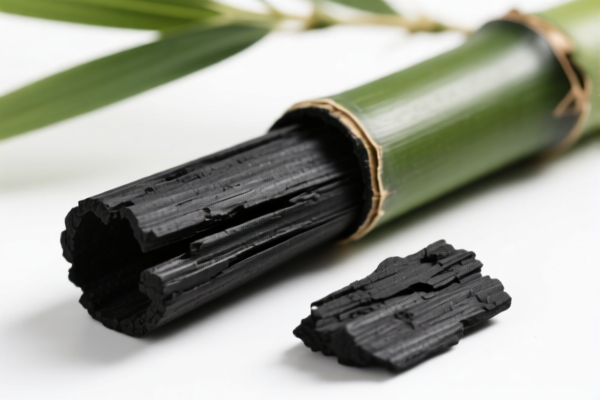
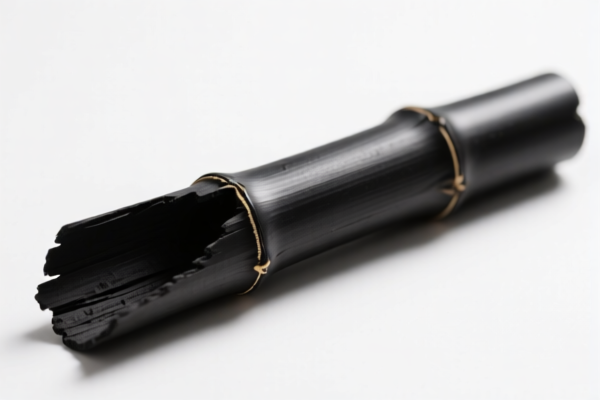
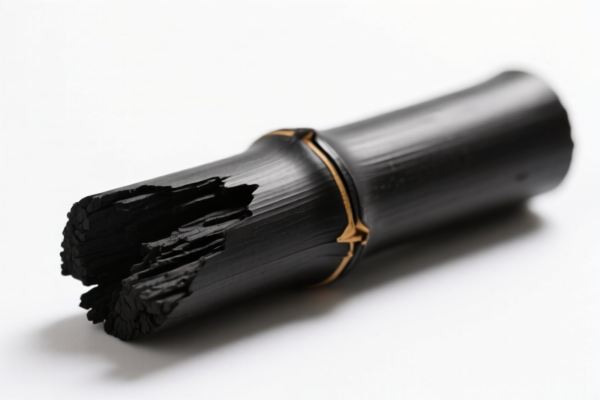
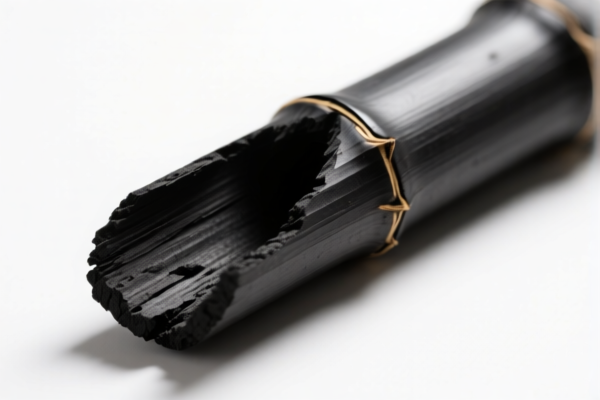
AI Analysis
🎋 Bamboo Charcoal Sticks (Bamboo Charcoal Rods)
🌐 HS Code Reference & Customs Clearance Guide | 2026 Latest Tariff Analysis | Professional Clearance Strategy
📌 I. Product Definition & Classification: Do You Really Understand "Bamboo Charcoal Sticks"?
Bamboo Charcoal Sticks are solid carbonaceous materials produced by the pyrolysis of bamboo. In international trade, they are primarily classified based on whether they are considered a processed timber product, a simple carbon material, or a miscellaneous plastic/materials product. The classification logic varies significantly depending on the specific material interpretation and processing level.
Primary Classification Logic: 1. Timber/Charcoal Category (Headings 4402): If viewed as a form of "vegetable charcoal" derived from bamboo, it falls under heading 4402. 2. Carbon/Graphite Category (Heading 3801): If viewed strictly as a carbonaceous material similar to artificial graphite, it may fall under heading 3801. 3. Miscellaneous Products (Heading 3926): If viewed as a manufactured item made of carbon/organic materials that doesn't fit specific definitions, it may fall under the residual category of plastics/materials.
⚠️ Key Distinction Point:
- Heading 4402: Focuses on the origin material (Bamboo/Timber) and the state of being "charcoal."
- Heading 3801: Focuses on the chemical nature (Carbon/Graphite).
- Heading 3926: Focuses on the manufactured form ("Other articles").
📦 II. HS Code Classification Details (2026 Latest Tariff Authority Comparison)
| HS Code | Product Description | Applicable Scenario | Key Classification Logic |
|---|---|---|---|
3926.90.99.89 |
Other articles of plastics and other materials | Generic carbon sticks not fitting specific carbon/timber definitions; "Other" catch-all category based on material inference. | ✅ Inferred as "Plastics/Other Materials" due to lack of specific charcoal listing in some interpretations. |
4402.90.01.00 |
Vegetable charcoal (including shell or nut charcoal), in spheres, pellets, or similar forms | Bamboo charcoal sticks considered a form of "vegetable charcoal" made from bamboo (a type of grass/timber). | ✅ Material (Bamboo) fits the "wood/timber" attribute for charcoal classification. |
3801.10.50.90 |
Artificial graphite; other articles of carbon | Bamboo charcoal sticks viewed as carbonaceous material products, not specifically "spherical modified graphite." | ✅ Fits the "Carbon/Graphite" material category; excludes specific graphite exclusions. |
4402.10.00.00 |
Bamboo charcoal, in spheres, rods, or similar forms | Explicitly includes "Bamboo" in the name and "Charcoal" in the form, fitting the specific definition for Bamboo Charcoal. | ✅ Explicit match for "Bamboo" material and "Charcoal" form. |
🔍 Critical Reminder:
- Heading 4402 is generally the most standard for "Bamboo Charcoal" as it directly addresses the raw material (Bamboo) and the product state (Charcoal).
- Heading 3926 is a fallback for "miscellaneous" items but carries a lower base duty but high total due to tariffs.
- Heading 3801 is less common for simple charcoal sticks unless they are industrial-grade carbon products.
💰 III. 2026 Latest Tariff Rate Breakdown (Including Surcharges & Policy Add-ons)
✅ Applicable Country: United States (US)
✅ Origin: China (CN)
✅ Effective Date: November 10, 2025 (and subsequent imports)
🎯 1. 3926.90.99.89 —— Other Articles of Plastics/Other Materials
| Item | Content |
|---|---|
| Base Duty Rate | 5.3% (ad valorem) |
| Section 301 Surcharge | +7.5% |
| Section 122 Surcharge | +10.0% |
| Total Tax Rate | 22.8% |
| Tax Calculation | CIF Value × 22.8% |
| De Minimis Eligibility | ❌ No (Deny de minimis) |
| Legal Basis Path | Base Rate → Section 301 Footnote → Section 122 EO |
📌 Explanation:
- Base Duty: 5.3% is relatively low for this heading.
- Section 301: Adds 7.5% (specific to certain plastic/material categories or broader 301 list).
- Section 122: Adds 10% under Executive Order 14069 (or related trade actions).
- Total: 22.8%, which is moderate compared to other charcoal classifications.
🎯 2. 4402.90.01.00 —— Vegetable Charcoal (Other Forms)
| Item | Content |
|---|---|
| Base Duty Rate | 0.0% |
| Section 301 Surcharge | +25.0% |
| Section 122 Surcharge | +10.0% |
| Total Tax Rate | 35.0% |
| Tax Calculation | CIF Value × 35.0% |
| De Minimis Eligibility | ❌ No |
| Legal Basis Path | IEEPA → Section 301 → USITC 4402.90.01.00 → Footnote |
📌 Note:
- Base Duty: 0% is attractive, but surcharges dominate.
- Section 301: Standard 25% applies to most wood/timber products from China.
- Section 122: Additional 10%.
- Total: 35.0%, significantly higher than the 3926 classification due to the higher Section 301 rate.
🎯 3. 3801.10.50.90 —— Artificial Graphite / Carbon Articles
| Item | Content |
|---|---|
| Base Duty Rate | 0.0% |
| Section 301 Surcharge | +25.0% |
| Section 122 Surcharge | +10.0% |
| Total Tax Rate | 35.0% |
| Tax Calculation | CIF Value × 35.0% |
| De Minimis Eligibility | ❌ No |
| Legal Basis Path | IEEPA → Section 301 → USITC 3801.10.50.90 → Footnote |
📌 Explanation:
- Base Duty: 0%.
- Section 301: 25% applies to carbon/graphite products.
- Section 122: 10%.
- Total: 35.0%. Same as 4402 due to identical surcharge structure.
🎯 4. 4402.10.00.00 —— Bamboo Charcoal (Specific)
| Item | Content |
|---|---|
| Base Duty Rate | 0.0% |
| Section 301 Surcharge | +25.0% |
| Section 122 Surcharge | +10.0% |
| Total Tax Rate | 35.0% |
| Tax Calculation | CIF Value × 35.0% |
| De Minimis Eligibility | ❌ No |
| Legal Basis Path | IEEPA → Section 301 → USITC 4402.10.00.00 → Footnote |
📌 Note:
- This is the most specific classification for "Bamboo Charcoal."
- Despite having a 0% base duty, the total effective rate is 35.0% due to heavy surcharges.
- Crucial: Even though it is specifically named, it is subject to the same Section 301/122 tariffs as other wood/carbon products.
🛠️ IV. Customs Clearance Practical Advice (Combat Pitfall Guide)
✅ 1. Document Preparation Checklist (Missing Documents = Delay)
| Document | Required | Explanation |
|---|---|---|
| ✅ Product Specification Sheet | ✔️ | Must detail dimensions, diameter, length, and density. |
| ✅ Material Analysis Report | ✔️ | Proves composition is >90% carbon/bamboo origin to support 4402 or 3801. |
| ✅ Product Photos (Clear) | ✔️ | Show texture, ends, and any packaging. |
| ✅ Commercial Invoice | ✔️ | Clearly state "Bamboo Charcoal Sticks" and HS Code. |
| ✅ Packing List | ✔️ | Detail weight per stick/package. |
| ✅ Certificate of Origin (CO) | ✔️ | Required for origin verification, though no preferential rate applies. |
✅ 2. Declaration Tips (Key Mnemonic)
🔥 "Material Matters: Bamboo Charcoal is Wood, Carbon is Carbon, Misc is Fallback!"
| Scenario | Correct Declaration | Common Mistake |
|---|---|---|
| Standard Bamboo Charcoal Sticks | 4402.10.00.00 (Most Accurate) |
Declaring as 3926 to save duty → Risk of Re-classification & Penalty. |
| Generic Charcoal (Other Plants) | 4402.90.01.00 |
Declaring as Bamboo → False Declaration. |
| Industrial Carbon Blocks | 3801.10.50.90 |
Declaring as 4402 → Possible Misclassification. |
| Decorative Charcoal Items | 3926.90.99.89 |
If it's a finished art piece, 3926 might be argued, but 4402 is safer for bulk. |
📌 Key Advice:
-3926.90.99.89has the lowest total tax rate (22.8%) but is technically weaker if the product is clearly "vegetable charcoal." Using it may trigger customs audits.
-4402.10.00.00is the most accurate for "Bamboo Charcoal" but carries a 35% total rate.
- Recommendation: If the value is low and risk tolerance is high, some importers argue for3926, but4402.10.00.00is the defensible, compliant choice. Consult a customs broker for a Pre-Ruling.
✅ 3. Special Cases Handling
| Scenario | Handling Suggestion |
|---|---|
| Bamboo Charcoal for Air Purification | Still 4402. Do not declare as "Air Purifier" (8421). |
| Bamboo Charcoal for BBQ | Still 4402. Do not declare as "Household Articles" (9403). |
| Mixed Packaging (Charcoal + Grill) | Split Declaration: Charcoal (4402) + Grill (separate HS). Do not bundle. |
| OEM Custom Sizes | Provide drawings to prove they are standard charcoal forms, supporting 4402. |
🌍 V. Global Major Market Clearance Comparison (2026 Latest)
| Country/Region | Recommended HS Code | Total Duty | Certification Requirements | Notes |
|---|---|---|---|---|
| 🇺🇸 USA | 4402.10.00.00 |
35.0% | None (Standard) | High tariff due to Section 301/122. |
| 🇨🇳 China | 4402.10.00.00 |
~0-5% | CCC (if applicable) | Low import duty. |
| 🇪🇺 EU | 4402.10.00.00 |
0% | None | No Section 301 equivalent. |
| 🇬🇧 UK | 4402.10.00.00 |
0% | None | Post-Brexit tariff-free for many goods. |
📌 Conclusion:
- The US market is the most expensive due to political tariffs (Section 301 & 122).
- EU/UK offer much better duty rates (0%) for the same product.
- Consider supply chain diversification if targeting the US heavily.
📌 VI. Common Mistakes & Pitfall Guide (Lessons Learned)
❌ Mistake 1: Declaring Bamboo Charcoal as 4402 but labeling it "Wooden Sticks"
👉 Consequence: Customs may question the material. Provide a Material Analysis Report.
❌ Mistake 2: Using 3926 to avoid 35% tariff when product is clearly 4402
👉 Consequence: High risk of penalty, seizure, or retroactive duty if customs disagrees with the classification.
❌ Mistake 3: Not specifying "Bamboo" in the description
👉 Consequence: May be classified as generic "Vegetable Charcoal" (4402.90), which might have different surcharge interpretations.
❌ Mistake 4: Ignoring Section 122 Tariff
👉 Consequence: Underestimating total cost by 10%. Budget for 35% total, not just 25%.
✅ Correct Practice:
"Bamboo Charcoal Sticks, Round, Diameter 3cm, Length 15cm, For Air Purification, Made from 100% Natural Bamboo, HS Code: 4402.10.00.00"
🎯 VII. Conclusion: Professional Declaration, Save Time & Money!
🎯 Remember the Mnemonic:
🔹 "Bamboo is Wood (4402), Carbon is Graphite (3801), Misc is Last (3926)."
🔹 "US Tariff is 35%, Don't Guess, Check the Rules!"
🔹 "Total Duty = Base + 301 + 122. Don't Forget the 10%!"
📌 Pro Tip:
If your Bamboo Charcoal is shaped, treated, or combined with other materials (e.g., resin), it may shift to 3926. For pure bamboo charcoal, stick to 4402.10.00.00.
Apply for a Customs Ruling if the shipment value is high to avoid disputes.
📣 Immediate Action:
📞 Contact your customs broker + Provide product specs + Declare Accurately as
4402.10.00.00
🚀 Ensure smooth clearance, avoid delays, and protect your profit margins!
✨ Professional Clearance Starts with Accurate Classification!
💼 Every Cent of Duty Counts!
Customer Reviews
About HS Code Classification
The Harmonized System (HS) is an internationally standardized nomenclature developed by the World Customs Organization (WCO) to classify traded products. Over 200 countries use the HS system as the basis for customs tariffs, trade statistics, and import/export regulations.
Each HS code follows a hierarchical structure:
- Chapter (2 digits) — Broad category of goods (e.g., Chapter 84: Machinery and Mechanical Appliances)
- Heading (4 digits) — More specific grouping within the chapter
- Subheading (6 digits) — Internationally standardized breakdown, used by all WCO member countries
- National subdivisions (8-10 digits) — Country-specific extensions for further classification, such as US HTSUS 10-digit codes
Correct HS code classification is essential for smooth customs clearance, accurate duty payment, and compliance with trade regulations. Misclassification can lead to customs delays, overpayment of duties, or penalties.
When importing from CN to US, the applicable tariff rates may include:
- Most-Favored-Nation (MFN) rate — The standard duty rate applied to WTO members
- General rate — Applied to countries without trade agreements
- Trade remedy duties — Additional tariffs such as Section 301 (anti-dumping), Section 232 (national security), or countervailing duties
The information provided on this page is for reference purposes only. For official classification, please consult with your local customs authority or a licensed customs broker.