Bamboo Circle
CN → US| HS Code | Tariff Rate | Origin | Destination | Doc |
|---|---|---|---|---|
| 4416006020 | 35.0% | CN | US | Official Doc |
| 4416006050 | 35.0% | CN | US | Official Doc |
| 4601920500 | 37.7% | CN | US | Official Doc |
| 4601922000 | 41.6% | CN | US | Official Doc |
Product Images
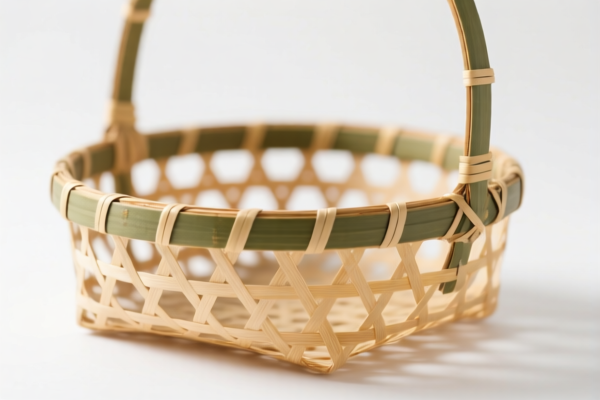
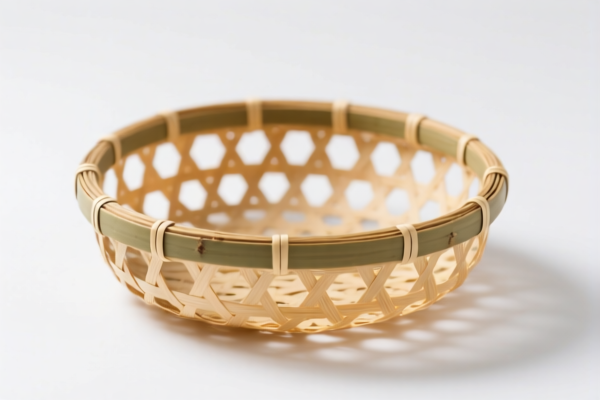
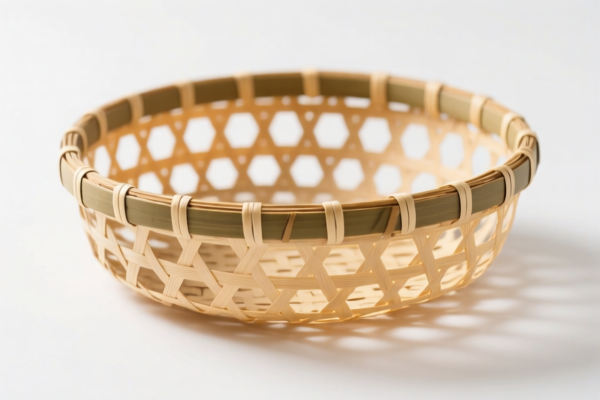
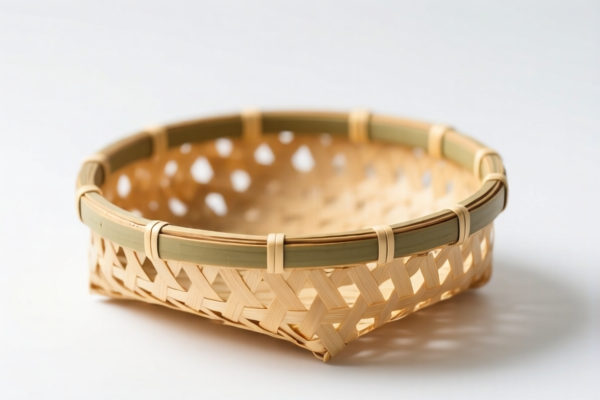
AI Analysis
🎋 Bamboo Circle (Bamboo Hoops/Rings)
🌐 HS Code Classification & Customs Clearance Guide | 2026 Tax Schedule Analysis | Expert Strategy for U.S. Imports
📌 One, Product Definition & Classification Logic
Bamboo Circles (often referred to as Bamboo Hoops or Rings) are essential components in the manufacturing of traditional bamboo baskets, cylindrical storage containers, and decorative crafts. In international trade, their classification hinges on the material (bamboo vs. wood) and the processing method (woven/braided vs. solid/rigid).
Key Distinction Points:
* As Wood Components (4416): If the bamboo is treated, processed, or classified similarly to wood due to structural rigidity and manufacturing logic, it falls under "Staves and hoop wood for cooperage."
* As Bamboo Weaving Products (4601): If the product is considered a "woven material" or a "part of a woven structure," it falls under Chapter 46. The finer the weave and the more integral it is to a woven fabric-like structure, the more likely it is to be classified under bamboo weaving materials.
⚠️ Critical Analysis: - Solid/Rigid Rings: Often misclassified. Customs may view them as "hoops for cooperage" (wood category) if they mimic the function of wooden barrel hoops. - Flexible/Interwoven Rings: Clearly fall under bamboo weaving articles.
📦 Two, Detailed HS Code Classification (2026 Latest Tariff Schedule)
| HS Code | Product Description | Classification Logic | Applicable Scenario |
|---|---|---|---|
4416.00.60.20 |
Staves and hoop wood for cooperage | Bamboo circles are logically grouped with wooden cooperage parts. Even though made of bamboo, if treated as "hoops" for barrels/cylinders, they fit this category. | Rigid bamboo rings used for structural support in baskets or containers; treated as "wood-like" components. |
4416.00.60.50 |
Other wooden barrels, vats, vats, and parts thereof | Bamboo circles are viewed as "circular wooden materials" or "parts of wooden barrel-like products." This is a broader "other" category for wood-based cylindrical parts. | Generic bamboo hoops used in non-specific wooden-style containers or decorative cylindrical items. |
4601.92.05.00 |
Bamboo weaving materials and similar products | Matches the classification logic for "bamboo weaving materials." If the bamboo circle is part of a woven fabric-like structure or is a raw woven component, it fits here. | Thin, flexible bamboo rings used in intricate weaving projects; considered "woven material parts." |
4601.92.20.00 |
Other woven bamboo materials and products | Fits the logic for "other bamboo woven materials and products." This is a catch-all for bamboo woven items not specifically listed elsewhere. | Finished or semi-finished bamboo hoops that are explicitly recognized as "woven bamboo products." |
🔍 Important Note: - The classification between
4416(Wood/Hoops) and4601(Bamboo Weaving) is highly disputable and depends on Customs' interpretation of "bamboo as wood" vs. "bamboo as woven material." - Risk: Misclassification can lead to significant duty differences (from 35% to 41.6%).
💰 Three, Detailed Breakdown of 2026 Tariff Rates (Including Surtaxes & Policy Add-ons)
✅ Applicable Country: United States (US)
✅ Origin: China (CN)
✅ Effective Date: November 10, 2025 (and subsequent imports)
🎯 1. 4416.00.60.20 & 4416.00.60.50 —— Bamboo Hoops (Wooden Cooperage Logic)
| Item | Details |
|---|---|
| Base Tariff | 0.0% (ad valorem) |
| Section 301 Surtax | +25% (USITC Footnote 9903.88.01 equivalent for wood/woven goods disputes) |
| IEEPA Surtax | +10% (Against Chinese/HK products, effective from Nov 10, 2025) |
| Total Tariff Rate | 35.0% |
| Tax Calculation | CIF Value × 35% |
| De Minimis Eligibility | ❌ No (deny_de_minimis) |
| Legal Basis Path | IEEPA:9903.01.25 → IEEPA:9903.01.24 → USITC:4416.00.60.20/50 → FOOTNOTE:9903.88.01 |
📌 Explanation: - "Section 301 Surtax 25%": Applies due to the inclusion of wooden/bamboo cooperage items in the tariff list. - "IEEPA 10%": Additional penalty for Chinese origin. - Total 35%: This is a high duty rate. If declared incorrectly as "bamboo weaving," you might pay more, but if declared as wood, you still face significant costs.
🎯 2. 4601.92.05.00 —— Bamboo Woven Materials
| Item | Details |
|---|---|
| Base Tariff | 2.7% (ad valorem) |
| Section 301 Surtax | +25% |
| IEEPA Surtax | +10% |
| Total Tariff Rate | 37.7% |
| Tax Calculation | CIF Value × 37.7% |
| De Minimis Eligibility | ❌ No |
| Legal Basis Path | IEEPA:9903.01.25 → IEEPA:9903.01.24 → USITC:4601.92.05.00 → FOOTNOTE:9903.88.01 |
📌 Note: - Slightly higher than the wooden classification due to the 2.7% base tariff. - This classification assumes the product is strictly "woven material" and not a structural "hoop."
🎯 3. 4601.92.20.00 —— Other Bamboo Woven Products
| Item | Details |
|---|---|
| Base Tariff | 6.6% (ad valorem) |
| Section 301 Surtax | +25% |
| IEEPA Surtax | +10% |
| Total Tariff Rate | 41.6% |
| Tax Calculation | CIF Value × 41.6% |
| De Minimis Eligibility | ❌ No |
| Legal Basis Path | IEEPA:9903.01.25 → IEEPA:9903.01.24 → USITC:4601.92.20.00 → FOOTNOTE:9903.88.01 |
📌 Warning: - This is the most expensive classification for bamboo circles. - The 6.6% base tariff makes it significantly more costly than the
4416or4601.92.05.00categories. - Avoid this classification unless your product is definitively a finished "woven product" and not a raw material or structural hoop.
🛠️ Four, Customs Clearance Practical Advice (Pitfall Avoidance Guide)
✅ 1. Required Documentation Checklist (Non-negotiable)
| Document | Must Provide | Description |
|---|---|---|
| ✅ Product Specifications | ✔️ | Diameter, thickness, material type (bamboo species), treatment (treated/untreated). |
| ✅ Product Photos | ✔️ | Clear images showing the ring structure, flexibility, and any weaving pattern. |
| ✅ Commercial Invoice | ✔️ | Must specify "Bamboo Circles/Hoops" and the intended use (e.g., "for basket making"). |
| ✅ Packing List | ✔️ | Weight, dimensions, and quantity. |
| ✅ Certificate of Origin (CO) | ✔️ | To prove Chinese origin (required for surtax calculation). |
| ✅ Usage Declaration | ✔️ | Explain if it's a "raw material" for weaving or a "structural component." |
✅ 2. Declaration Strategy (Key Tips)
🔥 "Define Material, Clarify Use, Avoid Ambiguity!"
| Scenario | Correct Declaration Approach | Wrong Practice |
|---|---|---|
| Rigid Bamboo Rings | Declare as 4416.00.60.20 (Hoop wood). Emphasize "structural hoop" function. |
Declaring as "woven material" → Risk of 41.6% tax. |
| Flexible Weaving Rings | Declare as 4601.92.05.00. Emphasize "woven bamboo material" nature. |
Declaring as "wooden barrel parts" → Risk of rejection or audit. |
| Mixed Shipments | Separate declarations for different types. | Mixing rigid and flexible rings in one line → Customs ambiguity. |
| Raw vs. Finished | Specify if it's a "component" (hoop) or a "product." | Vague terms like "Bamboo Parts" → High risk of audit. |
✅ 3. Special Handling for Disputes
| Situation | Handling Advice |
|---|---|
| Customs Audits Classification | Provide pre-classification rulings or expert opinions stating whether the bamboo is treated as wood or woven material. |
| Dispute on Base Tariff | Argue for 4416.00.60.20 (0% base) if the bamboo is structurally similar to wood hoops, rather than 4601 (which has 2.7%-6.6% base). |
| OEM Custom Orders | Provide customer design specs to prove the intended use (e.g., "for decorative basket," not "for industrial cooperage"). |
🌍 Five, Global Market Comparison (2026 Latest)
| Country/Region | Recommended HS Code | Tariff (China Origin) | Certification | Notes |
|---|---|---|---|---|
| 🇺🇸 United States | 4416.00.60.20 or 4601.92.05.00 |
35.0% or 37.7% | No special cert required | High surtaxes (301 + IEEPA). Avoid 4601.92.20.00 (41.6%). |
| 🇨🇳 China | 4416.00.60.20 |
0% - 5% | N/A | Low duty. |
| 🇪🇺 EU | 4416.00.60 or 4601.92 |
0% - 5% | FSC/PEFC (if wood/bamboo) | Generally low tariffs for bamboo crafts. |
| 🇦🇺 Australia | 4601.92.05 |
5% | N/A | Moderate duty. |
| 🇯🇵 Japan | 4601.92 |
0% - 5% | N/A | Low duty. |
📌 Conclusion: - USA is the most expensive market for bamboo circles due to 301 and IEEPA surtaxes. - Optimization Strategy: Aim for
4416.00.60.20(35%) over4601.92.20.00(41.6%) to save 6.6% on base tariffs. - Documentation is Key: Prove the product is a "hoop" (wood logic) rather than a "woven product" (bamboo logic) to potentially argue for lower base tariffs.
📌 Six, Common Mistakes & Pitfalls (Lessons Learned)
❌ Mistake 1: Using generic "Bamboo Parts" in declaration. 👉 Consequence: Customs assigns the highest possible rate (41.6%) or requires lengthy clarification.
❌ Mistake 2: Classifying rigid bamboo hoops as 4601.92.20.00 (Woven Product).
👉 Consequence: Paying an extra 6.6% in base tariffs unnecessarily.
❌ Mistake 3: Ignoring the "IEEPA 10%" surtax. 👉 Consequence: Underquoting costs, leading to budget overruns.
❌ Mistake 4: Not separating rigid and flexible rings. 👉 Consequence: Mixed classification risks, leading to partial audits or rejections.
✅ Correct Approach:
"Rigid Hoops → 4416 (Wood Logic, 35%); Flexible Weaving → 4601.92.05 (Woven Logic, 37.7%); Avoid 4601.92.20 (41.6%). Always specify 'Bamboo Hoop' and intended use."
🎯 Seven, Conclusion: Professional Declaration, Cost Savings!
🎯 Remember the Key Points:
🔹 "Structure over Material: Hoops are Wood Logic (35%), Woven are Bamboo Logic (37.7%)."
🔹 "Avoid the 41.6% Trap: Don't classify simple hoops as 'Other Woven Products'."
🔹 "Document Everything: Photos, Specs, and Intended Use are your Best Defense."
📌 Pro Tip:
If your bamboo circles are treated or coated, emphasize this in the description. Treated bamboo is more likely to be classified under
4416(wood-like) rather than raw woven bamboo, potentially stabilizing the classification at 35%.
📣 Immediate Action:
📞 Consult a Customs Broker: Verify if your specific bamboo circles qualify for
4416.00.60.20.
📄 Prepare Detailed Specs: Include diameter, thickness, and rigidity.
🚀 Optimize Your Tariff: Save up to 6.6% by choosing the right HS Code.
✨ Professional Customs Clearance Starts with Precise Classification!
💼 Every Percent Matters in Your Supply Chain!
Customer Reviews
About HS Code Classification
The Harmonized System (HS) is an internationally standardized nomenclature developed by the World Customs Organization (WCO) to classify traded products. Over 200 countries use the HS system as the basis for customs tariffs, trade statistics, and import/export regulations.
Each HS code follows a hierarchical structure:
- Chapter (2 digits) — Broad category of goods (e.g., Chapter 84: Machinery and Mechanical Appliances)
- Heading (4 digits) — More specific grouping within the chapter
- Subheading (6 digits) — Internationally standardized breakdown, used by all WCO member countries
- National subdivisions (8-10 digits) — Country-specific extensions for further classification, such as US HTSUS 10-digit codes
Correct HS code classification is essential for smooth customs clearance, accurate duty payment, and compliance with trade regulations. Misclassification can lead to customs delays, overpayment of duties, or penalties.
When importing from CN to US, the applicable tariff rates may include:
- Most-Favored-Nation (MFN) rate — The standard duty rate applied to WTO members
- General rate — Applied to countries without trade agreements
- Trade remedy duties — Additional tariffs such as Section 301 (anti-dumping), Section 232 (national security), or countervailing duties
The information provided on this page is for reference purposes only. For official classification, please consult with your local customs authority or a licensed customs broker.