Bamboo Creels for Freshwater Fishing
CN → US| HS Code | Tariff Rate | Origin | Destination | Doc |
|---|---|---|---|---|
| 4602110500 | 40.0% | CN | US | Official Doc |
| 4602120500 | 40.0% | CN | US | Official Doc |
| 9507906000 | 65.0% | CN | US | Official Doc |
| 9507908000 | 19.0% | CN | US | Official Doc |
Product Images
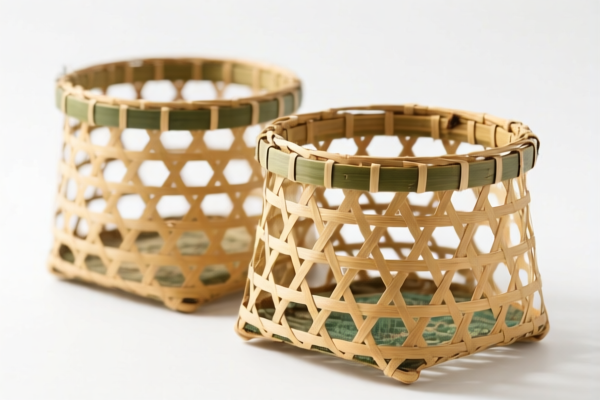
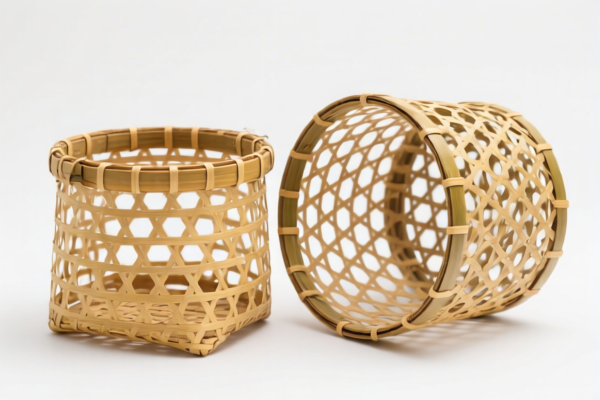
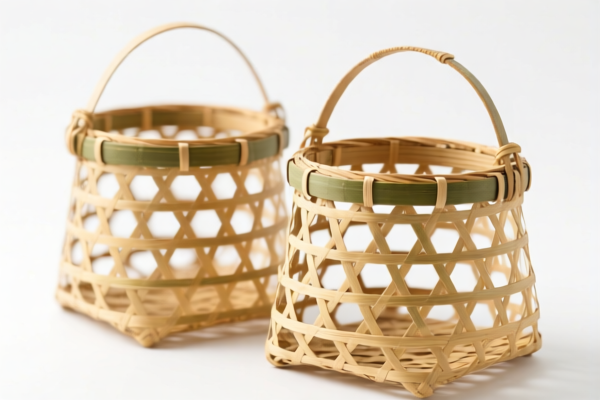
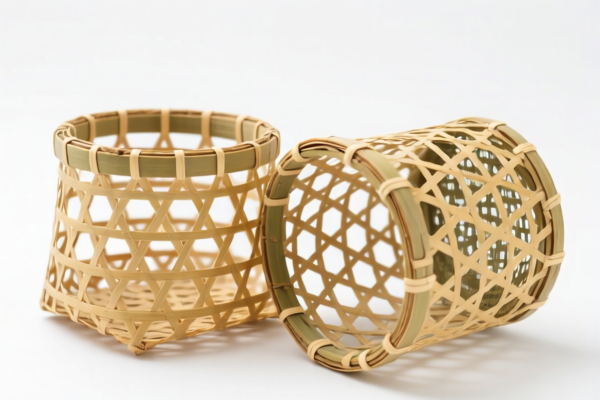
AI Analysis
🎣 Bamboo Creels for Freshwater Fishing: The Ultimate HS Code & Tax Guide (2026 Update)
🌐 HS Code Reference & Customs Clearance Guide | 2026 Latest Tariff Analysis | Professional-Level Clearance Strategy
📌 1. Product Definition & Classification: Do You Really Understand "Fishing Creels"?
Bamboo Creels are traditional, hand-woven baskets used specifically for holding caught fish during freshwater fishing. In international trade, these items fall into two distinct categories depending on their material and primary function.
The Critical Distinction: * Fishing Nets (Headings 9507) If the item is a "landing net" or "butterfly net" (made of mesh fabric/metal wire), it belongs to Chapter 95. * Basketry Articles (Heading 4602) If the item is a rigid, woven container made of bamboo, rattan, or other plaiting materials, it belongs to Chapter 46.
⚠️ Key Differentiator:
- Is it a mesh net used to scoop fish? → HS 9507
- Is it a rigid bamboo basket used to hold/store fish? → HS 4602
- For "Bamboo Creels", the structure is rigid and woven, so it is classified under Basketry.
📦 2. HS Code Classification Details (2026 Latest Tariff Authority Comparison)
Based on the provided data, here are the relevant HS Codes for Bamboo Creels and related fishing tackle:
| HS Code | Product Description | Applicability | Key Feature |
|---|---|---|---|
4602.11.05.00 |
Of vegetable materials: Of bamboo: Fishing baskets or creels | ✅ Primary Match | Specifically for Bamboo creels/baskets |
4602.12.05.00 |
Of vegetable materials: Of rattan: Fishing baskets or creels | ✅ Alternative | For Rattan creels (if material differs) |
9507.90.60.00 |
Fishing rods, hooks... Other: Fish landing nets, butterfly nets... | ❌ Incorrect for Creels | Applies to Nets/Mesh, not woven baskets |
9507.90.80.00 |
Fishing rods, hooks... Other: Other, including parts... | ❌ Incorrect for Creels | Catch-all for Other fishing gear, not bamboo baskets |
🔍 Important Reminder:
- Bamboo Creels must be declared under 4602.11.05.00 if they are made of bamboo.
- Do NOT confuse them with "Fishing Nets" (9507.90.60.00). If you declare a bamboo basket as a "net," customs may reclassify it, leading to delays and penalties.
- If the creel is made of Rattan instead of bamboo, use 4602.12.05.00.
💰 3. 2026 Latest Tariff Rate Breakdown (Including Surtaxes)
✅ Applicable Country: United States (US)
✅ Origin: China (CN)
✅ Effective Date: Current rates apply (Check for any 2025/2026 updates)
🎯 1. 4602.11.05.00 —— Bamboo Fishing Baskets or Creels
| Item | Details |
|---|---|
| Base Tariff | 5.0% |
| Additional Surtax | 25.0% (Section 301 / Trade War Surtax) |
| Total Tariff | 30.0% |
| Tax Calculation | CIF Value × 30% |
| De Minimis Exemption | ❌ Not Eligible (Value likely exceeds $800 threshold; even if under, bamboo articles often face stricter scrutiny) |
| Legal Basis | Base Rate: 5% + Section 301 Surtax: 25% |
📌 Explanation:
- The 5% base tariff applies to basketry articles of bamboo.
- The 25% surtax is applied due to Chinese origin (Section 301 tariffs).
- Total Cost Impact: 30% of the CIF value. This is a significant cost that must be factored into your pricing strategy.
🎯 2. 4602.12.05.00 —— Rattan Fishing Baskets or Creels
| Item | Details |
|---|---|
| Base Tariff | 5.0% |
| Additional Surtax | 25.0% (Section 301 / Trade War Surtax) |
| Total Tariff | 30.0% |
| Tax Calculation | CIF Value × 30% |
| De Minimis Exemption | ❌ Not Eligible |
| Legal Basis | Base Rate: 5% + Section 301 Surtax: 25% |
📌 Note:
- Same tariff structure as bamboo creels.
- Material difference (Rattan vs. Bamboo) does not change the tax rate, but does change the HS Code.
🚫 Incorrect Classification Example: 9507.90.60.00 (Fish Landing Nets)
| Item | Details |
|---|---|
| Base Tariff | 5.0% |
| Additional Surtax | 0.0% (Standard) + Potential 50% for Steel/Aluminum/Copper Products? |
| Total Tariff | 55.0% (if metal components are present) |
| Tax Detail | "Basic: 5%, Surtax: 0%; Steel/Aluminum/Copper Surtax: 50%" |
⚠️ Warning:
- If you mistakenly declare a bamboo creel as a "net" (9507), you might face a 55% tax if any metal parts (e.g., hinges, wire frames) are included.
- Even without metal, misclassification risks seizure, fines, or retroactive tariff applications.
🛠️ 4. Customs Clearance Practical Advice (Avoid Pitfalls)
✅ 1. Required Documentation Checklist
| Document | Required? | Purpose |
|---|---|---|
| ✅ Product Photos | ✔️ | Must clearly show woven bamboo structure (not mesh/net) |
| ✅ Material Declaration | ✔️ | Specify "100% Bamboo" or "Bamboo with Rattan Handles" |
| ✅ Commercial Invoice | ✔️ | Describe as "Bamboo Fishing Creel" or "Bamboo Fish Basket" |
| ✅ Packing List | ✔️ | Weight and dimensions |
| ✅ HS Code Confirmation | ✔️ | Pre-apply for Advance Ruling if unsure |
✅ 2. Declaration Tips (Key Mnemonic)
🔥 “Bamboo is Basket, Not Net; 4602 is the Way, 9507 is Wrong!”
| Situation | Correct Declaration | Incorrect Practice |
|---|---|---|
| Woven bamboo basket for fish | 4602.11.05.00 | 9507.90.60.00 (Net) |
| Rattan basket for fish | 4602.12.05.00 | 9507.90.80.00 (Other) |
| Net with bamboo handle | 9507.90.60.00 (Net takes precedence) | 4602.11.05.00 |
| Plastic imitation bamboo creel | 3926.90.97 (Plastic articles) | 4602.11.05.00 |
📌 Crucial Point:
- The primary material determines the chapter.
- If the creel is purely bamboo, it’s 4602.
- If it’s a net (mesh) with a bamboo handle, it’s 9507.
- Do not mix materials in one HS Code. If a basket has metal hinges, check if it changes the classification (it might push it to 73 articles, but typically small accessories don’t change the basket classification).
✅ 3. Special Cases & Handling
| Situation | Recommendation |
|---|---|
| Mixed Material Creel | If bamboo + rattan, use the primary material (usually bamboo) → 4602.11.05.00 |
| With Liner/Bag | If it includes a removable plastic liner, declare as Bamboo Creel. The liner is accessory. |
| Decorative Use | If sold as home decor (not for fishing), it may still be 4602.11.05.00 if it’s a "basket," but description should match intended use. |
| Large Bulk Imports | Consider Advance Ruling from CBP to confirm HS Code and avoid post-entry adjustments. |
🌍 5. Global Market Comparison (2026)
| Country/Region | Recommended HS Code | Tariff Rate | Certification | Notes |
|---|---|---|---|---|
| 🇺🇸 United States | 4602.11.05.00 |
30% | None | High surtax due to Section 301 |
| 🇨🇳 China | 4602.11.05.00 |
5% | None | Low tax, but import duty applies if re-imported |
| 🇪🇺 European Union | 4602.11.00.90 |
0-6% | None | Depends on specific EU subheading |
| 🇬🇧 United Kingdom | 4602.11.00.90 |
0-6% | None | Post-Brexit tariffs may vary |
| 🇯🇵 Japan | 4602.11.00.90 |
0% | None | Favorable tariff for bamboo basketry |
📌 Conclusion:
- USA: 30% Total Tax – High cost, plan accordingly.
- EU/UK/JP: 0-6% – Much more competitive for bamboo products.
- Strategy: If targeting the US market, consider cost absorption or price increase. If targeting EU/JP, leverage the lower tariff advantage.
📌 6. Common Mistakes & Pitfalls (Lessons Learned)
❌ Mistake 1: Declaring Bamboo Creel as "Fishing Net" (9507.90.60.00)
👉 Consequence: May face 55% tax if metal parts are detected, or misclassification penalties.
✅ Fix: Use 4602.11.05.00 for woven baskets.
❌ Mistake 2: Declaring as "Other Basket" (4602.19.90.00)
👉 Consequence: Misses the specific "Fishing Baskets" subheading, may trigger extra scrutiny.
✅ Fix: Use the specific subheading 4602.11.05.00 for clarity.
❌ Mistake 3: Ignoring Material Composition
👉 Consequence: If the creel is plastic-coated bamboo, customs may classify it as Plastic Article (Chapter 39).
✅ Fix: Declare as "Woven Bamboo with Plastic Coating" and confirm if Chapter 46 still applies (usually yes, if weaving is primary).
❌ Mistake 4: No Product Photos
👉 Consequence: Customs cannot verify the material → Delay/Inspection.
✅ Fix: Always provide clear photos of the woven structure.
🎯 7. Conclusion: Accurate Classification Saves Money!
🎯 Remember:
🔹 "Bamboo Basket = 4602, Net = 9507"
🔹 "USA Tax = 30%, EU Tax = 0-6%"
🔹 "Declare Material Clearly, Avoid 55% Trap"
📌 Pro Tip:
If you are importing large quantities to the US, consider:
1. Advance Ruling: Get a binding decision from CBP.
2. Supply Chain Diversification: Consider sourcing from Vietnam or Thailand (if rules of origin allow) to potentially avoid Section 301 surtaxes.
3. Price Adjustment: Factor in the 30% total tax into your product pricing.
📣 Act Now:
📞 Contact a Customs Broker + Provide Product Photos + Confirm HS Code
🚀 Clear Customs Smoothly, Maximize Profit, Avoid Surprises!
✨ Professional Clearance Starts with Precise Classification!
💼 Every Percent of Tax Counts!
Customer Reviews
About HS Code Classification
The Harmonized System (HS) is an internationally standardized nomenclature developed by the World Customs Organization (WCO) to classify traded products. Over 200 countries use the HS system as the basis for customs tariffs, trade statistics, and import/export regulations.
Each HS code follows a hierarchical structure:
- Chapter (2 digits) — Broad category of goods (e.g., Chapter 84: Machinery and Mechanical Appliances)
- Heading (4 digits) — More specific grouping within the chapter
- Subheading (6 digits) — Internationally standardized breakdown, used by all WCO member countries
- National subdivisions (8-10 digits) — Country-specific extensions for further classification, such as US HTSUS 10-digit codes
Correct HS code classification is essential for smooth customs clearance, accurate duty payment, and compliance with trade regulations. Misclassification can lead to customs delays, overpayment of duties, or penalties.
When importing from CN to US, the applicable tariff rates may include:
- Most-Favored-Nation (MFN) rate — The standard duty rate applied to WTO members
- General rate — Applied to countries without trade agreements
- Trade remedy duties — Additional tariffs such as Section 301 (anti-dumping), Section 232 (national security), or countervailing duties
The information provided on this page is for reference purposes only. For official classification, please consult with your local customs authority or a licensed customs broker.