Bamboo Customizable Paper Cups
CN → US| HS Code | Tariff Rate | Origin | Destination | Doc |
|---|---|---|---|---|
| 4823610020 | 35.0% | CN | US | Official Doc |
| 4823610040 | 35.0% | CN | US | Official Doc |
| 4818900080 | 17.5% | CN | US | Official Doc |
| 4818900020 | 17.5% | CN | US | Official Doc |
Product Images
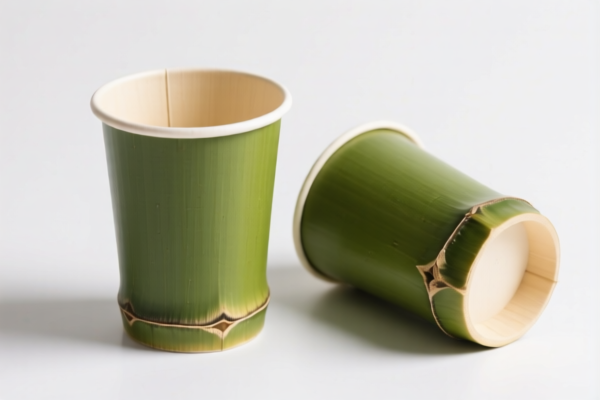
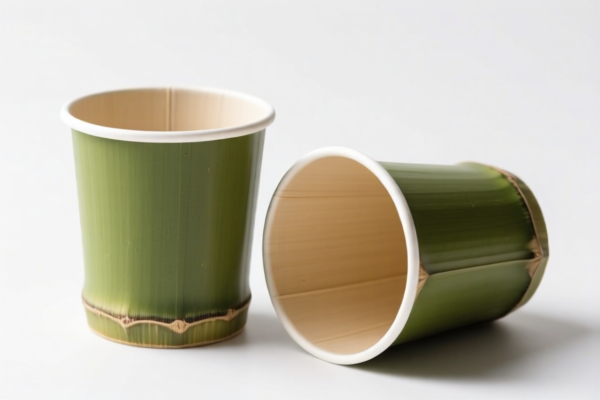
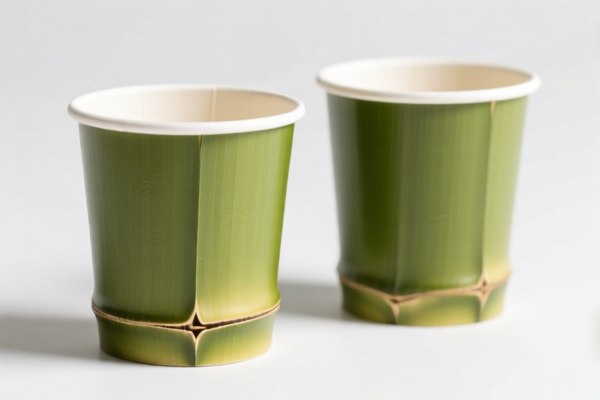
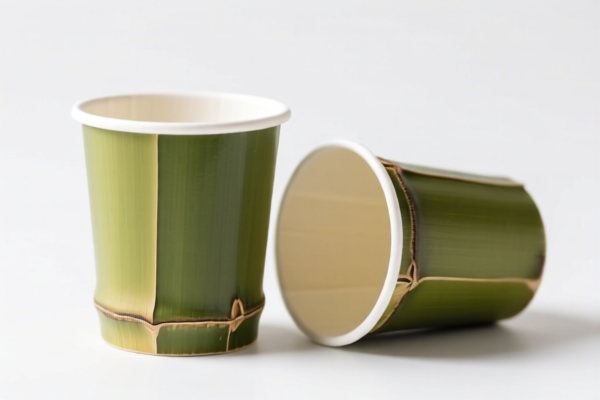
AI Analysis
🥤 Bamboo Customizable Paper Cups
🌐 HS Code Reference & Customs Clearance Guide | 2026 Latest Tariff Analysis | Professional Clearance Strategy
📌 I. Product Definition & Classification: What exactly are "Bamboo Paper Cups"?
"Bamboo Paper Cups" (or more accurately, Cups of Bamboo Paperboard) refer to disposable cups made primarily from paperboard, where the fiber source is bamboo or the material is explicitly classified under the "Of bamboo" subheading in customs tariffs. Unlike standard wood-pulp cups, these are often marketed as eco-friendly or sustainable alternatives.
In international trade, the classification hinges strictly on the material composition declared by the manufacturer. Even if the cup looks like paper, if the tariff schedule distinguishes between "Of bamboo" and "Other," the origin of the fiber matters immensely for duty rates.
⚠️ Key Distinction:
- Standard Paper Cups: Usually made from wood pulp → Classified as "Other" → Often subject to higher retaliatory tariffs (e.g., 25% in the US).
- Bamboo Paper Cups: Made from bamboo pulp/paperboard → Classified as "Of bamboo" → May enjoy 0% additional tariffs in specific contexts (like the US, if classified under specific 4823.61.00.20 subheadings with 0% additional tax).
📦 II. HS Code Classification Details (2026 Latest Tariff Alignment)
Based on the provided data, here are the precise HS Codes for "Bamboo Paper Cups" and related paper articles.
| HS Code | Product Description | Material/Type | Key Feature |
|---|---|---|---|
4823.61.00.20 |
Trays, dishes, plates, cups, etc., Of bamboo: Cups and round nested food containers | Bamboo-based paperboard | 0% Additional Tax (in US context provided) |
4823.61.00.40 |
Trays, dishes, plates, cups, etc., Of bamboo: Other | Bamboo-based paperboard | 25% Additional Tax (in US context provided) |
🔍 Critical Clarification:
- For Cups specifically, the correct subheading is4823.61.00.20("Cups and round nested food containers").
- The "Other" category (4823.61.00.40) applies to bamboo paper items that are not cups/plates/containers (e.g., bamboo paper tissues, napkins, or other cut shapes).
- Do not confuse with4818.90: Codes like4818.90.00.20(Face masks) and4818.90.00.80(Toilet paper/handkerchiefs) are NOT cups. They are hygiene products. Using these codes for cups will result in severe customs penalties and misclassification.
💰 III. 2026 Latest Tariff Rate Breakdown (Detailed Tax Clauses)
✅ Applicable Market: United States (US)
✅ Origin: China (CN)
✅ Product: Bamboo Paper Cups (4823.61.00.20)
🎯 1. 4823.61.00.20 —— Bamboo Paper Cups (Cups & Round Nested Containers)
| Item | Detail |
|---|---|
| Product Description | Trays, dishes, plates, cups... Of bamboo: Cups and round nested food containers |
| Base Tariff (MFN) | 0.0% (Basic import duty) |
| Additional Tariff (Section 301 / Retaliatory) | 0.0% (Specific exemption or favorable classification for bamboo paper cups under this subheading) |
| Total Tax Rate | 0.0% |
| Tax Calculation | CIF Value × 0.0% = $0 |
| De Minimis Eligibility | ✅ Yes (Likely eligible for $800 de minimis if value < $800, subject to CBP discretion) |
| Legal Basis Path | HTSUS:4823.61.00.20 → Tax Rate: 0.0% |
📌 Explanation:
- This is a zero-duty item for bamboo paper cups.
- Note: If the cup is not classified as "Of bamboo" but as "Other paper," it would fall under4823.69or similar, potentially incurring the 25% tax seen in4823.61.00.40(if misclassified as "Other" bamboo) or even higher if classified as non-bamboo.
- Crucial: Ensure your product description and material specs explicitly state "Bamboo Pulp" or "Bamboo Paperboard" to qualify for4823.61.00.20.
🎯 2. 4823.61.00.40 —— Other Bamboo Paper Articles (Not Cups)
| Item | Detail |
|---|---|
| Product Description | Trays, dishes, plates, cups... Of bamboo: Other |
| Base Tariff | 0.0% |
| Additional Tariff | 25.0% |
| Total Tax Rate | 25.0% |
| Tax Calculation | CIF Value × 25.0% |
| De Minimis Eligibility | ❌ No (Subject to 301 exclusions restrictions) |
📌 Warning:
- This code applies to bamboo paper items that are NOT cups/containers (e.g., bamboo paper napkins, tissues, or shaped pulp items).
- If you declare a cup as "Other" bamboo paper item, you will pay 25%.
- If you declare a non-cup item as a "Cup," you risk 0% vs 25% misclassification audits.
🚫 Irrelevant Codes (Do NOT Use for Cups)
| HS Code | Product | Why Not? |
|---|---|---|
4818.90.00.80 |
Toilet paper, handkerchiefs, tissues | Hygiene articles, not drinkware. Tax: 7.5% |
4818.90.00.20 |
Face masks | Medical/Protective gear, not drinkware. Tax: 7.5% |
🛠️ IV. Customs Clearance Practical Advice (Pro Tips)
✅ 1. Documentation Checklist (Must-Haves)
| Document | Required? | Explanation |
|---|---|---|
| ✅ Commercial Invoice | ✔️ | Must explicitly state: "Cups made of bamboo paperboard" |
| ✅ Product Specification Sheet | ✔️ | Detail fiber content (e.g., "100% bamboo pulp" or "Bamboo wood pulp"). Avoid vague terms like "eco-friendly paper" without specifying bamboo. |
| ✅ Material Composition Certificate | ✔️ | Third-party lab test or mill certificate confirming bamboo content is critical for 4823.61 classification. |
| ✅ Photos of Product | ✔️ | Show the cup, packaging, and any markings indicating "Bamboo." |
| ✅ Customs Declaration Form | ✔️ | HS Code: 4823.61.00.20 |
✅ 2. Declaration Strategy (Key Mantra)
🔥 "Declare Bamboo, Specify Cup, Avoid 'Other', Zero Duty Up!"
| Scenario | Correct Declaration | Incorrect Declaration | Consequence |
|---|---|---|---|
| Bamboo Cup | 4823.61.00.20 |
4823.69.00.00 (Other paper) |
Risk of 25% tax + penalty |
| Bamboo Cup | 4823.61.00.20 |
4818.90.00.80 (Tissue) |
Misclassification → Seizure/Fine |
| Non-Bamboo Cup | 4823.69.00.00 |
4823.61.00.20 |
Fraud/Risk of 25% tax if "bamboo" was falsely claimed |
✅ 3. Special Considerations
| Situation | Recommendation |
|---|---|
| "Paper" vs. "Bamboo" | In US HTSUS, "Bamboo" is often treated distinctly from "Wood Pulp." If the cup contains wood pulp mixed with bamboo, check the primary material. If bamboo is dominant, argue for 4823.61. |
| Lined Cups | If the cup has a plastic or wax lining, it may still be classified under 4823 if the paperboard is the essential character. However, ensure the lining doesn't change the essential character to a plastic article (Chapter 39). |
| Custom Branding | Adding a logo or custom shape does not change the HS Code. It remains a "cup" under 4823.61.00.20. |
🌍 V. Global Market Comparison (2026)
| Country/Region | Recommended HS Code | Tariff (China Origin) | Notes |
|---|---|---|---|
| 🇺🇸 USA | 4823.61.00.20 |
0.0% | Best Market! Bamboo cups enjoy 0% additional tax. |
| 🇺🇸 USA | 4823.61.00.40 |
25.0% | Only if misclassified as "Other" bamboo items. |
| 🇨🇳 China | 4823.61.00.00 |
Varies (Import Duty) | For re-export or domestic sale. |
| 🇪🇺 EU | 4823.61.00.00 |
~6.5% | Standard EU import duty for paper tableware. No Section 301 equivalent. |
| 🇬🇧 UK | 4823.61.00.00 |
~6.5% | Post-Brexit tariff schedule similar to EU for paper goods. |
📌 Conclusion:
- The US market offers a significant advantage for Bamboo paper cups (4823.61.00.20) with 0% additional tariffs, compared to standard paper cups or other bamboo items which may face 25% or more.
- Accuracy is Key: You must prove the "Bamboo" content to qualify for4823.61.00.20. If customs suspects it's wood pulp, they may reclassify it, leading to penalties.
📌 VI. Common Mistakes & Pitfalls (Lessons Learned)
❌ Mistake 1: Using "Paper Cup" generic description without specifying "Bamboo"
👉 Result: Customs may assign 4823.69 (Other paper) → Higher risk of classification disputes or different duty rates.
❌ Mistake 2: Mixing "Bamboo Cups" with "Bamboo Tissues" in one shipment without clear separation
👉 Result: 4823.61.00.40 (25% tax) might apply to the entire lot if documentation is unclear.
❌ Mistake 3: Using HS Code 4818.90.00.80 for cups
👉 Result: Severe Misclassification. 4818 is for hygiene/tissues. Cups are 4823. This leads to customs holds, fines, and potential anti-dumping investigations.
✅ Correct Approach:
"Custom Bamboo Paper Cups, Disposable, Lined, HS Code: 4823.61.00.20, Origin: China, 0% Additional Duty"
🎯 VII. Conclusion: Professional Declaration, Cost Savings!
🎯 Remember the Mantra:
🔹 "Bamboo Cups = 4823.61.00.20 → 0% Tax!"
🔹 "Other Bamboo Items = 4823.61.00.40 → 25% Tax!"
🔹 "Not a Cup? Don't use 4818!"
📌 Pro Tip:
If your supply chain is unsure about the bamboo content, request a Letter of Guarantee from the manufacturer stating "100% Bamboo Pulp" and attach it to your customs declaration. This protects you from retroactive duty assessments.
📣 Immediate Action:
📞 Verify material composition with your supplier.
📄 Use HS Code4823.61.00.20for all bamboo cup shipments to the US.
🚀 Clear your goods efficiently and maximize your profit margin!
✨ Professional clearance starts with precise classification!
💼 Your every dollar is worth calculating precisely!
Customer Reviews
About HS Code Classification
The Harmonized System (HS) is an internationally standardized nomenclature developed by the World Customs Organization (WCO) to classify traded products. Over 200 countries use the HS system as the basis for customs tariffs, trade statistics, and import/export regulations.
Each HS code follows a hierarchical structure:
- Chapter (2 digits) — Broad category of goods (e.g., Chapter 84: Machinery and Mechanical Appliances)
- Heading (4 digits) — More specific grouping within the chapter
- Subheading (6 digits) — Internationally standardized breakdown, used by all WCO member countries
- National subdivisions (8-10 digits) — Country-specific extensions for further classification, such as US HTSUS 10-digit codes
Correct HS code classification is essential for smooth customs clearance, accurate duty payment, and compliance with trade regulations. Misclassification can lead to customs delays, overpayment of duties, or penalties.
When importing from CN to US, the applicable tariff rates may include:
- Most-Favored-Nation (MFN) rate — The standard duty rate applied to WTO members
- General rate — Applied to countries without trade agreements
- Trade remedy duties — Additional tariffs such as Section 301 (anti-dumping), Section 232 (national security), or countervailing duties
The information provided on this page is for reference purposes only. For official classification, please consult with your local customs authority or a licensed customs broker.