Bamboo Disposable Biodegradable Plates
CN → US| HS Code | Tariff Rate | Origin | Destination | Doc |
|---|---|---|---|---|
| 4823610020 | 35.0% | CN | US | Official Doc |
| 4602110900 | 45.0% | CN | US | Official Doc |
| 4602110700 | 35.0% | CN | US | Official Doc |
| 4823610040 | 35.0% | CN | US | Official Doc |
| 4419110000 | 13.2% | CN | US | Official Doc |
| 4419199000 | 13.2% | CN | US | Official Doc |
Product Images
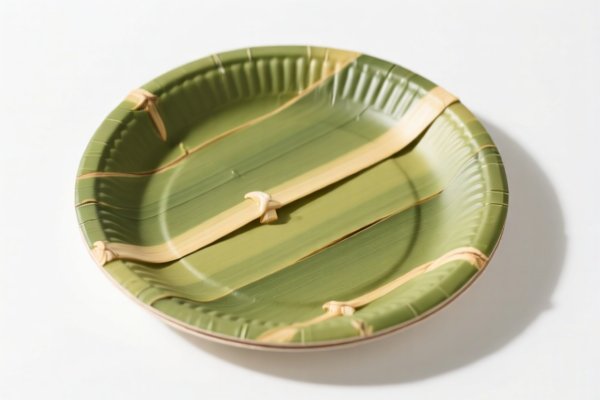
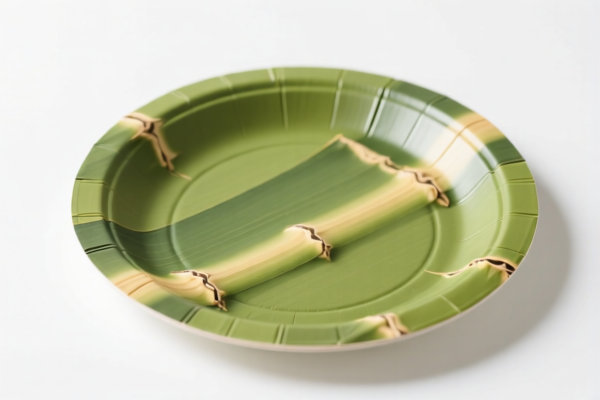
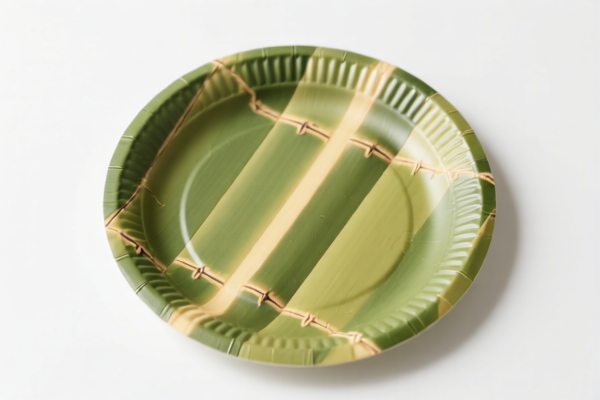
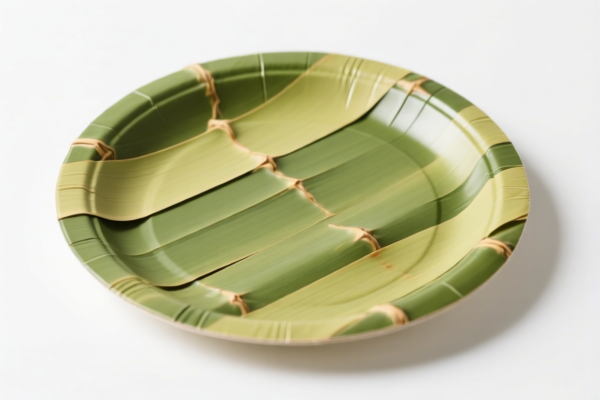
AI Analysis
🎋 Bamboo Disposable Biodegradable Plates (Eco-Friendly Tableware)
🌐 HS Code Reference & Customs Clearance Guide | 2026 Latest Tariff Analysis | Professional Clearance Strategy
📌 1. Product Definition & Classification: Understanding the Material Nuances
Bamboo disposable plates represent a rapidly growing segment in sustainable packaging and eco-friendly tableware. In international trade, the classification hinges on the manufacturing process: * Processed Bamboo Wood: Plates that are cut, shaped, and finished from solid bamboo wood are classified under Chapter 44 (Wood and articles of wood). * Bamboo Weavings: Plates made from woven bamboo strips are classified under Chapter 46 (Manufactures of straw, of esparto, of other plaiting materials). * Bamboo-Pulp/Paper-like: Plates made from pressed bamboo fiber/pulp, mimicking paper products, are classified under Chapter 48 (Paper and paperboard).
⚠️ Key Distinction Point:
- If the plate is solid bamboo wood (cut/milled) → Chapter 44
- If the plate is woven (interlaced strips) → Chapter 46
- If the plate is pulp-pressed (paper-like texture) → Chapter 48
📦 2. HS Code Classification Details (2026 Latest Tariff Authority Cross-Reference)
| HS Code | Product Description | Application Scenario | Tax Rate |
|---|---|---|---|
4823.61.00.20 |
Bamboo disposable plates, biodegradable, disc shape | Falls under "discs, plates, bowls, cups, etc. of paper or paperboard"; bamboo fiber pulp | 35.0% |
4602.11.09.00 |
Bamboo disposable plates, biodegradable, plate shape | Classified under "woven articles"; bamboo weaving | 45.0% |
4602.11.07.00 |
Bamboo disposable plates, biodegradable, plate shape | Classified under "basketry articles"; bamboo weaving (specific sub-heading) | 35.0% |
4823.61.00.40 |
Bamboo disposable plates, biodegradable, plate shape | Falls under "other articles of paper or paperboard"; bamboo fiber pulp | 35.0% |
4419.11.00.00 |
Bamboo stackable plates, solid bamboo | Falls under "tableware and kitchenware of bamboo"; solid wood | 13.2% |
4419.19.90.00 |
Bamboo stackable plates, solid bamboo | Falls under "tableware and kitchenware of bamboo"; other solid bamboo | 13.2% |
🔍 Key Reminder:
- Solid Bamboo Plates (4419.11.00.00/4419.19.90.00) have the lowest duty rate (13.2%).
- Bamboo Pulp Plates (4823.61.00.20/4823.61.00.40) and Specific Bamboo Weaving (4602.11.07.00) are taxed at 35.0%.
- General Bamboo Weaving (4602.11.09.00) carries the highest duty rate (45.0%).
💰 3. 2026 Latest Tariff Rate Details (Including Surcharge Taxes & Policy Additions)
✅ Applicable Country: United States (US)
✅ Origin: China (CN)
✅ Effective Time: 2025/2026 (as per current trade restrictions)
🎯 1. 4419.11.00.00 & 4419.19.90.00 —— Bamboo Tableware (Solid Wood)
| Item | Content |
|---|---|
| Base Tariff | 3.2% (ad valorem) |
| USITC Surcharge (Section 301) | +10.0% |
| IEEPA Surcharge | 0.0% (Not applicable for this specific HS code under current data) |
| Total Tax Rate | 13.2% |
| Tax Calculation | CIF Value × 13.2% |
| De Minimis Exemption | ❌ Not Applicable (Section 321 relief does not apply to Section 301 goods) |
| Legal Basis | USITC:4419.11.00.00 / USITC:4419.19.90.00 → Section 301 Footnote |
📌 Explanation:
- These codes classify solid bamboo plates as "tableware of bamboo."
- The base tariff is low (3.2%), but the Section 301 surcharge adds 10%.
- Crucially, there is NO additional IEEPA 10% surcharge for these codes in the provided data, making them the most cost-effective option compared to other bamboo products.
🎯 2. 4823.61.00.20 & 4823.61.00.40 —— Bamboo Pulp Plates (Paper-like)
| Item | Content |
|---|---|
| Base Tariff | 0.0% |
| USITC Surcharge (Section 301) | +25.0% |
| IEEPA Surcharge | +10.0% |
| Total Tax Rate | 35.0% |
| Tax Calculation | CIF Value × 35.0% |
| De Minimis Exemption | ❌ Not Applicable (deny_de_minimis applies to Section 301 & IEEPA goods) |
| Legal Basis | IEEPA:9903.01.25 → USITC:4823.61.00.20 → FOOTNOTE |
📌 Note:
- Even though the base tariff is 0%, the high surcharges (25% + 10%) bring the total to 35%.
- This applies to plates made from bamboo pulp/fiber that mimic paper products.
🎯 3. 4602.11.07.00 —— Bamboo Weaving Plates (Specific Basketry)
| Item | Content |
|---|---|
| Base Tariff | 0.0% |
| USITC Surcharge (Section 301) | +25.0% |
| IEEPA Surcharge | +10.0% |
| Total Tax Rate | 35.0% |
| Tax Calculation | CIF Value × 35.0% |
| De Minimis Exemption | ❌ Not Applicable |
| Legal Basis | IEEPA:9903.01.25 → USITC:4602.11.07.00 → FOOTNOTE |
📌 Note:
- Bamboo plates made by weaving specific bamboo strips fall under basketry.
- Same high surcharge structure as paper-like plates.
🎯 4. 4602.11.09.00 —— Bamboo Weaving Plates (Other)
| Item | Content |
|---|---|
| Base Tariff | 10.0% |
| USITC Surcharge (Section 301) | +25.0% |
| IEEPA Surcharge | +10.0% |
| Total Tax Rate | 45.0% |
| Tax Calculation | CIF Value × 45.0% |
| De Minimis Exemption | ❌ Not Applicable |
| Legal Basis | IEEPA:9903.01.25 → USITC:4602.11.09.00 → FOOTNOTE |
📌 Warning:
- This is the highest tax rate (45%).
- Applies to bamboo weaving articles that do not fit into the specific "basketry" sub-headings (4602.11.07.00).
- Avoid this classification if possible unless the product is strictly non-basketry woven bamboo.
🛠️ 4. Customs Clearance Practical Advice (Battle-Tested Pitfall Guide)
✅ 1. Essential Documentation Checklist (Mandatory)
| Document | Required | Description |
|---|---|---|
| ✅ Product Specification Sheet | ✔️ | Details material (solid bamboo vs. pulp vs. woven), shape, dimensions |
| ✅ Material Composition Report | ✔️ | Must clearly state "100% Bamboo Fiber" or "Solid Bamboo Wood" |
| ✅ Product Photos | ✔️ | Clear images showing texture (woven pattern vs. smooth solid wood vs. pulp surface) |
| ✅ Biodegradability Certificate | ✔️ | Proof of compostable/biodegradable claims (often required for eco-products) |
| ✅ Commercial Invoice | ✔️ | Accurate description matching HS Code (e.g., "Bamboo Plate, Solid Wood" vs. "Bamboo Pulp Plate") |
| ✅ Packing List | ✔️ | Include net/gross weight, carton dimensions |
✅ 2. Declaration Tips (Critical Keywords)
🔥 “Solid Wood for Low Tax, Pulp/Weave for High Tax!”
| Scenario | Correct Declaration | Incorrect Declaration |
|---|---|---|
| Solid Bamboo Plate | 4419.11.00.00 - "Bamboo Tableware, Solid Wood" |
"Bamboo Plate" → Risk of misclassification |
| Bamboo Pulp Plate | 4823.61.00.20 - "Biodegradable Plate, Bamboo Fiber Pulp" |
"Woven Bamboo Plate" → Wrong Chapter |
| Woven Bamboo Plate | 4602.11.07.00 or 4602.11.09.00 - "Bamboo Woven Plate" |
"Solid Bamboo Plate" → Risk of 45% vs 13.2% |
✅ 3. Special Handling
| Scenario | Handling Advice |
|---|---|
| OEM Custom Plates | Provide design drawings to prove material type (solid vs. woven) |
| Mixed Shipments | Declare each HS Code separately; do not mix 4419 and 4823 in one line |
| Biodegradable Claims | Ensure certificates are up-to-date; false claims can lead to penalties |
🌍 5. Global Market Comparison (2026 Latest)
| Country/Region | Recommended HS Code | Tariff Rate | Certification | Notes |
|---|---|---|---|---|
| 🇺🇸 USA | 4419.11.00.00 (Solid) |
13.2% | FDA Compliant | Lowest duty; avoid 4602.11.09.00 (45%) |
| 🇪🇺 EU | 4419.11.00.00 |
Varies (Check FTA) | EN13432 (Compostable) | No Section 301/IEEPA surcharges |
| 🇨🇳 China | 4419.11.00.00 |
~5-10% | GB Standards | Domestic market prefers solid bamboo |
📌 Conclusion:
- USA is the most challenging market due to Section 301 and IEEPA surcharges.
- Solid Bamboo (4419) is the optimal classification for US imports to minimize duty (13.2% vs 35-45%).
- Avoid weaving classifications (4602) unless necessary, as they carry the highest penalties.
📌 6. Common Mistakes & Pitfalls (Lessons Learned)
❌ Mistake 1: Declaring Bamboo Pulp Plates as Solid Bamboo
👉 Consequence: Customs audit reveals pulp texture → Reclassification to 4823 → Back taxes + penalties (21.8% difference!)
❌ Mistake 2: Declaring Woven Bamboo as Solid Bamboo
👉 Consequence: Visual inspection shows weave pattern → Reclassification to 4602 → Back taxes + penalties (31.8% difference!)
❌ Mistake 3: Ignoring Biodegradability Certificates
👉 Consequence: EU/US retailers reject shipment due to lack of compostability proof → Return or Destruction
✅ Correct Approach:
“Accurate Material Declaration is Key. Solid Wood for Low Duty, Pulp/Weave for High Duty.”
🎯 7. Conclusion: Smart Classification, Cost Savings!
🎯 Remember:
🔹 “Solid Bamboo: 13.2% | Pulp/Weave: 35-45%”
🔹 “Check the Material: Wood vs. Fiber vs. Weave”
🔹 “Avoid ‘Other Woven’ (45%) – It’s a Cost Trap!”
📌 Pro Tip:
If your product can be classified as Solid Bamboo (
4419), ensure the manufacturing process reflects this (cutting/sanding, not weaving or pulping).
Apply for an Advance Ruling if the material is ambiguous (e.g., compressed bamboo fiber that feels solid).
📣 Immediate Action:
📞 Verify Material with Supplier
📦 Provide Product Photos & Specs to Customs Broker
🚀 Optimize for4419.11.00.00to Save Up to 31.8% in Duties!
✨ Professional Clearance Starts with Accurate Classification!
💼 Every Percent Saved is Pure Profit!
Customer Reviews
About HS Code Classification
The Harmonized System (HS) is an internationally standardized nomenclature developed by the World Customs Organization (WCO) to classify traded products. Over 200 countries use the HS system as the basis for customs tariffs, trade statistics, and import/export regulations.
Each HS code follows a hierarchical structure:
- Chapter (2 digits) — Broad category of goods (e.g., Chapter 84: Machinery and Mechanical Appliances)
- Heading (4 digits) — More specific grouping within the chapter
- Subheading (6 digits) — Internationally standardized breakdown, used by all WCO member countries
- National subdivisions (8-10 digits) — Country-specific extensions for further classification, such as US HTSUS 10-digit codes
Correct HS code classification is essential for smooth customs clearance, accurate duty payment, and compliance with trade regulations. Misclassification can lead to customs delays, overpayment of duties, or penalties.
When importing from CN to US, the applicable tariff rates may include:
- Most-Favored-Nation (MFN) rate — The standard duty rate applied to WTO members
- General rate — Applied to countries without trade agreements
- Trade remedy duties — Additional tariffs such as Section 301 (anti-dumping), Section 232 (national security), or countervailing duties
The information provided on this page is for reference purposes only. For official classification, please consult with your local customs authority or a licensed customs broker.