Bamboo Disposable Plates
CN → US| HS Code | Tariff Rate | Origin | Destination | Doc |
|---|---|---|---|---|
| 4823610020 | 35.0% | CN | US | Official Doc |
| 4602110900 | 45.0% | CN | US | Official Doc |
| 4602110700 | 35.0% | CN | US | Official Doc |
| 4419110000 | 13.2% | CN | US | Official Doc |
| 4419199000 | 13.2% | CN | US | Official Doc |
Product Images
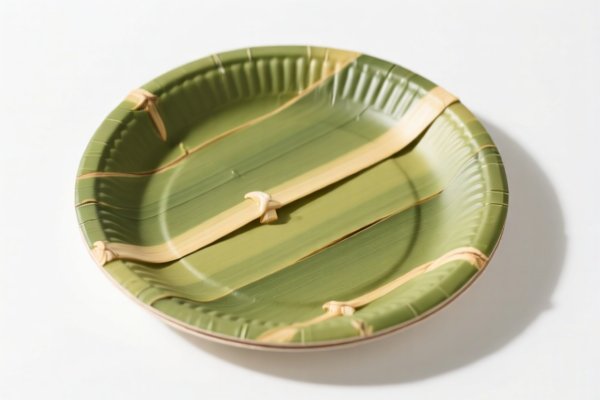
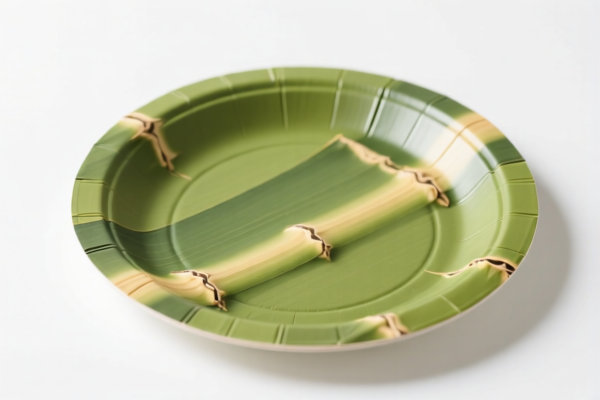
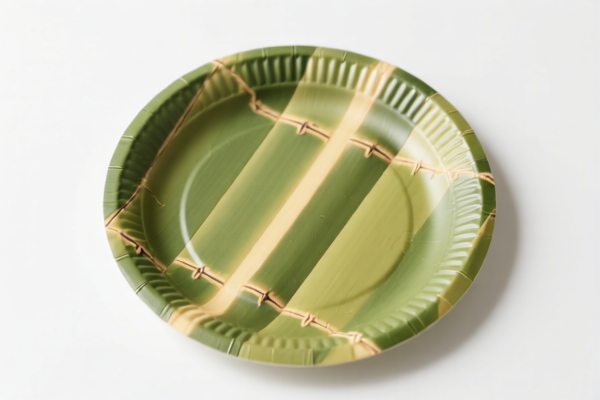
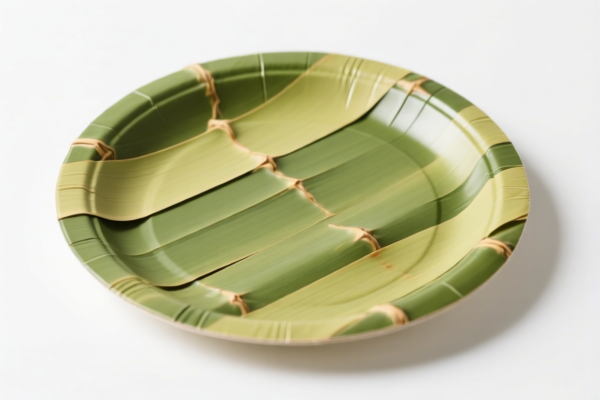
AI Analysis
🎋 Bamboo Disposable Plates (Single-Use Bamboo Tableware)
🌐 HS Code Reference & Customs Clearance Guide | 2026 Latest Tariff Analysis | Professional Clearance Strategy
📌 I. Product Definition & Classification: Do You Really Understand "Bamboo Plates"?
Bamboo disposable plates are sustainable, biodegradable tableware widely used in eco-friendly dining, catering, and outdoor events. In international trade, the classification depends heavily on the manufacturing process (carved vs. woven) and the specific use case (food container vs. general tableware).
There are two main categories for customs purposes:
1. Carved/Molded Bamboo Ware (Chapter 44): These are plates made from solid bamboo strips or molded bamboo fibers. They are treated as "wood products" or "cutlery/kitchenware." * Sub-category A: Specific "Bamboo Tableware" (Chopsticks, Spoons, Plates defined as cutlery). * Sub-category B: "Circular Nesting Food Containers" (Specific shape-based classification).
2. Woven Bamboo Articles (Chapter 46): These are plates made by weaving bamboo strips, similar to baskets. * Sub-category A: Baskets, bags, and similar woven vessels. * Sub-category B: Other woven articles not elsewhere specified.
⚠️ Key Distinction Point:
- If the product is carved, molded, or machined from bamboo blocks/strips →归类 to Chapter 44 (Wood Products).
- If the product is woven (interlaced bamboo strips) →归类 to Chapter 46 (Woven Products).
- Specific shapes (circular/nesting) may trigger specific sub-headings under Chapter 44.
📦 II. HS Code Classification Details (2026 Latest Tariff Authority Comparison)
| HS Code | Product Description | Applicable Scenario | Manufacturing Method |
|---|---|---|---|
4823.61.00.20 |
Bamboo disposable plates; fits the scope of cups and circular nesting food containers | Specific circular nesting designs, high-volume disposables | Carved/Molded |
4602.11.09.00 |
Bamboo plates; classified as other articles under Heading 46.02 (Bamboo weaving) | Generic woven bamboo plates, not baskets/bags | Woven |
4602.11.07.00 |
Bamboo plates; classified under basket/bag-related woven vessel scope | Woven plates treated as "baskets" or similar vessels | Woven |
4419.11.00.00 |
Bamboo tableware; fits the definition of "Bamboo Cutlery/Tableware" | Standard carved/molded bamboo plates, forks, spoons | Carved/Molded |
4419.19.90.00 |
Bamboo tableware and kitchen utensils; fits bamboo & tableware requirements | Mixed bamboo kitchenware, non-cutlery specific plates | Carved/Molded |
🔍 Important Reminder:
- Woven vs. Carved is Critical: If you declare a woven plate as carved (or vice versa), customs will reclassify it, leading to tax discrepancies and clearance delays. - "Disposable" is Not an HS Keyword: The term "disposable" does not change the HS code. It depends on the material processing (weaving vs. carving). - Circular Nesting: If the plate is specifically designed to nest circularly (like stacking cups), it may fall under4823.61.00.20, which has a different base tariff than general tableware.
💰 III. 2026 Latest Tariff Rate Breakdown (Including Add-on Taxes, Policy Surcharges)
✅ Applicable Country: United States (US)
✅ Country of Origin: China (CN)
✅ Effective Date: From November 10, 2025 (including subsequent imports)
🎯 1. 4823.61.00.20 —— Bamboo Disposable Plates (Circular Nesting/Food Container Category)
| Item | Content |
|---|---|
| Base Tariff | 0.0% (ad valorem) |
| USITC Additional Tax | +25% (Section 301) |
| IEEPA Additional Tax | +10% (Section 122, targeting China/HK) |
| Total Tax Rate | 35.0% |
| Tax Calculation | CIF Value × 35% |
| De Minimis Eligibility | ❌ Not Eligible (deny_de_minimis) |
| Legal Basis Path | IEEPA:9903.01.25 → IEEPA:9903.01.24 → USITC:4823.61.00.20 → FOOTNOTE:9903.88.01 |
📌 Explanation:
- Although the base tariff is 0%, the Section 301 (25%) and Section 122 (10%) surcharges apply, resulting in a 35% total tax. - This is a high-tariff item for US importers. Must be factored into pricing strategies.
🎯 2. 4602.11.09.00 —— Bamboo Plates (Woven, Other Articles)
| Item | Content |
|---|---|
| Base Tariff | 10.0% (ad valorem) |
| USITC Additional Tax | +25% (Section 301) |
| IEEPA Additional Tax | +10% (Section 122, targeting China/HK) |
| Total Tax Rate | 45.0% |
| Tax Calculation | CIF Value × 45% |
| De Minimis Eligibility | ❌ Not Eligible (deny_de_minimis) |
| Legal Basis Path | IEEPA:9901.25 → IEEPA:9903.01.24 → USITC:4602.11.09.00 → FOOTNOTE:9903.88.01 |
📌 Note:
- This is the highest tax rate among all bamboo plate categories (45%). - Applies to woven bamboo plates that are not classified as baskets/bags. - High cost risk: Importers must absorb this or adjust FOB prices significantly.
🎯 3. 4602.11.07.00 —— Bamboo Plates (Woven, Basket/Bag-Related)
| Item | Content |
|---|---|
| Base Tariff | 0.0% (ad valorem) |
| USITC Additional Tax | +25% (Section 301) |
| IEEPA Additional Tax | +10% (Section 122, targeting China/HK) |
| Total Tax Rate | 35.0% |
| Tax Calculation | CIF Value × 35% |
| De Minimis Eligibility | ❌ Not Eligible (deny_de_minimis) |
| Legal Basis Path | IEEPA:9903.01.25 → IEEPA:9903.01.24 → USITC:4602.11.07.00 → FOOTNOTE:9903.88.01 |
📌 Note:
- Same total rate as4823.61.00.20(35%). - Applies if customs interprets woven plates as "basket-like" vessels. - Key Risk: If you declare as4602.11.09.00(45%) but it’s considered4602.11.07.00(35%), you overpaid. If you declare35%but it’s45%, you face penalties. Accuracy is vital.
🎯 4. 4419.11.00.00 —— Bamboo Tableware (Cutlery Definition)
| Item | Content |
|---|---|
| Base Tariff | 3.2% (ad valorem) |
| USITC Additional Tax | 0.0% (Section 301 exemption for specific cutlery) |
| IEEPA Additional Tax | +10% (Section 122, targeting China/HK) |
| Total Tax Rate | 13.2% |
| Tax Calculation | CIF Value × 13.2% |
| De Minimis Eligibility | ❌ Not Eligible (deny_de_minimis) |
| Legal Basis Path | IEEPA:9903.01.24 → USITC:4419.11.00.00 → FOOTNOTE:9903.88.01 |
📌 Critical Insight:
- This is the LOWEST tax rate among all options (13.2%). - Applies to carved/molded bamboo plates explicitly classified as "Bamboo Tableware/Cutlery." - Strategic Advantage: If your product is carved/molded (not woven), insist on this classification to save over 30% in taxes compared to woven options. - Section 301 Exemption: Bamboo cutlery/tableware often enjoys exemption from the 25% Section 301 tariff, leaving only the 3.2% base + 10% IEEPA.
🎯 5. 4419.19.90.00 —— Bamboo Tableware & Kitchen Utensils (Other)
| Item | Content |
|---|---|
| Base Tariff | 3.2% (ad valorem) |
| USITC Additional Tax | 0.0% (Section 301 exemption for specific kitchenware) |
| IEEPA Additional Tax | +10% (Section 122, targeting China/HK) |
| Total Tax Rate | 13.2% |
| Tax Calculation | CIF Value × 13.2% |
| De Minimis Eligibility | ❌ Not Eligible (deny_de_minimis) |
| Legal Basis Path | IEEPA:9903.01.24 → USITC:4419.19.90.00 → FOOTNOTE:9903.88.01 |
📌 Note:
- Same low rate as4419.11.00.00(13.2%). - Applies to other bamboo tableware that doesn’t fit the specific "cutlery" definition but is still bamboo-based kitchenware. - Safe Choice: If your plate is carved/molded but not strictly "cutlery," this code is the best alternative.
🛠️ IV. Customs Clearance Practical Advice (Real-World Pitfall Avoidance Guide)
✅ 1. Preparation Checklist (None Can Be Missing)
| Document | Required? | Explanation |
|---|---|---|
| ✅ Product Specification Sheet | ✔️ | Material (Bamboo), Process (Woven/Carved), Dimensions, Usage |
| ✅ Photos of Product | ✔️ | Clear images showing woven pattern vs. solid carved surface |
| ✅ Commercial Invoice | ✔️ | Must specify "Bamboo Plates" + "Woven" or "Carved" |
| ✅ Packing List | ✔️ | Include quantity, weight, package dimensions |
| ✅ Material Certificate | ✔️ | Proof of bamboo origin (to support Chapter 44/46 classification) |
| ✅ FSC Certification (Optional) | ✔️ | For eco-conscious buyers, though not required for customs |
✅ 2. Declaration Tips (Critical Mantras)
🔥 “Weaving vs. Carving Determines Tax; 13% vs. 45% is the Gap!”
| Scenario | Correct Declaration | Wrong Practice |
|---|---|---|
| Carved/Molded Bamboo Plate | 4419.11.00.00 or 4419.19.90.00 (13.2%) |
Declare as woven → 45% |
| Woven Bamboo Plate | 4602.11.07.00 (35%) or 4602.11.09.00 (45%) |
Declare as carved → 13.2% (High Risk of Penalty) |
| Circular Nesting Plate | 4823.61.00.20 (35%) |
Declare as general tableware → 13.2% (Misclassification) |
| Mixed Batch (Woven + Carved) | Split Declaration | Mixed declaration → Audit Risk |
📌 Key Warning:
- Never declare a woven plate as carved (4419) to save taxes. Customs officers physically inspect samples. If they find weaving, they will reclassify to Chapter 46, impose 25% Section 301 + 10% IEEPA + Base Tariff, and levy penalties. - Woven plates are inherently more expensive in tariffs. If you sell woven plates, price accordingly.
✅ 3. Special Situations Handling
| Scenario | Handling Advice |
|---|---|
| OEM Custom Bamboo Plates | Provide design drawings to prove manufacturing process (weaving vs. carving) |
| Plates with Coating (e.g., Food-Grade Lacquer) | Still classified under 44/46. Coating doesn’t change HS code unless it makes it "plastic-like" |
| Bamboo Plates Packaged with Plastic Cutlery | Split Declaration: Bamboo plates under 44/46, plastic cutlery under Chapter 39. Don’t mix! |
| Samples for Evaluation | If value < $800 (De Minimis), check if Bamboo is exempt. No: Bamboo products from China are not eligible for de minimis exemption due to Section 301/122 |
🌍 V. Global Major Market Clearance Comparison (2026 Latest)
| Country/Region | Recommended HS Code | Tariff (China Origin) | Certification Requirements | Notes |
|---|---|---|---|---|
| 🇺🇸 USA | 4419.11.00.00 (Carved) |
13.2% | FDA (if food contact) | Lowest Tax Option |
| 🇺🇸 USA | 4602.11.09.00 (Woven) |
45.0% | FDA | Highest Tax Option |
| 🇨🇳 China | 4419.11.00.00 |
8%~13% | N/A | Lower taxes for domestic |
| 🇪🇺 EU | 4419.11.00.00 |
0%~4% | EU Food Contact Regulation | No Section 301/122 |
| 🇬🇧 UK | 4419.11.00.00 |
0%~5% | UKCA Mark | No Section 301/122 |
📌 Conclusion:
- USA is the only market with high surcharges (35%~45%) for bamboo plates. - Carved/Molded (4419) is significantly cheaper (13.2%) than Woven (4602) (35%~45%). - If you are exporting to the US, emphasize "Carved/Molded Bamboo" in your marketing and documentation to leverage the lower tariff.
📌 VI. Common Mistakes & Pitfall Avoidance (Blood & Tears Lessons)
❌ Mistake 1: Declaring Woven Bamboo Plates as 4419.11.00.00 (13.2%)
👉 Consequence: Customs inspection finds weaving → Reclassify to 4602 → Pay 35%~45% + Penalties + Delay!
❌ Mistake 2: Declaring Carved Bamboo Plates as 4602.11.09.00 (45%)
👉 Consequence: Overpaid tax by 31.8% → No refund automatically → Lost Profit!
❌ Mistake 3: Ignoring the "Circular Nesting" feature
👉 Consequence: If your plate is specifically designed to nest (like stacking cups), declaring it as 4419 (13.2%) may be challenged. Customs may insist on 4823.61.00.20 (35%) → Dispute & Delay!
✅ Correct Practice:
"Bamboo Plates, Carved/Molded, Food-Grade, For Disposable Use, Model XYZ, FDA Compliant"
OR
"Bamboo Plates, Woven, Open Weave Design, For Disposable Use, Model ABC"📌 Tip: Always include "Carved" or "Woven" in the commercial invoice description to guide customs.
🎯 VII. Conclusion: Professional Declaration, Save Time, Cut Costs!
🎯 Remember the Mantra:
🔹 "Carved is 13%, Woven is 45%; Declare Process, Not Just Material!"
🔹 "HS Code Decides Your Profit; 32% Difference, One Letter Change!"
📌 Pro Tip:
If your bamboo plates are sourced from Vietnam, Thailand, or Indonesia, you may qualify for tariff exemptions under US trade agreements (though China-origin faces 301/122).
Recommendation: Apply for a Binding Ruling (Pre-Clearance) with US CBP to confirm the correct HS code for your specific product. This avoids post-import audits and penalties.
📣 Immediate Action:
📞 Contact Professional Customs Broker + Provide Product Photos + Apply for HS Code Pre-Ruling
🚀 Let your Bamboo Plates Clear Customs Smoothly, Boost Margins, and Win the Eco-Market!
✨ Professional Clearance Starts with Accurate Classification!
💼 Every Percent of Tax Saved is Pure Profit!
Customer Reviews
About HS Code Classification
The Harmonized System (HS) is an internationally standardized nomenclature developed by the World Customs Organization (WCO) to classify traded products. Over 200 countries use the HS system as the basis for customs tariffs, trade statistics, and import/export regulations.
Each HS code follows a hierarchical structure:
- Chapter (2 digits) — Broad category of goods (e.g., Chapter 84: Machinery and Mechanical Appliances)
- Heading (4 digits) — More specific grouping within the chapter
- Subheading (6 digits) — Internationally standardized breakdown, used by all WCO member countries
- National subdivisions (8-10 digits) — Country-specific extensions for further classification, such as US HTSUS 10-digit codes
Correct HS code classification is essential for smooth customs clearance, accurate duty payment, and compliance with trade regulations. Misclassification can lead to customs delays, overpayment of duties, or penalties.
When importing from CN to US, the applicable tariff rates may include:
- Most-Favored-Nation (MFN) rate — The standard duty rate applied to WTO members
- General rate — Applied to countries without trade agreements
- Trade remedy duties — Additional tariffs such as Section 301 (anti-dumping), Section 232 (national security), or countervailing duties
The information provided on this page is for reference purposes only. For official classification, please consult with your local customs authority or a licensed customs broker.