Bamboo Divided Serving Tray
CN → US| HS Code | Tariff Rate | Origin | Destination | Doc |
|---|---|---|---|---|
| 4419110000 | 13.2% | CN | US | Official Doc |
| 4602110900 | 45.0% | CN | US | Official Doc |
| 4602110700 | 35.0% | CN | US | Official Doc |
| 4419199000 | 13.2% | CN | US | Official Doc |
| 4414900000 | 21.4% | CN | US | Official Doc |
Product Images
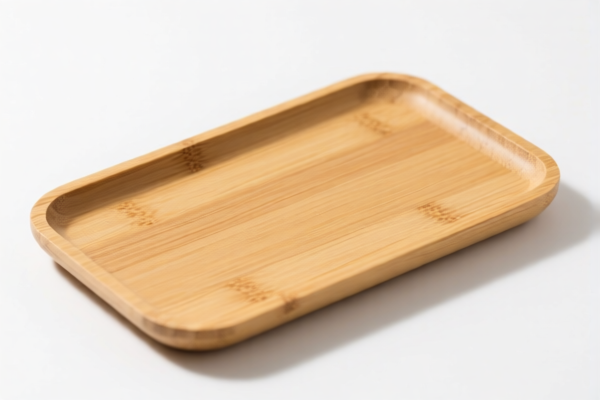
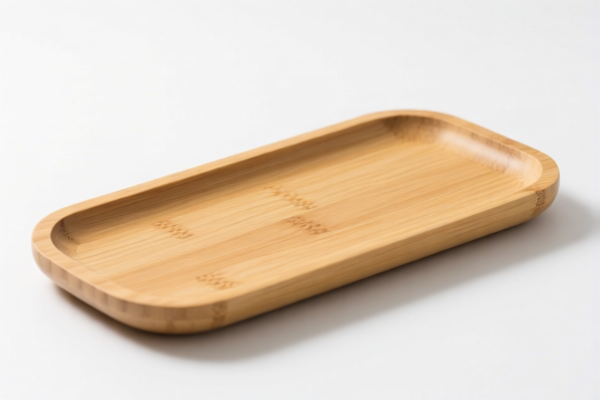
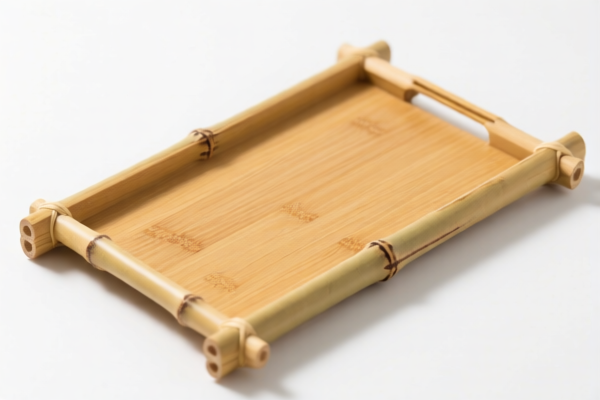
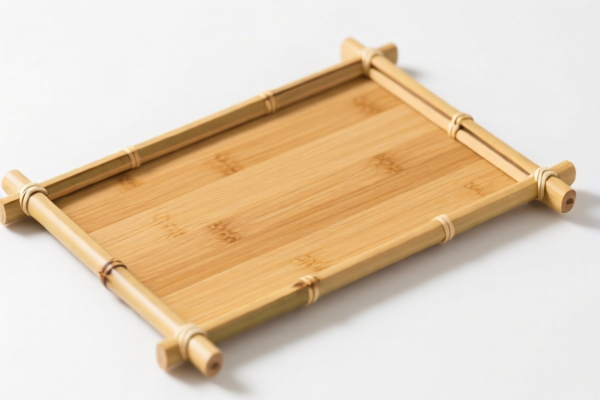
AI Analysis
🎋 Bamboo Divided Serving Tray
🌐 HS Code Reference & Customs Clearance Guide | 2026 Latest Tariff Analysis | Professional Clearance Strategy
📌 I. Product Definition & Classification: What Exactly Is a "Bamboo Divided Serving Tray"?
A Bamboo Divided Serving Tray is a kitchen or dining utensil designed to hold multiple food items separately on a single serving vessel. In international trade, its classification hinges on two critical factors: 1. Material: It must be made primarily of bamboo (a grass, but treated similarly to wood in HS Nomenclature for Chapter 44). 2. Function: It is classified as "Cutlery, tableware, kitchenware, or toilet articles" (Chapter 44, Heading 4419).
⚠️ Key Distinction:
- If it is made of bamboo and used for food service → It falls under Heading 4419 (Bamboo tableware).
- If it is woven into a basket-like shape with open sides and no rigid base structure suitable for stable table service → It might be misclassified under Heading 4602 (Basketry), but most rigid, flat serving trays are 4419.
- Crucial Note: Do not classify as wood products unless the bamboo is processed into engineered wood panels, but standard bamboo trays are explicitly covered under 4419.
📦 II. HS Code Classification Details (2026 Latest Tariff Authority Comparison)
Based on the provided data, here are the relevant HS Codes for bamboo tableware and related items:
| HS Code | Product Description | Relevance to "Bamboo Divided Serving Tray" | Key Differentiator |
|---|---|---|---|
4419.11.00.00 |
Bamboo tableware and kitchenware, of boards, strips, etc. | ✅ Primary Fit | If the tray is constructed from bamboo strips/boards (pressed or laminated), this is the most accurate code. |
4419.19.90.00 |
Other bamboo tableware and kitchenware | ⚠️ Secondary Fit | If the tray has a unique shape or manufacturing process not covered by "boards/strips" (e.g., carved solid bamboo), this code applies. |
4602.11.09.00 |
Bamboo baskets and other articles of basketware | ❌ Avoid | Only if the tray is open-weave and structurally resembles a basket, not a rigid serving tray. High tariff risk. |
4602.11.07.00 |
Bamboo baskets, baskets of bamboo, of a kind used for domestic purposes | ❌ Avoid | Similar to above. Misclassification leads to 35% total tax vs. 13.2% for tableware. |
4414.90.00.00 |
Other frames, of wood | ❌ Exclude | Applies to picture frames or mirrors, not serving trays. |
🔍 Critical Analysis:
- Most Bamboo Divided Serving Trays are manufactured from laminated bamboo strips or boards, making4419.11.00.00the most appropriate code.
- If the tray is made from a single piece of solid bamboo or has complex carving, use4419.19.90.00.
- Do not use 4602 series unless it is explicitly a "basket" with no rigid flat base. Customs will reject this if it looks like a tray.
💰 III. 2026 Latest Tariff Rate Breakdown (Including Surtaxes & Policy Add-ons)
✅ Applicable Country: United States (US)
✅ Origin: China (CN)
✅ Effective Date: 2025年11月10日起 (From November 10, 2025)
🎯 1. 4419.11.00.00 —— Bamboo Tableware, of Boards/Strips (Most Likely Code)
| Item | Content |
|---|---|
| Base Rate | 3.2% (Ad Valorem) |
| USITC Surtax | +0.0% (No additional 301 tariff for this specific subheading) |
| IEEPA Surtax | +10% (Against China/HK products, effective Nov 10, 2025) |
| Total Tax Rate | 13.2% |
| Tax Calculation | CIF Value × 13.2% |
| De Minimis Exemption | ❌ Not Eligible (Deny de minimis) |
| Legal Basis Path | IEEPA:9903.01.24 → USITC:4419.11.00.00 |
📌 Explanation:
- The Base Rate is 3.2%, which is low compared to many wood products.
- The 10% IEEPA tariff is the major add-on, bringing the total to 13.2%.
- No Section 301 (25%) tariff applies here, making this significantly cheaper than the basketware codes.
🎯 2. 4419.19.90.00 —— Other Bamboo Tableware
| Item | Content |
|---|---|
| Base Rate | 3.2% |
| USITC Surtax | +0.0% |
| IEEPA Surtax | +10% |
| Total Tax Rate | 13.2% |
| Tax Calculation | CIF Value × 13.2% |
| De Minimis Exemption | ❌ Not Eligible |
| Legal Basis Path | IEEPA:9903.01.24 → USITC:4419.19.90.00 |
📌 Note:
- Same tax rate as4419.11.00.00. Choose this code if the manufacturing process doesn't fit "boards/strips."
🚫 Avoid These Codes (High Risk, High Tax)
4602.11.09.00 & 4602.11.07.00 —— Bamboo Basketry (Misclassification Trap)
| Item | Content |
|---|---|
| Base Rate | 0.0% - 10.0% |
| USITC Surtax | +25.0% (Section 301) |
| IEEPA Surtax | +10% |
| Total Tax Rate | 35.0% - 45.0% |
| Tax Calculation | CIF Value × (35% or 45%) |
| De Minimis Exemption | ❌ Not Eligible |
📌 Warning:
- Misclassifying a tray as "basketware" can result in 35-45% tax instead of 13.2%.
- However, if you correctly classify as tableware (4419), you save ~22% in taxes.
- Do not let customs assign you to 4602 if your product is clearly a rigid serving tray.
🛠️ IV. Customs Clearance Practical Advice (Pitfall Avoidance Guide)
✅ 1. Preparation Checklist (All Required)
| Document | Required | Notes |
|---|---|---|
| ✅ Product Specification Sheet | ✔️ | Must specify "Bamboo," "Tableware," and "Dining Use." |
| ✅ Product Photos | ✔️ | Show the rigid structure, divided compartments, and lack of open weaving. |
| ✅ Commercial Invoice | ✔️ | Description: "Bamboo Divided Serving Tray, Model XYZ." Avoid vague terms like "Basket." |
| ✅ Packing List | ✔️ | Detail quantity per carton. |
| ✅ Origin Certificate (CO) | ✔️ | If applicable for preferential treatment in other markets. |
| ✅ FDA Compliance Statement | ✔️ | Since it contacts food, confirm it is FDA-compliant for food contact surfaces. |
✅ 2. Declaration Tips (Key Mantra)
🔥 "Solid Structure, Not Woven; Tableware, Not Basket!"
| Situation | Correct Declaration | Wrong Declaration |
|---|---|---|
| Rigid, flat bamboo tray with dividers | 4419.11.00.00 or 4419.19.90.00 |
"Bamboo Basket" → 4602.11.09.00 (35-45% tax) |
| Trays packed together in a box | Declare as Tableware | Break down into "bamboo strips" + "hardware" |
| Product made of engineered bamboo | Declare as Bamboo Tableware | "Wooden Frame" → 4414.90.00.00 (21.4% tax) |
| Product with metal handles | Still Bamboo Tableware | Separate metal part declaration → Complicated & risky |
✅ 3. Special Case Handling
| Scenario | Handling Advice |
|---|---|
| OEM Custom Trays | Provide customer design specs to prove it's a standard tableware item. |
| Mixed Materials (e.g., Bamboo + Plastic Base) | If bamboo is the principal material, it still goes to 4419. If plastic is primary, it may go to 3924 (Plastics), which has different tax rates. |
| Food Safety Compliance | Ensure the product meets FDA 21 CFR standards for food contact. Customs may request proof of non-toxicity. |
| Section 301 Exclusions | Check if your specific HS Code is excluded from the 25% surtax. 4419 codes are generally NOT excluded, so expect the 10% IEEPA + 3.2% base. |
🌍 V. Global Market Comparison (2026 Latest)
| Country/Region | Recommended HS Code | Tariff Rate | Certification Requirements | Notes |
|---|---|---|---|---|
| 🇺🇸 USA | 4419.11.00.00 / 4419.19.90.00 |
13.2% | FDA (Food Contact) | Avoid 4602 to save 22%+ |
| 🇨🇳 China | 4419.11.00.00 |
3.2% | GB Standard (Food Contact) | Low base rate, no surtax |
| 🇪🇺 EU | 4419.11.00.00 |
0% | LFGB / EC 1935/2004 | No surtax, easy entry |
| 🇬🇧 UK | 4419.11.00.00 |
0% | UKCA / Food Standards | Post-Brexit rules apply |
| 🇦🇺 Australia | 4419.11.00.00 |
5% | AS/NZS Standards | No surtax |
📌 Conclusion:
- USA is the most challenging market due to the 13.2% total tariff and no de minimis exemption.
- EU/UK/Australia offer zero or low tariffs, making bamboo tableware highly competitive.
- Critical Strategy: Accurately classify as 4419 to avoid the 35-45% penalty from misclassification as basketware.
📌 VI. Common Errors & Pitfall Guide (Blood & Tears Lessons)
❌ Error 1: Declaring as "Bamboo Basket" (4602.11.09.00)
👉 Consequence: 35-45% tax instead of 13.2%. Lost Profit!
❌ Error 2: Using vague description "Bamboo Plate"
👉 Consequence: Customs may reclassify or delay. Use "Tableware" explicitly.
❌ Error 3: Ignoring FDA Compliance
👉 Consequence: Goods held at border for food safety testing. Delay & Storage Fees.
❌ Error 4: Misclassifying as "Wooden Frame" (4414.90.00.00)
👉 Consequence: 21.4% tax. Higher than necessary, and incorrect description.
✅ Correct Practice:
"Bamboo Divided Serving Tray, Laminated Bamboo, Rectangular, 6 Compartments, FDA Compliant, Model XYZ"
🎯 VII. Conclusion: Precise Classification Saves Money!
🎯 Remember the Mantra:
🔹 "Rigid Tray = Tableware (13.2%); Woven Basket = Basketware (35-45%)!"
🔹 "Don't Let Customs Misclassify You – Save 22% Instantly!"
📌 Pro Tip:
If your bamboo trays are sourced from Vietnam or Thailand, you may qualify for lower tariffs under free trade agreements, but the IEEPA 10% surtax may still apply depending on origin rules. Always verify the country of origin on the bill of lading.
📣 Immediate Action:
📞 Consult your customs broker with photos and specs
🚀 Declare as4419.11.00.00or4419.19.90.00
💼 Your margin depends on this 13.2% vs. 45% difference!
✨ Professional Clearance, Start with Correct Code!
💼 Every percentage point counts in your profit!
Customer Reviews
About HS Code Classification
The Harmonized System (HS) is an internationally standardized nomenclature developed by the World Customs Organization (WCO) to classify traded products. Over 200 countries use the HS system as the basis for customs tariffs, trade statistics, and import/export regulations.
Each HS code follows a hierarchical structure:
- Chapter (2 digits) — Broad category of goods (e.g., Chapter 84: Machinery and Mechanical Appliances)
- Heading (4 digits) — More specific grouping within the chapter
- Subheading (6 digits) — Internationally standardized breakdown, used by all WCO member countries
- National subdivisions (8-10 digits) — Country-specific extensions for further classification, such as US HTSUS 10-digit codes
Correct HS code classification is essential for smooth customs clearance, accurate duty payment, and compliance with trade regulations. Misclassification can lead to customs delays, overpayment of duties, or penalties.
When importing from CN to US, the applicable tariff rates may include:
- Most-Favored-Nation (MFN) rate — The standard duty rate applied to WTO members
- General rate — Applied to countries without trade agreements
- Trade remedy duties — Additional tariffs such as Section 301 (anti-dumping), Section 232 (national security), or countervailing duties
The information provided on this page is for reference purposes only. For official classification, please consult with your local customs authority or a licensed customs broker.