Bamboo Divided Tray
CN → US| HS Code | Tariff Rate | Origin | Destination | Doc |
|---|---|---|---|---|
| 4419110000 | 13.2% | CN | US | Official Doc |
| 4602110900 | 45.0% | CN | US | Official Doc |
| 4602110700 | 35.0% | CN | US | Official Doc |
| 4419199000 | 13.2% | CN | US | Official Doc |
| 4414900000 | 21.4% | CN | US | Official Doc |
Product Images
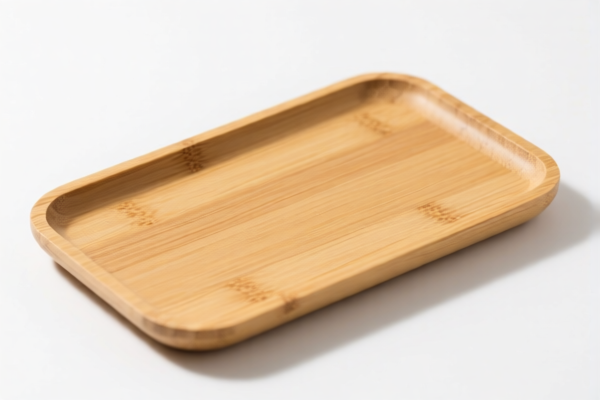
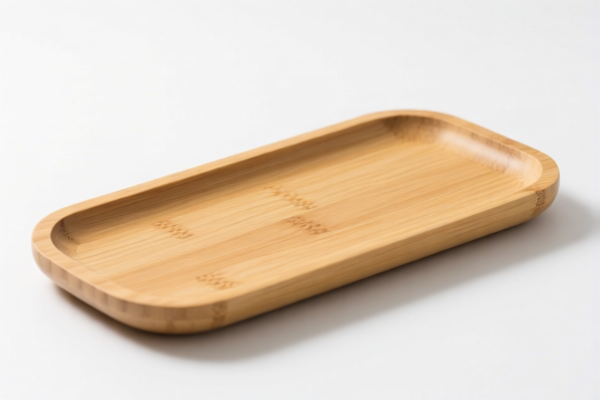
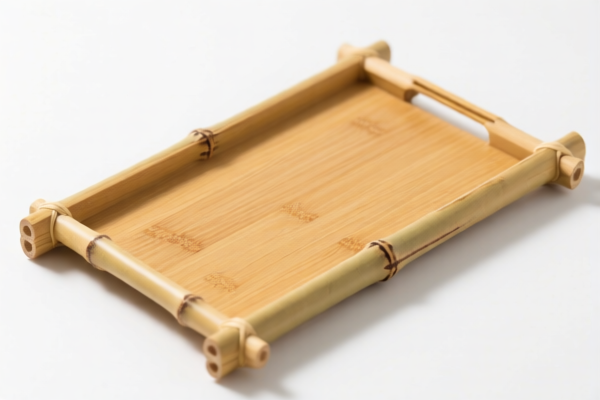
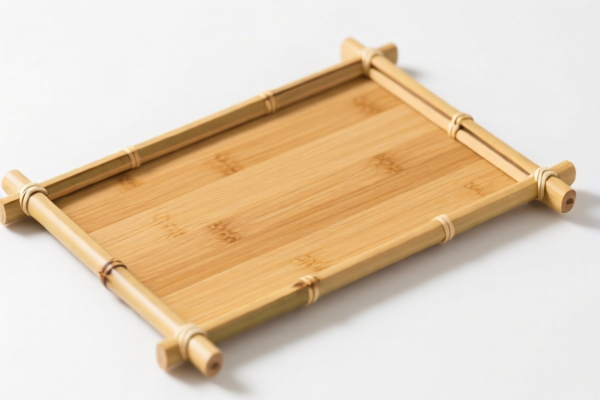
AI Analysis
🎋 Bamboo Divided Tray (Bamboo Compartmentalized Serving Ware)
🌐 HS Code Reference & Customs Clearance Guide | 2026 Latest Tariff Analysis | Professional Strategy
📌 I. Product Definition & Classification: What Exactly Is a "Bamboo Divided Tray"?
A Bamboo Divided Tray is a kitchenware or serving vessel made from bamboo, featuring internal partitions (compartments) to separate food items. In international trade, the classification depends heavily on its primary function and structural nature:
- Kitchenware/Tableware (Chapter 44.19): If the tray is designed primarily for serving or eating food directly (e.g., a charcuterie board, sushi tray, or appetizer platter), it falls under "Wooden tableware and kitchenware."
- Containers/Frames (Chapter 44.14): If the tray is viewed structurally as a frame, box, or container used for storage or transport rather than direct table service, it may fall under other articles of wood.
- Basketry/Woven Articles (Chapter 46.02): If the tray is constructed primarily through weaving processes (wicker, bamboo strips interlaced) to form a basket-like structure, it falls under "Basketware."
⚠️ Critical Distinction Point:
- If the item is a solid carved or assembled board with dividers →归入 Chapter 44 (Articles of Wood)
- If the item is woven from bamboo strips → 归入 Chapter 46 (Basketware)
- Misclassification Risk: Declaring a woven basket as "wooden tableware" or vice versa can lead to massive tariff discrepancies (e.g., 13% vs. 45%).
📦 II. HS Code Classification Details (2026 Latest Tariff Concordance)
| HS Code | Product Description | Application Scenario | Structural Characteristic |
|---|---|---|---|
4419.19.90.00 |
Wooden tableware & kitchenware, other (Bamboo Divided Tray) | Direct food serving, kitchen use, charcuterie/sushi trays | ✅ Tableware/Kitchenware (Solid/Assembled) |
4414.90.00.00 |
Frames for paintings, photographs, mirrors or similar objects; other | Storage frames, decorative holders, structural containers | ✅ Container/Frame (Structural) |
4419.11.00.00 |
Wooden tableware and kitchenware, of bamboo (similar boards) | Bamboo cutting boards, serving plates with minimal division | ✅ Bamboo Tableware (Similar to boards) |
4602.11.09.00 |
Basketware, of bamboo or of other materials of heading 46.01 (other woven containers) | Woven bamboo trays, decorative basket-style trays | ✅ Woven/Basketry (Interlaced structure) |
4602.11.07.00 |
Basketware, of bamboo (baskets, pails, and similar containers) | Basket-like storage trays, utility woven trays | ✅ Woven/Basketry (Utility basket style) |
🔍 Key Reminder:
- Direct Food Service items (serving appetizers, separating sushi components) are strongest candidates for 4419.
- Woven Items (where bamboo strips are interlaced) must go to 4602, regardless of whether they hold food.
- Storage/Transport items that look like trays but are not for immediate table service may fall under 4414 or 4602.
💰 III. 2026 Latest Tariff Rate Breakdown (Including Surtaxes & Policy Surcharges)
✅ Applicable Country: United States (US)
✅ Origin: China (CN)
✅ Effective Date: Current rates apply (including Section 301 and Section 122 surcharges)
🎯 1. 4419.19.90.00 —— Wooden Tableware, Other (Bamboo Serving Tray)
| Item | Content |
|---|---|
| Base Duty Rate | 3.2% |
| Surtax (Section 301) | 0.0% (Note: Many wooden items have specific exclusions or lower rates, but check current list) |
| Section 122 Surcharge | +10.0% (Imposed on certain Chinese imports) |
| Total Tax Rate | 13.2% |
| Tax Calculation | CIF Value × 13.2% |
| De Minimis Eligibility | ❌ No (Section 122 and 301 goods generally excluded or subject to higher thresholds) |
| Legal Basis Path | HTSUS:4419.19.90 → Section 122 Authority |
📌 Explanation:
- This is the most favorable rate for standard bamboo serving trays.
- The "Base 3.2%" is the standard MFN rate for wooden tableware.
- Crucial: Ensure the product is clearly defined as "Tableware" and not "Basketware" to avoid the 45% rate.
🎯 2. 4414.90.00.00 —— Frames, Other (Bamboo Structural Tray)
| Item | Content |
|---|---|
| Base Duty Rate | 3.9% |
| Surtax (Section 301) | +7.5% (Or applicable tier depending on specific exclusion status) |
| Section 122 Surcharge | +10.0% |
| Total Tax Rate | 21.4% |
| Tax Calculation | CIF Value × 21.4% |
| De Minimis Eligibility | ❌ No |
| Legal Basis Path | HTSUS:4414.90.00 → Section 301 Footnote → Section 122 Authority |
📌 Note:
- If the CBP views the tray as a "frame" or "container" rather than tableware, this classification applies.
- The 7.5% surtax makes this significantly more expensive than4419.19.90.00.
🎯 3. 4419.11.00.00 —— Bamboo Tableware, Similar Boards
| Item | Content |
|---|---|
| Base Duty Rate | 3.2% |
| Surtax (Section 301) | 0.0% |
| Section 122 Surcharge | +10.0% |
| Total Tax Rate | 13.2% |
| Tax Calculation | CIF Value × 13.2% |
| De Minimis Eligibility | ❌ No |
| Legal Basis Path | HTSUS:4419.11.00 → Section 122 Authority |
📌 Explanation:
- This code is for "bamboo tableware" specifically, often used for cutting boards or simple serving plates.
- If your tray is carved from a single piece of bamboo with simple dividers, this may apply.
- Same effective rate (13.2%) as4419.19.90.00in this dataset.
🎯 4. 4602.11.09.00 —— Basketware, Other (Woven Bamboo Tray)
| Item | Content |
|---|---|
| Base Duty Rate | 10.0% |
| Surtax (Section 301) | +25.0% (High tariff for basketware from China) |
| Section 122 Surcharge | +10.0% |
| Total Tax Rate | 45.0% |
| Tax Calculation | CIF Value × 45.0% |
| De Minimis Eligibility | ❌ No |
| Legal Basis Path | HTSUS:4602.11.09 → Section 301 Footnote 9903.88.01 → Section 122 Authority |
📌 Warning:
- HIGHEST RISK CATEGORY.
- If your tray is woven (bamboo strips interlaced), CBP will likely classify it here.
- 45% total duty is prohibitively high for many consumer goods. You MUST prove if it is "woven" or "assembled/solid" wood.
🎯 5. 4602.11.07.00 —— Basketware, Bamboo (Baskets/Pails)
| Item | Content |
|---|---|
| Base Duty Rate | 0.0% |
| Surtax (Section 301) | +25.0% |
| Section 122 Surcharge | +10.0% |
| Total Tax Rate | 35.0% |
| Tax Calculation | CIF Value × 35.0% |
| De Minimis Eligibility | ❌ No |
| Legal Basis Path | HTSUS:4602.11.07 → Section 301 → Section 122 |
📌 Note:
- Even with a 0% base rate, the 35% total is very high.
- Applies to utility bamboo baskets or containers.
🛠️ IV. Customs Clearance Practical Advice (Battle-Tested Pitfall Guide)
✅ 1. Preparation Checklist (Non-Negotiable)
| Document | Required | Explanation |
|---|---|---|
| ✅ Product Photos | ✔️ | Clear images showing how it is made (Solid assembly vs. Woven). |
| ✅ Technical Specification Sheet | ✔️ | Detail construction method: "Solid bamboo strips glued together" vs. "Woven bamboo fibers." |
| ✅ Function Description | ✔️ | Explicitly state: "Used for serving food directly at the table" (supports 4419). |
| ✅ Commercial Invoice | ✔️ | Describe as "Bamboo Wooden Serving Tray" or "Wooden Tableware," NOT "Woven Basket." |
| ✅ Packaging List | ✔️ | Ensure no accessories (like metal handles) change the principal character. |
✅ 2. Declaration Strategy (Key Mantras)
🔥 “Structure Determines Class! Solid/Assembled = 13%, Woven = 35-45%!”
| Scenario | Correct Declaration | Wrong Practice |
|---|---|---|
| Solid Bamboo Tray (Carved/Glued) | 4419.19.90.00 or 4419.11.00.00 |
Calling it "Bamboo Basket" → 35-45% |
| Woven Bamboo Tray (Interlaced) | 4602.11.09.00 or 4602.11.07.00 |
Calling it "Wooden Tableware" → Misclassification, Penalties |
| Storage/Decorative Frame | 4414.90.00.00 |
N/A (Use for structural items) |
✅ 3. Special Handling Tips
| Situation | Handling Advice |
|---|---|
| Mixed Materials (e.g., Bamboo with metal handles) | If bamboo is the principal material, it stays in Chapter 44/46. If metal dominates, it moves to Chapter 73/83. |
| OEM Custom Design | Provide design drawings to prove it is "Tableware" and not a "Container." |
| Pre-Clearance Ruling | HIGHLY RECOMMENDED. File an Advance Ruling with CBP to confirm if your specific tray is "Woven" (4602) or "Wooden Tableware" (4419). The tax difference is ~30%. |
| Origin Marking | Ensure "Made in China" is clearly marked on the product/packaging to avoid Section 301/122 disputes. |
🌍 V. Global Market Customs Comparison (2026 Latest)
| Country/Region | Recommended HS Code | Duty Rate | Certification Requirements | Notes |
|---|---|---|---|---|
| 🇺🇸 USA | 4419.19.90.00 |
13.2% | FSC (Wood) + FDA (Food Contact) | Avoid 4602 (45%!). |
| 🇨🇳 China | 4419.19.90.00 |
~5-10% | None specific | Lower base rates. |
| 🇪🇺 EU | 4419.19.90.00 |
0-2% | FSC + Food Safety | Very favorable for wooden tableware. |
| 🇬🇧 UK | 4419.19.90.00 |
0% | FSC | Post-Brexit tariff reset favors wood. |
| 🇯🇵 Japan | 4419.19.90.00 |
5-10% | Shinto Certification (if applicable) | Moderate rates. |
📌 Conclusion:
- The US market is the most challenging due to the Section 122 (10%) and Section 301 (0-25%) surcharges.
- European and UK markets offer 0% duty for similar goods, making them more profitable for high-value bamboo trays.
- Critical: In the US, the difference between "Wooden Tableware" (13.2%) and "Woven Basketware" (35-45%) is the single biggest cost driver.
📌 VI. Common Errors & Pitfall Guide (Lessons Learned)
❌ Error 1: Calling a woven tray "Wooden Tableware"
👉 Consequence: CBP reclassifies to 4602, assessing 35-45% duty + penalties.
👉 Fix: Be honest about construction. If woven, declare correctly and absorb cost or redesign.
❌ Error 2: Calling a solid tray "Woven Basketware"
👉 Consequence: You overpay by ~20-30%.
👉 Fix: Emphasize "Solid Wood," "Carved," or "Assembled" in documentation.
❌ Error 3: Ignoring Section 122
👉 Consequence: Missing the extra 10% in cost calculations leads to margin erosion.
👉 Fix: Always budget for +10% on top of base + Section 301 duties for US imports from China.
✅ Correct Declaration Example:
"Bamboo Wooden Divided Serving Tray, Solid Construction, Food Safe Finish, Model XYZ"
HS Code:4419.19.90.00
Duty: 13.2%
🎯 VII. Conclusion: Precision in Classification Saves Thousands!
🎯 Remember the Mantra:
🔹 "Solid = 13%, Woven = 45%. One word changes your profit!"
🔹 "Section 122 is always 10%. Factor it in!"
📌 Pro Tip:
If your product design is borderline (e.g., semi-woven), seek a CBP Advance Ruling before shipping. The cost of a ruling is negligible compared to the risk of a 30% duty surprise.
📣 Action Step:
📞 Contact your freight forwarder to verify the construction method.
📄 Update your Commercial Invoice description to reflect "Wooden Tableware" if solid.
🚀 Secure your margins by choosing the correct HS Code from the start!
✨ Professional Customs Clearance Starts with Accurate Classification!
💼 Your Profit Margin Depends on the Decimal Point!
Customer Reviews
About HS Code Classification
The Harmonized System (HS) is an internationally standardized nomenclature developed by the World Customs Organization (WCO) to classify traded products. Over 200 countries use the HS system as the basis for customs tariffs, trade statistics, and import/export regulations.
Each HS code follows a hierarchical structure:
- Chapter (2 digits) — Broad category of goods (e.g., Chapter 84: Machinery and Mechanical Appliances)
- Heading (4 digits) — More specific grouping within the chapter
- Subheading (6 digits) — Internationally standardized breakdown, used by all WCO member countries
- National subdivisions (8-10 digits) — Country-specific extensions for further classification, such as US HTSUS 10-digit codes
Correct HS code classification is essential for smooth customs clearance, accurate duty payment, and compliance with trade regulations. Misclassification can lead to customs delays, overpayment of duties, or penalties.
When importing from CN to US, the applicable tariff rates may include:
- Most-Favored-Nation (MFN) rate — The standard duty rate applied to WTO members
- General rate — Applied to countries without trade agreements
- Trade remedy duties — Additional tariffs such as Section 301 (anti-dumping), Section 232 (national security), or countervailing duties
The information provided on this page is for reference purposes only. For official classification, please consult with your local customs authority or a licensed customs broker.