Bamboo Divider
CN → US| HS Code | Tariff Rate | Origin | Destination | Doc |
|---|---|---|---|---|
| 9403820030 | 35.0% | CN | US | Official Doc |
| 9403896020 | 35.0% | CN | US | Official Doc |
| 4418999150 | 38.2% | CN | US | Official Doc |
| 4421913000 | 20.7% | CN | US | Official Doc |
| 4421914000 | 22.6% | CN | US | Official Doc |
Product Images
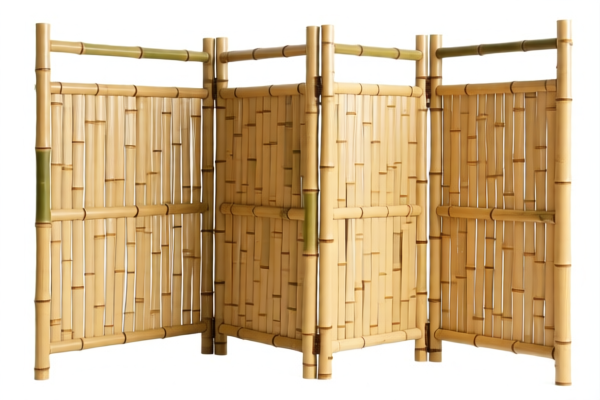
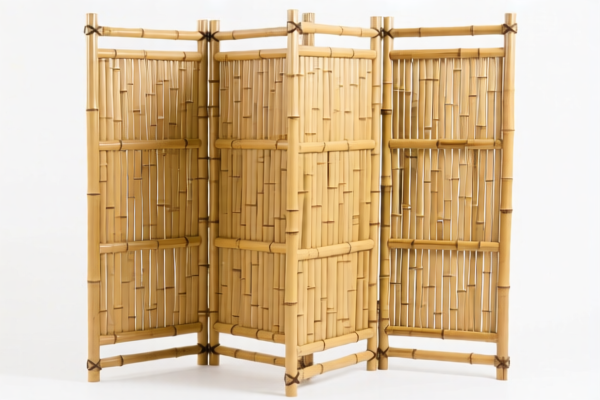


AI Analysis
🎋 Bamboo Divider (竹制隔断)
🌐 HS Code Reference & Customs Clearance Guide | 2026 Latest Tariff Analysis | Professional Clearance Strategy
📌 I. Product Definition & Classification: What Exactly is a "Bamboo Divider"?
Bamboo dividers are versatile architectural and furniture elements used to partition spaces in residential, commercial, and hospitality settings. In international trade, they are primarily classified under Chapter 94 (Furniture) or Chapter 44 (Wood/Bamboo Products). The critical distinction lies in whether the item is considered "Furniture" (movable, for use in homes/offices) or "Building Construction Material" (fixed, structural, or semi-permanent architectural components).
Key Classification Logic:
- Furniture Class (Ch 94): Freestanding, movable partitions used for interior decoration or space division (e.g., room dividers, screen-style dividers).
- Building Material Class (Ch 44): Pre-fabricated walls, fixed partitions, or components intended for permanent installation in construction.
- Material Specifics: While the material is bamboo, US customs often groups bamboo with wood for certain furniture classifications under HS 9403.
⚠️ Critical Distinction Point:
- If the divider is freestanding, decorative, and movable → Likely 9403.82.00.30 or 9403.89.60.20 (Furniture).
- If the divider is fixed, structural, or part of pre-fab wall systems → Likely 4418.99.91.50 (Building Material).
- If the divider is wood-based (including bamboo treated as wood) and serves as a screen or privacy screen → Likely 4421.91.30.00 or 4421.91.40.00.
📦 II. HS Code Classification Details (2026 Latest Tariff Reference)
Based on the provided data, here are the five possible HS Codes for Bamboo/Wood Dividers with their specific tax implications:
| HS Code | Product Description | Category | Applicability |
|---|---|---|---|
9403.82.00.30 |
Bamboo Divider (Furniture) | Other Furniture | Freestanding bamboo room dividers, movable partitions. |
9403.89.60.20 |
Bamboo Divider (Furniture) | Other Furniture | Other bamboo furniture items used as dividers. |
4418.99.91.50 |
Wooden/ Bamboo Pre-fab Partition | Building Material | Fixed or semi-permanent architectural partitions, pre-fab walls. |
4421.91.30.00 |
Wooden Divider (Screen/Partition) | Wood Product | Bamboo/Wood screens, privacy screens, non-structural dividers. |
4421.91.40.00 |
Wooden Divider (Screen/Curtain) | Wood Product | Bamboo/Wood screens, solar shades, or fabric-like wooden partitions. |
🔍 Key Insight:
- Ch 94 (Furniture) codes (9403...) are typically used for movable, decorative dividers.
- Ch 44 (Wood) codes (4418...,4421...) are used for construction-related or structural wood/bamboo products.
- Bamboo is often classified under 9403.82 (Bamboo Furniture) or grouped with wood under 4421 depending on the form and usage.
💰 III. 2026 Latest Tariff Rate Breakdown (Including Supplementary Taxes & Policy Add-ons)
✅ Applicable Country: United States (US)
✅ Origin: China (CN)
✅ Effective Date: Ongoing (Subject to Section 301 & IEEPA regulations)
🎯 1. 9403.82.00.30 & 9403.89.60.20 —— Bamboo Dividers (Furniture Class)
| Item | Detail |
|---|---|
| Base Duty Rate | 0.0% |
| Section 301 Add-on Duty | +25.0% (USITC Footnote 9903.88.01) |
| IEEPA Add-on Duty | +10.0% (China-specific, under Executive Order 14032) |
| Total Tax Rate | 35.0% |
| Tax Calculation | CIF Value × 35% |
| De Minimis Eligibility | ❌ No (Not eligible for $800 de minimis exemption due to IEEPA/Section 301 restrictions on China-origin goods) |
| Legal Basis Path | IEEPA:9903.01.25 → USITC:9403.82.00.30 → SECTION_301:9903.88.01 |
📌 Explanation:
- Base Rate 0%: Bamboo furniture generally enjoys a low base duty.
- Section 301 (+25%): Applied to most Chinese-origin furniture and wood/bamboo products.
- IEEPA (+10%): Additional 10% tariff on Chinese goods under current US emergency powers.
- Total 35%: A significant cost driver. Must be factored into landed cost calculations.
🎯 2. 4418.99.91.50 —— Wooden/ Bamboo Pre-fab Partitions (Building Material)
| Item | Detail |
|---|---|
| Base Duty Rate | 3.2% |
| Section 301 Add-on Duty | +25.0% |
| IEEPA Add-on Duty | +10.0% |
| Total Tax Rate | 38.2% |
| Tax Calculation | CIF Value × 38.2% |
| De Minimis Eligibility | ❌ No |
| Legal Basis Path | IEEPA:9903.01.25 → USITC:4418.99.91.50 → SECTION_301:9903.88.01 |
📌 Note:
- This code applies to pre-fabricated building components.
- The base duty is higher (3.2%) than furniture, leading to a higher total tariff (38.2%).
- Use this only if the divider is installed as part of the building structure.
🎯 3. 4421.91.30.00 —— Wooden/Bamboo Screens/Dividers (Non-Structural)
| Item | Detail |
|---|---|
| Base Duty Rate | 10.7% |
| Section 301 Add-on Duty | 0.0% |
| IEEPA Add-on Duty | +10.0% |
| Total Tax Rate | 20.7% |
| Tax Calculation | CIF Value × 20.7% |
| De Minimis Eligibility | ❌ No (IEEPA still applies) |
| Legal Basis Path | IEEPA:9903.01.24 → USITC:4421.91.30.00 |
📌 Insight:
- Lower Total Rate (20.7%): This is the most cost-effective classification if the product is deemed a "screen" or "partition" under Ch 44.
- Why? Section 301 does not apply to this specific subheading (0% add-on), only IEEPA (10%) + Base (10.7%).
- Strategy: Ensure product description emphasizes "screen," "privacy divider," or "non-structural partition" to qualify for this lower rate.
🎯 4. 4421.91.40.00 —— Wooden/Bamboo Screens/Solar Shades
| Item | Detail |
|---|---|
| Base Duty Rate | 5.1% |
| Section 301 Add-on Duty | +7.5% |
| IEEPA Add-on Duty | +10.0% |
| Total Tax Rate | 22.6% |
| Tax Calculation | CIF Value × 22.6% |
| De Minimis Eligibility | ❌ No |
| Legal Basis Path | IEEPA:9903.01.24 → USITC:4421.91.40.00 → SECTION_301:9903.88.01 |
📌 Note:
- Applies to dividers that may double as solar shades or semi-permeable screens.
- Section 301 applies partially (+7.5%), making it slightly more expensive than4421.91.30.00but cheaper than furniture codes.
🛠️ IV. Customs Clearance Practical Advice (Avoid Pitfalls)
✅ 1. Required Documentation Checklist
| Document | Mandatory? | Notes |
|---|---|---|
| ✅ Product Specification Sheet | ✔️ | Must clearly state material (Bamboo vs. Wood), dimensions, weight, and function. |
| ✅ Product Photos | ✔️ | Show freestanding nature (for Ch 94) or mounting features (for Ch 44). |
| ✅ Commercial Invoice | ✔️ | Clearly describe as "Bamboo Room Divider" or "Wooden Privacy Screen." Avoid vague terms like "Part." |
| ✅ Packing List | ✔️ | Detail components (e.g., panels, frames, connectors). |
| ✅ Country of Origin Certificate | ✔️ | Confirm China origin to apply correct IEEPA/Section 301 rates. |
| ✅ FSC Certification (Optional) | ✔️ | If sustainable sourcing is claimed, may help with US buyer requirements (not tariff-related). |
✅ 2. Declaration Strategy (Key Mnemonic)
🔥 "Freestanding = Furniture (94), Fixed = Building (44), Screen = Lower Tax!"
| Scenario | Recommended HS Code | Reason |
|---|---|---|
| Freestanding, movable room divider | 9403.82.00.30 or 9403.89.60.20 |
Classified as Furniture. High tariff (35%). |
| Pre-fab wall panel, semi-permanent | 4418.99.91.50 |
Classified as Building Material. Highest tariff (38.2%). |
| Privacy screen, non-structural, decorative | 4421.91.30.00 |
Classified as Wood Product. Lowest tariff (20.7%). |
| Solar shade-like wooden partition | 4421.91.40.00 |
Classified as Screen/Curtain. Moderate tariff (22.6%). |
📌 Critical Tip:
- If the divider is not fixed to the wall and can be moved easily, argue for Furniture (Ch 94) or Screen (Ch 44).
- Avoid4418unless it is clearly a construction material.
-4421.91.30.00offers the best tax efficiency if the product can be described as a "screen" or "privacy divider" rather than a "wall partition."
✅ 3. Special Cases
| Situation | Handling Advice |
|---|---|
| Bamboo treated as Wood | Ensure HS Code aligns with USITC rulings that treat bamboo as wood for certain Ch 44 classifications. |
| Mixed Materials (Bamboo + Metal) | If metal frame is primary, may fall under Ch 73. If bamboo is primary, Ch 94 or 44 applies. |
| OEM Custom Dividers | Provide design drawings to prove if it is "furniture" or "architectural component." |
| De Minimis Risk | Do NOT use de minimis ($800 exemption) for China-origin bamboo dividers. IEEPA and Section 301 taxes still apply even on low-value shipments. |
🌍 V. Global Market Comparison (2026 Latest)
| Country/Region | Recommended HS Code | Est. Total Duty | Certification Required | Notes |
|---|---|---|---|---|
| 🇺🇸 USA | 4421.91.30.00 |
20.7% | None (basic) | Best rate. Avoid Ch 94/4418 if possible. |
| 🇨🇳 China | 4421.91.30.00 |
~5-10% | N/A | Import duty lower. |
| 🇪🇺 EU | 4421.91.30.00 |
~0-5% | FSC/PEFC (voluntary) | No Section 301/IEEPA. |
| 🇬🇧 UK | 4421.91.30.00 |
~0-5% | UKCA (if applicable) | Post-Brexit rules apply. |
| 🇦🇺 Australia | 4421.91.30.00 |
~5% | None | Low tariff. |
📌 Conclusion:
- USA is the most challenging market due to Section 301 + IEEPA叠加 (stacking).
- Optimize Classification: Aim for4421.91.30.00to reduce tariff from 35% to 20.7% — a 14.3% savings on CIF value.
📌 VI. Common Errors & Pitfalls (Lessons Learned)
❌ Error 1: Classifying a freestanding bamboo screen as 4418.99.91.50 (Building Material)
👉 Result: 38.2% tariff instead of 20.7%. Overpayment!
❌ Error 2: Assuming $800 de minimis applies to bamboo dividers
👉 Result: Seizure or forced payment of 20-35% tax + penalties. IEEPA blocks de minimis for China.
❌ Error 3: Using vague description "Bamboo Part"
👉 Result: Customs delays, potential reclassification to higher tax code. Be specific!
❌ Error 4: Ignoring IEEPA 10% on all codes
👉 Result: Underestimating landed cost. All China-origin bamboo dividers face +10% IEEPA.
✅ Correct Approach:
"Bamboo Room Divider, Freestanding, Decorative Screen, Model XYZ, Origin: China" → Target
4421.91.30.00(20.7%) or9403.82.00.30(35%) based on functional proof.
🎯 VII. Conclusion: Smart Classification, Lower Costs!
🎯 Remember the Mnemonic:
🔹 "Freestanding = Furniture (35%), Screen = Wood (20.7%), Wall = Building (38.2%)!"
🔹 "IEEPA is always +10% on China, Section 301 varies!"
🔹 "Avoid 4418 unless it’s a wall! Save 17.5% with 4421!"
📌 Pro Tip:
- For low-value shipments, ensure you declare accurately and pay the 20.7% or 35% duty. Do not attempt de minimis.
- Consider pre-clarification with US Customs (Ruling Letter) if unsure between 9403 and 4421.
- Supplier cooperation: Ensure invoice and packing list match the declared HS Code description precisely.
📣 Immediate Action:
📞 Consult a licensed customs broker to validate HS Code before shipment.
📄 Include clear photos and product descriptions in commercial invoices.
🚀 Optimize classification to save up to 17.5% in tariffs!
✨ Professional Clearance, Starts with Accurate Classification!
💼 Every Percent of Duty Saved is Pure Profit!
Customer Reviews
About HS Code Classification
The Harmonized System (HS) is an internationally standardized nomenclature developed by the World Customs Organization (WCO) to classify traded products. Over 200 countries use the HS system as the basis for customs tariffs, trade statistics, and import/export regulations.
Each HS code follows a hierarchical structure:
- Chapter (2 digits) — Broad category of goods (e.g., Chapter 84: Machinery and Mechanical Appliances)
- Heading (4 digits) — More specific grouping within the chapter
- Subheading (6 digits) — Internationally standardized breakdown, used by all WCO member countries
- National subdivisions (8-10 digits) — Country-specific extensions for further classification, such as US HTSUS 10-digit codes
Correct HS code classification is essential for smooth customs clearance, accurate duty payment, and compliance with trade regulations. Misclassification can lead to customs delays, overpayment of duties, or penalties.
When importing from CN to US, the applicable tariff rates may include:
- Most-Favored-Nation (MFN) rate — The standard duty rate applied to WTO members
- General rate — Applied to countries without trade agreements
- Trade remedy duties — Additional tariffs such as Section 301 (anti-dumping), Section 232 (national security), or countervailing duties
The information provided on this page is for reference purposes only. For official classification, please consult with your local customs authority or a licensed customs broker.