Bamboo Door Mats
CN → US| HS Code | Tariff Rate | Origin | Destination | Doc |
|---|---|---|---|---|
| 5705002090 | 38.3% | CN | US | Official Doc |
| 4421919880 | 38.3% | CN | US | Official Doc |
| 4602114500 | 41.6% | CN | US | Official Doc |
| 4602110700 | 35.0% | CN | US | Official Doc |
| 4421999880 | 38.3% | CN | US | Official Doc |
Product Images
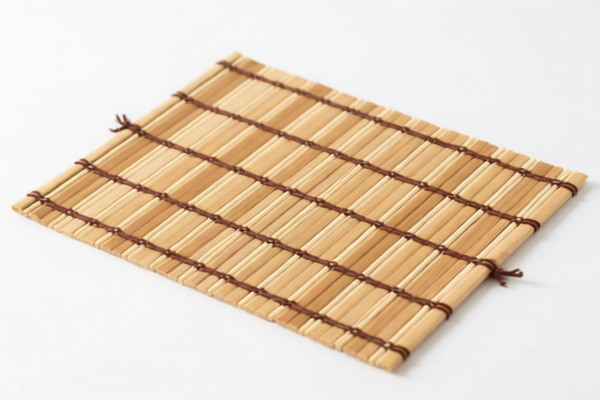
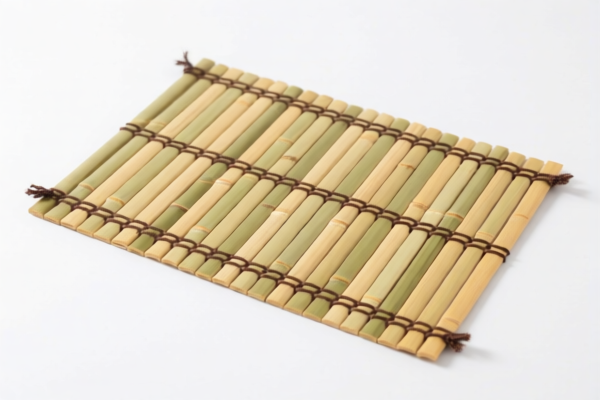
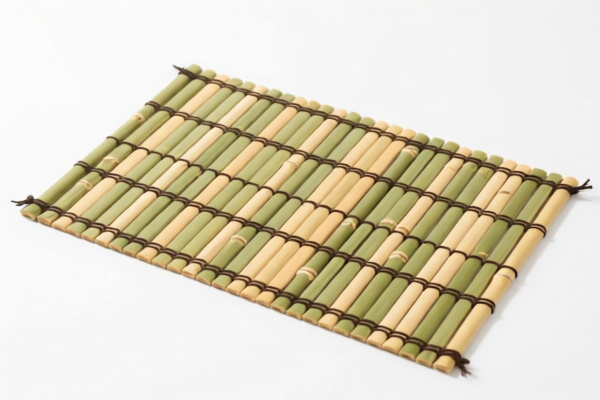
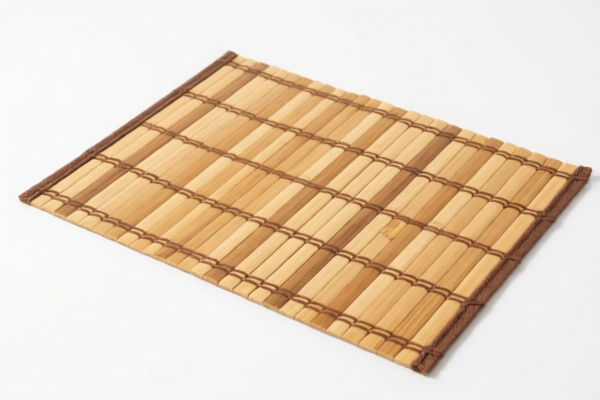
AI Analysis
🎋 Bamboo Door Mats (Woven Mats for Entryways)
🌐 HS Code Reference & Customs Clearance Guide | 2026 Latest Tariff Analysis | Professional Entry Strategy
📌 I. Product Definition and Classification: Do You Really Understand "Bamboo Door Mats"?
Bamboo door mats are essential entryway accessories designed to scrape dirt and moisture from footwear. In international trade, classification hinges on two main factors: Material Composition (Bamboo vs. Other Fibers) and Primary Function (Floor Covering vs. Woven Article).
Key Distinctions: - Floor Coverings (Carpet-like): If the mat is primarily viewed as a "carpet" or "rug" covering the floor, it may fall under Chapter 57. - Woven Bamboo Articles: If the product is a tight weave of bamboo strips, it is often classified as a woven article under Chapter 46. - Other Wood/Bamboo Products: If it doesn't fit the specific definitions of carpets or woven baskets/bags, it falls under the "Other" categories of Chapter 44.
⚠️ Critical Classification Point:
- If treated as a textile-like floor covering → Chapter 57
- If treated as a woven bamboo item → Chapter 46
- If treated as a general bamboo/wood artifact → Chapter 44
📦 II. HS Code Classification Details (2026 Latest Tariff Authority Comparison)
Based on the provided data, here are the five possible classifications for Bamboo Door Mats, ranging from textile-like to woven wood/bamboo products.
| HS Code | Product Description | Matching Logic / Summary | Total Tax Rate |
|---|---|---|---|
5705.00.20.90 |
Other Carpets & Floor Coverings (Textile Category) | Matches "Textile/Fiber Floor Covering" category. Shape fits "floor covering." Classified as Other due to lack of material conflict with standard textile rugs. | 38.3% |
4421.91.98.80 |
Other Articles of Bamboo (Wood/Bamboo Category) | Material is explicitly Bamboo (matches "bamboo"). Form is a "woven mat." Falls under "Other articles" of wood/bamboo products. No material conflict. | 38.3% |
4602.11.45.00 |
Woven Bamboo Baskets, Bags & Similar Articles | "Bamboo-woven" matches material limit. "Floor mat" is considered a shape application of woven products. Consistent with "Bamboo" and "Other" subheadings. | 41.6% |
4602.11.07.00 |
Woven Bamboo Articles (Specific Sub-category) | Material: Bamboo (Match). Form: Woven (Match). Use: Mat (Extension of basket/bag woven category). | 35.0% |
4421.99.98.80 |
Other Wooden/Bamboo Articles (General Other Category) | Material: Bamboo (Wood/Plant fiber class). Form: Mat (Artifact). Fits the "Other" catch-all category for wooden articles. | 38.3% |
🔍 Key Observation:
- The lowest tax rate (35.0%) is found under4602.11.07.00. - The highest tax rate (41.6%) is found under4602.11.45.00. - Most other options cluster at 38.3%. - Classification depends heavily on whether customs views the item as a woven article (Ch 46) or a floor covering/other artifact (Ch 57/44).
💰 III. 2026 Latest Tariff Rate Breakdown (Including Surtaxes & Policy Add-ons)
✅ Applicable Country: United States (US)
✅ Origin: China (CN)
✅ Effective Time: From November 10, 2025 (and subsequent imports)
🎯 1. 5705.00.20.90 – Textile Floor Covering (Other)
| Item | Content |
|---|---|
| Base Rate | 3.3% |
| USITC Surtax | +25.0% (Section 301) |
| IEEPA Surtax | +10.0% (122 Clause / China-specific) |
| Total Tax Rate | 38.3% |
| Tax Calculation | CIF Value × 38.3% |
| De Minimis Eligibility | ❌ No (High tariff rates typically deny de minimis benefits) |
| Legal Basis Path | IEEPA:9903.01.24 → USITC:5705.00.20.90 |
📌 Explanation:
- Although Chapter 57 is textile-based, the bamboo material triggers specific surtaxes for Chinese origin. - The 3.3% base rate is low, but the 25% + 10% surtaxes dominate the cost.
🎯 2. 4421.91.98.80 – Other Bamboo Articles
| Item | Content |
|---|---|
| Base Rate | 3.3% |
| USITC Surtax | +25.0% (Section 301) |
| IEEPA Surtax | +10.0% (122 Clause / China-specific) |
| Total Tax Rate | 38.3% |
| Tax Calculation | CIF Value × 38.3% |
| De Minimis Eligibility | ❌ No |
| Legal Basis Path | IEEPA:9903.01.24 → USITC:4421.91.98.80 |
📌 Note:
- Identical tax structure to the textile classification in this dataset. - Classification as "Bamboo Article" requires strong evidence that it is a finished woven product, not just a cut piece of bamboo flooring.
🎯 3. 4602.11.45.00 – Woven Bamboo Articles (Specific Sub-code)
| Item | Content |
|---|---|
| Base Rate | 6.6% |
| USITC Surtax | +25.0% (Section 301) |
| IEEPA Surtax | +10.0% (122 Clause / China-specific) |
| Total Tax Rate | 41.6% |
| Tax Calculation | CIF Value × 41.6% |
| De Minimis Eligibility | ❌ No |
| Legal Basis Path | IEEPA:9903.01.24 → USITC:4602.11.45.00 |
📌 Warning:
- This code has the highest base rate (6.6%) in the provided data, leading to the highest total tax. - Use only if the product is clearly defined as a "basket/bag/woven article" and not a floor mat.
🎯 4. 4602.11.07.00 – Woven Bamboo Articles (Lowest Tax Option)
| Item | Content |
|---|---|
| Base Rate | 0.0% |
| USITC Surtax | +25.0% (Section 301) |
| IEEPA Surtax | +10.0% (122 Clause / China-specific) |
| Total Tax Rate | 35.0% |
| Tax Calculation | CIF Value × 35.0% |
| De Minimis Eligibility | ❌ No |
| Legal Basis Path | IEEPA:9903.01.24 → USITC:4602.11.07.00 |
📌 Optimization Highlight:
- This is the most cost-effective classification in the provided data. - The base rate is 0%, which significantly reduces the total burden despite the 35% surtaxes. - Strategy: Argue that the mat is a "woven bamboo article" (Chapter 46) falling into this specific sub-category to leverage the 0% base rate.
🎯 5. 4421.99.98.80 – Other Wooden/Bamboo Articles (General Catch-all)
| Item | Content |
|---|---|
| Base Rate | 3.3% |
| USITC Surtax | +25.0% (Section 301) |
| IEEPA Surtax | +10.0% (122 Clause / China-specific) |
| Total Tax Rate | 38.3% |
| Tax Calculation | CIF Value × 38.3% |
| De Minimis Eligibility | ❌ No |
| Legal Basis Path | IEEPA:9903.01.24 → USITC:4421.99.98.80 |
📌 Note:
- Similar to4421.91..., but for "Other" items not specifically listed as "baskets/bags." - If customs rejects the "woven article" classification (Ch 46), this is the fallback for bamboo products.
🛠️ IV. Customs Clearance Practical Advice (Real-World Pitfall Guide)
✅ 1. Documentation Checklist (Non-negotiable)
| Document | Required? | Explanation |
|---|---|---|
| ✅ Product Specification Sheet | ✔️ | Must detail: Material (100% Bamboo?), Weave Type, Dimensions, Weight. |
| ✅ Product Photos | ✔️ | Clear images showing the woven structure, edges, and usage (on a floor). |
| ✅ Commercial Invoice | ✔️ | Describe as "Bamboo Woven Floor Mat" or "Entryway Mat." Avoid generic "Bamboo Product." |
| ✅ Origin Certificate | ✔️ | Crucial for proving Chinese origin (triggers 35-41% tax). |
| ✅ Material Test Report | ✔️ | Proves "Bamboo" and not "Woven Grass/Raffia" (which might have different tax rules). |
✅ 2. Declaration Tips (Key Mantras)
🔥 “Declare as Woven Bamboo to Save Base Rate, Avoid Textile Labels to Prevent Conflict!”
| Scenario | Correct Declaration | Wrong Practice |
|---|---|---|
| Goal: Lowest Tax (35%) | HS: 4602.11.07.00Desc: "Woven Bamboo Mat, for floor use" |
Describing it as "Carpet" → HS 5705... → 38.3% |
| Goal: Safe Fallback | HS: 4421.91.98.80Desc: "Bamboo Woven Artifact" |
Calling it "Plastic" or "Textile" → Misdeclaration Risk |
| Avoid: High Tax | Do NOT use 4602.11.45.00 unless forced. |
Using 4602.11.45.00 → 41.6% (Highest) |
| Avoid: Ambiguity | Be specific about "Woven" vs. "Laminated." | Vague "Bamboo Mat" → Customs Discretion → Delay |
✅ 3. Special Case Handling
| Situation | Handling Advice |
|---|---|
| Mixed Materials | If the mat has a rubber backing or fabric trim, the primary material (Bamboo) dictates classification. Disclose all components. |
| OEM Custom Mats | Provide design drawings showing the weave pattern. Helps prove it’s a "woven article" (Ch 46) rather than a "floor covering" (Ch 57). |
| Small Sample Imports | Even for de minimis shipments, if the value is high or quantity large, prepare for potential 35-41% tax assessment. |
| Re-imports/Returns | Ensure the original HS Code matches exactly. Different HS Codes = New Duty Assessment. |
🌍 V. Global Market Comparison (2026 Latest)
| Country/Region | Recommended HS Code | Tax Rate (China Origin) | Certification | Note |
|---|---|---|---|---|
| 🇺🇸 USA | 4602.11.07.00 |
35.0% | No special certs | Lowest tax in provided data. |
| 🇨🇳 China | 4602.11.07.00 |
Varies (Export) | None | Export tax rebate may apply. |
| 🇪🇺 EU | 4602.11.00.00 |
~5-6% | No surtax | Generally lower tariffs than US. |
| 🇬🇧 UK | 4602.11.00.00 |
~5-6% | No surtax | Post-Brexit, similar to EU. |
| 🇯🇵 Japan | 4602.11.00.00 |
~10-15% | No surtax | Higher base rate, no 301 surtax. |
📌 Conclusion:
- The US market is the most tax-sensitive due to Section 301 (25%) and IEEPA (10%) surtaxes. - Optimizing the HS Code from 44/57 to the specific4602.11.07.00can save 3.3% of the CIF value.
📌 VI. Common Errors & Pitfall Guide (Lessons Learned)
❌ Error 1: Classifying as 5705.00.20.90 (Textile Floor Covering)
👉 Consequence: Higher base rate (3.3% vs 0%) → Total 38.3% vs 35.0%. Wasted money.
❌ Error 2: Using 4602.11.45.00 without justification
👉 Consequence: Highest base rate (6.6%) → Total 41.6%. Unnecessary high cost.
❌ Error 3: Vague Description "Bamboo Mat"
👉 Consequence: Customs may classify as "Other" (4421.99.98.80) or demand higher scrutiny → Delays.
❌ Error 4: Ignoring Sur-2026 Rules
👉 Consequence: Failing to include IEEPA 10% in cost calculation → Profit Margins Eroded.
✅ Correct Practice:
"Woven Bamboo Entry Mat, 100% Natural Bamboo Strips, Hand-woven, for Indoor/Outdoor Use, Model BDM-01"
🎯 VII. Conclusion: Precise Classification Saves Money!
🎯 Remember the Mantra:
🔹 "Woven Bamboo = Ch 46, Specific Code = 0% Base, Total 35%!"
🔹 "Textile Code = 3.3% Base, Total 38.3% – Avoid if Possible!"
🔹 "Surtaxes are Fixed (35% Total), Base Rate is the Variable!"
📌 Pro Tip:
If you are importing to the US, consider applying for a Pre-Classification Ruling with CBP to lock in 4602.11.07.00. This provides legal certainty and avoids future audits.
📣 Immediate Action:
📞 Consult your customs broker with the Product Photos and Weave Details.
📝 Request classification under4602.11.07.00to minimize duty to 35.0%.
🚀 Secure your margins by choosing the right HS Code!
✨ Professional Customs Clearance Starts with Accurate Classification!
💼 Every Percent Saved is Pure Profit!
Customer Reviews
About HS Code Classification
The Harmonized System (HS) is an internationally standardized nomenclature developed by the World Customs Organization (WCO) to classify traded products. Over 200 countries use the HS system as the basis for customs tariffs, trade statistics, and import/export regulations.
Each HS code follows a hierarchical structure:
- Chapter (2 digits) — Broad category of goods (e.g., Chapter 84: Machinery and Mechanical Appliances)
- Heading (4 digits) — More specific grouping within the chapter
- Subheading (6 digits) — Internationally standardized breakdown, used by all WCO member countries
- National subdivisions (8-10 digits) — Country-specific extensions for further classification, such as US HTSUS 10-digit codes
Correct HS code classification is essential for smooth customs clearance, accurate duty payment, and compliance with trade regulations. Misclassification can lead to customs delays, overpayment of duties, or penalties.
When importing from CN to US, the applicable tariff rates may include:
- Most-Favored-Nation (MFN) rate — The standard duty rate applied to WTO members
- General rate — Applied to countries without trade agreements
- Trade remedy duties — Additional tariffs such as Section 301 (anti-dumping), Section 232 (national security), or countervailing duties
The information provided on this page is for reference purposes only. For official classification, please consult with your local customs authority or a licensed customs broker.