Bamboo Entrance Mats
CN → US| HS Code | Tariff Rate | Origin | Destination | Doc |
|---|---|---|---|---|
| 4602110700 | 35.0% | CN | US | Official Doc |
| 4602110900 | 45.0% | CN | US | Official Doc |
Product Images
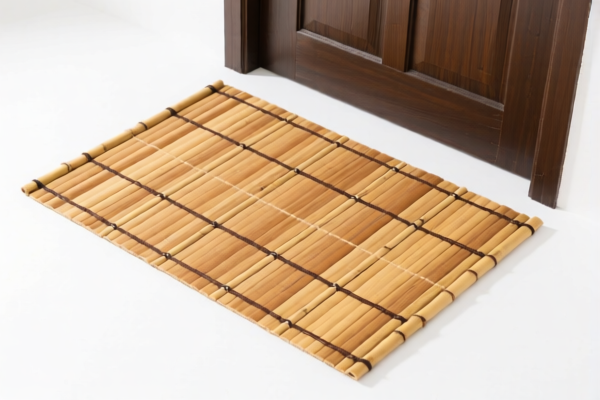
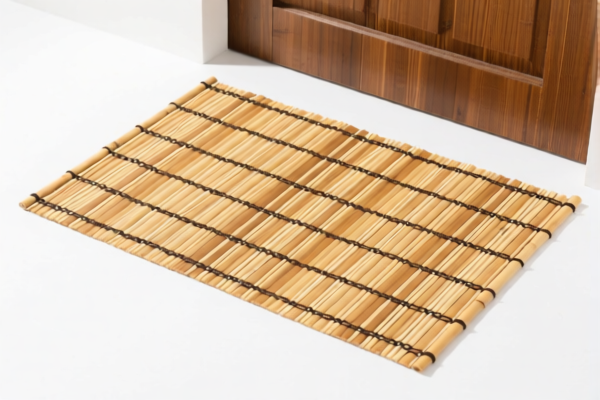
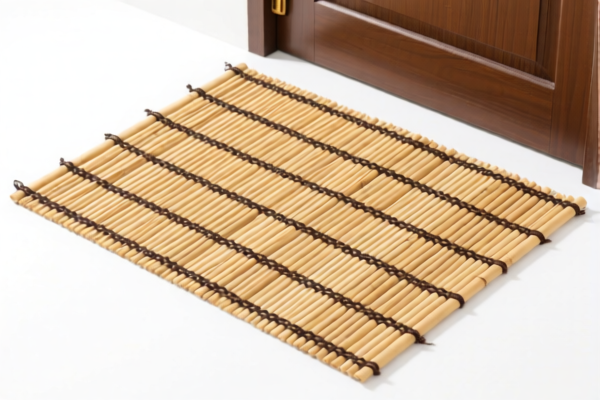
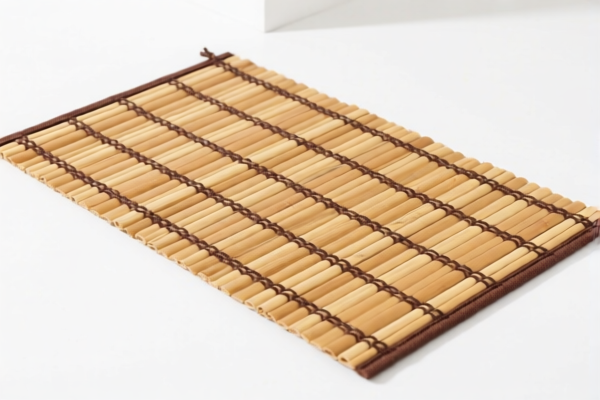
AI Analysis
🎋 Bamboo Entrance Mats (Mats of Plaiting Materials)
🌐 HS Code Reference & Customs Clearance Guide | 2026 Latest Tariff Analysis | Professional Clearance Strategy
📌 I. Product Definition & Classification: What Exactly is a "Bamboo Entrance Mat"?
Bamboo entrance mats are functional household or commercial items used to wipe feet, block dirt, and provide decoration at doorways. In international trade, they are not classified as "carpets" (Chapter 57) but as articles made directly to shape from plaiting materials.
The classification hinges on two critical factors: 1. Material: Must be of vegetable materials (specifically Bamboo, as per your input). 2. Structure: Must be "made directly to shape from plaiting materials" (wickerwork/basketwork style) OR "made up from articles of heading 4601".
⚠️ Key Distinction Point:
- If the mat is woven/plaited into a rigid or semi-rigid shape using bamboo strips/plaiting materials → Chapter 46 (Basketwork, wickerwork and other articles made directly to shape from plaiting materials).
- If it is a woven textile mat (non-plaited, flat fabric-like) → It might fall under Chapter 57 or 4601, but "Bamboo Entrance Mats" in commerce are typically rigid/plaited wickerwork.
- Crucial Sub-category: Is it a Basket/Bag (with lining, handles, or bag-like structure) or Other (simple flat mat, rigid tray-like, or decorative)?
📦 II. HS Code Classification Details (2026 Latest Tariff Authority Match)
Based on the provided <DATA>, here are the exact HS Codes and their corresponding tax structures. Note: Only these two codes are relevant for your input.
| HS Code | Product Description | Key Characteristics |
|---|---|---|
4602.11.07.00 |
Other baskets and bags, whether or not lined (of bamboo) | - Classified under "Wickerwork" - Includes items shaped like baskets or bags - May be lined - Implies a container-like or bag-like structure, even if used as a mat (e.g., a woven tray with raised edges acting as a basket) |
4602.11.09.00 |
Other (of bamboo, not baskets/bags) | - Includes simple flat mats, rigid trays, or decorative pieces - Not shaped as a basket or bag - Pure "wickerwork" items that do not fit the "basket/bag" definition |
🔍 Critical Interpretation for Mats:
- Most flat bamboo entrance mats are typically classified under4602.11.09.00(Other) because they are not "baskets" or "bags".
- However, if the mat has raised sides, is lined, or is packaged/sold as a woven container/tray, customs may classify it as a4602.11.07.00(Basket/Bag).
- Default Recommendation: For a standard flat bamboo mat, use4602.11.09.00. If it’s a woven tray-like mat, use4602.11.07.00.
💰 III. 2026 Latest Tariff Rate Breakdown (Including Surcharges)
✅ Origin: China (CN)
✅ Destination: United States (US)
✅ Effective Time: Current applicable rates (based on data provided)
🎯 1. 4602.11.07.00 – Bamboo Baskets/Bags (Wickerwork)
| Item | Content |
|---|---|
| Base Tariff | 0.0% |
| Section 301 Surcharge | +25.0% |
| Total Tax Rate | 25.0% |
| Tax Calculation | CIF Value × 25% |
| De Minimis Exemption | ❌ Not Eligible (Deemed high-risk category) |
| Legal Basis | USITC:4602.11.07.00 → FOOTNOTE:301 (25% surcharge) |
📌 Explanation:
- Although the base tariff for bamboo wickerwork is 0%, the 25% Section 301 surcharge applies to all Chinese-origin bamboo wickerwork articles.
- Total cost impact: 25% of the declared value.
🎯 2. 4602.11.09.00 – Other Bamboo Wickerwork (e.g., Simple Mats)
| Item | Content |
|---|---|
| Base Tariff | 10.0% |
| Section 301 Surcharge | +25.0% |
| Total Tax Rate | 35.0% |
| Tax Calculation | CIF Value × 35% |
| De Minimis Exemption | ❌ Not Eligible |
| Legal Basis | USITC:4602.11.09.00 → FOOTNOTE:301 (25% surcharge) |
📌 Explanation:
- The base tariff for "other" bamboo plaited articles is higher (10%).
- The 25% Section 301 surcharge is still applied.
- Total cost impact: 35% of the declared value.
🛠️ IV. Customs Clearance Practical Advice (Pitfall Avoidance Guide)
✅ 1. Documentation Checklist (Non-Negotiable)
| Document | Required? | Purpose |
|---|---|---|
| ✅ Product Photos | ✔️ | Must show material texture (bamboo strips) and structure (plaited/woven). |
| ✅ Specification Sheet | ✔️ | Specify: "Made of bamboo strips, plaited/woven, entrance mat." |
| ✅ Material Declaration | ✔️ | Explicitly state: "100% Natural Bamboo, No Plastic, No Textile Liner (if applicable)." |
| ✅ Commercial Invoice | ✔️ | Use accurate description: "Bamboo Wickerwork Entrance Mat" not just "Mat." |
| ✅ Packing List | ✔️ | Weight and dimensions must match the declared HS Code. |
✅ 2. Declaration Tips (Key Mnemonic)
🔥 "Shape Defines Code: Basket? 7.00. Other? 9.00. Both Pay 25% Extra!"
| Scenario | Correct HS Code | Why? |
|---|---|---|
| Flat, rigid bamboo mat (no handles, no lining, no bag shape) | 4602.11.09.00 |
Classified as "Other" wickerwork. Higher base tax (10% + 25% = 35%). |
| Bamboo tray-like mat with raised edges, lined, or sold as a basket | 4602.11.07.00 |
Classified as "Basket/Bag". Lower base tax (0% + 25% = 25%). |
| Mat with fabric backing/liner | Check Liner Material | If liner is textile, may shift to Chapter 57 or 4601. But if "made up from plaiting materials," still likely 4602. |
✅ 3. Special Cases & Risk Management
| Situation | Handling Advice |
|---|---|
| Mixed Materials (e.g., bamboo + rubber base) | If rubber base is >50% by value, may shift to rubber mat classification (Chapter 40). Risk: Misclassification. Keep base minimal. |
| Treated Bamboo (dyed, lacquered) | Still "vegetable material." Ensure declaration states "Natural Bamboo, Surface Treated." Avoid "Plastic-coated" if possible. |
| Drop-shipped from China | High Risk: US Customs scrutinizes bamboo products from China for Section 301 compliance. Ensure Certificate of Origin is clear. |
| Low-Value Shipments (< $800) | De Minimis (Section 321) Does NOT Apply to Chinese-origin bamboo wickerwork due to existing duties. Expect tax on all shipments. |
🌍 V. Global Market Comparison (2026)
| Country/Region | Recommended HS Code | Base Tariff | Surcharge | Total Rate | Notes |
|---|---|---|---|---|---|
| 🇺🇸 USA | 4602.11.09.00 |
10% | +25% | 35% | High duty due to Section 301. |
| 🇺🇸 USA | 4602.11.07.00 |
0% | +25% | 25% | Lower rate if classified as basket. |
| 🇪🇺 EU | 4602.11 | 4% | 0% | 4% | No Section 301 equivalent. Lower cost. |
| 🇨🇳 China | 4602.11 | 0-10% | 0% | 0-10% | Import duty for domestic sale. |
📌 Conclusion:
- USA market is the most expensive due to the 25% surcharge.
- EU market is favorable with only a 4% base tariff.
- Optimization Strategy: If possible, design mats to resemble "baskets/trays" (with raised edges) to qualify for4602.11.07.00(25% total) instead of4602.11.09.00(35% total). This saves 10% on landed cost.
📌 VI. Common Errors & Pitfalls (Lessons Learned)
❌ Error 1: Declaring as "Textile Mat" (HS 5702)
👉 Consequence: If material is bamboo plaiting, it’s wrong HS Code. Customs will reclassify and charge 35% + penalties.
👉 Fix: Always use "Plaiting Materials" or "Wickerwork" in description.
❌ Error 2: Ignoring the "Basket vs. Other" distinction
👉 Consequence: Overpaying 10% tax (35% vs 25%).
👉 Fix: Evaluate physical structure. If it holds items or has sides, argue for "Basket" (4602.11.07.00).
❌ Error 3: Assuming De Minimis ($800) exemption for small batches
👉 Consequence: Tax is still owed. Bamboo wickerwork from China is excluded from Section 321 de minimis relief.
👉 Fix: Budget for 25-35% tax on all shipments, regardless of value.
✅ Correct Declaration Example:
"Bamboo Wickerwork Entrance Mat, Plaited Vegetable Material, No Lining, For Door Use, Made in China"
🎯 VII. Conclusion: Professional Clearance, Cost Optimization
🎯 Key Takeaways:
🔹 "Shape is King: Basket/Bag = 25%. Other = 35%. Both Pay 25% Surcharge."
🔹 "No De Minimis: Tax applies to ALL values from China for this category."
🔹 "Verify Material: Must be plaited bamboo, not textile."
📌 Pro Tip:
If you are a manufacturer, consider modifying the design of your entrance mats to include raised edges or lining, allowing them to be classified under 4602.11.07.00. This simple design tweak can save 10% in customs duties for every shipment to the US.
📣 Immediate Action:
📞 Consult a licensed customs broker with product photos.
🚀 Submit a Binding Tariff Information (BTI) or Advance Ruling application for your specific mat design to lock in the 25% rate (4602.11.07.00) if possible.
✨ Precision Classification, Maximum Savings!
💼 Don’t Let 10% Slip Away – Optimize Your HS Code Today!
Customer Reviews
About HS Code Classification
The Harmonized System (HS) is an internationally standardized nomenclature developed by the World Customs Organization (WCO) to classify traded products. Over 200 countries use the HS system as the basis for customs tariffs, trade statistics, and import/export regulations.
Each HS code follows a hierarchical structure:
- Chapter (2 digits) — Broad category of goods (e.g., Chapter 84: Machinery and Mechanical Appliances)
- Heading (4 digits) — More specific grouping within the chapter
- Subheading (6 digits) — Internationally standardized breakdown, used by all WCO member countries
- National subdivisions (8-10 digits) — Country-specific extensions for further classification, such as US HTSUS 10-digit codes
Correct HS code classification is essential for smooth customs clearance, accurate duty payment, and compliance with trade regulations. Misclassification can lead to customs delays, overpayment of duties, or penalties.
When importing from CN to US, the applicable tariff rates may include:
- Most-Favored-Nation (MFN) rate — The standard duty rate applied to WTO members
- General rate — Applied to countries without trade agreements
- Trade remedy duties — Additional tariffs such as Section 301 (anti-dumping), Section 232 (national security), or countervailing duties
The information provided on this page is for reference purposes only. For official classification, please consult with your local customs authority or a licensed customs broker.