Bamboo Floor Mat Woven Pattern
CN → US| HS Code | Tariff Rate | Origin | Destination | Doc |
|---|---|---|---|---|
| 4602110700 | 35.0% | CN | US | Official Doc |
| 4602114500 | 41.6% | CN | US | Official Doc |
| 5705002090 | 38.3% | CN | US | Official Doc |
| 4421919880 | 38.3% | CN | US | Official Doc |
| 4421999880 | 38.3% | CN | US | Official Doc |
Product Images
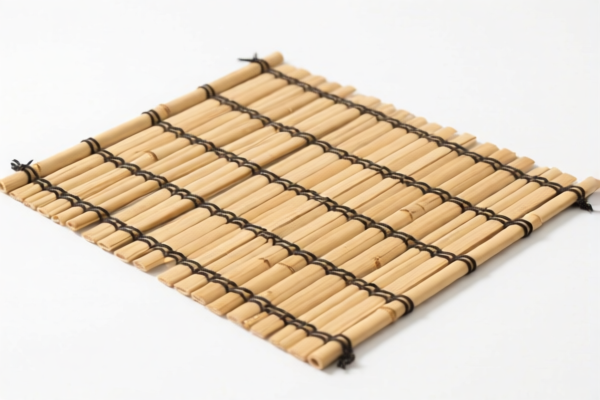
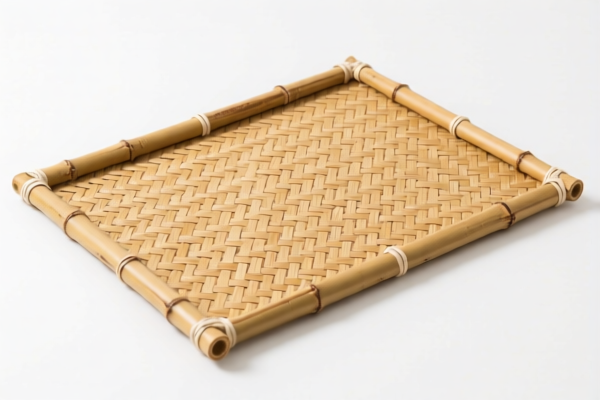
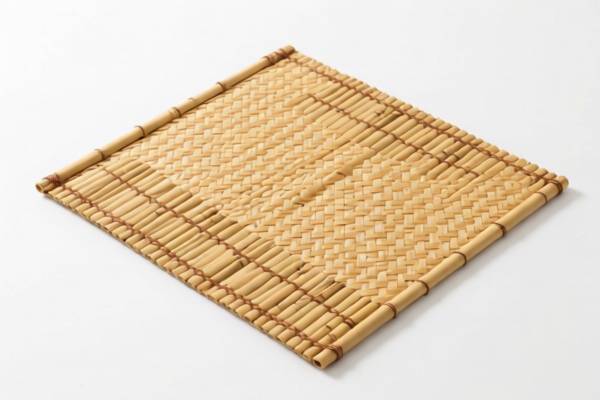
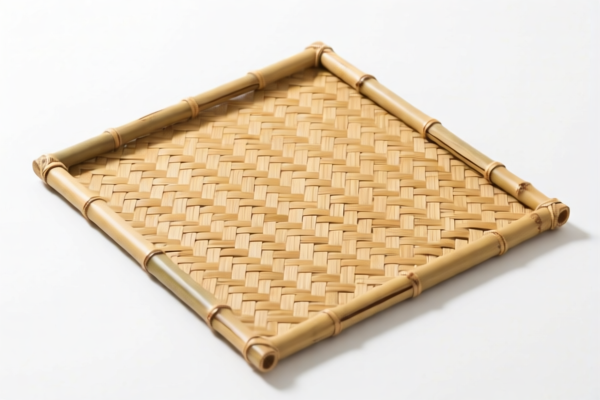
AI Analysis
🎋 Bamboo Floor Mat: Woven Pattern (Bamboo Woven Mats)
🌐 HS Code Reference & Customs Clearance Guide | 2026 Latest Tariff Analysis | Professional Entry Strategy
📌 I. Product Definition & Classification: Do You Really Understand "Bamboo Floor Mats"?
Bamboo floor mats are popular home décor and functional items used for decoration, insulation, or protection. However, in international trade, their classification depends strictly on material composition, manufacturing process, and specific use.
International customs authorities often debate whether a woven bamboo mat is: 1. A "Woven Product" of bamboo strips (Chapter 46)? 2. A "Wood/Bamboo Article" processed beyond weaving (Chapter 44)? 3. A "Floor Covering" similar to textile rugs (Chapter 57)?
⚠️ Key Distinction Points: - If the primary characteristic is weaving strips of bamboo → Look at Chapter 46. - If it is considered a processed wooden/bamboo item or underutilized chapter → Look at Chapter 44. - If classified as a floor covering regardless of material (rare for bamboo, but possible for composite/fiber blends) → Look at Chapter 57.
📦 II. HS Code Classification Details (2026 Latest Tariff Authority Comparison)
| HS Code | Product Description | Application Scenario | Classification Logic |
|---|---|---|---|
4602.11.07.00 |
Bamboo floor mats; made of bamboo, woven form, classified as "mats" | Decorative bamboo weaving, strict "woven" definition | ✅ Woven Bamboo Product |
4602.11.45.00 |
Bamboo floor mats; made of bamboo, woven form, "other" bamboo woven articles | Other bamboo woven items not specified elsewhere | ✅ Woven Bamboo Product |
5705.00.20.90 |
Bamboo floor mats; classified as textile/fiber floor coverings, mat form | Rare: Treated as a "rug/carpet" equivalent | ⚠️ Floor Covering |
4421.91.98.80 |
Bamboo floor mats; bamboo material, woven mat form, "other wood/bamboo articles" | Treated as a processed bamboo article rather than just "weaving" | ✅ Wood/Bamboo Article |
4421.99.98.80 |
Bamboo floor mats; bamboo material, mat form, "other wood articles" (catch-all) | Fallback classification for bamboo items | ✅ Wood/Bamboo Article |
🔍 Key Reminder: - Chapter 46 vs. Chapter 44: The critical factor is whether the bamboo is processed into strips and woven. If it fits the definition of Chapter 46 ("Baskets, Wickerwork and Other Woven Articles"), it should go there. However, if customs deems it a "processed wood article," Chapter 44 may apply. - Chapter 57: While this covers floor coverings, pure bamboo mats are rarely classified here unless they are composite materials with textile backing. It carries a high tax rate.
💰 III. 2026 Latest Tariff Rate Details (Including Surcharge & Policy Add-ons)
✅ Applicable Country: United States (US) ✅ Origin: China (CN) ✅ Effective Time: From November 10, 2025 (and subsequent imports)
🎯 1. 4602.11.07.00 —— Bamboo Floor Mats (Woven)
| Item | Content |
|---|---|
| Basic Rate | 0% (ad valorem) |
| Section 301 Surcharge | +25.0% (Additional Tariff) |
| Section 122 Tariff | +10.0% (Specific Policy Tariff) |
| Total Tax Rate | 35.0% |
| Tax Calculation | CIF Value × 35.0% |
| De Minimis Eligibility | ❌ Not Eligible (High risk of seizure/duty assessment) |
| Legal Basis Path | Section 301:8524.11.10.00 → Section 122 → USITC:4602.11.07.00 |
📌 Explanation: - This code falls under Chapter 46 (Woven articles). - The 25% is the standard Section 301 tariff on Chinese goods. - The 10% is an additional "Section 122" tariff (often related to specific trade enforcement or emergency measures). - Total: 35%. This is the most favorable rate among the options if the product strictly qualifies as "woven bamboo."
🎯 2. 4602.11.45.00 —— Other Bamboo Woven Articles
| Item | Content |
|---|---|
| Basic Rate | 6.6% |
| Section 301 Surcharge | +25.0% |
| Section 122 Tariff | +10.0% |
| Total Tax Rate | 41.6% |
| Tax Calculation | CIF Value × 41.6% |
| De Minimis Eligibility | ❌ Not Eligible |
| Legal Basis Path | Section 301 → Section 122 → USITC:4602.11.45.00 |
📌 Note: - If the specific "woven bamboo" description doesn't fit
4602.11.07.00, it may fall into this "other" category. - The basic rate is higher (6.6%), making the total tax burden heavier than the previous code. - Try to justify4602.11.07.00to save 6.6% in basic duties.
🎯 3. 5705.00.20.90 —— Bamboo Floor Mats (Floor Covering)
| Item | Content |
|---|---|
| Basic Rate | 3.3% |
| Section 301 Surcharge | +25.0% |
| Section 122 Tariff | +10.0% |
| Total Tax Rate | 38.3% |
| Tax Calculation | CIF Value × 38.3% |
| De Minimis Eligibility | ❌ Not Eligible |
| Legal Basis Path | Section 301 → Section 122 → USITC:5705.00.20.90 |
📌 Warning: - Classifying bamboo as a "textile/fiber floor covering" is risky. Customs may reject this if it's 100% bamboo. - The total tax (38.3%) is worse than the best Chapter 46 option (35.0%). - Only use this if the product contains significant textile components (e.g., bamboo fiber mixed with cotton/rayon).
🎯 4 & 5. 4421.91.98.80 & 4421.99.98.80 —— Other Wood/Bamboo Articles
| Item | Content |
|---|---|
| Basic Rate | 3.3% |
| Section 301 Surcharge | +25.0% |
| Section 122 Tariff | +10.0% |
| Total Tax Rate | 38.3% |
| Tax Calculation | CIF Value × 38.3% |
| De Minimis Eligibility | ❌ Not Eligible |
| Legal Basis Path | Section 301 → Section 122 → USITC:4421.9x.x8.80 |
📌 Note: - These are "catch-all" codes for bamboo articles not covered elsewhere. - If customs decides your "woven" mat is actually a "processed bamboo article," these codes apply. - The rate (38.3%) is higher than the optimal Chapter 46 rate (35.0%).
🛠️ IV. Customs Clearance Practical Advice (Avoiding Pitfalls)
✅ 1. Required Documentation Checklist (Do Not Miss)
| Document | Required | Description |
|---|---|---|
| ✅ Product Specification Sheet | ✔️ | Material: 100% Bamboo (or specify %). Process: Woven. Size, Weight. |
| ✅ Photos (Clear) | ✔️ | Show the weaving pattern, edges, and any backing material. |
| ✅ Bill of Lading / Invoice | ✔️ | Describe as "Bamboo Woven Floor Mat", not just "Mat" or "Rug". |
| ✅ Declaration of Composition | ✔️ | Explicitly state: "Made of bamboo strips, woven by hand/machine." |
| ✅ Certificate of Origin (CO) | ✔️ | If applicable for non-US origins to avoid Section 301. |
✅ 2. Declaration Tips (Key Mantra)
🔥 "Woven is Key, Bamboo is King, Chapter 46 Wins the Fight!"
| Scenario | Correct Declaration | Wrong Action |
|---|---|---|
| Pure Bamboo, Woven Strips | HS 4602.11.07.00 (35% Tax) | Misdeclare as "Rug" (HS 5705) → 38.3% Tax + Risk of Rejection |
| Bamboo + Fabric Backing | Check if Textile dominates | If fabric >50%, might go to Chapter 57, but risky for pure bamboo |
| Processed Bamboo Planks | HS 4421.xx.xx (38.3% Tax) | Do not claim "woven" if it's just sliced bamboo glued together |
| Mixed Material Mats | Declare all components | Hidden materials lead to penalties |
✅ 3. Special Situations
| Situation | Handling Advice |
|---|---|
| Bamboo Fiber Mats | If made from bamboo fiber (processed pulp) woven like fabric, it may be textile (Chapter 57 or 63). Pure bamboo strips are Chapter 46. |
| With Non-Woven Backing | If the backing is minor (e.g., felt for grip), it does not change the primary classification to Chapter 57. Still likely Chapter 46 or 44. |
| Dropshipping / De Minimis | ⚠️ WARNING: Rates are 35-41%. Section 321 (De Minimis) does NOT apply to Chinese-origin goods under these high tariffs. Do not attempt to split shipments to avoid duty. |
🌍 V. Global Market Comparison (2026 Latest)
| Country/Region | Recommended HS Code | Tariff (China Origin) | Certification | Notes |
|---|---|---|---|---|
| 🇺🇸 USA | 4602.11.07.00 |
35.0% (Total) | FDA (if food contact), Prop 65 | Section 301 + 122 apply. |
| 🇨🇳 China | 4602.11.07.00 |
0-13% (Export/Import varies) | N/A | Low import duty to China. |
| 🇪🇺 EU | 4601.20 or 4602.11 |
5-6% | CE (if applicable) | No Section 301/122. Much cheaper. |
| 🇬🇧 UK | 4602.11 |
5-6% | UKCA | Post-Brexit rules similar to EU. |
| 🇨🇦 Canada | 4602.11 |
0-5% | CCC (if applicable) | CUSMA potential benefits for non-CN origin. |
📌 Conclusion: - The US market is the most expensive due to Section 301 and Section 122 tariffs. - Chapter 46 is the best legal path for pure bamboo woven mats, but you must prove the "woven" nature. - Avoid Chapter 57 unless you have textile backing that changes the essential character.
📌 VI. Common Mistakes & Pitfalls (Lessons Learned)
❌ Mistake 1: Declaring as "Bamboo Rug" (HS 5705) 👉 Consequence: Customs may reject it as "not textile," forcing reclassification to Chapter 44 or 46 with penalties. Even if accepted, the rate (38.3%) is higher than the optimal 35.0%.
❌ Mistake 2: Not specifying "Woven" 👉 Consequence: If described as "Bamboo Mat," customs may default to "Wood Article" (Chapter 44), leading to the 38.3% rate. Always specify "Woven Bamboo Strips."
❌ Mistake 3: Assuming De Minimis applies 👉 Consequence: For Chinese goods, de minimis ($800) is blocked for Section 301 goods. Packages will be held, and duties will be assessed on the entire value.
✅ Correct Action:
"Bamboo Woven Floor Mat, Made of Bamboo Strips, Hand-Woven, No Textile Backing, Model XYZ"
🎯 VII. Conclusion: Professional Declaration Saves Money!
🎯 Remember the Mantra:
🔹 "Woven = Chapter 46. Pure Bamboo = 35%. Don't guess, Prove it!"
🔹 "HS Code decides tax. 3.3% difference means real profit."
📌 Pro Tip: If your bamboo mats are sourced from Vietnam, Thailand, or Indonesia, you may be eligible for lower or zero Section 301 tariffs. 👉 Action: 1. Get a Certificate of Origin from the non-China country. 2. Ensure substantial transformation occurs in that country. 3. Declare the correct origin to save 25-35% in duties.
📣 Immediate Action:
📞 Consult a licensed customs broker. 📤 Provide clear photos showing the weave. 📝 Request an Advance Ruling if importing large volumes. 🚀 Clear customs efficiently, protect your margin, and grow your business!
✨ Professional clearance starts with accurate classification!
💼 Every percentage point counts in global trade!
Customer Reviews
About HS Code Classification
The Harmonized System (HS) is an internationally standardized nomenclature developed by the World Customs Organization (WCO) to classify traded products. Over 200 countries use the HS system as the basis for customs tariffs, trade statistics, and import/export regulations.
Each HS code follows a hierarchical structure:
- Chapter (2 digits) — Broad category of goods (e.g., Chapter 84: Machinery and Mechanical Appliances)
- Heading (4 digits) — More specific grouping within the chapter
- Subheading (6 digits) — Internationally standardized breakdown, used by all WCO member countries
- National subdivisions (8-10 digits) — Country-specific extensions for further classification, such as US HTSUS 10-digit codes
Correct HS code classification is essential for smooth customs clearance, accurate duty payment, and compliance with trade regulations. Misclassification can lead to customs delays, overpayment of duties, or penalties.
When importing from CN to US, the applicable tariff rates may include:
- Most-Favored-Nation (MFN) rate — The standard duty rate applied to WTO members
- General rate — Applied to countries without trade agreements
- Trade remedy duties — Additional tariffs such as Section 301 (anti-dumping), Section 232 (national security), or countervailing duties
The information provided on this page is for reference purposes only. For official classification, please consult with your local customs authority or a licensed customs broker.