Bamboo Floor Mats Rough Surface
CN → US| HS Code | Tariff Rate | Origin | Destination | Doc |
|---|---|---|---|---|
| 4602110700 | 35.0% | CN | US | Official Doc |
| 4602114500 | 41.6% | CN | US | Official Doc |
| 5705002090 | 38.3% | CN | US | Official Doc |
| 4421919880 | 38.3% | CN | US | Official Doc |
| 4421999880 | 38.3% | CN | US | Official Doc |
Product Images
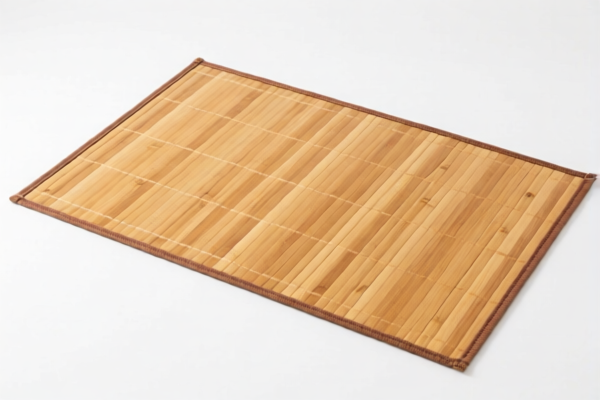
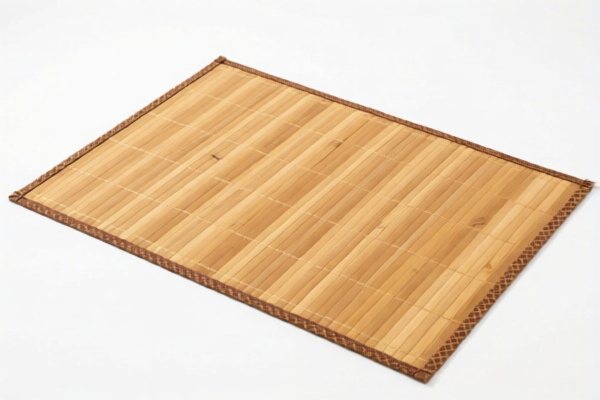
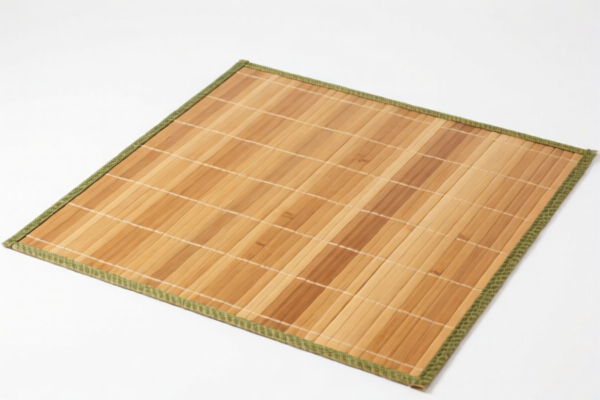
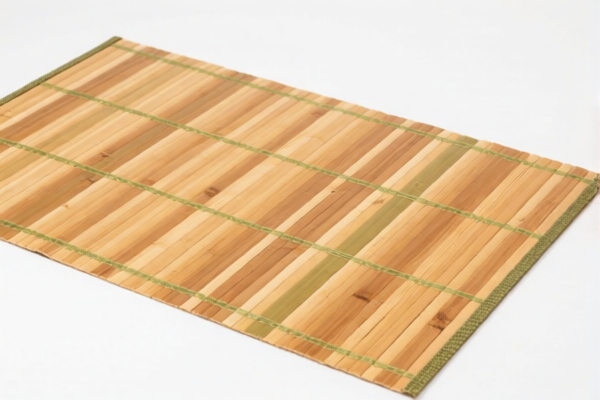
AI Analysis
🎋 Bamboo Floor Mats (Rough Surface)
🌐 HS Code Reference & Clearance Guide | 2026 Latest Tariff Analysis | Professional Clearance Strategy
📌 I. Product Definition & Classification: Do You Really Know "Bamboo Floor Mats"?
Bamboo floor mats, particularly those with a rough surface, are popular in home decor, yoga, and industrial flooring for their natural aesthetic and anti-slip properties. In international trade, classification depends heavily on the material composition, manufacturing process, and specific function.
Key Distinctions:
- Pure Bamboo Weaving (Chapter 46): Items made primarily by weaving bamboo strips or fibers.
- Bamboo as a Wood Substitute (Chapter 44): Items where bamboo is treated or processed similarly to wood, often used as flooring or general articles.
- Floor Coverings (Chapter 57): If the item is primarily considered a textile-like floor covering, even if made from natural fibers like bamboo.
⚠️ Critical Classification Point:
- If the primary characteristic is weaving of bamboo strips, it may fall under Chapter 46 (Articles of basket-weaving materials). - If it is considered a general article of bamboo or treated like wood flooring, it may fall under Chapter 44. - If it is deemed a textile/fiber floor covering, it may fall under Chapter 57.
📦 II. HS Code Classification Details (2026 Latest Tariff Authoritative Comparison)
| HS Code | Product Description | Application Scenario | Key Classification Basis |
|---|---|---|---|
4602.11.07.00 |
Floor mats of woven bamboo, material: bamboo, form: woven, use: mats | Purely woven bamboo mats, natural finish | Weaving process is dominant |
4602.11.45.00 |
Floor mats of woven bamboo, material: bamboo weaving, form: woven制品, use: floor mats | Woven bamboo floor coverings | Specific subheading for woven floor mats |
5705.00.20.90 |
Textile/fiber floor coverings, inferred from bamboo weaving material, form: floor covering | Bamboo fiber mats treated as textiles | Textile-like appearance/function |
4421.91.98.80 |
Other bamboo articles, material: bamboo, form: woven mat, other category | Bamboo mats classified as general bamboo articles | Other bamboo products (not basket-weaving) |
4421.99.98.80 |
Other wood products, material: bamboo, form: mat, catch-all classification | Bamboo mats as a general "wood-like" product | Catch-all for other wood/bamboo articles |
🔍 Key Reminder:
- Chapter 46 (e.g.,4602.11.xxxx) applies if the item is clearly woven from bamboo strips. - Chapter 44 (e.g.,4421.9x.xxxx) applies if the bamboo is processed like wood (e.g., laminated, pressed) or if it doesn’t fit the strict "basket-weaving" definition. - Chapter 57 (e.g.,5705.00.xxxx) is a fallback if the mat is considered a floor covering similar to carpets or rugs, even if made from bamboo fibers.
💰 III. 2026 Latest Tariff Rate Details (Including Additional Taxes, Policy Add-ons)
✅ Applicable Country: United States (US)
✅ Origin: China (CN)
✅ Effective Date: From November 10, 2025 (including subsequent imports)
🎯 1. 4602.11.07.00 —— Woven Bamboo Floor Mats
| Item | Content |
|---|---|
| Basic Tariff | 0% (ad valorem) |
| Additional Tariff (Section 301) | +25% |
| IEEPA Tariff (Section 122) | +10% |
| Total Tariff | 35.0% |
| Tax Calculation | CIF Value × 35.0% |
| De Minimis Exemption | ❌ Not Eligible (deny_de_minimis) |
| Legal Basis Path | IEEPA:9903.01.25 → USITC:4602.11.07.00 → FOOTNOTE:9903.88.01 |
📌 Explanation:
- "25% Additional Tariff" is under the US Trade Act Section 301. - "10% IEEPA Tariff" is under the International Emergency Economic Powers Act for Chinese products. - Total 35% is considered high, requiring advance planning!
🎯 2. 4602.11.45.00 —— Woven Bamboo Floor Mats (Specific Subcategory)
| Item | Content |
|---|---|
| Basic Tariff | 6.6% |
| Additional Tariff (Section 301) | +25% |
| IEEPA Tariff (Section 122) | +10% |
| Total Tariff | 41.6% |
| Tax Calculation | CIF Value × 41.6% |
| De Minimis Exemption | ❌ Not Eligible |
| Legal Basis Path | IEEPA:9903.01.24 → USITC:4602.11.45.00 → FOOTNOTE:9903.88.01 |
📌 Note:
- Higher basic tariff (6.6%) compared to4602.11.07.00(0%). - Still subject to 25% + 10% additional tariffs. - Total 41.6% is even higher!
🎯 3. 5705.00.20.90 —— Textile/Fiber Floor Coverings (Bamboo-Inferred)
| Item | Content |
|---|---|
| Basic Tariff | 3.3% |
| Additional Tariff (Section 301) | +25% |
| IEEPA Tariff (Section 122) | +10% |
| Total Tariff | 38.3% |
| Tax Calculation | CIF Value × 38.3% |
| De Minimis Exemption | ❌ Not Eligible |
| Legal Basis Path | IEEPA:9901.25 → USITC:5705.00.20.90 → FOOTNOTE:9903.88.01 |
📌 Note:
- Classified as a floor covering rather than a woven article. - Total 38.3% is moderate but still significant.
🎯 4. 4421.91.98.80 —— Other Bamboo Articles
| Item | Content |
|---|---|
| Basic Tariff | 3.3% |
| Additional Tariff (Section 301) | +25% |
| IEEPA Tariff (Section 122) | +10% |
| Total Tariff | 38.3% |
| Tax Calculation | CIF Value × 38.3% |
| De Minimis Exemption | ❌ Not Eligible |
| Legal Basis Path | IEEPA:9903.01.24 → USITC:4421.91.98.80 → FOOTNOTE:9903.88.01 |
📌 Note:
- Classified as a general bamboo article. - Same total tariff as Chapter 57 (38.3%).
🎯 5. 4421.99.98.80 —— Other Wood Products (Catch-All for Bamboo)
| Item | Content |
|---|---|
| Basic Tariff | 3.3% |
| Additional Tariff (Section 301) | +25% |
| IEEPA Tariff (Section 122) | +10% |
| Total Tariff | 38.3% |
| Tax Calculation | CIF Value × 38.3% |
| De Minimis Exemption | ❌ Not Eligible |
| Legal Basis Path | IEEPA:9903.01.24 → USITC:4421.99.98.80 → FOOTNOTE:9903.88.01 |
📌 Note:
- Catch-all classification for bamboo products not otherwise specified. - Same total tariff as other Chapter 44/57 options (38.3%).
🛠️ IV. Clearance Practical Advice (Battle-Tested Pitfall Avoidance Guide)
✅ 1. Preparation Checklist (All Required)
| Document | Mandatory? | Description |
|---|---|---|
| ✅ Product Specifications | ✔️ | Includes dimensions, weaving pattern, surface finish (rough/natural), usage |
| ✅ Material Composition Report | ✔️ | Confirms 100% bamboo or blended materials |
| ✅ Product Photos (Including Label) | ✔️ | Clear images of front, back, edges, and label |
| ✅ Third-Party Testing Report | ✔️ | If applicable: FSC, CARB, or eco-certifications |
| ✅ Commercial Invoice | ✔️ | Must clearly state "Bamboo Floor Mats, Woven, Rough Surface" |
| ✅ Certificate of Origin (CO) | ✔️ | For potential preferential rates (if applicable) |
| ✅ Packing List | ✔️ | Details units per carton, gross/net weight, dimensions |
✅ 2. Declaration Tips (Key Mnemonics)
🔥 “Woven vs. Wood: Choose Carefully! Rough Surface Doesn’t Change HS Code!”
| Scenario | Correct Declaration | Incorrect Practice |
|---|---|---|
| Purely woven bamboo strips | 4602.11.07.00 or 4602.11.45.00 |
Misclassify as "wood flooring" → Higher tariff |
| Bamboo fibers pressed into mats | 5705.00.20.90 |
Misclassify as "woven" → Classification dispute |
| Bamboo laminated like wood | 4421.91.98.80 or 4421.99.98.80 |
Misclassify as "textile" → Incorrect classification |
| "Rough surface" only | No change in HS Code | Trying to use "rough" to justify lower tariff → Audit risk |
✅ 3. Special Situations Handling
| Situation | Handling Advice |
|---|---|
| Mixed Materials | If bamboo is blended with other fibers, clarify the primary material in declaration |
| OEM Custom Mats | Provide client order + design specs to avoid being labeled as "generic" |
| Anti-Slip Coating | If coated with rubber or plastic, may shift classification to Chapter 39 or 40 – consult expert |
| Rolled vs. Tile | Rolled mats may be classified differently than tile-style mats – specify form factor |
🌍 V. Global Market Clearance Comparison (2026 Latest)
| Country/Region | Recommended HS Code | Tariff | Certification Requirements | Notes |
|---|---|---|---|---|
| 🇺🇸 United States | 4602.11.07.00 |
35% (Chinese origin) | None specific | Highest tax burden due to 301 + IEEPA |
| 🇨🇳 China | 4602.11.07.00 |
0-5% | None | Low tariff, easy clearance |
| 🇪🇺 European Union | 4602.11.00.00 |
0-3% | CE, REACH | Minimal additional taxes |
| 🇦🇺 Australia | 4602.11.00.00 |
5% | None | Moderate tariff |
| 🇯🇵 Japan | 4602.11.00.00 |
0-5% | FSC optional | Low tariff, eco-friendly focus |
📌 Conclusion:
- The US imposes the highest tariffs on Chinese-made bamboo floor mats due to Section 301 and IEEPA taxes. - EU, Japan, and Australia offer more favorable rates with fewer barriers. - Consider supply chain diversification if targeting the US market heavily.
📌 VI. Common Errors & Pitfall Avoidance (Lessons Learned)
❌ Error 1: Declaring woven bamboo mats as "wood flooring" (4411.94)
👉 Consequence: Classification dispute, potential delay, fines
❌ Error 2: Using "Rough Surface" to justify a different HS Code
👉 Consequence: No tariff benefit, possible audit flag
❌ Error 3: Failing to declare "woven" nature, listing only "bamboo mats"
👉 Consequence: Customs may reclassify to a higher-tariff category
❌ Error 4: Ignoring IEEPA Section 122 tariffs
👉 Consequence: Unexpected 10% surcharge, cost miscalculation
✅ Correct Approach:
“Woven Bamboo Floor Mats, Rough Surface, 100% Natural Bamboo, Dimensions: 24x24 inch, Model: XYZ, FSC Certified”
🎯 VII. Conclusion: Precision Classification Saves Money!
🎯 Remember the Mnemonics:
🔹 “Woven is Chapter 46, Wood-like is 44, Textile-like is 57!”
🔹 “Rough surface doesn’t change the code, choose wisely or pay more!”
🔹 “US tariffs hit hard: 35-41%, plan ahead or pivot supply chain!”
📌 Pro Tips:
- If your bamboo mats are sourced from Vietnam, Thailand, or Malaysia, you may qualify for IEEPA exemptions or lower Section 301 rates.
- Apply for Advance Rulings from US Customs and Border Protection (CBP) to lock in a favorable classification.
- Consider eco-certifications (FSC, CARB) to enhance marketability, especially in the EU and Japan.
📣 Immediate Action:
📞 Contact a licensed customs broker + Provide product photos + Apply for HS Code Advance Ruling
🚀 Ensure smooth clearance, optimize costs, and maximize profit margins!
✨ Professional clearance starts with precise classification!
💼 Every cent counts in international trade!
Customer Reviews
About HS Code Classification
The Harmonized System (HS) is an internationally standardized nomenclature developed by the World Customs Organization (WCO) to classify traded products. Over 200 countries use the HS system as the basis for customs tariffs, trade statistics, and import/export regulations.
Each HS code follows a hierarchical structure:
- Chapter (2 digits) — Broad category of goods (e.g., Chapter 84: Machinery and Mechanical Appliances)
- Heading (4 digits) — More specific grouping within the chapter
- Subheading (6 digits) — Internationally standardized breakdown, used by all WCO member countries
- National subdivisions (8-10 digits) — Country-specific extensions for further classification, such as US HTSUS 10-digit codes
Correct HS code classification is essential for smooth customs clearance, accurate duty payment, and compliance with trade regulations. Misclassification can lead to customs delays, overpayment of duties, or penalties.
When importing from CN to US, the applicable tariff rates may include:
- Most-Favored-Nation (MFN) rate — The standard duty rate applied to WTO members
- General rate — Applied to countries without trade agreements
- Trade remedy duties — Additional tariffs such as Section 301 (anti-dumping), Section 232 (national security), or countervailing duties
The information provided on this page is for reference purposes only. For official classification, please consult with your local customs authority or a licensed customs broker.