Bamboo Laundry Basket
CN → US| HS Code | Tariff Rate | Origin | Destination | Doc |
|---|---|---|---|---|
| 4602110900 | 45.0% | CN | US | Official Doc |
| 4602191800 | 39.5% | CN | US | Official Doc |
| 7326908688 | 87.9% | CN | US | Official Doc |
| 3926901000 | 20.9% | CN | US | Official Doc |
| 3926909989 | 22.8% | CN | US | Official Doc |
Product Images
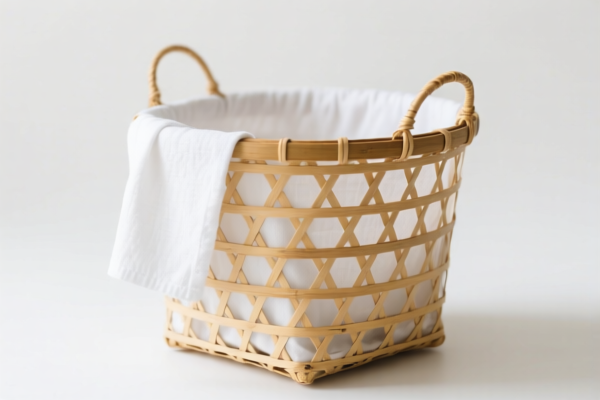
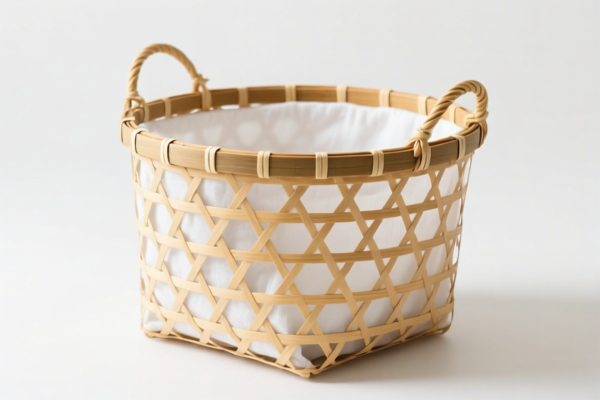
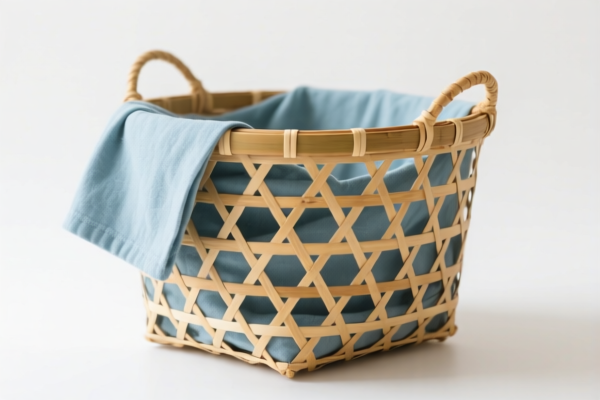
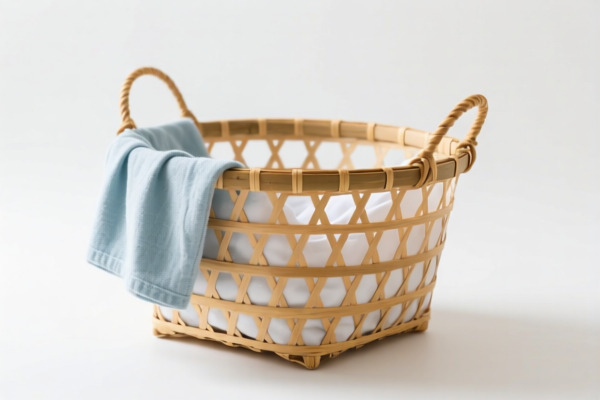
AI Analysis
🧺 Bamboo Laundry Basket: HS Code Classification & US Import Tariff Strategy (2026)
🌐 HS Code Reference & Customs Clearance Guide | 2026 Latest Tariff Analysis | Professional Clearance Strategy
📌 I. Product Definition & Classification: What is a "Bamboo Laundry Basket"?
A Bamboo Laundry Basket is a household storage container used for sorting or holding laundry. In international trade, the classification depends heavily on two factors: 1. Material: Is it strictly bamboo (Chapter 46)? Is it plastic (Chapter 39)? Or is it metal with a bamboo-like finish (Chapter 73)? 2. Form: Is it woven/interlaced (basket form) or a rigid container?
⚠️ Key Distinction Point: - If made of woven bamboo strips (plant material) → Classified under Chapter 46. - If made of molded plastic → Classified under Chapter 39. - If made of steel/iron (even if styled like bamboo) → Classified under Chapter 73.
📦 II. HS Code Classification Details (2026 Latest Tariff Authority)
Based on the provided data, here are the possible HS Codes and their corresponding logic:
| HS Code | Product Description | Material Inference | Key Classification Logic |
|---|---|---|---|
| 4602.11.09.00 | Baskets and other products made directly to shape from weaving materials (e.g., bamboo strips) | Bamboo/Plant Material | Primary Match: Fits the description of "bamboo" as a weaving material. Chapter 46 covers articles of vegetation. |
| 4602.19.18.00 | Other baskets and basketware (not specifically bamboo) | Plant Material (General) | Alternative Match: If the material is not strictly bamboo but other plant fibers (rattan, grass, reed), it falls under "Other" baskets. |
| 3926.90.99.89 | Other articles of plastics and articles of other materials of headings 3901–3914 | Plastic | Non-Match (Unless Plastic): Only applies if the "bamboo" appearance is actually molded plastic resin. |
| 7326.90.86.88 | Other articles of iron or steel | Iron/Steel | Non-Match (Unless Metal): Only applies if the basket is metal structure painted to look like bamboo. |
🔍 Critical Reminder: - Real Bamboo Baskets must be declared as Chapter 46 (4602.11.09.00 or 4602.19.18.00). Misdeclaring plastic/metal as bamboo to avoid tariffs is a major compliance risk. - The summary for
4602.11.09.00explicitly states: "Form matches basket, material inferred as bamboo/plant material, fits bamboo attribute classification."
💰 III. 2026 Latest Tariff Rate Breakdown (Including Surcharges & Policy Add-ons)
✅ Applicable Country: United States (US) ✅ Origin: China (CN) ✅ Effective Date: 2025 onwards (Current Data Snapshot)
🎯 1. 4602.11.09.00 —— Bamboo Baskets (Most Likely Classification)
| Item | Content |
|---|---|
| Base Duty Rate | 10.0% (Ad Valorem) |
| Section 301 Surcharge | +25.0% (From USITC Footnote 9903.88.01) |
| Section 122 Tariff | +10.0% (Specific legislative add-on) |
| Total Effective Tax Rate | 45.0% |
| Tax Calculation | CIF Value × 45% |
| De Minimis Exemption? | ❌ No (High duty rates typically disqualify from Section 321 de minimis for certain categories, or simply make it economically unviable). |
📌 Explanation: - Base 10%: Standard Most Favored Nation (MFN) rate for bamboo woven goods. - 301 Surcharge 25%: Applies to goods from China under Trade Act of 1974 Section 301. - Section 122 10%: An additional tariff layer applied to specific Chinese imports. - Total 45%: This is a high-cost item for US importers. Cost savings in manufacturing are often erased by these duties.
🎯 2. 4602.19.18.00 —— Other Plant Fiber Baskets (e.g., Rattan/Grass)
| Item | Content |
|---|---|
| Base Duty Rate | 4.5% (Ad Valorem) |
| Section 301 Surcharge | +25.0% |
| Section 122 Tariff | +10.0% |
| Total Effective Tax Rate | 39.5% |
| Tax Calculation | CIF Value × 39.5% |
| De Minimis Exemption? | ❌ No |
📌 Note: - If your basket is made of rattan, seagrass, or reed (not strict bamboo), the base rate is lower (4.5% vs 10%), resulting in a 39.5% total tax. This is a 5.5% savings compared to strict bamboo classification. - Customs Argument: If the material is ambiguous, importers often argue for "Other Plant Materials" to access the lower base rate, provided the product does not meet the strict technical definition of "bamboo" (Genus Bambusa).
🎯 3. 3926.90.99.89 —— Plastic "Bamboo" Look-alikes
| Item | Content |
|---|---|
| Base Duty Rate | 5.3% (Ad Valorem) |
| Section 301 Surcharge | +7.5% (Note: Data shows 7.5%, likely due to different 301 list category for plastics vs. wood/bamboo) |
| Section 122 Tariff | +10.0% |
| Total Effective Tax Rate | 22.8% |
| Tax Calculation | CIF Value × 22.8% |
| De Minimis Exemption? | ❌ No |
📌 Strategy: - If the product is 100% plastic (resin) designed to look like bamboo, the tax burden is significantly lower (22.8% vs 45%). - Risk: You must ensure the material composition certificate explicitly states "100% Plastic" or "PP/PE." Mislabeling plastic as bamboo can lead to fraud penalties.
🎯 4. 7326.90.86.88 —— Metal Baskets (Iron/Steel)
| Item | Content |
|---|---|
| Base Duty Rate | 2.9% (Ad Valorem) |
| Section 301 Surcharge | +25.0% |
| Section 122 Tariff | +10.0% |
| Aluminum/Copper Surcharge | +50.0% (If applicable, but this is Steel/Iron) |
| Total Effective Tax Rate | 87.9% |
| Tax Calculation | CIF Value × 87.9% |
| De Minimis Exemption? | ❌ No |
📌 Warning: - Metal baskets have a very low base rate but suffer from the highest total tariff (87.9%) due to the combination of 301, 122, and potential steel/aluminum specific add-ons. - Recommendation: Avoid importing metal laundry baskets from China if possible due to extreme cost inefficiency.
🛠️ IV. Customs Clearance Practical Advice (Real-World Pitfall Avoidance)
✅ 1. Documentation Checklist (Non-Negotiable)
| Document | Required? | Description |
|---|---|---|
| ✅ Commercial Invoice | ✔️ | Must clearly state "Bamboo Laundry Basket" or "Plant Fiber Basket." Do not use vague terms like "Home Storage." |
| ✅ Packing List | ✔️ | Show weight and dimensions. Verify no hidden metal parts (wires/handles) that might reclassify the item. |
| ✅ Material Composition Certificate | ✔️ | Critical. From the manufacturer stating: "100% Natural Bamboo" or "100% Plastic Resin." |
| ✅ Product Photos | ✔️ | Close-ups of the weave/pattern. If woven → Chapter 46. If molded → Chapter 39. |
| ✅ Fumigation Certificate | ✔️ | If using real bamboo, phytosanitary controls may apply. Ensure it is processed/heat-treated to avoid biosecurity issues. |
✅ 2. Declaration Strategy (Key Mantra)
🔥 "Real Bamboo = 45%, Plastic = 22%, Metal = 88%. Choose Wisely."
| Scenario | Correct Declaration | Wrong Declaration | Consequence |
|---|---|---|---|
| 100% Natural Bamboo | 4602.11.09.00 |
3926.90.99.89 (Plastic) |
Fraud. Heavy fines + seizure. |
| Rattan/Grass | 4602.19.18.00 |
4602.11.09.00 (Bamboo) |
Penalty. Incorrect origin of material. |
| Plastic Resin | 3926.90.99.89 |
4602.11.09.00 (Bamboo) |
Misclassification. Overpaying tax? Or risk of audit if declared plastic but found bamboo. |
| Mixed Materials | Split Line Items | Single HS Code | Delay. Bamboo + Steel Handle? Might need split declaration or highest duty applies. |
✅ 3. Special Handling Tips
- Fumigation: Bamboo is a plant product. US Customs and Border Protection (CBP) and APHIS may inspect for pests. Ensure the supplier provides a Phytosanitary Certificate if required by the port of entry.
- Composite Goods: If the basket has plastic handles or metal hinges, the essential character test applies. If the bamboo body dominates, it may still be Chapter 46, but disclose all materials in the invoice.
- Section 122 Impact: The 10% Section 122 tariff is a persistent burden on Chinese goods. Factor this into your landed cost calculation. It is not a one-time fee.
🌍 V. Global Market Comparison (2026)
| Market | Recommended HS Code | Base Duty | Surcharges | Total Est. Tax | Notes |
|---|---|---|---|---|---|
| 🇺🇸 USA | 4602.11.09.00 |
10% | 301: 25%, 122: 10% | 45.0% | High barrier. Consider Vietnam/Thailand sourcing. |
| 🇺🇸 USA | 4602.19.18.00 |
4.5% | 301: 25%, 122: 10% | 39.5% | Lower base rate for non-bamboo plants. |
| 🇨🇳 China | 4602.19.10.00 |
15% | None | 15.0% | Domestic consumption is cheaper. |
| 🇪🇺 EU | 4602.19.00.00 |
0-5% | None | <5% | EU has no 301/122 equivalent. Much more competitive. |
| 🇬🇧 UK | 4602.19.00.00 |
0-6% | None | <6% | Post-Brexit tariffs are competitive. |
📌 Conclusion: - The USA is the most expensive market for bamboo/plant fiber baskets due to the cumulative effect of Section 301 and Section 122 tariffs. - Cost Saving Strategy: If the material allows, classify as "Other Plant Material" (
4602.19.18.00) to save 5.5% on the total value. If the product can be made of Plastic, the tax burden is nearly halved (22.8%).
📌 VI. Common Errors & Pitfalls (Blood & Tears Lessons)
❌ Error 1: Declaring "Bamboo Basket" but providing no material certificate.
👉 Consequence: CBP may reclassify to Plastic (3926) or Other and assess penalties for lack of documentation. Or worse, hold shipment for phytosanitary inspection.
❌ Error 2: Using "Laundry Hamper" (a different HS code sometimes) to avoid duty. 👉 Consequence: If it looks like a basket, it is a basket. Misdescription leads to audits.
❌ Error 3: Ignoring the Section 122 Tariff. 👉 Consequence: Budgeting only for 301 (25%) and Base (10%) results in a 10% underpayment. Total is 45%, not 35%.
✅ Correct Approach:
"Laundry Basket, Woven, Natural Bamboo, Heat-Treated, No Metal Components. HS: 4602.11.09.00. Country of Origin: China."
🎯 VII. Conclusion: Professional Declaration, Save Money, Avoid Risks!
🎯 Remember the Mantra:
🔹 "Bamboo is 45%, Other Plant is 39.5%, Plastic is 22.8%. Metal is 87.9%!" 🔹 "Declare material accurately. Section 122 bites everyone. No surprises!"
📌 Pro Tip: If your volume is high, consider: 1. Shifting Sourcing: Move production to Vietnam or Thailand to bypass Chinese 301/122 tariffs (if allowed by Rules of Origin). 2. Material Substitution: Use High-Quality PP Plastic with bamboo texture if design allows, dropping tax from 45% to 22.8%. 3. Pre-Ruling: Apply for a Binding Tariff Information (BTI) or US CBP Ruling if the material is a mix (e.g., bamboo body with plastic base).
📣 Immediate Action:
📞 Contact your freight forwarder + Provide Material Spec + Calculate Landed Cost at 45%. 🚀 Let your products pass customs smoothly, efficiently, and profitably!
✨ Professional Customs Clearance Starts with Accurate Classification! 💼 Every Percent Counts in Global Trade!
Customer Reviews
About HS Code Classification
The Harmonized System (HS) is an internationally standardized nomenclature developed by the World Customs Organization (WCO) to classify traded products. Over 200 countries use the HS system as the basis for customs tariffs, trade statistics, and import/export regulations.
Each HS code follows a hierarchical structure:
- Chapter (2 digits) — Broad category of goods (e.g., Chapter 84: Machinery and Mechanical Appliances)
- Heading (4 digits) — More specific grouping within the chapter
- Subheading (6 digits) — Internationally standardized breakdown, used by all WCO member countries
- National subdivisions (8-10 digits) — Country-specific extensions for further classification, such as US HTSUS 10-digit codes
Correct HS code classification is essential for smooth customs clearance, accurate duty payment, and compliance with trade regulations. Misclassification can lead to customs delays, overpayment of duties, or penalties.
When importing from CN to US, the applicable tariff rates may include:
- Most-Favored-Nation (MFN) rate — The standard duty rate applied to WTO members
- General rate — Applied to countries without trade agreements
- Trade remedy duties — Additional tariffs such as Section 301 (anti-dumping), Section 232 (national security), or countervailing duties
The information provided on this page is for reference purposes only. For official classification, please consult with your local customs authority or a licensed customs broker.