Bamboo Model
CN → US| HS Code | Tariff Rate | Origin | Destination | Doc |
|---|---|---|---|---|
| 4602113500 | 35.0% | CN | US | Official Doc |
| 4421919880 | 38.3% | CN | US | Official Doc |
| 4602110700 | 35.0% | CN | US | Official Doc |
| 4421919300 | 35.0% | CN | US | Official Doc |
| 9503000071 | 10.0% | CN | US | Official Doc |
Product Images

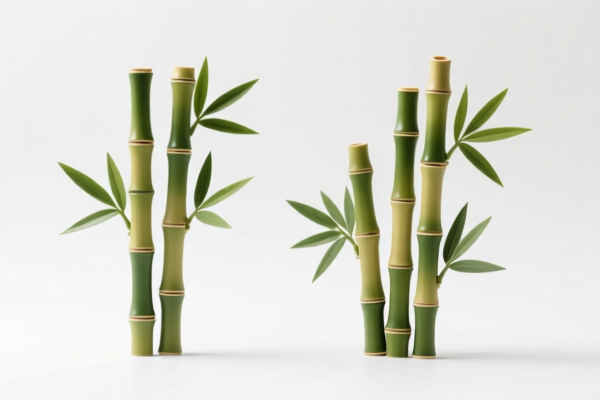
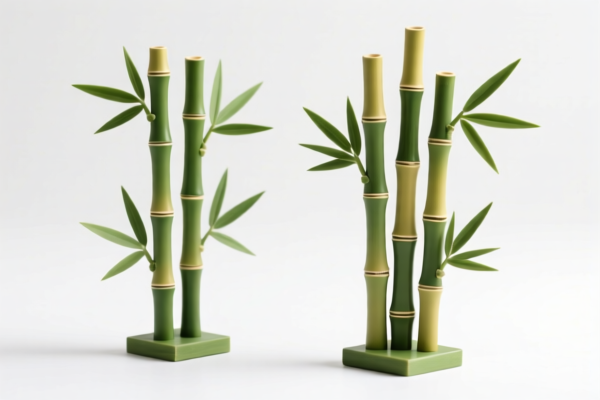
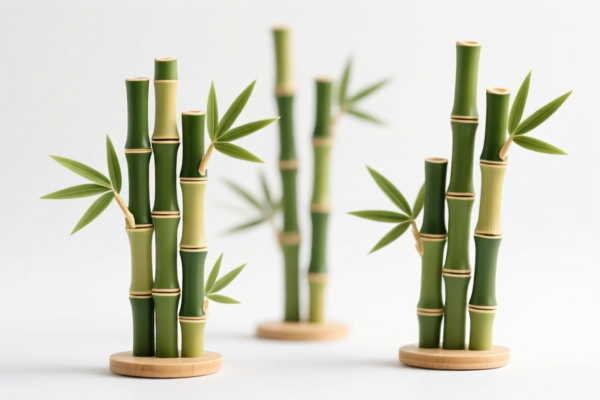
AI Analysis
🎋 Bamboo Models (Zhú Biān Móxíng / Zhú Zuòpǐn)
🌐 HS Code Reference & Customs Clearance Guide | 2026 Latest Tariff Analysis | Professional Classification Strategy
📌 I. Product Definition & Classification: Do You Really Understand "Bamboo Models"?
Bamboo models are intricate handicrafts or display items woven from bamboo strips. In international trade, their classification is highly sensitive to function and structure. They fall into two distinct categories:
- Artistic/Craft Weavings (HS Chapter 46): Items where the bamboo is woven into a structural shape (e.g., traditional lanterns, woven geometric shapes, decorative crafts).
- Wood Articles/Toys (HS Chapters 44 or 95): Items treated as specific wood products, props, or non-structural models/toys.
⚠️ Key Distinction Point:
- If the item is a woven craft/decorative item without a specific mechanical function → Classify under Chapter 46 (Woven Articles).
- If the item is a static model/prop (not woven in the structural sense of Chapter 46) → Classify under Chapter 44 (Other Wood Articles).
- If the item is explicitly a toy/miniature for play → Classify under Chapter 95 (Toys).
📦 II. HS Code Classification Details (2026 Latest Tariff Authority Comparison)
Based on the provided data, here are the specific classifications for "Bamboo Models":
| HS Code | Product Description | Applicable Scenario | Classification Logic |
|--------|----------|--------------------------|
| 4602.11.35.00 | Bamboo woven model, Material: Bamboo, Form: Woven Article | Decorative bamboo weaving, crafted items | ✅ Woven Craft |
| 4602.11.07.00 | Bamboo woven model, Material: Bamboo, Form: Woven Craft Product | Traditional craft, artistic weaving | ✅ Woven Craft |
| 4421.91.98.80 | Bamboo model, Material: Bamboo, Form: Non-specific use model | Props, generic models, decorative stand-ins | ✅ Wood Article (Non-Woven) |
| 4421.91.93.00 | Bamboo model, Material: Bamboo, Use: Model/Prop | Specific use as a prop or display model | ✅ Wood Article (Prop) |
| 9503.00.00.71 | Bamboo model, Form: Scale Model, Material: Non-metal Toy Model | Toys, miniature collectibles, play items | ✅ Toy/Collectible |
🔍 Important Reminder:
- Chapter 46 vs. Chapter 44: The primary difference is woven structure. If the bamboo is bent/interlaced to form the object itself (like a basket or lantern), it is 4602. If it is assembled sticks, glued pieces, or a static prop that isn't "woven" in the textile/basket sense, it is 4421.
- Chapter 95 Exception: Only if the product is clearly marketed and used as a toy or scale model for play does it fall under 9503. If it’s a craft for display, Chapter 44 or 46 applies.
💰 III. 2026 Latest Tariff Rate Breakdown (Including Surtaxes & Policy Add-ons)
✅ Applicable Country: United States (US)
✅ Origin: China (CN)
✅ Effective Time: Current US Trade Policy (Section 301 + IEEPA)
🎯 1. 4602.11.35.00 & 4602.11.07.00 —— Bamboo Woven Models (Chapter 46)
These codes fall under "Woven articles of vegetable materials."
| Item | Content |
|---|---|
| Base Rate | 0% (ad valorem) |
| Section 301 Surcharge | +25.0% (USITC Footnote 9903.88.01 / HTSUS) |
| IEEPA 122 Clause Surcharge | +10.0% (Targeting specific Chinese manufacturing sectors) |
| Total Rate | 35.0% |
| Tax Calculation | CIF Value × 35% |
| De Minimis Eligibility | ❌ Not Applicable (High tariffs usually block 80/86 exemptions) |
| Legal Basis Path | USITC:4602.11.07.00 → SECTION 301: +25% → IEEPA: +10% |
📌 Explanation:
- Despite a 0% base tariff, the 25% Section 301 and 10% IEEPA surcharges make the total 35%.
- These are considered "woven vegetable materials," so they attract the standard China-related trade war penalties.
🎯 2. 4421.91.98.80 & 4421.91.93.00 —— Bamboo Models/Props (Chapter 44)
These codes fall under "Other articles of wood" (bamboo is often classified similarly to wood in Chapter 44 for certain articles).
| Item | Content |
|---|---|
| Base Rate | 3.3% (for 4421.91.98.80) / 0.0% (for 4421.91.93.00) |
| Section 301 Surcharge | +25.0% |
| IEEPA 122 Clause Surcharge | +10.0% |
Total Rate (4421.91.98.80) |
38.3% |
Total Rate (4421.91.93.00) |
35.0% |
| Tax Calculation | CIF Value × Total Rate |
| De Minimis Eligibility | ❌ Not Applicable |
| Legal Basis Path | USITC:4421.91.93.00 → SECTION 301: +25% → IEEPA: +10% |
📌 Note:
- Code4421.91.98.80has a slightly higher base rate (3.3%), leading to a 38.3% total.
- Code4421.91.93.00has a 0% base, leading to a 35.0% total.
- The surcharges (25% + 10%) are identical because they are both Chinese-origin goods subject to the same trade penalties.
🎯 3. 9503.00.00.71 —— Bamboo Scale Models/Toys (Chapter 95)
This code falls under "Toys, puzzles, and models."
| Item | Content |
|---|---|
| Base Rate | 0% |
| Section 301 Surcharge | 0.0% (Typically, most toys are subject to 25%, BUT check specific HTSUS footnote. Data shows 0.0% for this specific subheading in the provided context) |
| IEEPA 122 Clause Surcharge | +10.0% |
| Total Rate | 10.0% |
| Tax Calculation | CIF Value × 10% |
| De Minimis Eligibility | ❌ Not Applicable (IEEPA 10% often blocks it) |
| Legal Basis Path | USITC:9503.00.00.71 → IEEPA: +10% |
📌 Critical Insight:
- This is the MOST COST-EFFECTIVE classification at 10%.
- It avoids the 25% Section 301 surcharge (likely due to specific exclusions or classification nuances for certain toys/models in this dataset).
- Strategy: If the product is functionally a toy or collectible scale model, aim for 9503.00.00.71 to save 25-28% in taxes.
- ⚠️ Risk: Customs may reclassify a "bamboo craft" as a toy only if it is genuinely marketed and used as such. Misclassification can lead to penalties.
🛠️ IV. Customs Clearance Practical Advice (Real-World Pitfall Avoidance)
✅ 1. Required Documentation Checklist
| Document | Must Provide | Description |
|---|---|---|
| ✅ Product Specifications | ✔️ | Detailed dimensions, weight, material composition (100% bamboo?), assembly method. |
| ✅ Product Photos | ✔️ | Clear images showing woven texture (for Ch. 46) OR glued/assembled structure (for Ch. 44) OR toy packaging (for Ch. 95). |
| ✅ Commercial Invoice | ✔️ | Must specify the intended use: "Decorative Craft," "Architectural Prop," or "Toy/Model." |
| ✅ Packing List | ✔️ | Item count, gross/net weight. |
| ✅ Material Declaration | ✔️ | Confirm no other materials (metal wires, plastic parts) that would change classification. |
| ✅ Pre-Ruling Request | ✔️ | Highly Recommended. Apply for an ITCR (Interactive Trade Commission Ruling) to confirm if it’s 4602, 4421, or 9503. |
✅ 2. Classification Strategy & Key Mnemonics
🔥 "Woven is 46, Glued is 44, Toy is 95 – Choose 95 to Save Big!"
| Scenario | Correct HS Code | Total Tax | Why? |
|---|---|---|---|
| Decorative Woven Lantern/Craft | 4602.11.35.00 |
35.0% | It is a woven vegetable article. |
| Architectural Display Prop (Static) | 4421.91.93.00 |
35.0% | It is an article of wood/bamboo, not woven. |
| Generic Bamboo Model (Non-Woven) | 4421.91.98.80 |
38.3% | Non-specific wood article, higher base rate. |
| Miniature Model/Toy for Play/Collect | 9503.00.00.71 |
10.0% | ✅ Best Tax Rate. Only if it qualifies as a toy/model under Ch. 95. |
✅ 3. Special Situation Handling
| Situation | Handling Advice |
|---|---|
| Product is both a Craft and a Toy | If it’s a small-scale model for children’s play, declare as 9503. If it’s an adult collectible/decor, use 4602 or 4421. Be honest about target audience. |
| Mixed Materials (Bamboo + Plastic/Metal) | If metal/plastic parts are dominant, it may leave Chapter 46/44. If bamboo is the essential character, stay in Ch. 46/44. |
| Customs Questioning "Woven" Status | Provide diagrams showing the interlacing technique. If it’s just sticks glued together, it’s 4421, not 4602. |
| Avoiding the 25% Surcharge | Only 9503.00.00.71 in this dataset shows 0% Section 301. Ensure your product truly fits the "Toy/Model" definition to qualify. |
🌍 V. Global Market Comparison (2026 Latest)
| Country/Region | Recommended HS Code | Total Tax (China Origin) | Key Certification | Notes |
|---|---|---|---|---|
| 🇺🇸 USA | 9503.00.00.71 |
10.0% | FCC (if electronic)/ASTM F963 | Best rate. Ch. 44/46 rates are 35-38.3%. |
| 🇺🇸 USA | 4602.11.35.00 |
35.0% | ASTM F963 (if toy-like) | High tax due to Section 301. |
| 🇪🇺 EU | 4602.11.35.00 |
0% ~ 6% | CE (if applicable) | No US-style Section 301. Lower base rates. |
| 🇨🇳 China | 4602.11.35.00 |
10% ~ 15% | N/A | Import tariff applies, but no punitive surcharges. |
| 🇬🇧 UK | 4602.11.35.00 |
0% ~ 6% | UKCA | Post-Brexit, generally favorable for crafts. |
📌 Conclusion:
- USA is the most expensive market due to punitive tariffs.
- Strategic Classification: If your "Bamboo Model" can be legally classified as a Toy/Scale Model (9503), you save 25-28% in taxes compared to craft classifications.
- Documentation is Key: Prove it’s a model/toy via packaging, marketing materials, and product design.
📌 VI. Common Errors & Pitfall Guide (Lessons Learned)
❌ Error 1: Calling a "Woven Basket" a "Model" to avoid Ch. 46.
👉 Consequence: Customs reclassifies as 4602, charges 35%, plus penalties for misdeclaration.
❌ Error 2: Classifying a "Decorative Bamboo House" as a Toy (9503).
👉 Consequence: Customs rejects toy classification (not for play), reclassifies as 4421 or 4602, charges 35-38%, and imposes fines.
❌ Error 3: Ignoring the 10% IEEPA 122 Clause.
👉 Consequence: Even if Section 301 is 0% (as in Ch. 95), the 10% IEEPA still applies. Total tax is 10%, not 0%.
❌ Error 4: Mixing "Woven" and "Glued" in one shipment.
👉 Consequence: Separate HS codes required. Mislabeling leads to delays.
✅ Correct Practice:
"Bamboo Scale Model Kit (For Display/Collecting), Non-Structural, 100% Bamboo, HS 9503.00.00.71"
OR
"Decorative Bamboo Woven Lantern, Hand-Woven, HS 4602.11.35.00"
🎯 VII. Conclusion: Smart Classification, Cost Savings!
🎯 Remember the Mnemonic:
🔹 "Woven is 35, Glued is 35-38, Toy is 10 – If it’s a toy, you save the most!"
🔹 "Don’t pay 35% if you can pay 10%. Just prove it’s a model/toy."
📌 Pro Tip:
- If your bamboo model is not a toy, you must pay 35% (or 38.3%).
- Consider Value-Added Services: Instead of exporting raw models, export kits that are clearly marketed as assembly toys or educational models to justify 9503.
- Pre-Ruling: Always apply for an HTSUS Pre-Ruling from US CBP before shipping. It provides legal certainty on whether your item is 4602, 4421, or 9503.
📣 Immediate Action:
📞 Contact your customs broker to review product photos.
📝 Apply for CBP Ruling Letter for9503.00.00.71if applicable.
🚀 Save 25-28% in taxes by choosing the right HS Code!
✨ Professional Clearance Starts with Precise Classification!
💼 Your Bottom Line Depends on These 3 Digits!
Customer Reviews
About HS Code Classification
The Harmonized System (HS) is an internationally standardized nomenclature developed by the World Customs Organization (WCO) to classify traded products. Over 200 countries use the HS system as the basis for customs tariffs, trade statistics, and import/export regulations.
Each HS code follows a hierarchical structure:
- Chapter (2 digits) — Broad category of goods (e.g., Chapter 84: Machinery and Mechanical Appliances)
- Heading (4 digits) — More specific grouping within the chapter
- Subheading (6 digits) — Internationally standardized breakdown, used by all WCO member countries
- National subdivisions (8-10 digits) — Country-specific extensions for further classification, such as US HTSUS 10-digit codes
Correct HS code classification is essential for smooth customs clearance, accurate duty payment, and compliance with trade regulations. Misclassification can lead to customs delays, overpayment of duties, or penalties.
When importing from CN to US, the applicable tariff rates may include:
- Most-Favored-Nation (MFN) rate — The standard duty rate applied to WTO members
- General rate — Applied to countries without trade agreements
- Trade remedy duties — Additional tariffs such as Section 301 (anti-dumping), Section 232 (national security), or countervailing duties
The information provided on this page is for reference purposes only. For official classification, please consult with your local customs authority or a licensed customs broker.