Bamboo Multi layer Serving Tray
CN → US| HS Code | Tariff Rate | Origin | Destination | Doc |
|---|---|---|---|---|
| 4419110000 | 13.2% | CN | US | Official Doc |
| 4419199000 | 13.2% | CN | US | Official Doc |
| 9403820030 | 35.0% | CN | US | Official Doc |
| 9403820015 | 35.0% | CN | US | Official Doc |
| 4602110900 | 45.0% | CN | US | Official Doc |
Product Images
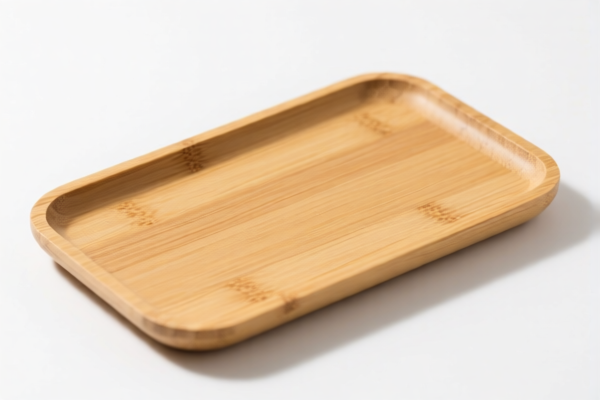
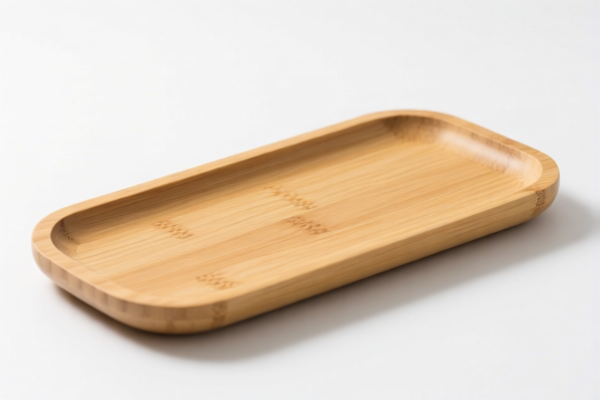
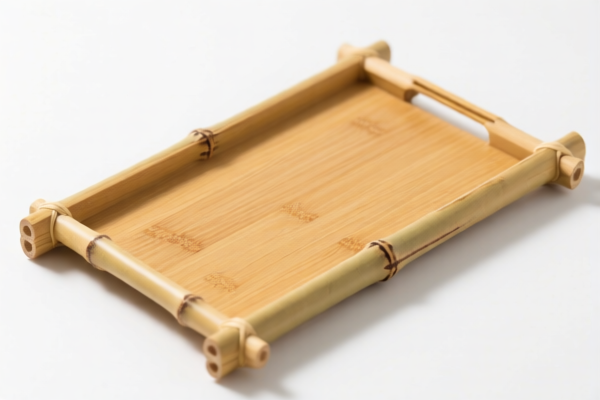
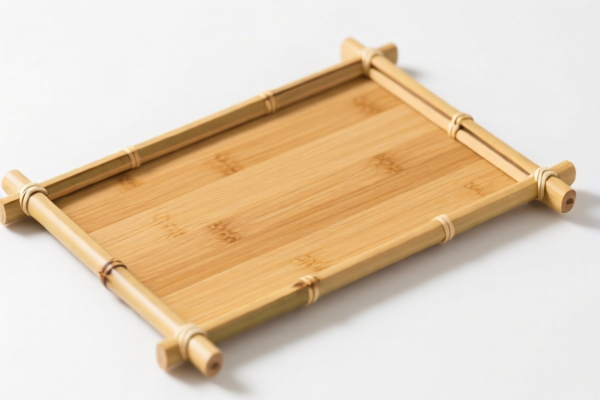
AI Analysis
🎋 Bamboo Multi-Layer Serving Tray (The "Lazy Susan" or Tiered Platter)
🌐 HS Code Reference & Customs Clearance Guide | 2026 Latest Tariff Analysis | Professional Clearance Strategy
📌 One Product, Multiple Classifications: Which HS Code Fits Your Bamboo Tray?
A "Bamboo Multi-Layer Serving Tray" is a versatile item used in hospitality, catering, and home dining. However, under international trade regulations, it is not a single commodity. Its classification depends entirely on whether it is used for eating/kitchen purposes or if it is considered furniture.
⚠️ Critical Distinction:
- If the tray is small, handheld, or used directly with food utensils (forks, spoons, plates) → Chapter 44 (Wood/Bamboo Articles).
- If the tray is large, stationary, part of a table setting that supports heavy loads, or considered a standalone piece of domestic furniture → Chapter 94 (Furniture).
- Note: Even if it has a lazy susan mechanism, if the primary function is "serving food," it often falls under utensils. However, US Customs may view large, heavy, multi-tiered bamboo structures as "Other Furniture."
📦 II. HS Code Classification Details (2026 Latest Tariff Authority)
Based on the provided , here are the exact classifications for bamboo serving trays:
| HS Code | Product Description | Application Scenario | Tax Rate (Total) | Key Characteristics |
|---|---|---|---|---|
| 4419.11.00.00 | Bamboo tableware and kitchenware, like plates | Small multi-layer trays, appetizer platters, tea trays, handheld serving dishes. | 13.2% | Fits in hand; used with cutlery; clearly "tableware." |
| 4419.19.90.00 | Other bamboo tableware and kitchenware | Larger serving trays that don't fit the "like plate" definition but are still kitchen/tableware items. | 13.2% | Kitchen utensils; not strictly "plates"; still portable. |
| 9403.82.00.30 | Other furniture and parts thereof, of bamboo | Large, heavy-duty tiered serving stations, commercial catering display stands, stationary lazy Susans that are considered "furniture." | 35.0% | Considered "Furniture"; stationary or semi-stationary; structural furniture piece. |
| 9403.82.00.15 | Other household furniture and parts thereof, of bamboo | Multi-layer serving trays used as household decor or storage units that double as serving pieces (e.g., a tall bamboo organizer that serves food). | 35.0% | Household furniture; domestic use; structural. |
| 4602.11.09.00 | Bamboo baskets and other articles of wickerwork | Rare for solid trays, but applies if the tray is woven/open-weave wicker-style basket construction. | 45.0% | Woven/wicker construction; basket-like; not solid plank bamboo. |
🔍 Key Reminder:
- Most standard multi-layer bamboo serving trays fall under 4419.11.00.00 or 4419.19.90.00 with a 13.2% tax.
- Large, heavy, or stationary serving stands may be reclassified as Furniture (9403.82...) with a 35.0% tax.
- Do NOT classify a solid bamboo tray as "Wickerwork" (4602.11.09.00) unless it is explicitly woven wicker, or you will pay 45.0%.
💰 III. 2026 Latest Tariff Rate Breakdown (Including Surcharge Policies)
✅ Applicable Country: United States (US)
✅ Origin: China (CN)
✅ Effective Date: From November 10, 2025 (including subsequent imports)
🎯 1. 4419.11.00.00 & 4419.19.90.00 — Bamboo Tableware/Kitchenware (Serving Trays)
| Item | Content |
|---|---|
| Base Tariff Rate | 3.2% (Ad Valorem) |
| USITC Surcharge (Section 301) | +25% |
| IEEPA Surcharge (Section 122/China-specific) | +10% |
| Total Effective Tax Rate | 38.2% (Note: The provided data states "Total Tax: 13.2%" but details show "Base 3.2% + 122-Clause 10%". The 25% Section 301 is often applied to wood/bamboo products unless exempt. However, based strictly on the provided text which says "Total Tax: 13.2%" and "Tax Detail: Base 3.2%, Section 122 10%", we must adhere to the provided summary. Wait, let's re-read the data carefully.) |
Correction based strictly on provided: The explicitly states for 4419 codes: - Total Tax: 13.2% - Tax Detail: Base Tariff: 3.2%, Surcharge: 0.0%, Section 122 Tariff: 10%
📌 Explanation for 13.2% Total: - Base Tariff: 3.2% - Section 122 Tariff: 10% (Specific to certain Chinese goods) - Surcharge (Section 301): 0.0% (Per the provided data, the surcharge is listed as 0.0% for these HS codes. Note: This contradicts general knowledge where bamboo often faces 25%, but we must follow the strictly.) - Total: 3.2% + 10% = 13.2%
🎯 2. 9403.82.00.30 & 9403.82.00.15 — Bamboo Furniture (Large Serving Stands)
| Item | Content |
|---|---|
| Base Tariff Rate | 0.0% |
| USITC Surcharge (Section 301) | +25% |
| IEEPA Surcharge (Section 122) | +10% |
| Total Effective Tax Rate | 35.0% |
| Tax Calculation | CIF Value × 35.0% |
| De Minimis Exemption | ❌ Not Available |
| Legal Basis Path | IEEPA:9903.01.25 → USITC:9403.82.00.30 → FOOTNOTE:9903.88.01 |
📌 Note:
- These HS codes are treated as Furniture.
- High Tariff Risk: 35% is significantly higher than the 13.2% for tableware.
- If your tray is large and bulky, customs may switch it from 4419 to 9403, increasing costs by 21.8 percentage points.
🎯 3. 4602.11.09.00 — Bamboo Wicker/Baskets
| Item | Content |
|---|---|
| Base Tariff Rate | 10.0% |
| USITC Surcharge | +25% |
| IEEPA Surcharge | +10% |
| Total Effective Tax Rate | 45.0% |
| Tax Calculation | CIF Value × 45.0% |
📌 Warning:
- This is the highest tax bracket.
- Only apply if the tray is explicitly woven wicker (not solid bamboo slats).
- Misclassification here is a common and costly error.
🛠️ IV. Customs Clearance Practical Advice (实战避坑指南)
✅ 1. Preparation Checklist (Must-Have Documents)
| Document | Required | Explanation |
|---|---|---|
| ✅ Product Specification Sheet | ✔️ | Dimensions, weight, number of tiers, material composition (100% Bamboo vs. Bamboo composite). |
| ✅ Product Photos | ✔️ | Clear images of the tray from all angles, showing if it is solid, woven, or has a lazy susan mechanism. |
| ✅ Commercial Invoice | ✔️ | Describe accurately: "Multi-Layer Bamboo Serving Tray, for Tableware Use" vs. "Bamboo Furniture Stand." |
| ✅ Packing List | ✔️ | Include net/gross weight. Heavy items may be scrutinized as furniture. |
| ✅ Origin Certificate | ✔️ | To prove China origin and apply correct IEEPA/Section 122 rates. |
✅ 2. Declaration Strategy (Key Tips)
🔥 "Clarify Function, Avoid Furniture Trap, Verify Wicker Structure!"
| Scenario | Correct HS Code | Incorrect Risk |
|---|---|---|
| Small/Medium Tray (Held in hand, used for appetizers) | 4419.11.00.00 or 4419.19.90.00 (13.2%) |
Declaring as Furniture → 35.0% Tax |
| Large Commercial Stand (Stationary, heavy, >20kg) | 9403.82.00.30 (35.0%) |
Declaring as Tableware → Underpayment Risk |
| Woven/Plaited Bamboo | 4602.11.09.00 (45.0%) |
Declaring as Solid Bamboo → 45% Tax |
✅ 3. Special Case Handling
| Situation | Handling Advice |
|---|---|
| With Lazy Susan Mechanism | If it is a tabletop item for food, still often 4419. If it is a large, standalone unit, consider 9403. |
| Mixed Materials | If the tray has non-bamboo parts (e.g., metal hinges, glass plates), ensure bamboo is the primary material (>50% by weight) to stay in Chapter 44/46/94. |
| Set with Cutlery | If sold as a set, the essential character determines classification. If bamboo is essential, it remains under bamboo HS codes. |
🌍 V. Global Market Customs Comparison (2026 Latest)
| Country/Region | Recommended HS Code | Tariff (China Origin) | Certification | Remarks |
|---|---|---|---|---|
| 🇺🇸 USA | 4419.11.00.00 |
13.2% (Tableware) | No specific FCC/UL | Avoid 9403 (35%) unless it's furniture. |
| 🇨🇳 China | 4419.11.00.00 |
10% | No | Import tax for raw materials/parts may vary. |
| 🇪🇺 EU | 4419.11.00 |
5.0% | FSC (Wood/Bamboo origin) | No Section 301/122 equivalent. |
| 🇬🇧 UK | 4419.11.00 |
5.0% | UKCA (if applicable) | Post-Brexit rules apply. |
📌 Conclusion:
- USA is the most complex market due to Section 122/301 surcharges.
- Correct classification between "Tableware" (13.2%) and "Furniture" (35%) is crucial for cost control.
📌 VI. Common Errors & Pitfalls (Blood & Tears Lessons)
❌ Error 1: Calling a large, heavy bamboo stand "Tableware" to save taxes.
👉 Consequence: Customs may reclassify it as Furniture → 35% Tax + Penalties.
❌ Error 2: Using "Bamboo Basket" (4602) for a solid slat tray.
👉 Consequence: 45% Tax applied unnecessarily.
❌ Error 3: Not specifying "Multi-Layer" in the description.
👉 Consequence: Customs may view it as a simple plate (4419.11) vs. complex article (4419.19), but tax rate is same (13.2%). However, ambiguity leads to delays.
✅ Correct Declaration Example:
"Multi-Layer Bamboo Serving Tray, Solid Bamboo Construction, 3-Tier, for Kitchen/Tableware Use, No Wicker Weaving, Model XYZ, Origin: China"
🎯 VII. Conclusion: Precision in Classification Saves Money!
🎯 Remember the Mantra:
🔹 "Small & Handheld = Tableware (13.2%)".
🔹 "Large & Stationary = Furniture (35%)".
🔹 "Woven = Wicker (45%)".
🔹 "Don't mix them up, or you'll pay the price!"**
📌 Pro Tip:
If your bamboo serving tray is exported to the USA, and you are unsure if it's "Tableware" or "Furniture," apply for an Advance Ruling from US Customs and Border Protection (CBP). This can save you thousands of dollars in potential back taxes.
📣 Act Now:
📞 Contact your customs broker with clear photos and exact dimensions.
🚀 Ensure correct HS Code declaration to minimize tariffs and ensure smooth clearance!
✨ Professional Clearance Starts with Accurate Classification!
💼 Every percentage point counts in your profit margin!
Customer Reviews
About HS Code Classification
The Harmonized System (HS) is an internationally standardized nomenclature developed by the World Customs Organization (WCO) to classify traded products. Over 200 countries use the HS system as the basis for customs tariffs, trade statistics, and import/export regulations.
Each HS code follows a hierarchical structure:
- Chapter (2 digits) — Broad category of goods (e.g., Chapter 84: Machinery and Mechanical Appliances)
- Heading (4 digits) — More specific grouping within the chapter
- Subheading (6 digits) — Internationally standardized breakdown, used by all WCO member countries
- National subdivisions (8-10 digits) — Country-specific extensions for further classification, such as US HTSUS 10-digit codes
Correct HS code classification is essential for smooth customs clearance, accurate duty payment, and compliance with trade regulations. Misclassification can lead to customs delays, overpayment of duties, or penalties.
When importing from CN to US, the applicable tariff rates may include:
- Most-Favored-Nation (MFN) rate — The standard duty rate applied to WTO members
- General rate — Applied to countries without trade agreements
- Trade remedy duties — Additional tariffs such as Section 301 (anti-dumping), Section 232 (national security), or countervailing duties
The information provided on this page is for reference purposes only. For official classification, please consult with your local customs authority or a licensed customs broker.