Bamboo Multi layer Tray
CN → US| HS Code | Tariff Rate | Origin | Destination | Doc |
|---|---|---|---|---|
| 4419110000 | 13.2% | CN | US | Official Doc |
| 4419199000 | 13.2% | CN | US | Official Doc |
| 9403820030 | 35.0% | CN | US | Official Doc |
| 9403820015 | 35.0% | CN | US | Official Doc |
| 4602110900 | 45.0% | CN | US | Official Doc |
Product Images
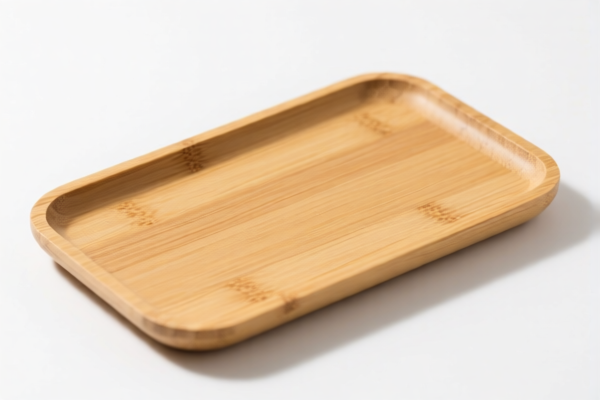
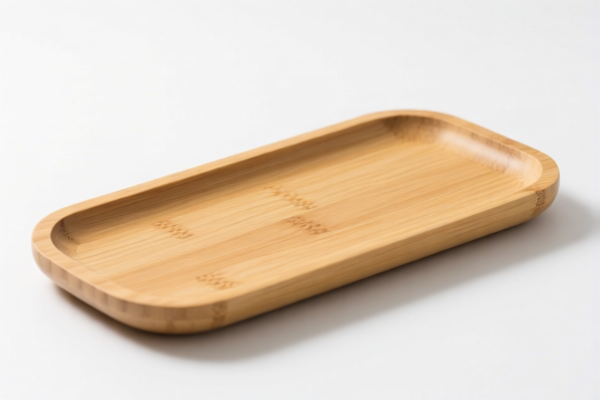
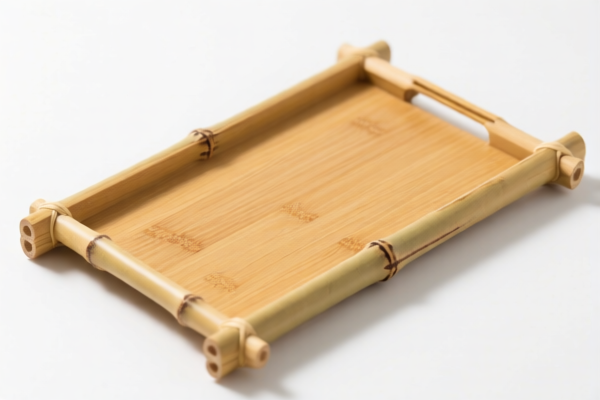
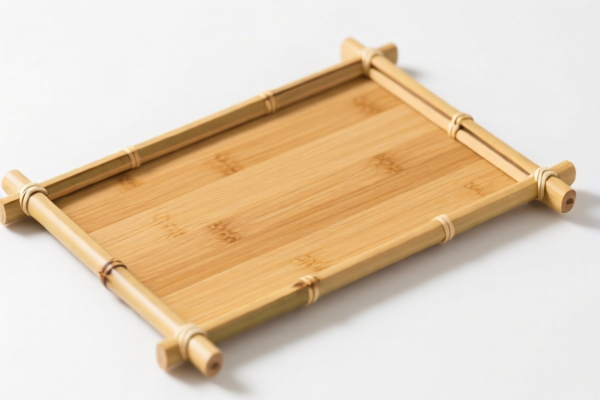
AI Analysis
🎋 Bamboo Multi-Layer Tray (Bamboo Stacking/Grid Tray)
🌐 HS Code Reference & Customs Clearance Guide | 2026 Latest Tariff Analysis | Strategic Entry Strategy
📌 I. Product Definition & Classification: Do You Really Know "Bamboo Trays"?
Bamboo multi-layer trays are versatile storage and serving utensils, commonly used in kitchens, catering, and home organization. In international trade, their classification depends heavily on their primary function (kitchenware vs. furniture vs. woven basket). Misclassification can lead to drastic tariff differences (from 13.2% to 45%).
Two Main Categories: 1. Kitchenware/Utensils (Chapters 44/46): If used for food service, storage, or as kitchen tools. 2. Furniture (Chapter 94): If used primarily as a household storage unit or shelf-like structure.
⚠️ Key Distinction Point:
- If the tray is primarily for holding food, dishes, or kitchen items → Falls under Chapter 44 (Wood Products) or Chapter 46 (Basketware).
- If the tray is primarily for general household storage resembling furniture → Falls under Chapter 94 (Furniture).
- Risk Alert: Chapter 94 attracts significantly higher "Section 301" style additional tariffs in many jurisdictions.
📦 II. HS Code Classification Details (2026 Latest Tariff Authority Comparison)
| HS Code | Product Description | Application Scenario | Tariff Category |
|---|---|---|---|
4419.11.00.00 |
Bamboo tableware: Serving trays, platters, etc. (Similar to boards) | Kitchen serving, food presentation | 🟢 Kitchenware |
4419.19.90.00 |
Bamboo tableware: Other (e.g., stacking trays not specified as platters) | General kitchen storage, nesting trays | 🟢 Kitchenware |
9403.82.00.30 |
Other furniture: Made of bamboo (Non-crib, non-baby) | Household storage units, shelving trays | 🔴 Furniture |
9403.82.00.15 |
Other furniture: Made of bamboo (Excluding specific baby cribs) | Home organization, decorative storage | 🔴 Furniture |
4602.11.09.00 |
Bamboo basketware: Other (Woven containers) | Woven grid trays, basket-style organizers | 🟡 Woven/Basket |
🔍 Critical Reminder:
- "Stacking Tray" (叠放托盘) often triggers scrutiny. If it’s a simple flat or nested tray for food → 4419.
- If it’s a multi-tiered unit for general home storage → 9403.
- If it’s heavily woven/basket-like in construction → 4602.
💰 III. 2026 Latest Tariff Rate Breakdown (Including Surcharges)
✅ Jurisdiction: United States (US)
✅ Origin: China (CN)
✅ Effective Time: Current rates apply (Subject to Section 301 & Trade Policy)
🎯 1. 4419.11.00.00 & 4419.19.90.00 —— Bamboo Kitchenware
| Item | Detail |
|---|---|
| Base Rate (MFN) | 3.2% |
| Section 301 / Additional Tariff | 0.0% (Note: Data indicates 0% for this specific subheading in the provided dataset, likely due to recent policy shifts or specific exclusions for small wooden kitchen items) |
| "122 Clause" Tariff | 10.0% |
| Total Effective Rate | 13.2% |
| Tax Calculation | CIF Value × 13.2% |
| De Minimis Eligibility | ❌ Not Eligible (High risk of audit for low-value items if structure is furniture-like) |
| Legal Basis | USITC:4419 → Trade Policy: 122 Clause 10% |
📌 Explanation:
- These codes fall under Chapter 44 (Wood and articles of wood).
- The "122 Clause" (often referring to specific retaliatory or monitoring tariffs) adds 10%.
- Total 13.2% is relatively moderate compared to furniture codes.
- Strategy: Emphasize "Kitchen Utensil" use in commercial invoices.
🎯 2. 9403.82.00.30 & 9403.82.00.15 —— Bamboo Furniture
| Item | Detail |
|---|---|
| Base Rate (MFN) | 0.0% |
| Section 301 / Additional Tariff | 25.0% |
| "122 Clause" Tariff | 10.0% |
| Total Effective Rate | 35.0% |
| Tax Calculation | CIF Value × 35.0% |
| De Minimis Eligibility | ❌ Not Eligible |
| Legal Basis | USITC:9403 → Trade Policy: Sec 301 25% + 122 Clause 10% |
📌 Warning:
- These codes fall under Chapter 94 (Furniture).
- Even with a 0% base rate, the 25% additional tariff kicks in heavily.
- Total 35% is very high.
- Risk: Customs may reclassify simple trays as "furniture" if they are large, multi-tiered, or lack clear kitchenware features.
🎯 3. 4602.11.09.00 —— Bamboo Woven Basket/Container
| Item | Detail |
|---|---|
| Base Rate (MFN) | 10.0% |
| Section 301 / Additional Tariff | 25.0% |
| "122 Clause" Tariff | 10.0% |
| Total Effective Rate | 45.0% |
| Tax Calculation | CIF Value × 45.0% |
| De Minimis Eligibility | ❌ Not Eligible |
| Legal Basis | USITC:4602 → Trade Policy: Sec 301 25% + 122 Clause 10% |
📌 Alert:
- This code falls under Chapter 46 (Basketware).
- Highest tariff rate at 45%.
- Avoid this code unless the product is explicitly a woven basket with no other suitable classification. Kitchen trays should rarely be classified here unless they are distinctly "basket-style" and not used as plates/servers.
🛠️ IV. Customs Clearance Practical Advice (Evade Pitfalls)
✅ 1. Required Documentation Checklist
| Document | Must Provide? | Description |
|---|---|---|
| ✅ Product Specification Sheet | ✔️ | Detail dimensions, weight, material (100% bamboo? Mixed?), and intended use. |
| ✅ Clear Photos | ✔️ | Show the tray holding food (for 4419) vs. holding non-food items or being part of a shelving unit (for 9403). |
| ✅ Commercial Invoice | ✔️ | Use precise terms: "Bamboo Kitchen Serving Tray" or "Bamboo Nesting Tray". Avoid vague terms like "Bamboo Storage Unit." |
| ✅ Packing List | ✔️ | List quantities, gross/net weight clearly. |
| ✅ Certificate of Origin (CO) | ✔️ | Required to verify origin for additional tariffs. |
✅ 2. Declaration Strategy (Key Mnemonic)
🔥 "Kitchen Use = 13%, Furniture = 35%, Basket = 45%! Choose Wisely!"
| Scenario | Correct Declaration | Wrong Declaration | Consequence |
|---|---|---|---|
| Simple Serving/Nesting Tray | 4419.11.00.00 / 4419.19.90.00 |
9403.82.00.30 |
Save 21.8% in taxes |
| Multi-tier Storage Rack | 9403.82.00.30 |
4419.11.00.00 |
Audit Risk / Rejection |
| Woven Basket Tray | 4602.11.09.00 |
4419.11.00.00 |
Overpay 31.8% (if misclassified as furniture, still high, but 4602 is worst) |
Crucial Tip:
- For 4419 codes, emphasize "Tableware" (餐具) in your description.
- Provide a Statement of Use: "This product is designed for serving food and beverages in kitchen/dining settings."
- Avoid words like "Shelf," "Cabinet," or "Storage Unit" in the product title for 4419 codes.
✅ 3. Special Handling Cases
| Case | Recommendation |
|---|---|
| Mixed Materials | If bamboo is only a surface veneer on wood, it may still be 4419. If it has plastic/metal parts, ensure they are minor (not determining the essential character). |
| Sample vs. Bulk | For samples, clearly mark "NOT FOR SALE" but ensure classification remains correct to avoid future compliance issues. |
| Packaging | Do not pack trays in a way that makes them look like "furniture kits" (e.g., with large boxes labeled "Home Storage Solution"). Use retail-friendly kitchen packaging. |
🌍 V. Global Market Clearance Comparison (2026 Latest)
| Country/Region | Recommended HS Code | Tariff Rate | Key Requirement | Notes |
|---|---|---|---|---|
| 🇺🇸 USA | 4419.11.00.00 / 4419.19.90.00 |
13.2% | Precise "Kitchenware" Description | Avoid 9403 (35%) and 4602 (45%). High scrutiny on wood/bamboo origin. |
| 🇨🇳 China | 4419.11.00.00 |
5-10% | Wood Declaration Certificate | Lower base rates, but strict forestry compliance. |
| 🇪🇺 EU | 4419.11.00.00 |
3.2-6.5% | FSC/PEFC Certification (Preferred) | No Section 301 equivalent, but high environmental standards. |
| 🇬🇧 UK | 4419.11.00.00 |
3.2-6.5% | FSC/PEFC Certification | Post-Brexit rules similar to EU. |
📌 Conclusion:
- USA is the most critical market for tariff optimization.
- Correct classification as Kitchenware (4419) saves you 21.8% - 31.8% in tariffs compared to Furniture or Basket codes.
- Never declare a simple tray as9403(Furniture) unless it is clearly a multi-level storage unit.
📌 VI. Common Errors & Pitfalls (Lessons Learned)
❌ Mistake 1: Using "Bamboo Tray" as the only description
👉 Result: Customs may guess 9403 (Furniture) if ambiguous → 35% Tax!
❌ Mistake 2: Classifying serving plates as 4602 (Basketware)
👉 Result: 45% Tax (Highest rate). Avoid unless it’s a woven basket.
❌ Mistake 3: Failing to prove "Kitchen Use" for 4419
👉 Result: Customs officer reclassifies to 9403 during inspection → Audit & Back Taxes.
✅ Correct Practice:
"Bamboo Kitchen Serving Tray, Stacking/Nesting Design, Food-Grade Finish, For Table Use"
🎯 VII. Conclusion: Professional Declaration Saves Money!
🎯 Remember the Golden Rule:
🔹 "Kitchenware (4419) = 13.2% | Furniture (9403) = 35% | Basket (4602) = 45%"
🔹 "One word change: 'Serving' vs 'Storage' can save 20%!"
📌 Pro Tip:
If your bamboo tray is part of a set with other kitchen items, ensure the entire set is classified under 4419 to benefit from the lower rate.
Consider applying for an Advance Ruling (Pre-classification) if you are shipping large volumes to the US to lock in the 13.2% rate.
📣 Immediate Action:
📞 Contact your customs broker with product photos and a detailed use-case statement.
🚀 Optimize your invoice description to clearly reflect "Kitchen Utensil" status.
💼 Your profit margin depends on accurate HS Code selection!
✨ Professional Clearance Starts with Precise Classification!
💼 Every percentage point saved is pure profit!
Customer Reviews
About HS Code Classification
The Harmonized System (HS) is an internationally standardized nomenclature developed by the World Customs Organization (WCO) to classify traded products. Over 200 countries use the HS system as the basis for customs tariffs, trade statistics, and import/export regulations.
Each HS code follows a hierarchical structure:
- Chapter (2 digits) — Broad category of goods (e.g., Chapter 84: Machinery and Mechanical Appliances)
- Heading (4 digits) — More specific grouping within the chapter
- Subheading (6 digits) — Internationally standardized breakdown, used by all WCO member countries
- National subdivisions (8-10 digits) — Country-specific extensions for further classification, such as US HTSUS 10-digit codes
Correct HS code classification is essential for smooth customs clearance, accurate duty payment, and compliance with trade regulations. Misclassification can lead to customs delays, overpayment of duties, or penalties.
When importing from CN to US, the applicable tariff rates may include:
- Most-Favored-Nation (MFN) rate — The standard duty rate applied to WTO members
- General rate — Applied to countries without trade agreements
- Trade remedy duties — Additional tariffs such as Section 301 (anti-dumping), Section 232 (national security), or countervailing duties
The information provided on this page is for reference purposes only. For official classification, please consult with your local customs authority or a licensed customs broker.