Bamboo Pallet
CN → US| HS Code | Tariff Rate | Origin | Destination | Doc |
|---|---|---|---|---|
| 4419110000 | 13.2% | CN | US | Official Doc |
| 4419199000 | 13.2% | CN | US | Official Doc |
| 9403820030 | 35.0% | CN | US | Official Doc |
| 9403820015 | 35.0% | CN | US | Official Doc |
| 4602110900 | 45.0% | CN | US | Official Doc |
Product Images
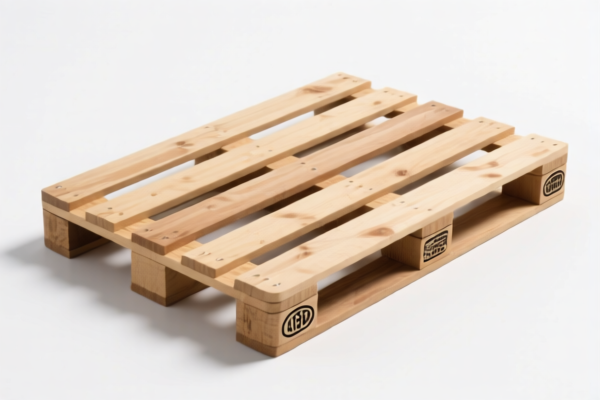
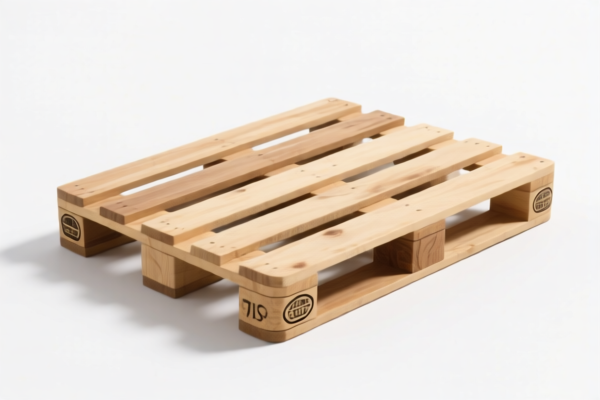
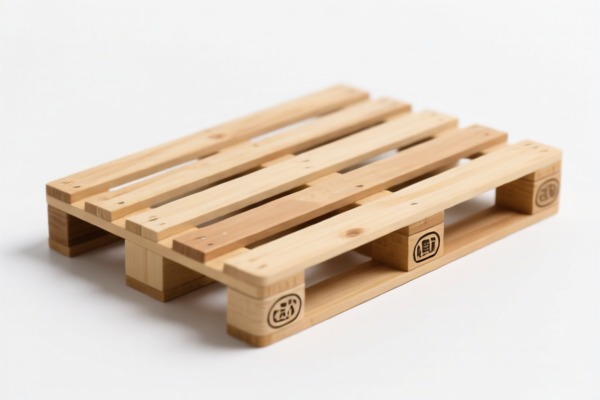
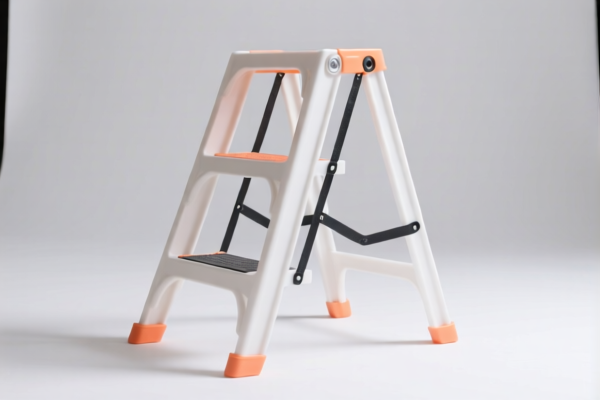
AI Analysis
🎋 Bamboo Pallet (Bamboo Stacking/Divided Trays)
🌐 HS Code Reference & Customs Clearance Guide | 2026 Latest Tariff Analysis | Professional Entry Strategy
📌 I. Product Definition & Classification: Do You Really Understand "Bamboo Pallet"?
The term "Bamboo Pallet" in international trade is ambiguous and can refer to kitchenware trays (for serving food) or packaging/storage pallets. The HS Code classification depends entirely on the specific use and design:
- Kitchen/Dining Trays: If used for stacking food, dividing dishes, or serving, it falls under Chapter 44 (Wood and articles of wood) or Chapter 46 (Basketware and other plaiting materials).
- Furniture/Storage Pallets: If used as a structural shelf unit, storage rack, or household furniture component, it may fall under Chapter 94 (Furniture).
⚠️ Critical Distinction Point:
- If the item is a serving tray or kitchen organizer →归入 4419.11.00.00 / 4419.19.90.00 / 4602.11.09.00
- If the item is a structural shelf unit or furniture component → 归入 9403.82.00.30 / 9403.82.00.15
📦 II. HS Code Classification Details (2026 Official Tariff对照)
| HS Code | Product Description | Application Scenario | Tax Category |
|---|---|---|---|
4419.11.00.00 |
Bamboo tableware (stacking trays/divided trays) | Kitchen serving, food presentation | 🍽️ Tableware |
4419.19.90.00 |
Other bamboo tableware & kitchen articles | General bamboo trays, non-specified kitchen use | 🍽️ Tableware |
9403.82.00.30 |
Other furniture of bamboo (pallet/shelf unit) | Structural pallets, shelving units, storage racks | 🪑 Furniture |
9403.82.00.15 |
Other household furniture of bamboo | Household storage pallets, decorative pallets | 🪑 Furniture |
4602.11.09.00 |
Basketry & plaited articles (bamboo tray) | Weaved bamboo containers, basket-like trays | 🧺 Basketware |
🔍 Key Reminder:
- Kitchen Use: Must declare as "Bamboo Tableware" or "Kitchen Utensil" to qualify for lower base tariffs (3.2%).
- Furniture Use: Declared as "Furniture" incurs a 0% base tariff but triggers high Trade War Surcharges (25%).
- Weaved/Basket Style: If the tray is made of woven bamboo strips, it may be classified under Chapter 46, which has the highest base tariff (10%).
💰 III. 2026 Latest Tariff Rate Details (Including Additional Taxes)
✅ Applicable Country: United States (US)
✅ Origin: China (CN)
✅ Effective Date: November 10, 2025 onwards
🎯 1. 4419.11.00.00 & 4419.19.90.00 —— Bamboo Tableware & Kitchen Utensils
| Item | Content |
|---|---|
| Base Tariff | 3.2% (Ad Valorem) |
| Trade War Surcharge (Section 301) | +10% (122-Clause Tariff) |
| Additional Section Tariff | +2.2% (if applicable under specific Section 201/301 updates) |
| Total Tariff Rate | 13.2% |
| Calculation Method | CIF Value × 13.2% |
| De Minimis Exemption? | ❌ No (Section 301 goods are generally not eligible for $800 de minimis exemption if specifically targeted) |
| Legal Basis Path | USITC:4419.11.00.00 → Trade Act Section 301 → USCBP |
📌 Explanation:
- Base Rate 3.2%: Standard most-favored-nation (MFN) rate for bamboo tableware.
- 10% Surcharge: Specific additional tariff for bamboo products from China under Section 301.
- Total 13.2%: This is the most cost-effective classification for bamboo trays/pallets.
🎯 2. 9403.82.00.30 & 9403.82.00.15 —— Bamboo Furniture (Pallets/Shelves)
| Item | Content |
|---|---|
| Base Tariff | 0.0% (Ad Valorem) |
| Trade War Surcharge (Section 301) | +25.0% (High-Tariff Category) |
| Additional Section Tariff | +10% (122-Clause Tariff) |
| Total Tariff Rate | 35.0% |
| Calculation Method | CIF Value × 35.0% |
| De Minimis Exemption? | ❌ No |
| Legal Basis Path | USITC:9403.82.00.xx → Trade Act Section 301 → USCBP |
📌 Explanation:
- Base Rate 0%: Furniture often has low base rates.
- 25% Surcharge: Bamboo furniture is classified under high-tariff categories due to trade tensions.
- 10% Surcharge: Additional layer for specific Chinese-origin goods.
- Total 35%: Significantly higher than tableware classification. Avoid if the item can be argued as kitchenware.
🎯 3. 4602.11.09.00 —— Bamboo Basketry & Plaited Articles
| Item | Content |
|---|---|
| Base Tariff | 10.0% (Ad Valorem) |
| Trade War Surcharge (Section 301) | +25.0% |
| Additional Section Tariff | +10% (122-Clause Tariff) |
| Total Tariff Rate | 45.0% |
| Calculation Method | CIF Value × 45.0% |
| De Minimis Exemption? | ❌ No |
| Legal Basis Path | USITC:4602.11.09.00 → Trade Act Section 301 → USCBP |
📌 Explanation:
- Base Rate 10%: Highest base rate among the options.
- 25% + 10% Surcharges: Adds up to a 45% total tariff.
- Risk: Only classify here if the item is clearly woven basketware and not a rigid tray. Otherwise, this is the most expensive option.
🛠️ IV. Customs Clearance Practical Advice (Pitfall Avoidance Guide)
✅ 1. Preparation Checklist (All Required)
| Document | Mandatory | Notes |
|---|---|---|
| ✅ Product Photos | ✔️ | Show clear details: Is it a tray? A shelf? A basket? |
| ✅ Product Specifications | ✔️ | Include dimensions, weight, material (100% bamboo?), finish (lacquer/varnish?) |
| ✅ Intended Use Statement | ✔️ | "For kitchen use" vs. "For storage/furniture" drastically changes HS Code. |
| ✅ Commercial Invoice | ✔️ | Accurately describe as "Bamboo Serving Tray" or "Bamboo Storage Pallet". |
| ✅ Packing List | ✔️ | Weight and dimensions for freight calculation. |
| ✅ Origin Certificate | ✔️ | Proof of Chinese origin is critical for surcharge calculation. |
✅ 2. Declaration Strategy (Key Tactics)
🔥 "Define Use First, Choose Code Second, Avoid Basketry if Possible!"
| Scenario | Recommended HS Code | Reason |
|---|---|---|
| Kitchen Serving Tray | 4419.11.00.00 |
Lowest Tax (13.2%). Declare as "Tableware". |
| General Bamboo Tray | 4419.19.90.00 |
Low Tax (13.2%). Safe fallback for tableware. |
| Shelving Unit/Pallet Rack | 9403.82.00.30 |
High Tax (35%). Only if it’s clearly furniture. |
| Woven Bamboo Basket | 4602.11.09.00 |
Highest Tax (45%). Avoid unless it’s genuinely woven. |
📌 Tip:
- If the item can be used as both a tray and a shelf, choose the tableware classification (4419.11.00.00) to save 21.8% in taxes.
- Do not describe it as "Pallet" if it’s a kitchen item. Use "Serving Tray" or "Food Organizer".
- Do not describe it as "Basket" if it’s a solid board. Use "Bamboo Tray".
✅ 3. Special Situations
| Situation | Handling Advice |
|---|---|
| Solid vs. Weaved | Solid bamboo boards → 4419. Weaved strips → 4602. Be honest; customs may inspect. |
| With Legs/Stand | If it has legs, it’s closer to furniture (9403). Remove legs or declare as "tray with stand" to stay in 4419. |
| Lacquered/Varnished | Does not change HS Code but must be declared. Affects "Finish" description. |
| Customs Inspection | Bring physical samples to prove it’s a kitchen tray, not a structural pallet. |
🌍 V. Global Market Comparison (2026 Latest)
| Country/Region | Recommended HS Code | Total Tariff (China Origin) | Notes |
|---|---|---|---|
| 🇺🇸 USA | 4419.11.00.00 |
13.2% | Best option. 9403 is 35%, 4602 is 45%. |
| 🇨🇳 China | 4419.11.00.00 |
3.2% | No additional surcharges. Low tax. |
| 🇪🇺 EU | 4419.11.00.00 |
6.0% + VAT | No Section 301 equivalent. Moderate tax. |
| 🇬🇧 UK | 4419.11.00.00 |
6.0% + VAT | Similar to EU post-Brexit. |
| 🇦🇺 Australia | 4419.11.00.00 |
5.0% | Preferential rates may apply. |
📌 Conclusion:
- USA is the most sensitive to HS Code misclassification due to Section 301 surcharges.
- Always aim for4419.11.00.00for bamboo trays in the US market to minimize costs.
📌 VI. Common Errors & Pitfalls (Blood Lessons)
❌ Error 1: Declaring a kitchen tray as Furniture (9403.82.00.30)
👉 Consequence: Tax jumps from 13.2% to 35%. Overpaying 21.8% unnecessarily.
❌ Error 2: Declaring a solid bamboo board as Basketry (4602.11.09.00)
👉 Consequence: Tax jumps to 45%. Customs will reject "woven" claim for solid boards.
❌ Error 3: Using "Pallet" in description for a serving tray
👉 Consequence: Customs may assume it’s industrial packaging/furniture, leading to audit or higher classification.
❌ Error 4: Ignoring Section 301 surcharges
👉 Consequence: Underestimating landed cost. Budget must include 13.2%, 35%, or 45% depending on code.
✅ Correct Approach:
"Bamboo Serving Tray, Stackable, for Kitchen Use, Model XYZ" → HS 4419.11.00.00
"Bamboo Storage Pallet, Furniture Grade, for Shelving" → HS 9403.82.00.30
🎯 VII. Conclusion: Smart Classification, Higher Profit Margins!
🎯 Remember the Mantra:
🔹 "Kitchen is 13%, Furniture is 35%, Basket is 45%!"
🔹 "Call it a Tray, Not a Pallet, to Save Big Dollars!"
🔹 "Solid Bamboo = 4419, Weaved Bamboo = 4602, Don't Mix Them Up!"
📌 Pro Tip:
If you are unsure, request a Customs Ruling (Pre-Ruling) from CBP before shipping. This provides legal certainty and avoids surprise bills.
📣 Take Action Now:
📞 Consult a licensed customs broker + Provide product photos + Declare accurate use
🚀 Ensure your Bamboo Pallets/Trays pass customs smoothly, stay profitable, and scale globally!
✨ Professional Clearance Starts with Precise Classification!
💼 Every Percent Saved is Pure Profit!
Customer Reviews
About HS Code Classification
The Harmonized System (HS) is an internationally standardized nomenclature developed by the World Customs Organization (WCO) to classify traded products. Over 200 countries use the HS system as the basis for customs tariffs, trade statistics, and import/export regulations.
Each HS code follows a hierarchical structure:
- Chapter (2 digits) — Broad category of goods (e.g., Chapter 84: Machinery and Mechanical Appliances)
- Heading (4 digits) — More specific grouping within the chapter
- Subheading (6 digits) — Internationally standardized breakdown, used by all WCO member countries
- National subdivisions (8-10 digits) — Country-specific extensions for further classification, such as US HTSUS 10-digit codes
Correct HS code classification is essential for smooth customs clearance, accurate duty payment, and compliance with trade regulations. Misclassification can lead to customs delays, overpayment of duties, or penalties.
When importing from CN to US, the applicable tariff rates may include:
- Most-Favored-Nation (MFN) rate — The standard duty rate applied to WTO members
- General rate — Applied to countries without trade agreements
- Trade remedy duties — Additional tariffs such as Section 301 (anti-dumping), Section 232 (national security), or countervailing duties
The information provided on this page is for reference purposes only. For official classification, please consult with your local customs authority or a licensed customs broker.