Bamboo Paper Cups
CN → US| HS Code | Tariff Rate | Origin | Destination | Doc |
|---|---|---|---|---|
| 4823610040 | 35.0% | CN | US | Official Doc |
| 4823610020 | 35.0% | CN | US | Official Doc |
| 4419901100 | 15.3% | CN | US | Official Doc |
| 4602110700 | 35.0% | CN | US | Official Doc |
| 4419199000 | 13.2% | CN | US | Official Doc |
Product Images
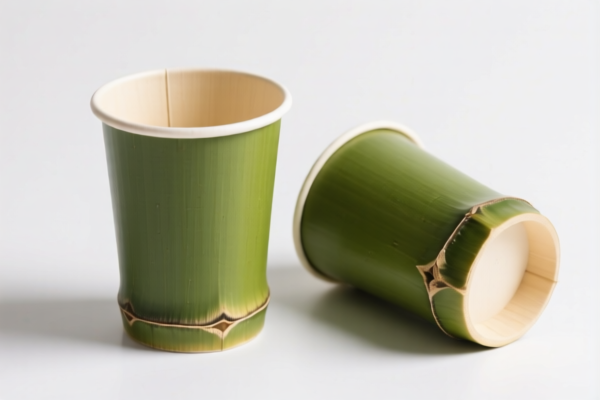
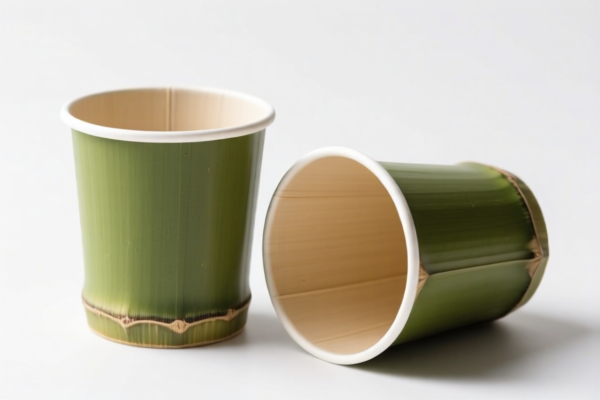
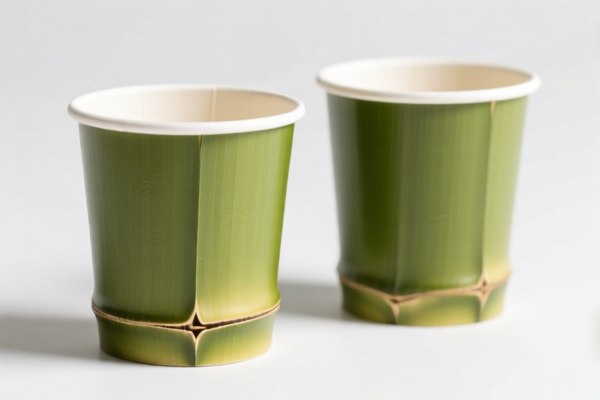
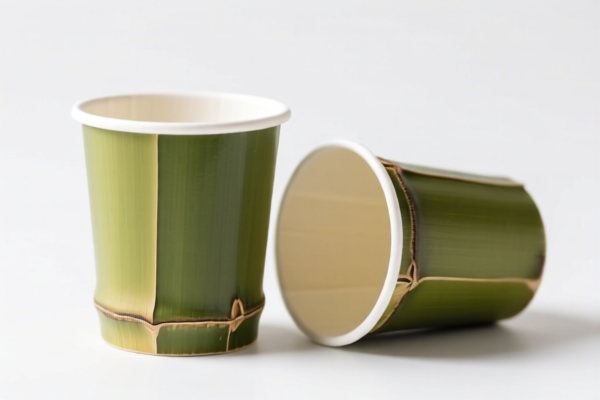
AI Analysis
🎋 Bamboo Paper Cups (Eco-Friendly Tableware)
🌐 HS Code Reference & Customs Clearance Guide | 2026 Latest Tariff Analysis | Professional Clearance Strategy
📌 I. Product Definition & Classification: What Are "Bamboo Paper Cups"?
In international trade, "Bamboo Paper Cups" is a colloquial term that usually refers to two distinct types of products, leading to significantly different HS Code classifications and tax liabilities. It is critical to distinguish between them:
1. Printed Paper Cups with Bamboo Fiber/Material (Section 48):
- These are technically paper cups (often lined with plastic or biodegradable coatings) that may contain bamboo fibers in the paper pulp or have bamboo-based branding/printing.
- They fall under Heading 48.23 (Other paper, paperboard, cellulose wadding and webs of cellulosic fibers, cut to size or shape...).
2. Solid Bamboo Cups/Containers (Section 44 or 46):
- These are cups made entirely of bamboo wood or bamboo weaving, not paper.
- If made of solid bamboo wood: Heading 44.19 (Tableware and kitchenware, of bamboo).
- If made of woven bamboo: Heading 46.02 (Plaiting materials; basketware... of other vegetable materials).
⚠️ Critical Distinction:
- If it’s paper-based (even with bamboo pulp/printing) → Use HS 4823.
- If it’s solid bamboo wood → Use HS 4419.
- If it’s woven bamboo → Use HS 4602.
- Misclassification leads to massive tax penalties!
📦 II. HS Code Classification Details (2026 Latest Tariff Authority对照)
| HS Code | Product Description | Application Scenario | Material Type |
|---|---|---|---|
4823.61.00.40 |
Bamboo-printed paper cups, paper-based | Disposable drinking vessels, eco-friendly branding | ✅ Paper/Bamboo Fiber Composite |
4823.61.00.20 |
Bamboo-printed paper cups, nested food containers | Round nested food containers, bakery/food service | ✅ Paper/Bamboo Fiber Composite |
4419.90.11.00 |
Bamboo fruit cups, tableware category | Solid bamboo cups, reusable tableware | ✅ Solid Bamboo Wood |
4602.11.07.00 |
Bamboo fruit cups, woven basketware extension | Woven bamboo cups, artisanal containers | ✅ Woven Bamboo |
4419.19.90.00 |
Bamboo fruit cups, other tableware | Solid bamboo cups, other kitchen/tableware uses | ✅ Solid Bamboo Wood |
🔍 Key Reminder:
- "Bamboo Paper" is a marketing term. Customs looks at composition.
- If the cup is >50% paper/fiber, it’s 4823.
- If it’s solid wood/bamboo, it’s 4419.
- If it’s woven, it’s 4602.
💰 III. 2026 Latest Tariff Rate Breakdown (Including Surcharges & Policy Add-ons)
✅ Applicable Country: United States (US)
✅ Country of Origin: China (CN)
✅ Effective Time: 2025 Nov 10 onwards (including subsequent imports)
🎯 1. 4823.61.00.40 & 4823.61.00.20 —— Bamboo-Printed Paper Cups (Paper-Based)
| Item | Details |
|---|---|
| Base Tariff Rate | 0.0% (ad valorem) |
| USITC Surcharge (Section 301) | +25.0% (Under USITC Footnote 9903.88.01) |
| IEEPA Surcharge (China) | +10.0% (Against China/HK products, effective from 2025 Nov 10) |
| Total Tax Rate | 35.0% |
| Tax Calculation | CIF Value × 35% |
| De Minimis Exemption | ❌ Not Available (deny_de_minimis) |
| Legal Basis Path | IEEPA:9903.01.25 → IEEPA:9903.01.24 → USITC:4823.61.00.40 → FOOTNOTE:9903.88.01 |
📌 Explanation:
- "Base Tariff 0%": Standard MFN rate for paper cups is low.
- "301 Tariff 25%": Trade war surcharge on Chinese paper products.
- "IEEPA 10%": Emergency economic power surcharge on China.
- Total 35% is high for disposable goods. Pre-calculate costs!
🎯 2. 4419.90.11.00 & 4419.19.90.00 —— Solid Bamboo Cups (Wood Category)
| Item | Details |
|---|---|
| Base Tariff Rate | 3.2% – 5.3% (ad valorem) |
| USITC Surcharge (Section 301) | 0.0% (Some bamboo wood items are excluded or have lower rates) |
| IEEPA Surcharge (China) | +10.0% (Against China/HK products, effective from 2025 Nov 10) |
| Total Tax Rate | 13.2% – 15.3% |
| Tax Calculation | CIF Value × 13.2%–15.3% |
| De Minimis Exemption | ❌ Not Available (deny_de_minimis) |
| Legal Basis Path | IEEPA:9901.25 → IEEPA:9903.01.24 → USITC:4419.90.11.00 |
📌 Note:
- HS 4419.90.11.00: Base 5.3% + 10% IEEPA = 15.3%.
- HS 4419.19.90.00: Base 3.2% + 10% IEEPA = 13.2%.
- Savings: Solid bamboo cups are ~20% cheaper in taxes than paper-based "bamboo" cups!
🎯 3. 4602.11.07.00 —— Woven Bamboo Cups (Basketware Category)
| Item | Details |
|---|---|
| Base Tariff Rate | 0.0% (ad valorem) |
| USITC Surcharge (Section 301) | +25.0% |
| IEEPA Surcharge (China) | +10.0% |
| Total Tax Rate | 35.0% |
| Tax Calculation | CIF Value × 35% |
| De Minimis Exemption | ❌ Not Available (deny_de_minimis) |
| Legal Basis Path | IEEPA:9903.01.25 → IEEPA:9903.01.24 → USITC:4602.11.07.00 → FOOTNOTE:9903.88.01 |
📌 Warning:
- Woven bamboo items are often treated similarly to paper/plastic composites in tariffs.
- 35% Total Rate is very high. Consider alternative origins if possible.
🛠️ IV. Customs Clearance Practical Advice (Battle-Proven Pitfall Avoidance Guide)
✅ 1. Required Documentation Checklist (Missing = Delay)
| Document | Mandatory | Notes |
|---|---|---|
| ✅ Product Composition Sheet | ✔️ | Must specify % of paper, bamboo fiber, plastic lining, etc. |
| ✅ Product Photos | ✔️ | Clear shots of cup material, texture, and printing |
| ✅ Commercial Invoice | ✔️ | Describe as "Paper Cup" or "Bamboo Wood Cup," NOT "Bamboo Paper Cup" |
| ✅ Packing List | ✔️ | Include nested/stacked details |
| ✅ Certificate of Origin | ✔️ | If non-China origin, claim preferential rates |
| ✅ Third-Party Lab Test | ✔️ | FDA Food Contact Compliance, LFGB, or BPA-free tests |
✅ 2. Declaration Tips (Key Mantra)
🔥 “Material Dictates Code, Name Matches Reality, 35% is for Paper, 15% for Wood!”
| Scenario | Correct Declaration | Wrong Practice |
|---|---|---|
| Paper cup with bamboo fiber | 4823.61.00.40 (35%) |
Call it "Bamboo Cup" → Risk of audit |
| Solid bamboo cup | 4419.90.11.00 (15.3%) |
Call it "Paper Cup" → Underpaid tax |
| Woven bamboo cup | 4602.11.07.00 (35%) |
Call it "Wood Cup" → Wrong classification |
| Mixed packaging (Paper + Bamboo Lid) | Declare main component | Split declaration → Higher total tax |
✅ 3. Special Cases Handling
| Situation | Recommendation |
|---|---|
| Bamboo Fiber Paper Cup | Declare as Paper Cup (4823). Provide lab report showing >50% paper. |
| Solid Bamboo Cup | Declare as Bamboo Wood (4419). Provide wood species certificate. |
| Woven Bamboo Cup | Declare as Basketware (4602). Provide weaving technique description. |
| Food Contact Safety | Ensure FDA/EFSA compliance. Failure = Return or Destruction. |
| Anti-Dumping | Check if bamboo products face anti-dumping duties in other markets (e.g., EU). |
🌍 V. Global Market Clearance Comparison (2026 Latest)
| Country/Region | Recommended HS Code | Tariff Rate | Certification Requirements | Notes |
|---|---|---|---|---|
| 🇺🇸 USA | 4823.61.00.40 |
35% | FDA + No IPEX | High tax on paper/bamboo fiber |
| 🇺🇸 USA | 4419.90.11.00 |
15.3% | FDA | Lower tax for solid bamboo |
| 🇨🇳 China | 4823.61.00.40 |
5%–8% | None | No IEEPA/301 tariffs |
| 🇪🇺 EU | 4823.61.00.40 |
3.5% | CE + LFGB | No 301/IEEPA surcharges |
| 🇦🇺 Australia | 4823.61.00.40 |
5% | RCM + Food Standards | Low base tariff |
📌 Conclusion:
- USA is the highest-cost market due to 35% tariffs on paper-based "bamboo" cups.
- Solid bamboo cups (4419) save ~20% in taxes in the US.
- EU and Australia are more favorable for paper-based bamboo cups.
📌 VI. Common Mistakes & Pitfall Guide (Lessons Learned)
❌ Mistake 1: Calling all bamboo cups "Bamboo Paper Cups"
👉 Consequence: Customs may classify as 4823 (35%) even if it’s solid wood (4419, 15.3%) → Overpayment or Audit if misdeclared.
❌ Mistake 2: Ignoring "Bamboo Fiber" vs. "Solid Bamboo"
👉 Consequence: 35% vs. 15.3% difference. Always provide material breakdown.
❌ Mistake 3: Using "Bamboo Cup" as the only description
👉 Consequence: Customs asks for clarification → Delay in clearance. Use specific terms: "Bamboo-Fiber Paper Cup" or "Solid Bamboo Wood Cup."
❌ Mistake 4: Assuming De Minimis Exemption applies
👉 Consequence: No exemption for HS 4823/4602 from China. All shipments are taxed.
✅ Correct Approach:
"Bamboo Fiber Paper Cup, 12oz, Disposable, FDA Compliant, 70% Paper Pulp, 30% Bamboo Fiber, Printed with Soy Ink"
🎯 VII. Conclusion: Precise Classification Saves Money!
🎯 Remember the Mantra:
🔹 “Paper = 35%, Wood = 15%, Woven = 35%!”
🔹 “Be specific: ‘Bamboo Fiber Paper’ not ‘Bamboo Cup’!”
🔹 “Tax savings: $20 per 1000 units by choosing solid bamboo!”
📌 Pro Tip:
If your product is solid bamboo, declare as 4419.90.11.00 to save ~20% in taxes compared to paper-based alternatives.
For paper cups, ensure FDA compliance to avoid rejection.
Consider pre-ru filings if volumes are high.
📣 Immediate Action:
📞 Consult a customs broker with product samples
📝 Get HS Code Pre-Ruling from CBP
🚀 Optimize supply chain: Solid bamboo for US market, Paper for EU/Asia
✨ Professional Clearance Starts with Accurate Classification!
💼 Every Percent Matters in Tariffs!
Customer Reviews
About HS Code Classification
The Harmonized System (HS) is an internationally standardized nomenclature developed by the World Customs Organization (WCO) to classify traded products. Over 200 countries use the HS system as the basis for customs tariffs, trade statistics, and import/export regulations.
Each HS code follows a hierarchical structure:
- Chapter (2 digits) — Broad category of goods (e.g., Chapter 84: Machinery and Mechanical Appliances)
- Heading (4 digits) — More specific grouping within the chapter
- Subheading (6 digits) — Internationally standardized breakdown, used by all WCO member countries
- National subdivisions (8-10 digits) — Country-specific extensions for further classification, such as US HTSUS 10-digit codes
Correct HS code classification is essential for smooth customs clearance, accurate duty payment, and compliance with trade regulations. Misclassification can lead to customs delays, overpayment of duties, or penalties.
When importing from CN to US, the applicable tariff rates may include:
- Most-Favored-Nation (MFN) rate — The standard duty rate applied to WTO members
- General rate — Applied to countries without trade agreements
- Trade remedy duties — Additional tariffs such as Section 301 (anti-dumping), Section 232 (national security), or countervailing duties
The information provided on this page is for reference purposes only. For official classification, please consult with your local customs authority or a licensed customs broker.