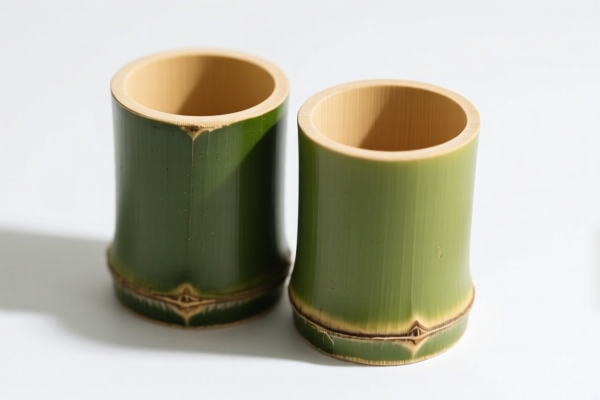
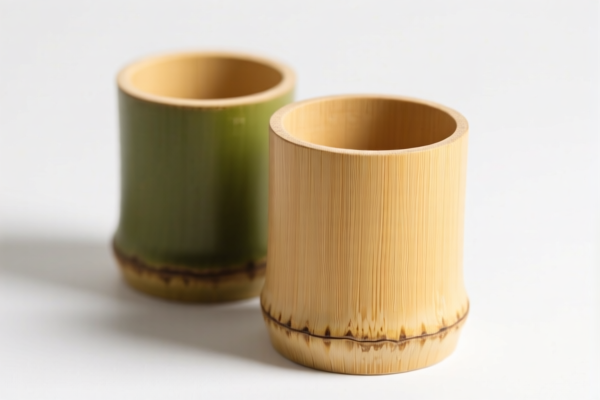
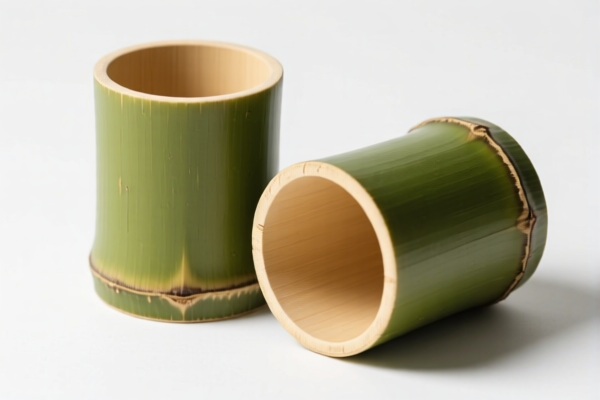
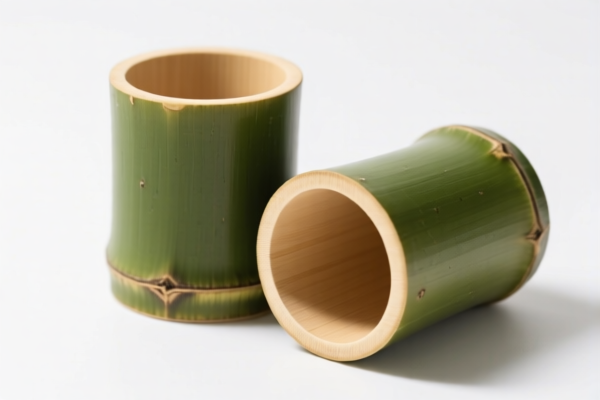
Bamboo Pastry Cup
CN → US| HS Code | Tariff Rate | Origin | Destination | Doc |
|---|---|---|---|---|
| 4419901100 | 15.3% | CN | US | Official Doc |
| 4602110700 | 35.0% | CN | US | Official Doc |
| 4421919880 | 38.3% | CN | US | Official Doc |
| 4421999880 | 38.3% | CN | US | Official Doc |
| 4419199000 | 13.2% | CN | US | Official Doc |
| 4602110900 | 45.0% | CN | US | Official Doc |
Product Images
AI Analysis
🎋 Bamboo Pastry Cup (Bamboo Fruit Cup)
🌐 HS Code Reference & Customs Clearance Guide | 2026 Latest Tariff Analysis | Professional Clearance Strategy
📌 Part I: Product Definition & Classification Strategy
The Bamboo Pastry Cup (often used for serving fruits, desserts, or pastries) is a consumer good made from processed bamboo. In international trade, its classification hinges on two main factors:
1. Material Composition: Is it classified under Chapter 44 (Wood and articles of wood) or Chapter 46 (Manufactures of straw, osier, or other plaiting materials)?
2. Function/Use: Is it considered "Cutlery/Tableware" (Chapter 44, Heading 4419) or a "Basket/Container" (Chapter 46, Heading 4602/4421)?
⚠️ Key Classification Dilemma:
- Bamboo as Wood: Often classified under 4419 (Bamboo tableware) for lower duties.
- Bamboo as Plaiting Material: Classified under 4602 (Plaited articles), leading to significantly higher tariffs due to Section 301 (122 Clause) impacts.
- General Wood Article: Classified under 4421 (Other wood articles), also attracting high tariffs.
📦 Part II: HS Code Classification Details (2026 Latest Tariff Data)
Based on the provided data, here are the 6 potential HS Codes for "Bamboo Pastry Cup" imported into the US from China:
| HS Code | Classification Summary | Total Tax Rate | Tax Breakdown |
|---|---|---|---|
4419.90.11.00 |
Bamboo Tableware (Cutlery/Knives/Forks/etc., excluding chopsticks). Viewed as "Wooden Cutlery" due to bamboo material and cup usage. | 15.3% | Base: 5.3% Add'l (Sec 301): 0.0% 122 Clause: 10% |
4602.11.07.00 |
Plaited Baskets & Containers. Viewed as "Woven Basket/Bag" due to basket-like shape and plaiting technique. | 35.0% | Base: 0.0% Add'l (Sec 301): 25.0% 122 Clause: 10% |
4421.91.98.80 |
Other Wooden Articles. Viewed as "Other Wood Products" (catch-all for wooden items not specifically tableware). | 38.3% | Base: 3.3% Add'l (Sec 301): 25.0% 122 Clause: 10% |
4421.99.98.80 |
Other Wooden Articles (Catch-all). Viewed as "Other Wood Products" (generic catch-all for finished wood consumer goods). | 38.3% | Base: 3.3% Add'l (Sec 301): 25.0% 122 Clause: 10% |
4419.19.90.00 |
Bamboo Tableware (Other). Viewed as "Other Bamboo Tableware". This is often the most favorable classification for bamboo cutlery/cups. | 13.2% | Base: 3.2% Add'l (Sec 301): 0.0% 122 Clause: 10% |
4602.11.09.00 |
Other Plaited Articles. Viewed as "Woven Products" (generic woven container). | 45.0% | Base: 10.0% Add'l (Sec 301): 25.0% 122 Clause: 10% |
🔍 Critical Insight:
- The Tax Rate Disparity is massive: From 13.2% (Code4419.19.90.00) to 45.0% (Code4602.11.09.00).
- Section 301 (25%) applies heavily to codes4602.11.07.00,4421.91.98.80,4421.99.98.80, and4602.11.09.00.
- Codes under 4419 (Bamboo Tableware) generally exclude the 25% Section 301 duty, keeping total tax lower.
💰 Part III: Detailed Tariff Analysis & Legal Basis
✅ Applicable Market: United States (US)
✅ Origin: China (CN)
✅ Effective Date: Post-2025 (Current Data)
🎯 1. The "Winning" Classification: Bamboo Tableware (4419)
Codes: 4419.90.11.00 and 4419.19.90.00
| Item | Details |
|---|---|
| HS Code | 4419.19.90.00 (Lowest Tax: 13.2%) or 4419.90.11.00 (15.3%) |
| Base Duty | 3.2% - 5.3% |
| Section 301 Duty | 0.0% (Crucial Advantage!) |
| 122 Clause Duty | 10% |
| Total Effective Rate | 13.2% - 15.3% |
| Legal Logic | These codes fall under "Cutlery and other tableware." Bamboo is treated as a wood product. Since it is tableware, it avoids the heavy "plaited goods" or "other wood goods" surcharges. |
📌 Why this is best:
- Avoids the 25% Section 301 tariff applied to woven goods and other wood products.
- Total tax is less than 1/3 of the highest possible rate.
🎯 2. The "High Risk" Classification: Plaited Articles (4602)
Codes: 4602.11.07.00 and 4602.11.09.00
| Item | Details |
|---|---|
| HS Code | 4602.11.09.00 (Highest Tax: 45.0%) or 4602.11.07.00 (35.0%) |
| Base Duty | 0.0% - 10.0% |
| Section 301 Duty | 25.0% |
| 122 Clause Duty | 10% |
| Total Effective Rate | 35.0% - 45.0% |
| Legal Logic | Customs may view bamboo cups as "woven" or "plaited" containers (like baskets). This triggers the 25% add-on tariff. |
⚠️ Warning:
- If Customs determines your bamboo cup is made by braiding/weaving strips, they may force this classification.
- 45% tax will destroy profit margins.
🎯 3. The "Generic Wood" Classification (4421)
Codes: 4421.91.98.80 and 4421.99.98.80
| Item | Details |
|---|---|
| HS Code | 4421.99.98.80 or 4421.91.98.80 |
| Base Duty | 3.3% |
| Section 301 Duty | 25.0% |
| 122 Clause Duty | 10% |
| Total Effective Rate | 38.3% |
| Legal Logic | If it doesn't fit "tableware" (4419) or "plaited" (4602), it falls into "Other wood articles." This is a penalty bracket. |
🛠️ Part IV: Customs Clearance Practical Advice
✅ 1. Documentation Checklist (Must-Haves)
| Document | Requirement | Purpose |
|---|---|---|
| Product Photos | ✔️ Must show construction method | To prove it is molded/carved bamboo (Tableware) vs. woven/braided bamboo (Plaited). |
| Product Specification | ✔️ Detail material: "Solid Bamboo" or "Bamboo Veneer" | To support Chapter 44 (Wood) classification. |
| Usage Description | ✔️ Label as "Tableware," "Food Container," or "Dessert Cup" | To support Heading 4419 (Tableware). Avoid words like "Basket" or "Weave." |
| Commercial Invoice | ✔️ Clear description: "Bamboo Tableware Cup" | Align with HS Code 4419. |
| Packing List | ✔️ Standard export format | For customs inspection. |
✅ 2. Declaration Strategy (Critical!)
🔥 Golden Rule: "Declare as Tableware, Not Basket!"
| Scenario | Recommended HS Code | Tax Rate | Risk |
|---|---|---|---|
| Bamboo Cup is Solid/Molded | 4419.19.90.00 |
13.2% | ✅ Low Risk. Best option. |
| Bamboo Cup is Carved | 4419.90.11.00 |
15.3% | ✅ Low Risk. |
| Bamboo Cup is Woven/Braided | 4602.11.09.00 |
45.0% | ⚠️ High Tax. If unavoidable, justify construction. |
| Unclear Construction | 4421.99.98.80 |
38.3% | ⚠️ High Tax. Avoid if possible. |
📌 Key Advice:
- Avoid using terms like "woven," "braided," or "plaited" in your commercial invoice if the cup is primarily molded or carved.
- Use terms like "Bamboo Tableware," "Food Container," or "Pastry Cup."
- If the cup is truly woven, consider if you can modify the design to look more like molded bamboo to qualify for 4419, but do not misdeclare. Misclassification leads to penalties.
✅ 3. Special Handling: The "122 Clause"
📌 Note: All codes listed above include a 10% "122 Clause" duty.
- This is a separate, additional tariff applied to many Chinese goods regardless of the base HS Code.
- It cannot be avoided by changing HS Code within this dataset.
- Focus on avoiding the 25% Section 301 duty by choosing 4419 over 4602/4421.
🌍 Part V: Global Market Comparison (Hypothetical)
| Market | Recommended HS Code | Est. Tax Rate | Notes |
|---|---|---|---|
| 🇺🇸 USA | 4419.19.90.00 |
13.2% | Must avoid 4602/4421 due to 25% Sec 301. |
| 🇨🇳 China | 4419.19.90.00 |
Low (Domestic) | No import duty. |
| 🇪🇺 EU | 4419.19.00 |
~5-7% | No Section 301 equivalent. Check Ecolabel. |
| 🇬🇧 UK | 4419.19.00 |
~5-7% | Post-Brexit tariffs. |
📌 Conclusion for US Imports:
The 12.1% difference between 13.2% and 25.3% (approx) or 31.8% difference between 13.2% and 45.0% is significant.
Optimization is critical.
📌 Part VI: Common Mistakes & Pitfalls (Blood & Tears Lessons)
❌ Mistake 1: Calling it a "Bamboo Basket" in the invoice
👉 Result: Customs reclassifies to 4602 or 4421 → Tax jumps to 35-45%.
👉 Fix: Use "Tableware" or "Food Container."
❌ Mistake 2: Assuming all bamboo is "Wood"
👉 Result: If it's woven, it's Chapter 46. If it's molded, it's Chapter 44.
👉 Fix: Provide photos showing molded/carved structure to support 4419.
❌ Mistake 3: Ignoring the 122 Clause
👉 Result: Budgeting only for Base + Sec 301.
👉 Fix: Always add 10% to your cost calculation for US imports from China in this category.
✅ Correct Declaration Example:
"Bamboo Tableware Cup, Molded, for Pastry/Fruit Serving, Model XYZ"
→ Supports HS 4419.19.90.00
🎯 Part VII: Conclusion & Action Plan
🎯 Final Recommendation:
Target HS Code:
4419.19.90.00
Target Tax Rate: 13.2%
📌 Action Steps:
1. Verify Construction: Ensure your product is manufactured via molding, carving, or bending of bamboo strips, not complex weaving/braiding.
2. Update Documentation: Change invoice descriptions to "Bamboo Tableware."
3. Pre-Ruling: If volume is high, apply for an Advance Ruling from US Customs (CBP) to lock in the 13.2% rate.
4. Cost Calculation:
- Landed Cost = CIF Value + (CIF × 13.2%)
- Avoid the 45% trap!
📣 Immediate Action:
📞 Consult your customs broker with product photos showing the molded/carved nature of the cup.
🚀 Secure the 13.2% rate. Don't let "woven" assumptions cost you 30%+ in duties.
✨ Professional Clearance, Precise Classification, Maximized Profit!
💼 Your bottom line depends on this 13.2% vs 45.0% decision!
Customer Reviews
About HS Code Classification
The Harmonized System (HS) is an internationally standardized nomenclature developed by the World Customs Organization (WCO) to classify traded products. Over 200 countries use the HS system as the basis for customs tariffs, trade statistics, and import/export regulations.
Each HS code follows a hierarchical structure:
- Chapter (2 digits) — Broad category of goods (e.g., Chapter 84: Machinery and Mechanical Appliances)
- Heading (4 digits) — More specific grouping within the chapter
- Subheading (6 digits) — Internationally standardized breakdown, used by all WCO member countries
- National subdivisions (8-10 digits) — Country-specific extensions for further classification, such as US HTSUS 10-digit codes
Correct HS code classification is essential for smooth customs clearance, accurate duty payment, and compliance with trade regulations. Misclassification can lead to customs delays, overpayment of duties, or penalties.
When importing from CN to US, the applicable tariff rates may include:
- Most-Favored-Nation (MFN) rate — The standard duty rate applied to WTO members
- General rate — Applied to countries without trade agreements
- Trade remedy duties — Additional tariffs such as Section 301 (anti-dumping), Section 232 (national security), or countervailing duties
The information provided on this page is for reference purposes only. For official classification, please consult with your local customs authority or a licensed customs broker.