Bamboo Pot
CN → US| HS Code | Tariff Rate | Origin | Destination | Doc |
|---|---|---|---|---|
| 6914108000 | 44.0% | CN | US | Official Doc |
| 6914908000 | 40.6% | CN | US | Official Doc |
| 4414900000 | 21.4% | CN | US | Official Doc |
| 4414100000 | 21.4% | CN | US | Official Doc |
| 4419199000 | 13.2% | CN | US | Official Doc |
| 4419110000 | 13.2% | CN | US | Official Doc |
Product Images
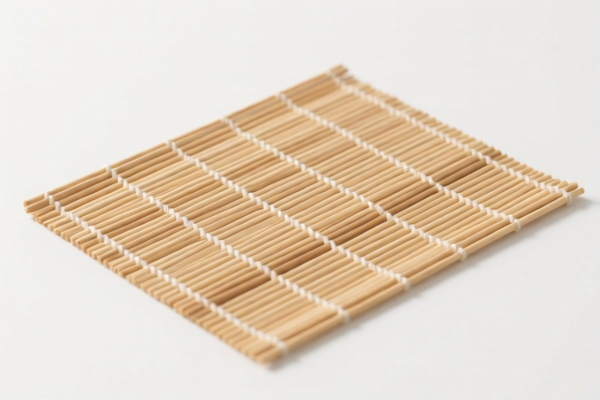
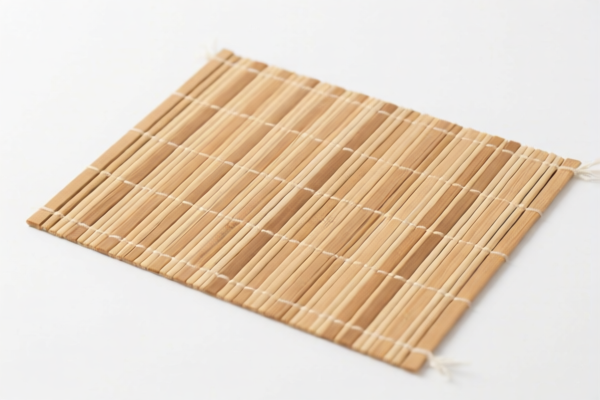
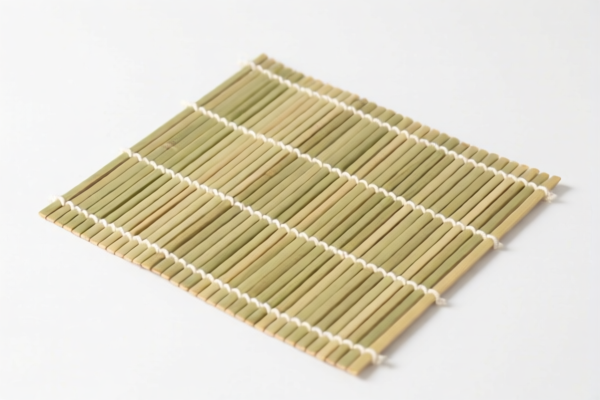
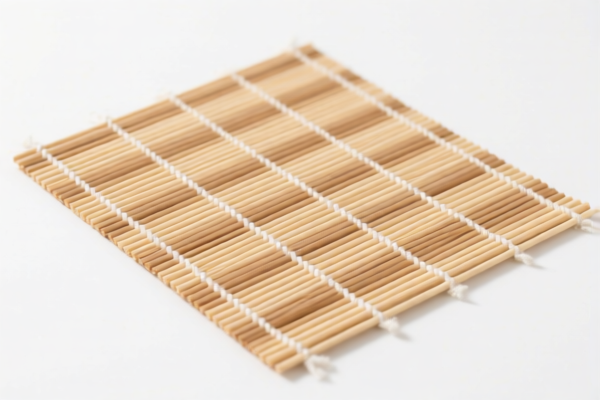
AI Analysis
🎋 Bamboo Pot (Bamboo Container/Vessel)
🌐 HS Code Reference & Customs Clearance Guide | 2026 Latest Tariff Analysis | Professional Strategy
📌 I. Product Definition & Classification: What Exactly is a "Bamboo Pot"?
A "Bamboo Pot" is a generic term that usually refers to containers made primarily of bamboo. In international trade, its classification depends entirely on its intended function: 1. Kitchen/Tableware Use: If it is used for holding food, serving rice, cutting, or storing kitchen items (e.g., a rice box, chopping board, food storage jar). 2. Non-Kitchen/Other Use: If it is used for decoration, general storage, or non-food purposes.
⚠️ Key Distinction Point:
- If the item is Tableware or Kitchenware (food contact intended) → It falls under Chapter 44.19.
- If the item is NOT Tableware/Kitchenware (e.g., a decorative basket or planter) → It falls under Chapter 44.14 or 4421.
- Note: The provided DATA only contains entries for Chapter 44.14 (Frames) and 44.19 (Tableware).
📦 II. HS Code Classification Details (Based on Provided DATA)
Since the prompt provides specific HS codes, we must map the "Bamboo Pot" to the most logically applicable codes in the dataset.
| HS Code | Product Description | Applicability to "Bamboo Pot" |
|---|---|---|
4419.19.90.00 |
Tableware and kitchenware, of wood: Of bamboo: Other: Other | ✅ High Probability: If the "pot" is a food container, rice box, or kitchen storage item. |
4419.11.00.00 |
Tableware and kitchenware, of wood: Of bamboo: Bread boards, chopping boards and similar boards | ❌ Low Probability: Only if the "pot" is actually a cutting board or serving board. |
4414.90.00.00 |
Wooden frames for paintings, photographs, mirrors or similar objects: Other | ❌ Very Low Probability: Unless the "pot" is structurally a frame for a mirror/photo (unlikely). |
4414.10.00.00 |
Wooden frames for paintings, photographs, mirrors or similar objects: Of tropical wood | ❌ Very Low Probability: Same as above. |
🔍 Critical Analysis:
- Most "Bamboo Pots" used in households for food storage or serving are classified as Tableware/Kitchenware.
- Therefore,4419.19.90.00is the most likely correct HS code for a standard bamboo food container/pot.
- Codes4414.xxxxxxare for Frames, which are structurally different from pots/vessels. Using a frame code for a pot is a common misclassification error.
💰 III. 2026 Latest Tariff Rate Details
✅ Applicable Country: United States (US)
✅ Origin: China (CN)
✅ Effective Time: Current rates apply
🎯 1. 4419.19.90.00 —— Bamboo Tableware/Kitchenware (Other)
| Item | Content |
|---|---|
| Base Tariff | 3.2% (ad valorem) |
| Additional Tariff (Section 301) | 0.0% |
| Total Tax Rate | 3.2% |
| Tax Calculation | CIF Value × 3.2% |
| De Minimis Eligibility | ✅ Yes (if value < $800, typically duty-free) |
| Legal Basis Path | USITC:4419.19.90.00 |
📌 Explanation:
- Bamboo tableware and kitchenware generally enjoy low base tariffs (3.2%).
- Unlike many other bamboo products (e.g., flooring or certain crafts), tableware/kitchenware often has no additional Section 301 tariff (0% add-on), making it significantly cheaper to import than other bamboo goods.
- Total Cost Impact: Very low. This is a highly favorable classification for bamboo containers.
🎯 2. 4419.11.00.00 —— Bamboo Chopping Boards
| Item | Content |
|---|---|
| Base Tariff | 3.2% |
| Additional Tariff (Section 301) | 0.0% |
| Total Tax Rate | 3.2% |
| Tax Calculation | CIF Value × 3.2% |
📌 Explanation:
- If the "pot" is actually a cutting board or serving platter, the rate is identical to other bamboo tableware.
🚫 Misclassification Warning: 4414.90.00.00 & 4414.10.00.00
| Item | Content |
|---|---|
| Base Tariff | 3.9% |
| Additional Tariff (Section 301) | 7.5% |
| Total Tax Rate | 11.4% |
| Applicability | ONLY for Frames |
⚠️ Do Not Use for Pots:
- If you misclassify a bamboo pot as a "Frame" (4414), you may be penalized for incorrect classification.
- However, if you did misclassify it, the tax would be 11.4%, which is 3.5x higher than the correct tableware rate (3.2%).
- Never classify a pot as a frame unless it is literally a frame for a mirror/photo.
🛠️ IV. Customs Clearance Practical Advice
✅ 1. Documentation Checklist (Must-Provided)
| Document | Required | Explanation |
|---|---|---|
| ✅ Product Specification Sheet | ✔️ | Must clearly state: "Bamboo Pot for Food Storage," "Capacity: X L," "Food-Grade Finish." |
| ✅ Product Photos | ✔️ | Clear images showing the item is a container/pot, NOT a frame. |
| ✅ Commercial Invoice | ✔️ | Description: "Bamboo Kitchen Container" or "Bamboo Food Pot." Avoid vague terms like "Bamboo Item." |
| ✅ Material Declaration | ✔️ | Confirm it is 100% Bamboo (or specify if lined with plastic/wood). If lined with non-bamboo material, it may still be bamboo if bamboo is the essential character. |
| ✅ Food Contact Statement | ✔️ | If used for food, confirm it meets FDA/USDA standards (if applicable). |
✅ 2. Classification Strategy (Key Tips)
🔥 "It's a Pot, Not a Frame!"
| Scenario | Correct HS Code | Incorrect HS Code | Consequence |
|---|---|---|---|
| Bamboo food storage container | 4419.19.90.00 |
4414.90.00.00 (Frame) |
Wrong Code: High tax (11.4% vs 3.2%), potential penalty. |
| Bamboo chopping board | 4419.11.00.00 |
4419.19.90.00 (Other) |
Minor: Both are 3.2%, but specific code is preferred for audit trails. |
| Bamboo decorative vase (non-food) | Not in DATA | 4414.90.00.00 |
Misclassification: If not food-related, 4419 is wrong. Must use 4421 or 4415 (not in DATA). |
📌 Important Note:
- The provided DATA only covers4419(Tableware) and4414(Frames).
- If your "Bamboo Pot" is NOT for food/kitchen use (e.g., a flower pot or storage basket), none of the provided HS codes are correct. You would need to look up4421.99.80or4415.20.00.
- However, if it is for kitchen/food use, stick to4419.19.90.00.
✅ 3. Special Cases
| Case | Handling Advice |
|---|---|
| Lined Bamboo Pot | If the bamboo pot is lined with plastic, epoxy, or wood, ensure the bamboo is the essential character. If not, it may fall under Plastics (Chapter 39) or Wood (Chapter 44) depending on primary material. |
| Set of Bamboo Pots | If sold as a set (e.g., 3-piece nesting pots), classify the essential character item. Usually, all are 4419. |
| Export to USA | Bamboo products are subject to USDA Phytosanitary Requirements. Ensure no pest issues. Customs may require a Phytosanitary Certificate. |
🌍 V. Global Market Comparison (2026)
| Country/Region | Recommended HS Code (Bamboo Pot) | Tariff Rate | Notes |
|---|---|---|---|
| 🇺🇸 USA | 4419.19.90.00 |
3.2% | No Section 301 for tableware. Low risk. |
| 🇨🇳 China | 4419.19.90.00 |
8.0% | Higher base rate. No additional taxes. |
| 🇪🇺 EU | 4419.19.00.00 |
6.4% | Standard NMF duty. No anti-dumping. |
| 🇬🇧 UK | 4419.19.00 |
6.4% | Post-Brexit tariff. |
| 🇯🇵 Japan | 4419.19.00 |
6.0% | Low tariff. |
📌 Conclusion:
- The USA offers the most favorable tariff (3.2%) for bamboo tableware/kitchenware among major markets.
- This is a strategic advantage for exporting bamboo kitchenware to the US.
📌 VI. Common Errors & Pitfalls (Blood & Tears Lessons)
❌ Error 1: Classifying a food pot as a "Frame" (4414)
👉 Consequence: Tax jumps from 3.2% to 11.4%. Overpayment of tax. Customs may flag for misdeclaration.
❌ Error 2: Vague Description "Bamboo Pot"
👉 Consequence: Customs may doubt if it's tableware. Request for additional info or reclassification.
✅ Fix: Use "Bamboo Rice Container" or "Bamboo Food Storage Pot."
❌ Error 3: Ignoring USDA Requirements
👉 Consequence: Shipment held at port for phytosanitary inspection. Delays and storage fees.
✅ Fix: Provide Phytosanitary Certificate from the country of origin.
❌ Error 4: Assuming All Bamboo Items are 4419
👉 Consequence: If it's a decoration or planter, 4419 is wrong. Must use 4421 or 4415.
✅ Fix: Determine primary use. Food/Kitchen → 4419. Decor/Planter → 4421/4415.
🎯 VII. Conclusion: Smart Classification, Maximize Profit!
🎯 Remember the Rule:
🔹 "If it holds food, it's 4419 (3.2%). If it's a frame, it's 4414 (11.4%). If it's a planter, it's neither!"
🔹 "Bamboo Pot = 4419.19.90.00 = 3.2% Tax. Save money, stay compliant."
📌 Pro Tip:
- If your bamboo pot is new, innovative, or non-standard, consider applying for an Advance Ruling from CBP (U.S. Customs) to lock in the classification.
- Always ensure the product is clean, dry, and free of pests to avoid USDA delays.
📣 Immediate Action:
📞 Contact a Customs Broker
📄 Prepare: Invoice + Spec Sheet + Photos
🚀 Classify as4419.19.90.00for 3.2% Tax. Avoid4414!
✨ Professional Clearance Starts with Accurate Classification!
💼 Every Point of Tax Matters. Choose the Right Code!
Customer Reviews
About HS Code Classification
The Harmonized System (HS) is an internationally standardized nomenclature developed by the World Customs Organization (WCO) to classify traded products. Over 200 countries use the HS system as the basis for customs tariffs, trade statistics, and import/export regulations.
Each HS code follows a hierarchical structure:
- Chapter (2 digits) — Broad category of goods (e.g., Chapter 84: Machinery and Mechanical Appliances)
- Heading (4 digits) — More specific grouping within the chapter
- Subheading (6 digits) — Internationally standardized breakdown, used by all WCO member countries
- National subdivisions (8-10 digits) — Country-specific extensions for further classification, such as US HTSUS 10-digit codes
Correct HS code classification is essential for smooth customs clearance, accurate duty payment, and compliance with trade regulations. Misclassification can lead to customs delays, overpayment of duties, or penalties.
When importing from CN to US, the applicable tariff rates may include:
- Most-Favored-Nation (MFN) rate — The standard duty rate applied to WTO members
- General rate — Applied to countries without trade agreements
- Trade remedy duties — Additional tariffs such as Section 301 (anti-dumping), Section 232 (national security), or countervailing duties
The information provided on this page is for reference purposes only. For official classification, please consult with your local customs authority or a licensed customs broker.