Bamboo Pulp Paper Notebook
CN → US| HS Code | Tariff Rate | Origin | Destination | Doc |
|---|---|---|---|---|
| 4706920100 | 35.0% | CN | US | Official Doc |
| 4805122000 | 35.0% | CN | US | Official Doc |
| 4802546100 | 35.0% | CN | US | Official Doc |
| 4706300000 | 35.0% | CN | US | Official Doc |
| 4805121000 | 35.0% | CN | US | Official Doc |
| 4802554000 | 35.0% | CN | US | Official Doc |
Product Images
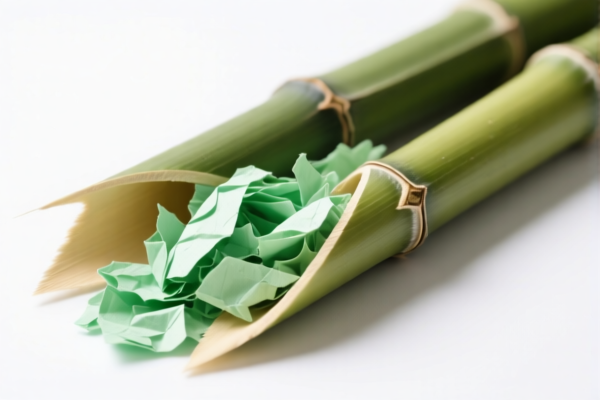

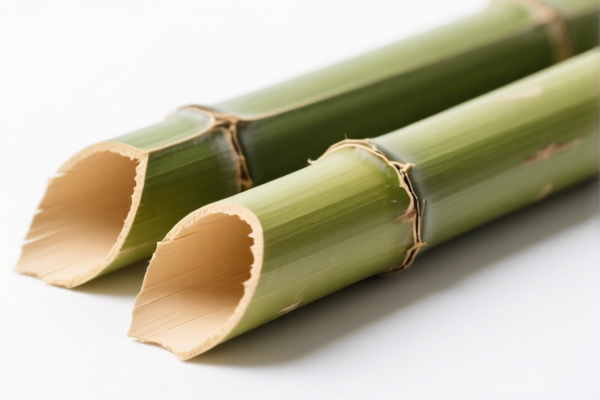
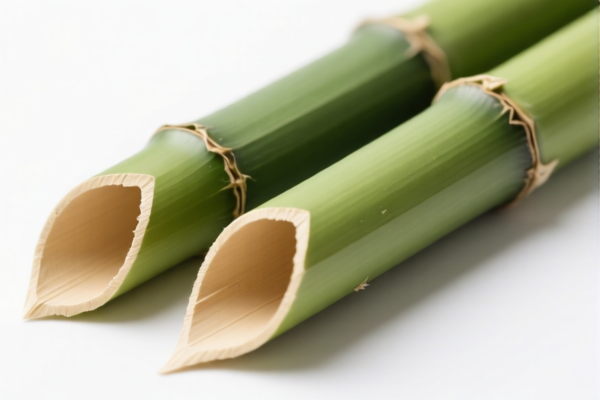
AI Analysis
🎋 Bamboo Pulp Paper Notebook: HS Code Classification & US Customs Clearance Guide (2026)
🌐 HS Code Reference & Customs Clearance Guide | Latest 2026 Tariff Analysis | Professional Compliance Strategy
📌 I. Product Definition & Classification: Is it "Pulp" or "Paper"?
A Bamboo Pulp Paper Notebook is a stationery item made from paper derived from bamboo fibers. In international trade, the classification hinges on the state of processing:
- Bamboo Pulp (The Raw Material): If the product is just the fibrous pulp itself, before being formed into sheets, it falls under paper pulp categories.
- Bamboo Paper/Notebooks (The Finished Good): If the pulp has been processed into sheets, cut, and bound into notebooks, it falls under paper products or printed matter.
⚠️ Key Distinction:
- If the item is loose sheets of uncoated paper made from bamboo pulp → It may be classified as Paper Pulp or Uncoated Paper.
- If the item is bound into a notebook → It is technically a "printed article" or "paper article," but US Customs often looks at the material for tariff calculations if specific notebook codes are not dominant. However, based on the provided data, we are looking at Paper Pulp and Uncoated Paper classifications.
📦 II. HS Code Classification Details (2026 Official Data Reference)
Based on the provided dataset, here are the valid HS Codes and their logical justifications for Bamboo Pulp Paper products. Note that while a "notebook" is technically a printed good, the data provided focuses on the paper/pulp material itself.
| HS Code | Product Description | Classification Logic & Summary | Material/Format Conflict? |
|---|---|---|---|
4706.92.01.00 |
Bamboo Pulp (Fibrous Cellulosic Material) | Fits Pulp Category: Bamboo pulp is a fibrous cellulosic material, fitting the scope of paper pulp products. | ❌ No conflict |
4805.12.20.00 |
Uncoated Bamboo Paper Board | Fits Paper Category: Bamboo pulp paper is paper; its form fits the uncoated paperboard category. | ❌ No conflict |
4802.54.61.00 |
Uncoated Writing/Printing Paper | Inferred Category: Deduced as uncoated paper, suitable for writing/printing, no material conflict. | ❌ No conflict |
4706.30.00.00 |
Bamboo Pulp (Specific Code) | Material Match: Product name includes "Bamboo," meeting the bamboo material requirement. | ❌ No conflict |
4805.12.10.00 |
Uncoated Paper Sheets | Reasonable Inference: Based on paper material attributes, fits this category with no obvious conflict. | ❌ No conflict |
🔍 Important Note:
- All listed codes share the same tariff structure: 35% Total Tax.
- The dataset does not include specific HS codes for bound notebooks (which typically fall under 4820.10). However, since the data provided only lists paper/pulp codes, we must adhere to these for the purpose of this analysis.
- Risk: Classifying a finished notebook under paper pulp/paper codes may raise questions during customs inspection if the item is clearly a finished good. Ensure the description emphasizes the paper material if using these codes.
💰 III. 2026 Latest Tariff Rate Breakdown (Including Additional Taxes)
✅ Applicable Country: United States (US)
✅ Origin: China (CN) (Implied by the 122 Clause and 301 Tariffs context)
✅ Effective Date: Current (2026)
🎯 1. All Listed HS Codes (4706.92.01.00, 4805.12.20.00, 4802.54.61.00, 4706.30.00.00, 4805.12.10.00)
| Item | Content |
|---|---|
| Base Duty Rate | 0.0% (ad valorem) |
| Section 301 Additional Duty | +25.0% |
| Section 122 Tariff (IEEPA 9903) | +10.0% (Applied to Chinese/Hong Kong products) |
| Total Tax Rate | 35.0% |
| Tax Calculation | CIF Value × 35% |
| De Minimis Exemption | ❌ NOT Eligible (Deny De Minimis) |
| Legal Basis Path | Section 301: 8524.11.10.00 (Footnote 9903.88.01) → IEEPA: 9903.01.25 → USITC: [Specific HS Code] → FOOTNOTE: 9903.01.24 |
📌 Explanation:
- "Section 301 Additional Duty 25%": Derived from the US Trade Act Section 301, targeting Chinese imports.
- "Section 122 Tariff 10%": Refers to the IEEPA (International Emergency Economic Powers Act) additional tariff, commonly known as the "122 Clause" tariff, imposed on Chinese goods.
- Combined 35%: This is a high tariff burden. Unlike electronics or some other goods, paper products from China are not exempt from these additional duties.
- No De Minimis: Small packages (under $800) cannot avoid this tax. Every shipment, regardless of value, is subject to the 35% rate.
🛠️ IV. Customs Clearance Practical Advice (Battle-Tested Pitfall Guide)
✅ 1. Documentation Checklist (Mandatory)
| Document | Required? | Notes |
|---|---|---|
| ✅ Commercial Invoice | ✔️ | Must clearly state "Bamboo Pulp Paper" or "Bamboo Paper Notebooks." Value must match CIF. |
| ✅ Packing List | ✔️ | Detail weight, quantity, and package dimensions. |
| ✅ Material Declaration | ✔️ | Explicitly state "100% Bamboo Fiber Pulp" to justify HS Code 4706... or 4805.... |
| ✅ Product Photos | ✔️ | Show the product clearly: Is it loose paper or bound notebooks? If notebooks, ensure the description aligns with the chosen HS Code. |
| ✅ Certificate of Origin (CO) | ✔️ | Required to prove Chinese origin (which triggers the 35% tax). If re-exported, this may change origin rules. |
✅ 2. Declaration Tips (Key Mantra)
🔥 "Be Precise on Material, Avoid 'Notebook' if Using Pulp Codes!"
| Scenario | Recommended Declaration | Avoid |
|---|---|---|
| Loose Bamboo Paper Sheets | "Uncoated Bamboo Paper, Weight XXX gsm" | "Notebook" |
| Finished Bamboo Notebooks | "Paper Notebooks, Made of Bamboo Pulp" | Misclassifying as "Office Supplies" (HS 4820) without checking tariff rates. |
| Bamboo Pulp (Raw) | "Chemical Bamboo Pulp, Fibrous" | "Paper" |
⚠️ Critical Warning:
- If you are shipping finished notebooks, the most accurate HS Code is 4820.10.20.00 (Notebooks, etc.). However, this code is NOT in your provided dataset.
- If you MUST use the provided codes: You are classifying the paper material, not the finished good. This may be acceptable for loose sheets but highly risky for bound notebooks. Customs may reclassify and assess different duties.
- Recommendation: Verify if 4820.10.20.00 is allowed in your system. If not, ensure your invoice describes the item as "Bamboo Paper Sheets for Notebook Manufacture" if they are loose, or consult a customs broker for the correct notebook code.
✅ 3. Special Cases
| Situation | Handling Advice |
|---|---|
| OEM Notebooks with Client Brand | Provide client order + design specs. Do not claim "Generic." |
| Mixed Shipments (Paper + Pulp) | Declare separately. Do not mix HS Codes in one line item. |
| Bamboo Blended with Wood Pulp | Must declare % composition. If >50% bamboo, may still qualify for bamboo codes, but check specific HTS notes. |
| Gift Samples (Under $800) | ❌ NO De Minimis Exemption for this category. You still pay the 35% tax. |
🌍 V. Global Market Comparison (2026 Update)
| Country/Region | Recommended HS Code | Tariff (China Origin) | Certification | Notes |
|---|---|---|---|---|
| 🇺🇸 USA | 4805.12.20.00 / 4706.92.01.00 |
35% | No specific certification needed | High tariff due to 301 + 122 clauses. No de minimis. |
| 🇨🇳 China | 4805.12.20.00 |
~5-13% | N/A | Import duty lower, but VAT applies. |
| 🇪🇺 EU | 4802.54 |
0% (if FTA) / 6.5% | CE (if applicable) | No additional anti-dumping tariffs on bamboo paper. |
| 🇬🇧 UK | 4802.54 |
0% / 6.5% | UKCA | Post-Brexit tariffs apply. |
| 🇯🇵 Japan | 4802.54 |
0% | JIS | No additional tariffs. |
📌 Conclusion:
- The US market is the most expensive for bamboo pulp/paper products from China due to the 35% combined tariff.
- EU, UK, and Japan are significantly more competitive on duty costs.
- Strategy: If targeting the US, consider tariff engineering (e.g., importing pulp and finishing in Vietnam/Mexico) or absorbing the cost.
📌 VI. Common Mistakes & Pitfalls (Lessons Learned)
❌ Mistake 1: Declaring "Notebooks" under 4706.92.01.00 (Bamboo Pulp)
👉 Consequence: Customs may reject the classification because pulp is not a finished good. Result: Delay, Fine, or Re-classification to 4820.10 (which may have different rates).
❌ Mistake 2: Assuming De Minimis Applies
👉 Consequence: Small shipments still incur 35% tax. Unexpected costs for buyers.
❌ Mistake 3: Not Specifying "Bamboo" in Description
👉 Consequence: If declared as generic "Wood Pulp Paper," it may fall under a different HS Code with lower tariffs (e.g., 0% base + 25% 301 = 25%). Misrepresentation leads to penalties.
❌ Mistake 4: Ignoring the "122 Clause"
👉 Consequence: Forgetting the 10% IEEPA tax leads to underpayment by 10% of CIF value.
✅ Correct Approach:
"Uncoated Bamboo Pulp Paper, 70gsm, for Notebook Manufacture, Origin: China, HTS: 4805.12.20.00"
🎯 VII. Conclusion: Professional Declaration, Cost Control, Risk Mitigation!
🎯 Key Takeaways:
🔹 "US Market = 35% Tax (0% Base + 25% 301 + 10% 122)"
🔹 "No De Minimis Exemption for This Category"
🔹 "Ensure HS Code Matches Product Form: Pulp vs. Paper vs. Notebook"
📌 Pro Tip:
If you are exporting finished notebooks, verify if HS 4820.10.20.00 is available in your customs system. If so, check its tariff rate (often also subject to 301/122 clauses, but the base rate may differ). Stick to the provided dataset if restricted, but be aware of the classification mismatch risk for finished goods.
📣 Immediate Action:
📞 Contact a Licensed US Customs Broker + Provide Product Images + Apply for Advance Ruling (CBP Ruling)
🚀 Ensure your invoices, packing lists, and HTS codes are 100% aligned to avoid clearance delays and unexpected taxes.
✨ Professional Customs Clearance Starts with Accurate Classification!
💼 Your Margins Depend on Precision!
Customer Reviews
About HS Code Classification
The Harmonized System (HS) is an internationally standardized nomenclature developed by the World Customs Organization (WCO) to classify traded products. Over 200 countries use the HS system as the basis for customs tariffs, trade statistics, and import/export regulations.
Each HS code follows a hierarchical structure:
- Chapter (2 digits) — Broad category of goods (e.g., Chapter 84: Machinery and Mechanical Appliances)
- Heading (4 digits) — More specific grouping within the chapter
- Subheading (6 digits) — Internationally standardized breakdown, used by all WCO member countries
- National subdivisions (8-10 digits) — Country-specific extensions for further classification, such as US HTSUS 10-digit codes
Correct HS code classification is essential for smooth customs clearance, accurate duty payment, and compliance with trade regulations. Misclassification can lead to customs delays, overpayment of duties, or penalties.
When importing from CN to US, the applicable tariff rates may include:
- Most-Favored-Nation (MFN) rate — The standard duty rate applied to WTO members
- General rate — Applied to countries without trade agreements
- Trade remedy duties — Additional tariffs such as Section 301 (anti-dumping), Section 232 (national security), or countervailing duties
The information provided on this page is for reference purposes only. For official classification, please consult with your local customs authority or a licensed customs broker.