Bamboo Pulp Tableware Raw Materials
CN → US| HS Code | Tariff Rate | Origin | Destination | Doc |
|---|---|---|---|---|
| 4823700020 | 35.0% | CN | US | Official Doc |
| 4706920100 | 35.0% | CN | US | Official Doc |
| 4706300000 | 35.0% | CN | US | Official Doc |
| 3924104000 | 13.4% | CN | US | Official Doc |
| 4823610040 | 35.0% | CN | US | Official Doc |
Product Images
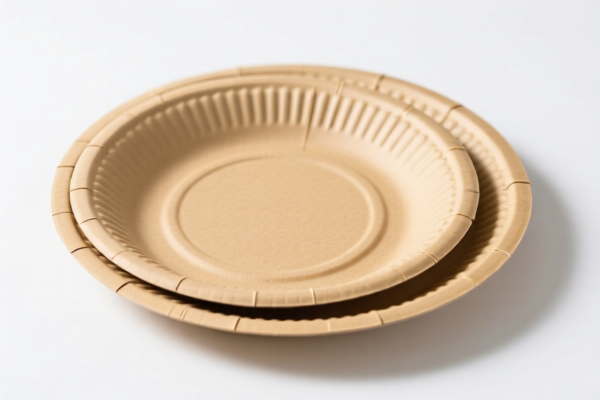
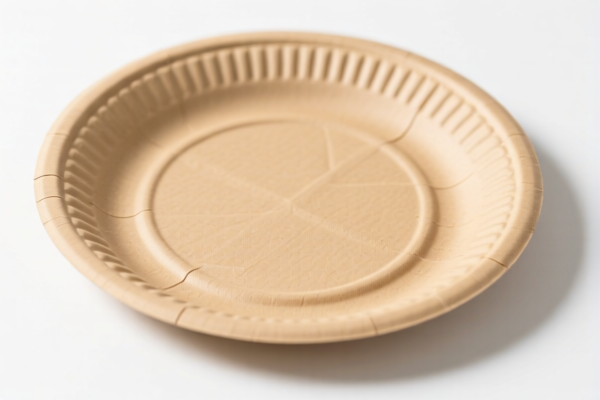
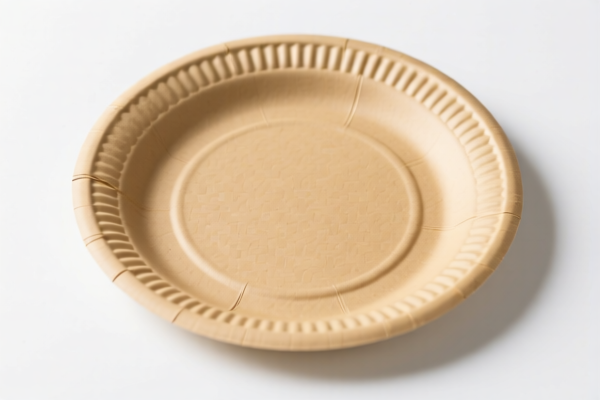
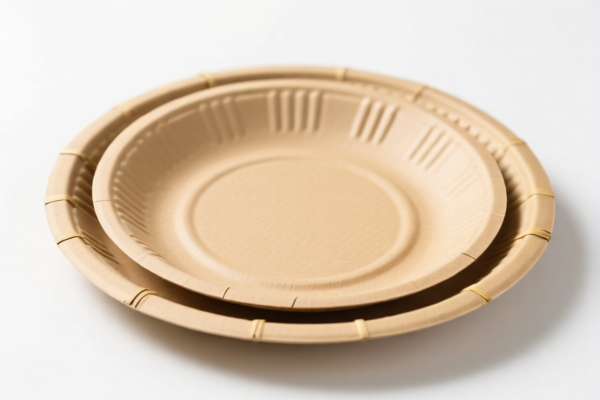
AI Analysis
🎋 Bamboo Pulp Tableware Raw Materials
🌐 HS Code Reference & Customs Clearance Guide | 2026 Latest Tariff Analysis | Professional Clearance Strategy
📌 I. Product Definition & Classification: Do You Really Understand "Bamboo Pulp"?
Bamboo pulp tableware raw materials are sustainable, biodegradable alternatives to plastic and paper products. In international trade, they are classified based on their state of processing and final form:
1. Unprocessed/Primary Pulp (Raw Material State)
Refers to bamboo fibers processed into pulp form, ready for further manufacturing. These are not yet finished tableware items.
State: Fiber/Cellulose Pulp
Key Identifier: Not shaped into final utensils.
2. Processed Pulp/Fiber (Semi-Finished or Specific Product State)
Refers to bamboo pulp used directly in the manufacturing of specific tableware items (plates, bowls, cups) or processed into specific paper-like forms.
State: Shaped products or specific paper grades.
Key Identifier: Used specifically for tableware manufacturing.
⚠️ Critical Distinction:
- If the product is raw pulp/chemical cellulose → Classify under Chapter 47 (Papermaking Raw Materials).
- If the product is processed pulp formed into tableware → Classify under Chapter 48 (Paper/Paperboard Articles).
- If the product is considered a generic plastic-like item (rare for pure bamboo, but possible if heavily resin-coated and categorized as "other") → Classify under Chapter 39.
📦 II. HS Code Classification Details (2026 Latest Tariff Authority Comparison)
Based on the provided data, here are the precise classifications for Bamboo Pulp Tableware Raw Materials:
| HS Code | Product Description | Application Scenario | State/Form |
|---|---|---|---|
4706.92.01.00 |
Bamboo Fiber Pulp (Cellulose Fiber Pulp) | Raw material for tableware; pure bamboo fiber pulp form. | Pulp/Fiber |
4706.30.00.00 |
Bamboo Fiber Pulp (Cellulose Material Pulp) | Raw material for tableware; pulp derived from bamboo cellulose. | Pulp/Fiber |
4823.70.00.20 |
Bamboo Fiber Pulp Tableware (Plates/Bowls/Cups) | Finished tableware items made from bamboo pulp fiber. | Shaped Tableware |
4823.61.00.40 |
Bamboo Pulp Paper Tableware (Trays/Dishes/Plates/Cups) | Tableware made from bamboo pulp paper/board. | Shaped Tableware |
3924.10.40.00 |
Bamboo Pulp Tableware (Catch-all Category) | Other tableware applications; generic "other" category for bamboo pulp tableware. | Other Tableware |
🔍 Key Reminder:
- Raw Pulp (4706.xx) is subject to the same high tariffs as Finished Tableware (4823.xx) in this specific dataset due to trade policies.
- Misclassification Risk: Declaring finished tableware (4823) as raw pulp (4706) to seek lower base tariffs may trigger audits if the physical form is clearly shaped.
-3924.10.40.00serves as a fallback but has a lower total tax rate in this specific scenario, though it may require specific justification regarding material composition (e.g., heavy plastic blending).
💰 III. 2026 Latest Tariff Rate Details (Including Surcharges & Policy Add-ons)
✅ Applicable Country: United States (US)
✅ Origin: China (CN)
✅ Effective Date: Current trade policies (2025-2026)
🎯 1. 4706.92.01.00 & 4706.30.00.00 — Bamboo Fiber Pulp (Raw Material)
| Item | Content |
|---|---|
| Base Tariff | 0.0% (ad valorem) |
| Section 301 Surcharge | +25.0% (USITC Footnote 9903.88.01 / China Origin) |
| Section 122 Tariff | +10.0% (Specific trade measure) |
| Total Tariff Rate | 35.0% |
| Tax Calculation | CIF Value × 35% |
| De Minimis Exemption | ❌ Not Eligible (High tariff items usually excluded) |
| Legal Basis Path | USITC:4706.92.01.00 → Section 301: 25% → Section 122: 10% |
📌 Explanation:
- Although the Base Tariff is 0%, the 301 Surcharge (25%) and Section 122 Tariff (10%) apply, resulting in a 35% total tax.
- This applies to both4706.92.01.00and4706.30.00.00as they are classified under the same surcharge rules in the provided data.
🎯 2. 4823.70.00.20 — Bamboo Fiber Pulp Tableware (Plates/Bowls/Cups)
| Item | Content |
|---|---|
| Base Tariff | 0.0% (ad valorem) |
| Section 301 Surcharge | +25.0% |
| Section 122 Tariff | +10.0% |
| Total Tariff Rate | 35.0% |
| Tax Calculation | CIF Value × 35% |
| De Minimis Exemption | ❌ Not Eligible |
| Legal Basis Path | USITC:4823.70.00.20 → Section 301: 25% → Section 122: 10% |
📌 Note:
- Even though this is a finished product, the base tariff is 0%, but the surcharges push the total to 35%.
- Ensure the description clearly states "Bamboo Fiber Pulp Tableware" to avoid misclassification penalties.
🎯 3. 4823.61.00.40 — Bamboo Pulp Paper Tableware (Trays/Dishes/Plates/Cups)
| Item | Content |
|---|---|
| Base Tariff | 0.0% (ad valorem) |
| Section 301 Surcharge | +25.0% |
| Section 122 Tariff | +10.0% |
| Total Tariff Rate | 35.0% |
| Tax Calculation | CIF Value × 35% |
| De Minimis Exemption | ❌ Not Eligible |
| Legal Basis Path | USITC:4823.61.00.40 → Section 301: 25% → Section 122: 10% |
📌 Note:
- Similar to4823.70.00.20, this is a paper/board article category.
- The distinction between4823.61and4823.70often lies in the specific paper type or manufacturing process, but both attract the 35% total rate.
🎯 4. 3924.10.40.00 — Bamboo Pulp Tableware (Catch-all Category)
| Item | Content |
|---|---|
| Base Tariff | 3.4% (ad valorem) |
| Section 301 Surcharge | 0.0% (Note: Data shows 0% surcharge for this specific code) |
| Section 122 Tariff | +10.0% |
| Total Tariff Rate | 13.4% |
| Tax Calculation | CIF Value × 13.4% |
| De Minimis Exemption | ⚠️ Check Eligibility (Lower base may sometimes allow de minimis, but Section 122 may block it) |
| Legal Basis Path | USITC:3924.10.40.00 → Section 122: 10% |
📌 Important:
- This is the only code with a lower total tax rate (13.4%).
- However, this code is typically for "Tableware of plastics" or similar. Using it for bamboo pulp requires careful justification that the product fits the "plastic-like" or "catch-all" definition, or that it is heavily processed/resin-bound.
- Risk: Misclassification here could lead to significant penalties if customs determines the product is clearly bamboo fiber tableware (4823).
🛠️ IV. Customs Clearance Practical Advice (Real-World Pitfall Avoidance)
✅ 1. Required Documentation Checklist (Non-negotiable)
| Document | Mandatory? | Description |
|---|---|---|
| ✅ Product Specification Sheet | ✔️ | Must specify: Material (100% Bamboo Pulp / Blended), Form (Pulp vs. Shaped), Usage. |
| ✅ Composition Analysis | ✔️ | Detailed breakdown of bamboo fiber content vs. any binders/resins. Critical for 3924 vs 4823 distinction. |
| ✅ Product Photos (Front/Side/Back) | ✔️ | Clear images showing the physical form (pulp block vs. shaped plate). |
| ✅ Commercial Invoice | ✔️ | Must accurately describe the product as "Bamboo Pulp Tableware Raw Material" or "Bamboo Pulp Tableware." |
| ✅ Packing List | ✔️ | Details on net/gross weight, dimensions, and number of packages. |
| ✅ Certificate of Origin (CO) | ✔️ | Proves Chinese origin, triggering the specific 301/122 tariffs. |
✅ 2. Declaration Tips (Key Mantras)
🔥 "True Form, True Material, True Code!"
| Scenario | Correct Declaration | Wrong Action |
|---|---|---|
| Raw Pulp | "Bamboo Fiber Pulp, Cellulose Base, Unshaped" → 4706.92.01.00 |
Calling it "Tableware" → May delay inspection |
| Shaped Tableware | "Bamboo Pulp Plates, Molded, Biodegradable" → 4823.70.00.20 |
Calling it "Plastic Tableware" → High risk of penalty |
| Mixed/Resin-Heavy | "Bamboo Composite Tableware, High Resin Content" → Consider 3924.10.40.00 (with caution) |
Ignoring resin content → Misclassification |
✅ 3. Special Cases Handling
| Situation | Handling Advice |
|---|---|
| Bamboo Pulp with Heavy Plastic Binder | If >50% plastic by weight/value, consider 3924.10.40.00 for lower tax (13.4%), but ensure legal compliance. |
| Small Samples for R&D | If value is very low, check if 3924 qualifies for de minimis exemption (unlikely under current Section 122 rules). |
| Export to Third Countries | If transshipped through Vietnam/Mexico, provide full supply chain documentation to prove origin. |
🌍 V. Global Market Clearance Comparison (2026 Latest)
| Country/Region | Recommended HS Code | Tariff (China Origin) | Certification Requirements | Notes |
|---|---|---|---|---|
| 🇺🇸 USA | 4706.92.01.00 / 4823.70.00.20 |
35% (301+122) | FDA (if food contact), CPC | High tariff; 3924 is 13.4% but risky. |
| 🇨🇳 China | 4706.92.01.00 / 4823.70.00.20 |
~5-10% (Import Duty) | FSC (Forest Stewardship Council) | Lower tariffs; focus on eco-certification. |
| 🇪🇺 EU | 4823.70.00.20 |
0% (Most Favored Nation) | EN71, LFGB (Food Safety) | No 301/122 surcharges; easier market entry. |
| 🇬🇧 UK | 4823.70.00.20 |
0% | UKCA Mark (if applicable) | Post-Brexit rules apply; check latest schedules. |
| 🇦🇺 Australia | 4823.70.00.20 |
5% | AS/NZS Standards | Moderate tariff; no major surcharges. |
📌 Conclusion:
- USA is the most challenging market due to 35% combined tariffs.
- EU/UK/Australia offer significantly lower tariff barriers.
- Cost Optimization: Consider if3924.10.40.00(13.4% in US) is legally viable for your product to save 21.6% in taxes, but consult legal counsel first.
📌 VI. Common Errors & Pitfall Guide (Lessons Learned)
❌ Error 1: Declaring shaped bamboo tableware as "Raw Pulp" (4706)
👉 Consequence: Customs may reject the declaration or impose penalties for misclassification.
👉 Result: Delayed release, potential fines.
❌ Error 2: Using 3924.10.40.00 for pure bamboo pulp tableware
👉 Consequence: Customs may determine it does not fit the "plastic" or "catch-all" definition.
👉 Result: Back-tariff difference (35% - 13.4% = 21.6% per unit) + interest.
❌ Error 3: Ignoring Section 122 Tariff
👉 Consequence: Underpaying duties.
👉 Result: Audit, penalties, and loss of customs compliance standing.
❌ Error 4: Lack of FDA Documentation for Food-Contact Items
👉 Consequence: Goods held at US border.
👉 Result: Storage fees, destruction, or re-export.
✅ Correct Practice:
"Bamboo Pulp Tableware, 100% Natural Bamboo Fiber, Molded Plates, Food-Grade, FDA Compliant, HS: 4823.70.00.20"
🎯 VII. Conclusion: Professional Declaration, Save Time, Reduce Costs!
🎯 Remember the Mantra:
🔹 "True Form, True Code, 35% for Pulp/Tableware, 13.4% for Plastic-Like (if valid)."
🔹 "HS Code is Life, Tariff Difference is Cost, Declaration Accuracy is Profit!"
📌 Pro Tip:
If your bamboo pulp tableware is blended with other biodegradable materials or has a significant plastic/resin component, evaluate if 3924.10.40.00 is a viable, compliant option to reduce your US tariff from 35% to 13.4%.
Recommend applying for an Advance Ruling (Pre-Ruling) from US Customs to confirm the correct HS code and tariff treatment before shipping.
📣 Immediate Action:
📞 Contact a Professional Customs Broker + Provide Product Specs + Apply for HS Code Pre-Ruling
🚀 Let your bamboo products clear smoothly, save on tariffs, and boost profits!
✨ Professional Clearance Starts with Accurate Classification!
💼 Every Dollar Saved in Tariffs is Pure Profit!
Customer Reviews
About HS Code Classification
The Harmonized System (HS) is an internationally standardized nomenclature developed by the World Customs Organization (WCO) to classify traded products. Over 200 countries use the HS system as the basis for customs tariffs, trade statistics, and import/export regulations.
Each HS code follows a hierarchical structure:
- Chapter (2 digits) — Broad category of goods (e.g., Chapter 84: Machinery and Mechanical Appliances)
- Heading (4 digits) — More specific grouping within the chapter
- Subheading (6 digits) — Internationally standardized breakdown, used by all WCO member countries
- National subdivisions (8-10 digits) — Country-specific extensions for further classification, such as US HTSUS 10-digit codes
Correct HS code classification is essential for smooth customs clearance, accurate duty payment, and compliance with trade regulations. Misclassification can lead to customs delays, overpayment of duties, or penalties.
When importing from CN to US, the applicable tariff rates may include:
- Most-Favored-Nation (MFN) rate — The standard duty rate applied to WTO members
- General rate — Applied to countries without trade agreements
- Trade remedy duties — Additional tariffs such as Section 301 (anti-dumping), Section 232 (national security), or countervailing duties
The information provided on this page is for reference purposes only. For official classification, please consult with your local customs authority or a licensed customs broker.