Bamboo Pulp for Cardboard
CN → US| HS Code | Tariff Rate | Origin | Destination | Doc |
|---|---|---|---|---|
| 4802554000 | 35.0% | CN | US | Official Doc |
| 4706920100 | 35.0% | CN | US | Official Doc |
| 4805122000 | 35.0% | CN | US | Official Doc |
| 4802546100 | 35.0% | CN | US | Official Doc |
| 4805121000 | 35.0% | CN | US | Official Doc |
Product Images
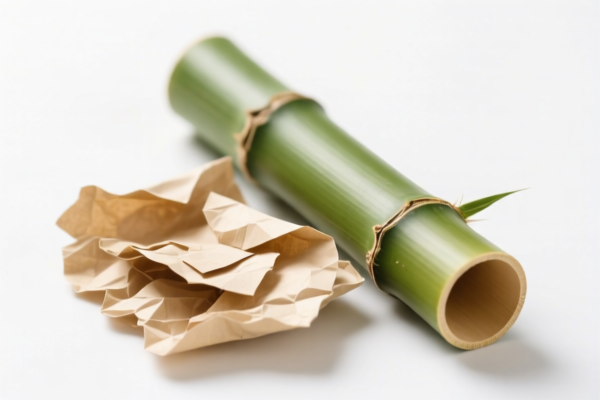
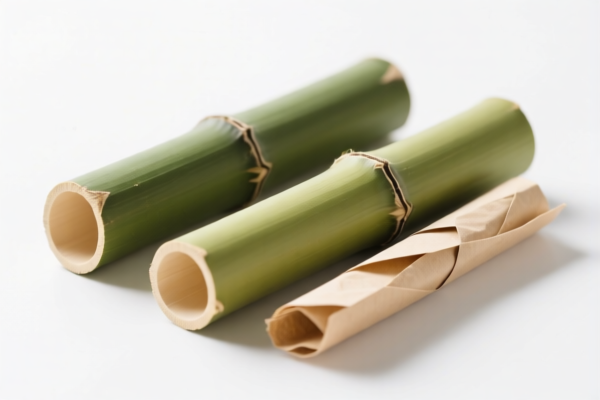
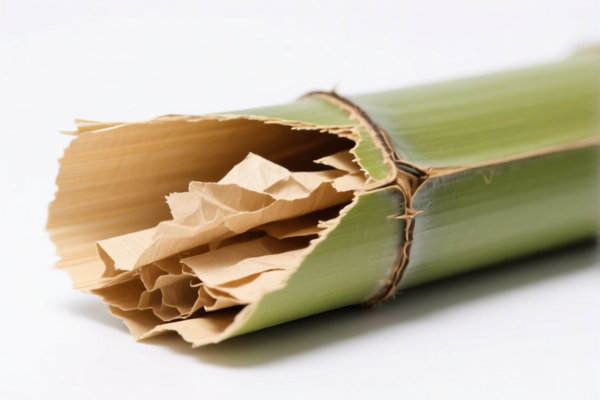
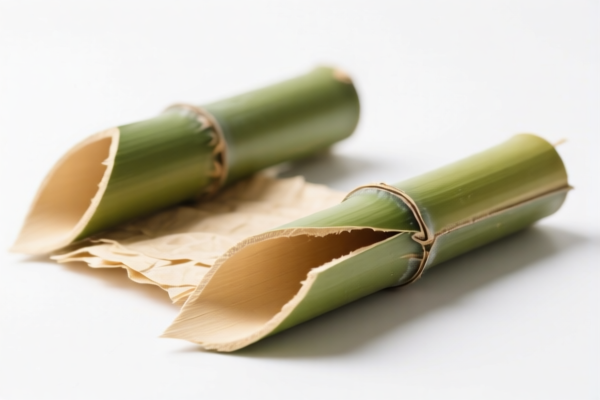
AI Analysis
🎋 Bamboo Pulp for Cardboard (Paper & Paperboard Products)
🌐 HS Code Reference & Customs Clearance Guide | 2026 Latest Tariff Analysis | Professional Clearance Strategy
📌 I. Product Definition & Classification: Do You Really Understand "Bamboo Pulp for Cardboard"?
"Bamboo Pulp for Cardboard" is not a single, standardized commodity name in international trade. It is a generic description that can cover various stages of processing. In international trade, it is broadly divided into two categories based on its physical state and function:
1. Bamboo Pulp (Raw Material):
Unbleached or bleached fibrous material, prepared by mechanical or chemical means from bamboo. It is classified as a semi-finished product used for making paper.
Key Feature: Fibrous cellulose material, not yet formed into sheets.
2. Bamboo Paper/Paperboard (Finished/Semi-finished Product):
Paper or paperboard made from bamboo pulp. It can be coated, uncoated, printed, or plain.
Key Feature: Sheet form, definite dimensions, used for writing, printing, packaging, or cardboard production.
⚠️ Key Distinction Point:
- If the product is loose fibrous material (pulp) without a specific sheet form → Classified under Chapter 47 (Pulp).
- If the product is sheeted paper/board → Classified under Chapter 48 (Paper & Paperboard).
- Crucial: "Bamboo Pulp for Cardboard" often leads to misclassification. If it is already sheeted, it is NOT pulp (Ch. 47), but Paper (Ch. 48).
📦 II. HS Code Classification Details (2026 Latest Tariff Authority Comparison)
| HS Code | Product Description | Applicable Scenario | Material/State |
|---|---|---|---|
4706.92.01.00 |
Bamboo Pulp: Fibrous cellulose material, prepared from bamboo | Raw bamboo pulp, loose fibers, used as input for paper making | ✅ Fibrous Pulp |
4802.55.40.00 |
Bamboo Paper: Plant fiber source, uncoated | Bamboo paper sheets, natural color, no coating | ✅ Paper Sheet |
4805.12.20.00 |
Uncoated Paperboard: Bamboo paper, thick sheet, for cardboard | Thick bamboo paperboard, used for making cartons/cardboard boxes | ✅ Paperboard |
4805.12.10.00 |
Uncoated Paperboard: Bamboo paper, inference of form | Bamboo paperboard, generic form, no specific conflict | ✅ Paperboard |
4802.54.61.00 |
Uncoated Paper: Bamboo paper, for writing/printing | Thin bamboo paper, suitable for office/printing use | ✅ Paper Sheet |
🔍 Key Reminder:
-4706.92.01.00is for pulp (fibers).
-4802&4805are for paper/board (sheets).
- Misclassifying sheeted paper as "pulp" (Ch. 47) or pulp as "paper" (Ch. 48) will lead to customs delays, penalties, and incorrect tariff calculations.
- Both categories carry the same total tax rate in this specific dataset, but the legal classification is critical for compliance.
💰 III. 2026 Latest Tariff Rate Details (Including Surcharges & Policy Add-ons)
✅ Applicable Country: United States (US)
✅ Origin: China (CN)
✅ Effective Date: From November 10, 2025 (and subsequent imports)
✅ Total Tax Rate: 35.0% for all listed HS Codes
🎯 1. 4706.92.01.00 – Bamboo Pulp (Fibrous Cellulose)
| Item | Content |
|---|---|
| Basic Tariff | 0.0% (ad valorem) |
| USITC Additional Tariff (Section 301) | +25.0% |
| Section 122 Tariff | +10.0% |
| Total Tax Rate | 35.0% |
| Tax Calculation | CIF Value × 35% |
| De Minimis Exemption Eligibility | ❌ Not Eligible (deny_de_minimis) |
| Legal Basis Path | Section 301: 9903.88.01 → Section 122: 9903.01.24 → USITC: 4706.92.01.00 |
📌 Explanation:
- 25% (Section 301): The standard additional tariff on Chinese goods under the US Trade Act Section 301.
- 10% (Section 122): A specific additional tariff applicable to certain Chinese imports.
- Combined: 0% (base) + 25% + 10% = 35%.
- High Cost: This is a significant cost factor for bamboo pulp imports.
🎯 2. 4802.55.40.00 – Bamboo Paper (Plant Fiber, Uncoated)
| Item | Content |
|---|---|
| Basic Tariff | 0.0% |
| USITC Additional Tariff (Section 301) | +25.0% |
| Section 122 Tariff | +10.0% |
| Total Tax Rate | 35.0% |
| Tax Calculation | CIF Value × 35% |
| De Minimis Exemption Eligibility | ❌ Not Eligible |
| Legal Basis Path | Section 301: 9903.88.01 → Section 122: 9903.01.24 → USITC: 4802.55.40.00 |
📌 Note:
- Same tariff structure as pulp.
- Applies to uncoated bamboo paper, including natural-colored sheets.
🎯 3. 4805.12.20.00 & 4805.12.10.00 – Bamboo Paperboard (Uncoated)
| Item | Content |
|---|---|
| Basic Tariff | 0.0% |
| USITC Additional Tariff (Section 301) | +25.0% |
| Section 122 Tariff | +10.0% |
| Total Tax Rate | 35.0% |
| Tax Calculation | CIF Value × 35% |
| De Minimis Exemption Eligibility | ❌ Not Eligible |
| Legal Basis Path | Section 301: 9903.88.01 → Section 122: 9903.01.24 → USITC: 4805.12.xx.00 |
📌 Note:
- Applies to thick bamboo paperboard used for cardboard boxes.
- Even though it's "cardboard," it is not exempt from Section 301.
🎯 4. 4802.54.61.00 – Bamboo Paper (Uncoated, for Writing/Printing)
| Item | Content |
|---|---|
| Basic Tariff | 0.0% |
| USITC Additional Tariff (Section 301) | +25.0% |
| Section 122 Tariff | +10.0% |
| Total Tax Rate | 35.0% |
| Tax Calculation | CIF Value × 35% |
| De Minimis Exemption Eligibility | ❌ Not Eligible |
| Legal Basis Path | Section 301: 9903.88.01 → Section 122: 9903.01.24 → USITC: 4802.54.61.00 |
📌 Note:
- Applies to bamboo paper suitable for printing/writing.
- Same 35% total rate.
🛠️ IV. Customs Clearance Practical Advice (Real-World Pitfall Avoidance Guide)
✅ 1. Required Documentation Checklist (Non-negotiable)
| Document | Must Provide | Explanation |
|---|---|---|
| ✅ Product Specification Sheet | ✔️ | Must clearly state: Bamboo content %, Fibre length, Pulp type (chemical/mechanical), Sheet size/thickness |
| ✅ Material Safety Data Sheet (MSDS) | ✔️ | For pulp, may be required for hazardous material review (if bleached with chlorine, etc.) |
| ✅ Product Photos (Clear Labels) | ✔️ | Show packaging, labels, and product form (loose fibers vs. stacked sheets) |
| ✅ Commercial Invoice | ✔️ | Must accurately describe: "Bamboo Pulp" OR "Bamboo Paper," not just "Cardboard Material" |
| ✅ Packing List | ✔️ | Detail net/gross weight, number of bales/sheets |
| ✅ Certificate of Origin (CO) | ✔️ | To prove Chinese origin (triggering Section 301) |
✅ 2. Declaration Techniques (Key Mantras)
🔥 “Pulp is Fibers, Paper is Sheets; Name it Right, Avoid Disputes!”
| Scenario | Correct Declaration | Wrong Practice |
|---|---|---|
| Loose Bamboo Fibers | 4706.92.01.00 – "Bamboo Pulp" |
Misdeclare as "Paper" → Customs may reject or reclassify |
| Stacked Bamboo Sheets | 4802.55.40.00 / 4805.12.20.00 – "Bamboo Paper/Paperboard" |
Misdeclare as "Pulp" → Wrong chapter, potential penalty |
| Mixed Pulp & Paper | Separate Declarations | Combine in one line item → Confusion, delay, 35% on all |
| Bamboo + Wood Blend | Declare based on principal material | If bamboo >50%, use bamboo codes; otherwise, use wood codes |
✅ 3. Special Handling Scenarios
| Scenario | Handling Advice |
|---|---|
| Bamboo Pulp for Export Re-import | If re-imported into China, different rules apply. For US import, 35% applies. |
| Bamboo Paper for Packaging | If used for food contact, provide FDA Compliance Statement if applicable. |
| Certified Sustainable Bamboo | Provide FSC/PEFC Certification if buyer requires it, though it doesn't change US tariff. |
| Small Samples (De Minimis) | ❌ Not Eligible for $800 de minimis exemption due to Section 301/122 surcharges. |
🌍 V. Global Market Clearance Comparison (2026 Latest)
| Country/Region | Recommended HS Code | Tariff Rate | Certification Required | Remarks |
|---|---|---|---|---|
| 🇺🇸 USA | 4706.92.01.00 / 4802.55.40.00 / 4805.12.20.00 |
35% (Total) | No special certs | Section 301 + Section 122 apply |
| 🇨🇳 China | 4706.92.01.00 / 4802.55.40.00 |
~0-13% | N/A | Low tariff for domestic use |
| 🇪🇺 EU | 4706.92 / 4802 |
~0-5% | CE (if consumer product) | No Section 301 equivalent |
| 🇬🇧 UK | 4706.92 / 4802 |
~0-5% | UKCA | Post-Brexit rules apply |
| 🇯🇵 Japan | 4706.92 / 4802 |
0-3% | PSE (if applicable) | Low tariff, high quality standards |
📌 Conclusion:
- USA is the only market with 35% additional tariffs for Chinese bamboo pulp/paper.
- EU, UK, Japan have much lower tariffs. Consider alternative markets or supply chain diversification (e.g., sourcing from Vietnam/Thailand) to mitigate US tariff risks.
📌 VI. Common Mistakes & Pitfall Guide (Lessons Learned)
❌ Mistake 1: Declaring "Bamboo Pulp" when it is actually "Bamboo Paper Sheets"
👉 Consequence: Wrong HS Code classification → Customs may assess different duties, delay, or fine.
❌ Mistake 2: Assuming "Cardboard" means low tariff
👉 Consequence: Bamboo paperboard is still subject to 35% total tax in the US. No exemption.
❌ Mistake 3: Using "Pulp" for sheeted products to avoid "Paper" labeling
👉 Consequence: Customs inspection will reveal sheeted form → Retrospective duty assessment + penalties.
❌ Mistake 4: Ignoring Section 122 Tariff
👉 Consequence: Only accounting for 25% Section 301, missing the additional 10% → Underpaid 35% total instead of 25%.
✅ Correct Practice:
"Bamboo Pulp, Unbleached, Chemical, 4706.92.01.00"
"Bamboo Uncoated Paper, Natural Color, 4802.55.40.00"
"Bamboo Uncoated Paperboard, for Cardboard, 4805.12.20.00"
🎯 VII. Conclusion: Professional Declaration, Save Time, Reduce Costs!
🎯 Remember the Mantra:
🔹 "Pulp is Fibers (4706), Paper is Sheets (4802); Name it Right, Avoid Disputes!"
🔹 "US Tariff is 35%, Don't Miss Section 122!"
🔹 "No De Minimis Exemption, Plan Your Logistics!"
📌 Pro Tip:
If your bamboo products are sourced from Vietnam, Thailand, or Malaysia, they may be exempt from Section 301 and Section 122 tariffs, reducing the rate to 0%~5%.
Consider supply chain diversification or pre-clearance rulings to mitigate US tariff risks.
📣 Immediate Action:
📞 Contact Professional Customs Brokers + Provide Product Photos + Apply for HS Code Pre-ruling
🚀 Ensure Your Bamboo Products Clear Customs Smoothly, Efficiently Export, and Maximize Profit!
✨ Professional Clearance Starts with Accurate Classification!
💼 Every Cent of Your Cost Deserves Precise Calculation!
Customer Reviews
About HS Code Classification
The Harmonized System (HS) is an internationally standardized nomenclature developed by the World Customs Organization (WCO) to classify traded products. Over 200 countries use the HS system as the basis for customs tariffs, trade statistics, and import/export regulations.
Each HS code follows a hierarchical structure:
- Chapter (2 digits) — Broad category of goods (e.g., Chapter 84: Machinery and Mechanical Appliances)
- Heading (4 digits) — More specific grouping within the chapter
- Subheading (6 digits) — Internationally standardized breakdown, used by all WCO member countries
- National subdivisions (8-10 digits) — Country-specific extensions for further classification, such as US HTSUS 10-digit codes
Correct HS code classification is essential for smooth customs clearance, accurate duty payment, and compliance with trade regulations. Misclassification can lead to customs delays, overpayment of duties, or penalties.
When importing from CN to US, the applicable tariff rates may include:
- Most-Favored-Nation (MFN) rate — The standard duty rate applied to WTO members
- General rate — Applied to countries without trade agreements
- Trade remedy duties — Additional tariffs such as Section 301 (anti-dumping), Section 232 (national security), or countervailing duties
The information provided on this page is for reference purposes only. For official classification, please consult with your local customs authority or a licensed customs broker.