Bamboo Pulp for Coating
CN → US| HS Code | Tariff Rate | Origin | Destination | Doc |
|---|---|---|---|---|
| 4706300000 | 35.0% | CN | US | Official Doc |
| 4810132090 | 35.0% | CN | US | Official Doc |
| 4810131900 | 35.0% | CN | US | Official Doc |
| 3913905000 | 41.5% | CN | US | Official Doc |
| 3913902090 | 40.8% | CN | US | Official Doc |
Product Images
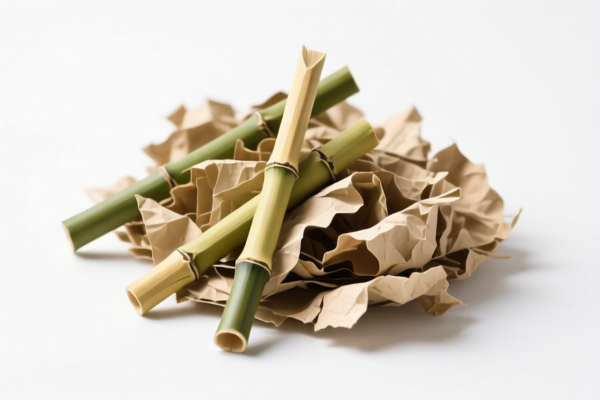
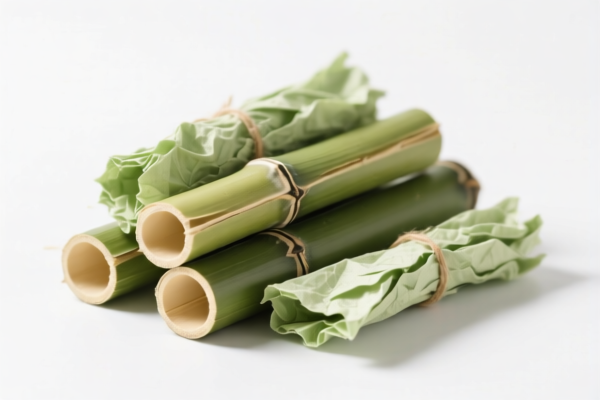
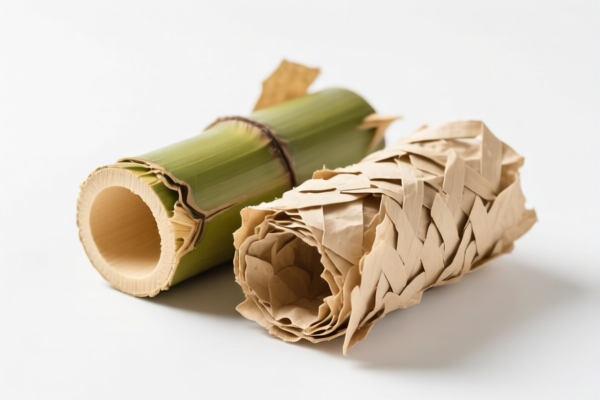
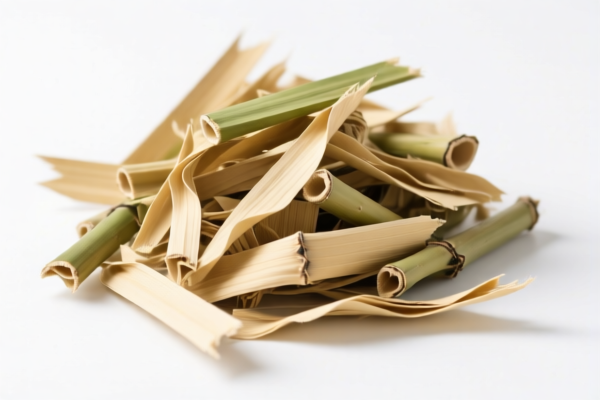
AI Analysis
🎋 Bamboo Pulp for Coating (Paper/Textile Grade)
🌐 HS Code Reference & Customs Clearance Guide | 2026 Latest Tariff Analysis | Professional Compliance Strategy
📌 I. Product Definition & Classification: Do You Really Understand "Bamboo Pulp"?
Bamboo pulp, specifically prepared for coating applications, sits at a complex intersection of material science and trade law. In international trade, it is primarily categorized by its state (fiber vs. chemical derivative) and end-use (paper manufacturing vs. industrial raw material).
Chemical/Mechanical Pulp (Fiber Form): The primary raw material for paper production. It retains the fibrous structure of cellulose. → Key Logic: If used for making paper (including coated paper), it falls under Chapter 48 (Paper/Paperboard).
Natural Polymers (Derivative Form): Processed bamboo extracts (e.g., cellulose derivatives, hemicellulose) used as binding agents, coatings, or additives. → Key Logic: If processed into non-fibrous natural polymers for industrial use, it falls under Chapter 39.
⚠️ Critical Distinction:
- Is it fibrous (for paper/board)? → Chapter 48
- Is it a polymer/derivative (for industrial coating/adhesives)? → Chapter 39
📦 II. HS Code Classification Details (2026 Official Tariff Alignment)
Based on the provided dataset, here are the five potential classification paths for "Bamboo Pulp for Coating". The choice depends strictly on the physical form and intended industrial use.
| HS Code | Product Description | Application Scenario | Material State |
|---|---|---|---|
4706.30.00.00 |
Chemical Wood Pulp (Extended to Bamboo Fiber) | For making paper, cardboard, or coated paper products. | ✅ Fibrous |
4810.13.20.90 |
Other Paper, Coated, with Basis > 150g/m² | Finished coated paper made from bamboo pulp. | ✅ Paper Product |
4810.13.19.00 |
Other Paper, Coated, Other | Generic coated paper fallback category. | ✅ Paper Product |
3913.90.50.00 |
Other Natural Polymers (Primary Forms) | Bamboo cellulose used as a raw polymer for coatings/adhesives. | ❌ Polymer/Derivative |
3913.90.20.90 |
Other Polysaccharides & Derivatives | Bamboo-derived hemicellulose/lignin used in industrial coatings. | ❌ Chemical Derivative |
🔍 Key Insight:
- If you are importing raw bamboo fibers to make paper → Use4706.30or4810.xx.
- If you are importing processed bamboo extracts to create a coating liquid → Use3913.xx.
💰 III. 2026 Tariff Rate Breakdown (Including Surtaxes & Policy Add-ons)
✅ Applicable Country: United States (US)
✅ Origin: China (CN)
✅ Effective Date: From November 10, 2025 (including subsequent imports)
🎯 1. Paper & Fiber Categories (4706.30, 4810.13)
Scenario: Importing Bamboo Pulp/Coated Paper for printing, packaging, or tissue.
| Item | Details |
|---|---|
| Base Duty | 0.0% (Free Trade/Exempt under general rules) |
| Section 301 Surcharge | +25.0% (USITC Footnote: Additional Tariffs on Chinese Goods) |
| IEEPA Clause 122 | +10.0% (Executive Order on Critical Minerals & Strategic Materials) |
| Total Effective Rate | 35.0% |
| Calculation | CIF Value × 35% |
| De Minimis Exemption? | ❌ NO (deny_de_minimis applies to these HS codes) |
| Legal Path | Section 301 → IEEPA 122 → USITC 4706/4810 |
📌 Explanation:
- Although the base duty is 0%, the 25% Section 301 tariff and 10% IEEPA 122 tariff stack additively.
- Total Cost Impact: 35%. This is a significant barrier for paper-based imports from China.
🎯 2. Polymer & Derivative Categories (3913.90)
Scenario: Importing Bamboo-derived chemical polymers for industrial coating formulations.
| Item | Details |
|---|---|
| Base Duty | 5.8% - 6.5% (Varies by specific polymer subtype) |
| Section 301 Surcharge | +25.0% |
| IEEPA Clause 122 | +10.0% |
| Total Effective Rate | 40.8% - 41.5% |
| Calculation | CIF Value × (40.8% to 41.5%) |
| De Minimis Exemption? | ❌ NO |
| Legal Path | Section 301 → IEEPA 122 → USITC 3913 |
📌 Explanation:
-3913.90.50.00: Base 6.5% + 25% + 10% = 41.5%
-3913.90.20.90: Base 5.8% + 25% + 10% = 40.8%
- Total Cost Impact: ~41%. These chemicals are even more heavily taxed than the paper products due to higher base duties.
🛠️ IV. Customs Clearance Practical Advice (Pitfall Avoidance Guide)
✅ 1. Required Documentation Checklist
| Document | Mandatory? | Purpose |
|---|---|---|
| ✅ Product Specification Sheet | ✔️ | Must clearly state: Physical Form (Fiber vs. Powder/Liquid), Chemical Composition (Cellulose %, Lignin %, etc.). |
| ✅ Certificate of Origin (CO) | ✔️ | Proves origin is China (triggers surtaxes). |
| ✅ Commercial Invoice | ✔️ | Must explicitly describe the product as "Bamboo Pulp" or "Bamboo-Derived Polymer" — DO NOT use vague terms like "Plant Extract." |
| ✅ MSDS (Material Safety Data Sheet) | ✔️ | Required for chemical/polymer imports (3913). Shows if it’s hazardous. |
| ✅ Bill of Lading | ✔️ | Confirms weight and volume for duty calculation. |
✅ 2. Declaration Strategy (Critical Tips)
🔥 "Form Determines Code, Use Determines Rate!"
| Situation | Correct Declaration | Incorrect Declaration | Consequence |
|---|---|---|---|
| Raw Bamboo Fibers for Paper | 4706.30.00.00 |
3913.90.50.00 |
Under-declaration Risk: If classified as polymer but actually fiber, penalty for misclassification. |
| Coated Paper (Finished) | 4810.13.20.90 |
4706.30.00.00 |
Over-declaration Risk: Paying raw material duty on finished goods; or vice versa. |
| Bamboo Cellulose Liquid for Coating | 3913.90.50.00 |
4810.13.19.00 |
Wrong Category: Chemicals are not "Paper." Customs will reject. |
| Generic "Bamboo Powder" | Specify Clearly | Vague description | Delays/Seizure: Customs will hold for inspection if intent is unclear. |
✅ 3. Special Scenarios & Mitigation
| Scenario | Recommendation |
|---|---|
| Mixed Shipment (Paper + Chemicals) | Split the declaration. Do not lump them into one HS code. Paper goes to Ch.48, Chemicals to Ch.39. |
| Bamboo Pulp as "Packaging Material" | If used as the package (e.g., kraft bags), it is still Paper (4810). If used in the package (e.g., glue), it is Chemical (3913). |
| Origin Shifting | If bamboo is sourced from Vietnam or Thailand, you may avoid the 25% Section 301 tariff. → Strategy: Ensure substantial transformation occurs outside China. |
| Small Sample Imports | No De Minimis Exemption. Even small shipments of these HS codes are subject to full 35-41% tariffs. Do not use 800/864 exemptions. |
🌍 V. Global Market Comparison (2026 Snapshot)
| Market | Recommended HS Code | Total Tax Rate (China Origin) | Key Requirement |
|---|---|---|---|
| 🇺🇸 USA | 4706.30 / 3913.90 |
35% - 41.5% | Strict 301 + IEEPA 122 application. No de minimis. |
| 🇨🇳 China | 4706.30 |
0% - 5% | Import duty low; VAT 13% applies. |
| 🇪🇺 EU | 4706.30 |
0% - 6.5% | Standard MFN rate. No punitive surtaxes. |
| 🇬🇧 UK | 4706.30 |
0% - 5% | Post-Brexit tariff schedule similar to EU. |
| 🇦🇺 Australia | 4706.30 |
0% | Free Trade Agreement (ChAFTA) if eligible. |
📌 Conclusion:
- The USA is the most expensive market for bamboo pulp/paper imports from China due to layered punitive tariffs.
- Europe/Asia offer significantly lower duty rates.
- Recommendation: If exporting to the US, consider third-country processing (e.g., Vietnam) to reset the origin status and reduce tariffs.
📌 VI. Common Mistakes & Pitfalls (Lessons Learned)
❌ Mistake 1: Classifying Coated Paper as Raw Pulp (4706 instead of 4810)
👉 Result: Incorrect duty base. While both have 35% total, the legal definition differs. Misdeclaration can lead to fines for false statement of facts.
❌ Mistake 2: Calling Chemical Bamboo Extract "Pulp" (3913 instead of 4706)
👉 Result: Higher duty! Chemical derivatives (41.5%) are taxed more heavily than fibers (35%). Misclassification leads to underpayment penalties.
❌ Mistake 3: Assuming De Minimis ($800) applies
👉 Result: NO. HS codes 4706, 4810, 3913 are excluded from the $800 de minimis exemption for China-origin goods. Even a $100 sample will incur $35-$41 in taxes.
❌ Mistake 4: Vague Description: "Bamboo Material"
👉 Result: Customs will detain the shipment for inspection. You must specify: "Chemical Bamboo Pulp for Papermaking" or "Bamboo Cellulose Derivative for Coating."
✅ Correct Declaration Example:
"Chemical Bamboo Pulp, Unbleached, Fibrous, for Paper Manufacturing, HS 4706.30.00.00"
"Bamboo-Derived Cellulose Polymer, Liquid Form, for Industrial Coating, HS 3913.90.50.00"
🎯 VII. Conclusion: Precision Saves Money
🎯 Key Takeaways:
🔹 Fiber = Chapter 48 → 35% Total Tax
🔹 Polymer = Chapter 39 → 40.8%-41.5% Total Tax
🔹 No De Minimis Exemption for China Origin!
🔹 Consider Vietnam/Thailand to avoid 301/IEEPA surtaxes.
📌 Pro Tip:
Apply for an Advance Ruling from US CBP if your product form is ambiguous. This locks in the HS code and tariff rate, preventing future disputes.
📣 Immediate Action:
📞 Consult a Customs Broker with your MSDS and Product Samples.
📄 Get an Advance Ruling before shipping.
🚀 Optimize Supply Chain: Consider non-China origin to save 25-35% in duties.
✨ Professional Clearance Starts with Accurate Classification!
💼 Every Percent Saved is Pure Profit!
Customer Reviews
About HS Code Classification
The Harmonized System (HS) is an internationally standardized nomenclature developed by the World Customs Organization (WCO) to classify traded products. Over 200 countries use the HS system as the basis for customs tariffs, trade statistics, and import/export regulations.
Each HS code follows a hierarchical structure:
- Chapter (2 digits) — Broad category of goods (e.g., Chapter 84: Machinery and Mechanical Appliances)
- Heading (4 digits) — More specific grouping within the chapter
- Subheading (6 digits) — Internationally standardized breakdown, used by all WCO member countries
- National subdivisions (8-10 digits) — Country-specific extensions for further classification, such as US HTSUS 10-digit codes
Correct HS code classification is essential for smooth customs clearance, accurate duty payment, and compliance with trade regulations. Misclassification can lead to customs delays, overpayment of duties, or penalties.
When importing from CN to US, the applicable tariff rates may include:
- Most-Favored-Nation (MFN) rate — The standard duty rate applied to WTO members
- General rate — Applied to countries without trade agreements
- Trade remedy duties — Additional tariffs such as Section 301 (anti-dumping), Section 232 (national security), or countervailing duties
The information provided on this page is for reference purposes only. For official classification, please consult with your local customs authority or a licensed customs broker.