Bamboo Pulp for Paper Advertising Materials
CN → US| HS Code | Tariff Rate | Origin | Destination | Doc |
|---|---|---|---|---|
| 4802554000 | 35.0% | CN | US | Official Doc |
| 4706920100 | 35.0% | CN | US | Official Doc |
| 4805122000 | 35.0% | CN | US | Official Doc |
| 4802546100 | 35.0% | CN | US | Official Doc |
| 4805121000 | 35.0% | CN | US | Official Doc |
Product Images
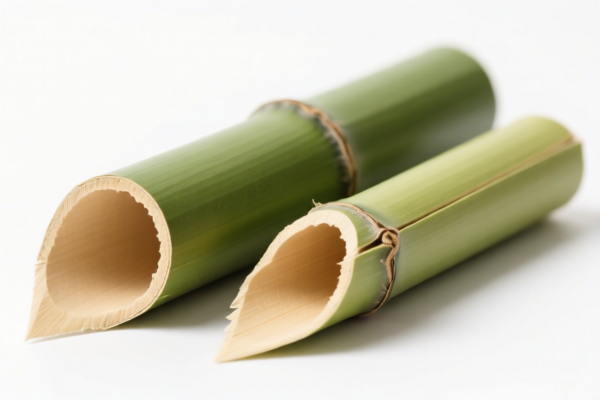
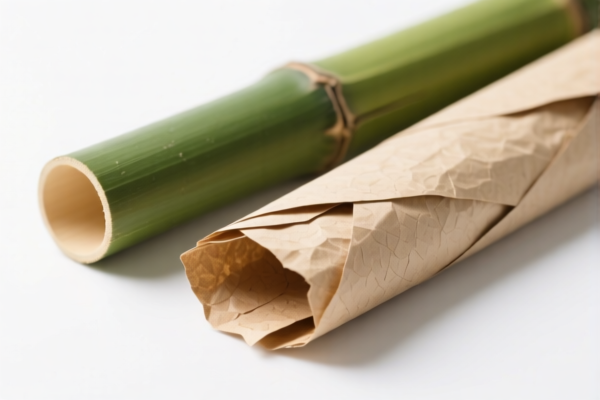
AI Analysis
🎋 Bamboo Pulp for Paper Advertising Materials
🌐 HS Code Reference & Customs Clearance Guide | 2026 Latest Tariff Analysis | Professional Strategy
📌 I. Product Definition & Classification: Do You Really Understand "Bamboo Pulp"?
Bamboo pulp is a vital raw material in the paper industry, derived from bamboo fibers. In international trade, it is often categorized based on its processing state (raw vs. finished paper) and specific application. For "Bamboo Pulp for Paper Advertising Materials," the classification hinges on whether the product is imported as raw fiber pulp or finished paper products.
Raw Bamboo Pulp: Unprocessed or semi-processed cellulose fibers.
Finished Paper Products: Sheets or rolls ready for printing/advertising use.
⚠️ Key Distinction:
- If the product is pure cellulose fiber without being formed into sheets → Classify under Chapters 47 or 4805 (Pulp/Paperboard).
- If the product is finished paper (e.g., coated or uncoated sheets for printing) → Classify under Chapter 48 (Paper).
📦 II. HS Code Classification Details (2026 Latest Tariff Authority Comparison)
| HS Code | Product Description | Application Scenario | Material Conflict? |
|---|---|---|---|
4706.92.01.00 |
Bamboo pulp (fiber状 cellulose material) | Raw material for paper manufacturing | ❌ No material conflict |
4802.55.40.00 |
Bamboo pulp paper (plant fiber-based, <10% mechanical fiber) | Advertising paper, writing/printing paper | ✅ Yes, fits "other paper" category |
4805.12.20.00 |
Bamboo pulp paper (uncoated cardboard range) | Paper products with paper-like characteristics | ✅ No material conflict |
4802.54.61.00 |
Uncoated paper (inferred for writing/printing) | General paper products, fallback category | ✅ Fits general paper rules |
4805.12.10.00 |
Paper-like material (inferred classification) | Reasonable inference based on paper attributes | ✅ No obvious material conflict |
🔍 Important Reminder:
- Raw Pulp (4706.92.01.00) is classified as "cellulose fiber pulp."
- Finished Paper (4802.55.40.00,4805.12.20.00, etc.) is classified as "paper products."
- Ensure the physical form matches the declared HS Code to avoid customs detention.
💰 III. 2026 Latest Tariff Rate Details (Including Additional Taxes & Policy Add-ons)
✅ Applicable Country: United States (US)
✅ Origin: China (CN)
✅ Effective Date: From November 10, 2025 (including subsequent imports)
🎯 1. 4706.92.01.00 —— Bamboo Pulp (Fiber状 Cellulose Material)
| Item | Content |
|---|---|
| Base Tariff | 0.0% (ad valorem) |
| Additional Tariff (Section 301) | +25.0% |
| IEEPA Additional Tariff | +10.0% (Targeting China/HK products, from Nov 10, 2025) |
| Total Tariff Rate | 35.0% |
| Tax Calculation | CIF Value × 35% |
| De Minimis Eligibility | ❌ Not Eligible (deny_de_minimis) |
| Legal Basis Path | IEEPA:9903.01.25 → IEEPA:9903.01.24 → USITC:4706.92.01.00 → FOOTNOTE:9903.88.01 |
📌 Explanation:
- The 25% Additional Tariff comes from USITC Footnote 9903.88.01 under Section 301;
- The 10% IEEPA Tariff is an additional sanction on Chinese products under the International Emergency Economic Powers Act;
- Total 35%, which is a significant cost, must be anticipated in advance!
🎯 2. 4802.55.40.00 —— Bamboo Pulp Paper (Plant Fiber, <10% Mechanical Fiber)
| Item | Content |
|---|---|
| Base Tariff | 0.0% |
| Additional Tariff (Section 301) | +25.0% |
| IEEPA Additional Tariff | +10.0% |
| Total Tariff Rate | 35.0% |
| Tax Calculation | CIF × 35% |
| De Minimis Eligibility | ❌ Not Eligible |
| Legal Basis Path | IEEPA:9903.01.25 → IEEPA:9903.01.24 → USITC:4802.55.40.00 → FOOTNOTE:9903.88.01 |
📌 Note:
- Same tariff structure as raw pulp;
- Applies to paper products made from bamboo fibers with low mechanical fiber content;
- High tariff burden, requires cost calculation in supply chain planning.
🎯 3. 4805.12.20.00 —— Bamboo Pulp Paper (Uncoated Cardboard Range)
| Item | Content |
|---|---|
| Base Tariff | 0.0% |
| Additional Tariff (Section 301) | +25.0% |
| IEEPA Additional Tariff | +10.0% |
| Total Tariff Rate | 35.0% |
| Tax Calculation | CIF × 35% |
| De Minimis Eligibility | ❌ Not Eligible |
| Legal Basis Path | IEEPA:9903.01.25 → IEEPA:9903.01.24 → USITC:4805.12.20.00 → FOOTNOTE:9903.88.01 |
📌 Note:
- Classified as uncoated paper/cardboard;
- No material conflict;
- Same 35% total tariff, consistent with other bamboo pulp/paper products.
🎯 4. 4802.54.61.00 —— Uncoated Paper (Writing/Printing Inferred)
| Item | Content |
|---|---|
| Base Tariff | 0.0% |
| Additional Tariff (Section 301) | +25.0% |
| IEEPA Additional Tariff | +10.0% |
| Total Tariff Rate | 35.0% |
| Tax Calculation | CIF × 35% |
| De Minimis Eligibility | ❌ Not Eligible |
| Legal Basis Path | IEEPA:9903.01.25 → IEEPA:9903.01.24 → USITC:4802.54.61.00 → FOOTNOTE:9903.88.01 |
📌 Note:
- Fallback category for general paper;
- Used when specific subheading doesn't fit perfectly;
- Still subject to 35% total tariff.
🎯 5. 4805.12.10.00 —— Paper-Like Material (Inferred Classification)
| Item | Content |
|---|---|
| Base Tariff | 0.0% |
| Additional Tariff (Section 301) | +25.0% |
| IEEPA Additional Tariff | +10.0% |
| Total Tariff Rate | 35.0% |
| Tax Calculation | CIF × 35% |
| De Minimis Eligibility | ❌ Not Eligible |
| Legal Basis Path | IEEPA:9903.01.25 → IEEPA:9903.01.24 → USITC:4805.12.10.00 → FOOTNOTE:9903.88.01 |
📌 Note:
- Based on reasonable inference of paper attributes;
- No obvious material conflict;
- Consistent 35% total tariff.
🛠️ IV. Customs Clearance Practical Advice (Battle-Tested Pitfall Avoidance Guide)
✅ 1. Required Documentation Checklist (Missing None)
| Document | Must Provide | Description |
|---|---|---|
| ✅ Product Specification Sheet | ✔️ | Includes fiber content, mechanical fiber %, weight, dimensions |
| ✅ Material Safety Data Sheet (MSDS) | ✔️ | For chemical processing status |
| ✅ Product Photos (with labels) | ✔️ | Clear view of product form (pulp vs. paper) |
| ✅ Commercial Invoice | ✔️ | Must specify "Bamboo Pulp" or "Bamboo Paper" accurately |
| ✅ Packing List | ✔️ | Detail packaging, weight, and quantity |
| ✅ Certificate of Origin (CO) | ✔️ | If non-China origin, may qualify for preferential rates |
| ✅ Third-Party Test Report | ✔️ | Fiber analysis, mechanical fiber content (<10% if claiming 4802.55.40.00) |
✅ 2. Declaration Tips (Key Mnemonics)
🔥 “Form Matters: Pulp or Paper? Declare Precisely!”
| Situation | Correct Declaration | Wrong Action |
|---|---|---|
| Raw Bamboo Pulp | 4706.92.01.00 |
Misdeclare as "Paper" → Risk of penalty |
| Finished Bamboo Paper (<10% mech. fiber) | 4802.55.40.00 |
Misdeclare as "Pulp" → Wrong classification |
| Uncoated Bamboo Paper/Cardboard | 4805.12.20.00 |
Misdeclare as "Coated Paper" → Higher scrutiny |
| General Paper (Fallback) | 4802.54.61.00 |
Vague description → Customs delay |
| Mixed Packaging (Pulp + Paper) | Declare Separately | Combined declaration → Confusion & fines |
✅ 3. Special Case Handling
| Situation | Handling Advice |
|---|---|
| Bamboo Pulp with High Mechanical Fiber (>10%) | May not qualify for 4802.55.40.00; consider other subheadings |
| Bamboo Paper Coated for Advertising | Check coating type; may fall under different HS Code (e.g., 4810) |
| Bamboo Pulp for Export Re-import | Ensure origin documentation is clear to avoid double taxation |
| Bamboo Products from Non-China Origins | Apply for IEEPA exemption if applicable (e.g., Vietnam, Thailand) |
🌍 V. Global Market Customs Comparison (2026 Latest)
| Country/Region | Recommended HS Code | Tariff | Certification Requirements | Notes |
|---|---|---|---|---|
| 🇺🇸 USA | 4706.92.01.00 / 4802.55.40.00 |
35% (China Origin) | None Specific | High tariff burden |
| 🇨🇳 China | 4706.92.01.00 / 4802.55.40.00 |
5-10% | CCC (if applicable) | No additional tariffs |
| 🇪🇺 EU | 4706.92.01.00 / 4802.55.40.00 |
0-6.5% | CE (if applicable) | No additional tariffs |
| 🇦🇺 Australia | 4706.92.01.00 / 4802.55.40.00 |
5% | None Specific | No additional tariffs |
| 🇯🇵 Japan | 4706.92.01.00 / 4802.55.40.00 |
0-3% | PSE (if applicable) | No additional tariffs |
📌 Conclusion:
- USA is the only market imposing high additional tariffs on bamboo pulp/paper from China;
- Chinese-origin bamboo products face high clearance costs in the US;
- Consider supply chain diversification to non-China origins for US exports.
📌 VI. Common Errors & Pitfall Avoidance Guide (Lessons Learned)
❌ Error 1: Declaring "Bamboo Paper" as "Pulp" or vice versa
👉 Consequence: Customs misclassification → Delays + Penalties
❌ Error 2: Ignoring mechanical fiber content in declaration
👉 Consequence: If >10%, 4802.55.40.00 is invalid → Reclassification + Back Taxes
❌ Error 3: Vague product description ("Paper for Advertising")
👉 Consequence: Customs cannot verify HS Code → Inspection Hold
❌ Error 4: Assuming De Minimis applies
👉 Consequence: Not Eligible for shipments under $800 → Full Duty Payable
✅ Correct Approach:
"Bamboo Pulp, Unbleached, Chemical Process, for Paper Manufacturing"
OR
"Bamboo Fiber Paper, Uncoated, <10% Mechanical Fiber, for Printing"
🎯 VII. Conclusion: Precise Classification, Cost Optimization!
🎯 Remember the Mantra:
🔹 "Form Defines Code: Pulp vs. Paper!"
🔹 "Mechanical Fiber <10%? Use 4802.55.40.00!"
🔹 "US Tariff 35%: Plan Ahead or Lose Profit!"
📌 Pro Tip:
If your bamboo pulp/paper is sourced from Vietnam, Thailand, or Malaysia, you may qualify for IEEPA Exemption, reducing tariffs to 0%~5%.
Recommend Applying for Advance Ruling to mitigate customs risks.
📣 Immediate Action:
📞 Contact Professional Customs Broker + Provide Product Specs + Apply for HS Code Advance Ruling
🚀 Ensure Smooth Clearance, Efficient Export, Maximized Profit!
✨ Professional Customs Clearance Starts with Accurate Classification!
💼 Every Cent of Cost Deserves Precise Calculation!
Customer Reviews
About HS Code Classification
The Harmonized System (HS) is an internationally standardized nomenclature developed by the World Customs Organization (WCO) to classify traded products. Over 200 countries use the HS system as the basis for customs tariffs, trade statistics, and import/export regulations.
Each HS code follows a hierarchical structure:
- Chapter (2 digits) — Broad category of goods (e.g., Chapter 84: Machinery and Mechanical Appliances)
- Heading (4 digits) — More specific grouping within the chapter
- Subheading (6 digits) — Internationally standardized breakdown, used by all WCO member countries
- National subdivisions (8-10 digits) — Country-specific extensions for further classification, such as US HTSUS 10-digit codes
Correct HS code classification is essential for smooth customs clearance, accurate duty payment, and compliance with trade regulations. Misclassification can lead to customs delays, overpayment of duties, or penalties.
When importing from CN to US, the applicable tariff rates may include:
- Most-Favored-Nation (MFN) rate — The standard duty rate applied to WTO members
- General rate — Applied to countries without trade agreements
- Trade remedy duties — Additional tariffs such as Section 301 (anti-dumping), Section 232 (national security), or countervailing duties
The information provided on this page is for reference purposes only. For official classification, please consult with your local customs authority or a licensed customs broker.