Bamboo Pulp for Paper Labels
CN → US| HS Code | Tariff Rate | Origin | Destination | Doc |
|---|---|---|---|---|
| 4802554000 | 35.0% | CN | US | Official Doc |
| 4706920100 | 35.0% | CN | US | Official Doc |
| 4805122000 | 35.0% | CN | US | Official Doc |
| 4802546100 | 35.0% | CN | US | Official Doc |
| 4805121000 | 35.0% | CN | US | Official Doc |
Product Images
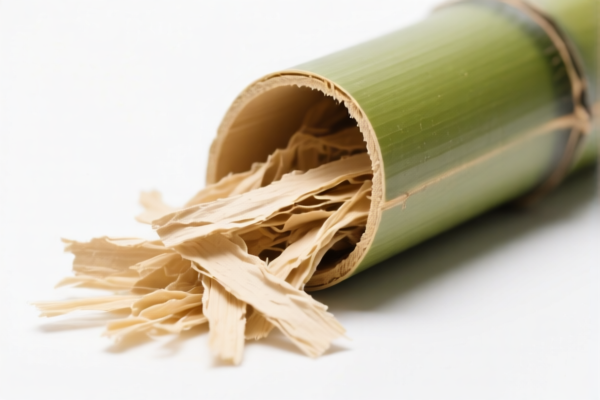
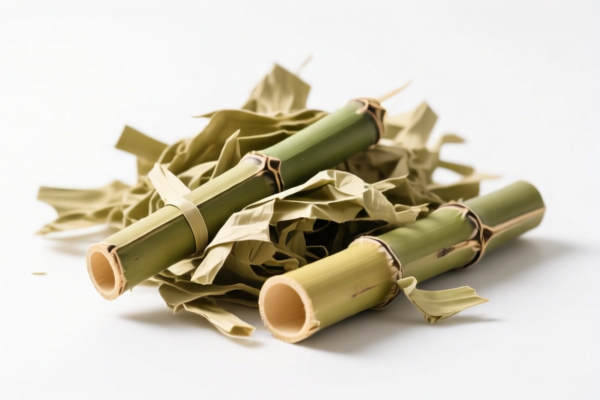
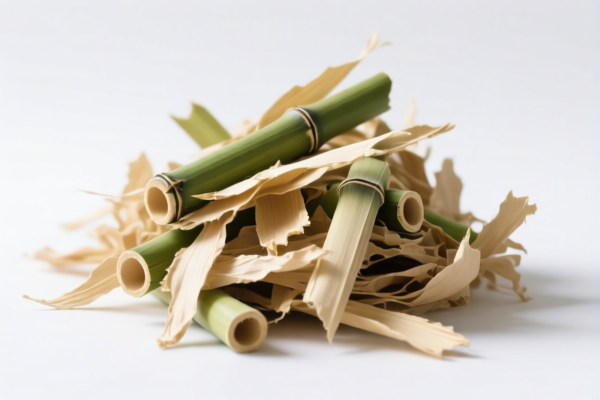

AI Analysis
🎋 Bamboo Pulp for Paper Labels
🌐 HS Code Reference & Customs Clearance Guide | 2026 Latest Tariff Analysis | Professional Entry Strategy
📌 I. Product Definition & Classification: Do You Really Understand "Bamboo Pulp"?
Bamboo pulp, derived from bamboo plant fibers, is a versatile semi-finished material primarily used in the production of paper products, including paper labels. In international trade, its classification depends heavily on its physical state (raw vs. processed) and intended final use.
Chemical/Processed Bamboo Pulp: Refers to pulp where lignin has been removed or significantly reduced, resulting in high-purity cellulose fibers, suitable for high-quality paper manufacturing. Mechanical/Refined Bamboo Pulp: Refers to pulp that retains more lignin and other plant components, often used for lower-grade paper or packaging materials.
⚠️ Key Distinction Point:
- If the product is raw fiberous cellulose material intended for further processing into paper → Classified as Pulp (Chapter 47).
- If the product is already formed into sheets/fibers resembling paper without further mechanical treatment → Classified as Paper/Board (Chapter 48).
- Note: For "Paper Labels," the pulp itself is an input. If shipped as raw pulp, it falls under Chapter 47. If shipped as pre-formed paper stock for labels, it falls under Chapter 48.
📦 II. HS Code Classification Details (2026 Latest Tariff Authority对照)
| HS Code | Product Description | Applicable Scenario | Key Characteristics |
|---|---|---|---|
4706.92.01.00 |
Bamboo Pulp: Fibrous cellulosic material, classified as paper pulp | Raw bamboo pulp, chemical/mechanical pulp, not yet formed into paper | ✅ Pulp Class (Chapter 47) |
4802.55.40.00 |
Bamboo Pulp Paper: Material is plant fiber, meets the characteristic of no mechanical fiber | Uncoated paper made from bamboo pulp, used for writing/printing | ✅ Paper Class (Chapter 48) |
4805.12.20.00 |
Bamboo Pulp Paper: Uncoated paperboard category, material is paper-like | Thick paper/board made from bamboo pulp, used for packaging/labels | ✅ Paper Class (Chapter 48) |
4802.54.61.00 |
Inferenced Uncoated Paper: Pulped processed product for writing or printing | Medium-weight paper, inferred as uncoated, suitable for label substrates | ✅ Paper Class (Chapter 48) |
4805.12.10.00 |
Based on paper material attributes, belongs to reasonable inference paper products | General paper products inferred from bamboo fiber source | ✅ Paper Class (Chapter 48) |
🔍 Key Reminder:
- All raw fiberous cellulose materials must be classified under4706.92.01.00(Pulp).
- If the bamboo material is already formed into paper sheets/fiber forms resembling paper, it should be classified under Chapter 48 (e.g.,4802.55.40.00,4805.12.20.00).
- Misclassification between Pulp (Ch 47) and Paper (Ch 48) can lead to significant tariff discrepancies and customs delays.
💰 III. 2026 Latest Tariff Rate Details (Including Surtaxes, Policy Add-ons)
✅ Applicable Country: United States (US)
✅ Origin: China (CN)
✅ Effective Time: From November 10, 2025 (including subsequent imports)
🎯 1. 4706.92.01.00 —— Bamboo Pulp (Raw Cellulosic Material)
| Item | Content |
|---|---|
| Base Tariff | 0% (ad valorem) |
| USITC Surtax | +25% (from USITC Footnote 9903.88.01) |
| IEEPA Surtax | +10% (for Chinese/HK products, effective from Nov 10, 2025) |
| Total Rate | 35% |
| Tax Calculation | CIF Value × 35% |
| De Minimis Exemption | ❌ Not Applicable (deny_de_minimis) |
| Legal Basis Path | IEEPA:9903.01.25 → IEEPA:9903.01.24 → USITC:4706.92.01.00 → FOOTNOTE:9903.88.01 |
📌 Explanation:
- "USITC Surtax 25%" comes from the "Additional Duties" under Section 301 of the U.S. Trade Act;
- "IEEPA 10%" is the additional duty on China under the International Emergency Economic Powers Act;
- Total 35% is considered a high tariff, requiring advance planning!
🎯 2. 4802.55.40.00 —— Bamboo Pulp Paper (Uncoated Plant Fiber Paper)
| Item | Content |
|---|---|
| Base Tariff | 0% |
| USITC Surtax | +25% |
| IEEPA Surtax | +10% |
| Total Rate | 35% |
| Tax Calculation | CIF × 35% |
| De Minimis Exemption | ❌ Not Applicable |
| Legal Basis Path | IEEPA:9901.25 → IEEPA:9903.01.24 → USITC:4802.55.40.00 → FOOTNOTE:9903.88.01 |
📌 Note:
- Same tariff rate as raw pulp;
- Whether it's "writing paper," "printing paper," or "label substrate paper," as long as it's classified under Chapter 48 with these specific HS codes, the rate remains 35%.
🎯 3. 4805.12.20.00 & 4802.54.61.00 & 4805.12.10.00 —— Other Paper/Board Products
| Item | Content |
|---|---|
| Base Tariff | 0% |
| USITC Surtax | +25% |
| IEEPA Surtax | +10% |
| Total Rate | 35% |
| Tax Calculation | CIF × 35% |
| De Minimis Exemption | ❌ Not Applicable |
| Legal Basis Path | IEEPA:9903.01.25 → IEEPA:9903.01.24 → USITC:[Specific Code] → FOOTNOTE:9903.88.01 |
📌 Note:
- All these paper products have the same tariff structure;
- Even if labeled as "Paper for Labels," "Uncoated Board," or "Writing Paper," the 35% total rate applies uniformly.
🛠️ IV. Customs Clearance Practical Suggestions (Battle-Tested Pitfall Avoidance Guide)
✅ 1. Preparation Checklist (No Exceptions)
| Document | Mandatory | Description |
|---|---|---|
| ✅ Product Specification Sheet | ✔️ | Includes fiber content, lignin content, weight, dimensions, intended use |
| ✅ Photos (Clear & Detailed) | ✔️ | Show raw pulp form vs. paper form, packaging, labels |
| ✅ Commercial Invoice | ✔️ | Clearly state "Bamboo Pulp" or "Bamboo Pulp Paper" |
| ✅ Packing List | ✔️ | Explain relationship between bulk pulp and packaged paper |
| ✅ Certificate of Origin (CO) | ✔️ | If non-Chinese origin, apply for preferential rates |
| ✅ Test Report (if applicable) | ✔️ | Proof of mechanical vs. chemical pulp process |
| ✅ Importer Security Filing (ISF) | ✔️ | Required for US shipments 24 hours prior |
✅ 2. Declaration Tips (Key Mantra)
🔥 "Raw Fiber = Pulp, Sheet Form = Paper, Name Accurate, Tax Clarity!"
| Scenario | Correct Declaration Method | Wrong Practice |
|---|---|---|
| Raw bamboo fibers/chips | 4706.92.01.00 |
Misreporting as paper → Risk of audit |
| Pre-formed paper sheets | 4802.55.40.00 etc. |
Misreporting as pulp → Delay/penalty |
| Mixed shipment (pulp + paper) | Declare separately | Mixed declaration → Complex assessment |
| Vague description "Bamboo Material" | Specific: "Chemical Bamboo Pulp" | Vague → Customs may downgrade or reclassify |
✅ 3. Special Situation Handling
| Situation | Handling Advice |
|---|---|
| OEM Custom Label Paper | Provide customer order + design specs, avoid "non-standard" designation |
| Bamboo Pulp for Food-Grade Labels | Provide FDA compliance documents, proof of food-safe processing |
| Bamboo Pulp from Non-China Origin | If from Vietnam/Thailand, apply for IEEPA exemption, rate drops to 0%-5% |
| Small Sample Shipments | Still subject to 35% if over de minimis threshold, no automatic exemption |
🌍 V. Global Main Market Customs Clearance Comparison (2026 Latest)
| Country/Region | Recommended HS Code | Tariff | Certification Requirements | Notes |
|---|---|---|---|---|
| 🇺🇸 USA | 4706.92.01.00 / 4802.55.40.00 |
35% (China origin) | None specific | High surtax, strict scrutiny |
| 🇨🇳 China | 4706.92.01.00 |
0-5% | None | No additional surtax |
| 🇪🇺 EU | 4706.92.00 / 4802.55 |
0-5% (if compliant) | REACH, FSC | No additional surtax |
| 🇦🇺 Australia | 4706.92.00 / 4802.55 |
5% | None | No additional surtax |
| 🇯🇵 Japan | 4706.92.00 / 4802.55 |
0-3% | None | No additional surtax |
📌 Conclusion:
- USA is the only market imposing high additional surtaxes on Chinese bamboo pulp/paper;
- China-origin bamboo pulp/paper has very high customs clearance costs in the US;
- Recommend evaluating supply chain relocation or origin adjustment before shipping to the US.
📌 VI. Common Errors & Pitfall Avoidance Guide (Blood & Tears Lessons)
❌ Error 1: Declaring "Bamboo Pulp" as "Wood Pulp"
👉 Consequence: Misclassification, potential fraud penalties, 35% tariff still applies but audit risk increases.
❌ Error 2: Declaring "Paper Labels" as "Raw Pulp" to avoid tariff
👉 Consequence: Customs will reject, delay shipment, or impose fines for false declaration.
❌ Error 3: Not specifying "Bamboo" in description, only saying "Plant Fiber Pulp"
👉 Consequence: Customs may classify under generic higher-tariff codes or request additional documentation.
❌ Error 4: Ignoring IEEPA 10% surtax for shipments after Nov 10, 2025
👉 Consequence: Underpayment of duties, penalties, and potential seizure of goods.
✅ Correct Practice:
"Chemical Bamboo Pulp, White, 95% Cellulose, for Paper Manufacturing, Model BP-900, Non-Mechanical, HS 4706.92.01.00"
or
"Uncoated Bamboo Pulp Paper, 80gsm, White, for Printing Labels, Model LP-80, HS 4802.55.40.00"
🎯 VII. Conclusion: Professional Declaration, Save Time, Reduce Costs!
🎯 Remember the Mantra:
🔹 "Raw Fiber = Pulp, Sheet = Paper, Name Precise, Tax Clear!"
🔹 "HS Code Determines Fate, 35% Rate is High, Declaration Error Costs Thousands!"
📌 Pro Tip:
If your bamboo pulp/paper originates from Vietnam, Mexico, Thailand, or Malaysia, you can apply for IEEPA Exemption, with rates as low as 0%~5%.
It is recommended to apply for Advance Ruling (Pre-classification) beforehand to avoid customs clearance risks.
📣 Take Action Now:
📞 Contact Professional Customs Broker + Provide Product Photos + Apply for HS Code Advance Ruling
🚀 Ensure Your Bamboo Pulp Products Clear Customs Smoothly, Efficiently Export, Profit Doubles!
✨ Professional Customs Clearance Starts with Accurate Classification!
💼 Every Cent of Your Cost Deserves Precise Calculation!
Customer Reviews
About HS Code Classification
The Harmonized System (HS) is an internationally standardized nomenclature developed by the World Customs Organization (WCO) to classify traded products. Over 200 countries use the HS system as the basis for customs tariffs, trade statistics, and import/export regulations.
Each HS code follows a hierarchical structure:
- Chapter (2 digits) — Broad category of goods (e.g., Chapter 84: Machinery and Mechanical Appliances)
- Heading (4 digits) — More specific grouping within the chapter
- Subheading (6 digits) — Internationally standardized breakdown, used by all WCO member countries
- National subdivisions (8-10 digits) — Country-specific extensions for further classification, such as US HTSUS 10-digit codes
Correct HS code classification is essential for smooth customs clearance, accurate duty payment, and compliance with trade regulations. Misclassification can lead to customs delays, overpayment of duties, or penalties.
When importing from CN to US, the applicable tariff rates may include:
- Most-Favored-Nation (MFN) rate — The standard duty rate applied to WTO members
- General rate — Applied to countries without trade agreements
- Trade remedy duties — Additional tariffs such as Section 301 (anti-dumping), Section 232 (national security), or countervailing duties
The information provided on this page is for reference purposes only. For official classification, please consult with your local customs authority or a licensed customs broker.