Bamboo Rectangular Serving Tray
CN → US| HS Code | Tariff Rate | Origin | Destination | Doc |
|---|---|---|---|---|
| 4419110000 | 13.2% | CN | US | Official Doc |
| 4419199000 | 13.2% | CN | US | Official Doc |
| 9403820030 | 35.0% | CN | US | Official Doc |
| 9403820015 | 35.0% | CN | US | Official Doc |
| 4602110900 | 45.0% | CN | US | Official Doc |
Product Images
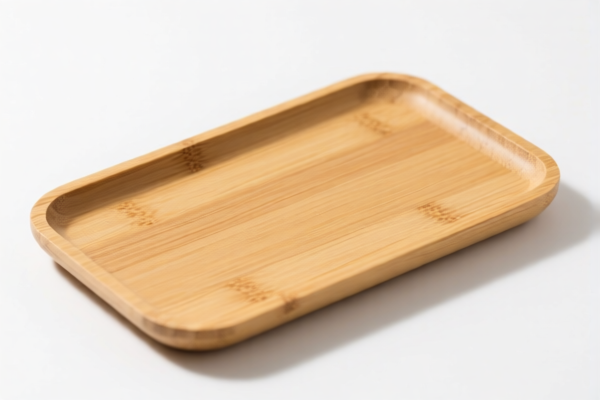
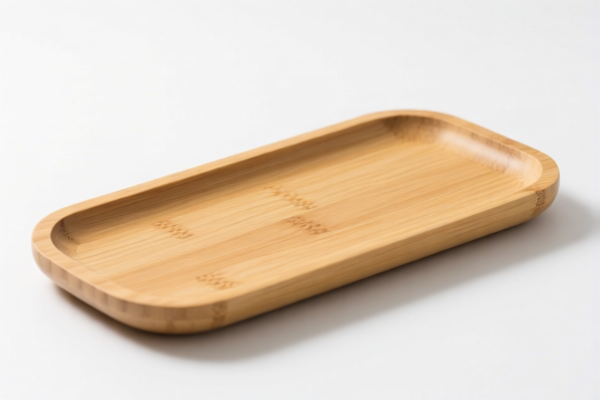
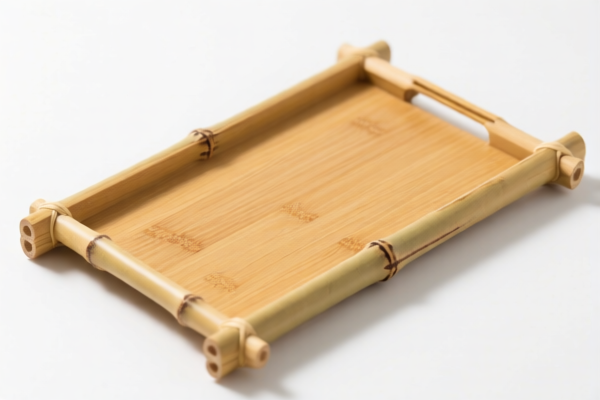
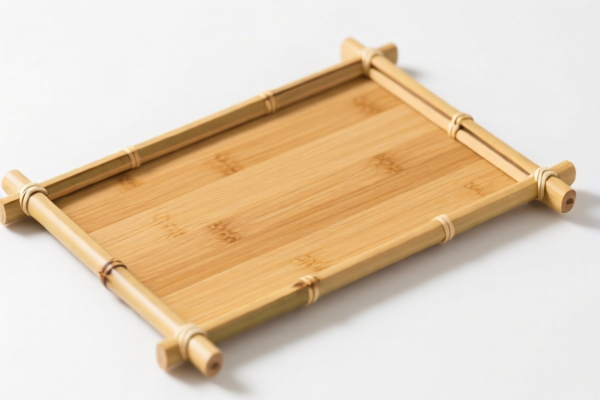
AI Analysis
🎋 Bamboo Rectangular Serving Tray (Kitchenware & Tableware)
🌐 HS Code Reference & Customs Clearance Guide | 2026 Latest Tariff Analysis | Professional Entry Strategy for US Imports
📌 One, Product Definition & Classification: What Exactly Is a "Bamboo Serving Tray"?
A Bamboo Rectangular Serving Tray falls under the category of bimbo products. In international trade, its classification hinges on its primary function and material composition. It is generally categorized as either: 1. Tableware/Kitchenware: If designed specifically for serving food/drinks (e.g., breakfast trays, cheese boards, drink carriers). 2. Basketry/Woven Goods: If constructed from split bamboo strips woven together (less common for solid rectangular trays, but possible for lattice-style). 3. Furniture: ❌ Rarely applicable unless it is a large, standalone table surface (not a portable tray).
⚠️ Key Distinction:
- If it is a solid or laminated bamboo board used for serving → Chapter 44 (Wood/Bamboo Articles).
- If it is a woven basketry item (e.g., a woven carrier basket) → Chapter 46 (Basketry).
- Do not classify as furniture unless it is a permanent table top.
📦 Two, HS Code Classification Details (2026 Latest Tariff Authority Comparison)
Based on the provided data, here are the correct classifications for bamboo serving trays:
| HS Code | Product Description | Application Scenario | Tax Rate (Total) |
|---|---|---|---|
4419.11.00.00 |
Bamboo tableware and kitchenware, similar to boards | Solid/Laminated Bamboo Trays: Rectangular serving trays, cutting boards, cheese boards, breakfast trays. | 13.2% |
4419.19.90.00 |
Other bamboo tableware and kitchenware | Trays that do not fit the "board-like" description (e.g., ornamental, deep bowls, or non-standard shapes). | 13.2% |
9403.82.00.30 |
Other bamboo furniture and parts | ❌ Incorrect for trays. Applies only if the item is a table, shelf, or cabinet. | 35.0% |
9403.82.00.15 |
Other bamboo household furniture and parts | ❌ Incorrect for trays. Same as above. | 35.0% |
4602.11.09.00 |
Bamboo baskets and woven articles for transport/storage | ❌ Incorrect for solid trays. Applies only to woven bamboo containers/baskets. | 45.0% |
🔍 Key Reminder:
- For a standard rectangular serving tray (solid, laminated, or molded bamboo), the correct HS Code is almost always4419.11.00.00or4419.19.90.00.
- Do not misclassify as furniture (9403) or basketry (4602) unless the product structure strictly matches those definitions. Misclassification can lead to overpayment of tariffs (e.g., 35% or 45% instead of 13.2%).
💰 Three, 2026 Latest Tariff Rate Details (Including Surtaxes, Policy Surcharges)
✅ Applicable Country: United States (US)
✅ Origin: China (CN)
✅ Effective Time: 2025/2026 (Current Trade Policy)
🎯 1. 4419.11.00.00 —— Bamboo Tableware and Kitchenware, Similar to Boards (e.g., Rectangular Serving Trays)
| Item | Content |
|---|---|
| Base Tariff Rate | 3.2% (Most Favored Nation / MFN) |
| Section 301 Surtax | 0.0% (Bamboo tableware is NOT on the current Section 301 List for high tariffs) |
| Section 122 Tariff | +10% (Under IEEPA Authority, applied to certain Chinese goods) |
| Total Tariff Rate | 13.2% |
| Tax Calculation | CIF Value × 13.2% |
| De Minimis Eligibility | ❌ Not Applicable (De Minimis usually applies to shipments <$800, but if subject to 122 or 301, it may be scrutinized. However, for standard commercial imports, this rate applies.) |
| Legal Basis Path | HTSUS:4419.11.00.00 → IEEPA:122 → USITC:4419 |
📌 Explanation:
- The 13.2% total rate is composed of a 3.2% base duty and a 10% IEEPA surtax.
- Crucially, bamboo tableware is exempt from the 25% Section 301 tariff, which applies to many other bamboo products (like furniture or woven baskets).
- This is a favorable classification compared to furniture or basketry.
🎯 2. 4419.19.90.00 —— Other Bamboo Tableware and Kitchenware
| Item | Content |
|---|---|
| Base Tariff Rate | 3.2% |
| Section 301 Surtax | 0.0% |
| Section 122 Tariff | +10% |
| Total Tariff Rate | 13.2% |
| Tax Calculation | CIF Value × 13.2% |
| Legal Basis Path | HTSUS:4419.19.90.00 → IEEPA:122 → USITC:4419 |
📌 Note:
- Same tax structure as4419.11.00.00.
- Use this code only if the tray does not fit the "board-like" description (e.g., it has high walls like a tray with a rim, or is made of different bamboo processing methods).
🛠️ Four, Customs Clearance Practical Advice (Battle-Tested Pitfall Avoidance)
✅ 1. Preparation Checklist (All Required)
| Document | Required | Notes |
|---|---|---|
| ✅ Product Specification Sheet | ✔️ | Specify: Material (100% Bamboo), Dimensions, Weight, Usage (Serving Food). |
| ✅ Product Photos (Clear) | ✔️ | Show the entire tray, close-up of texture, and any markings. |
| ✅ Commercial Invoice | ✔️ | Must clearly state "Bamboo Tableware" or "Bamboo Serving Tray", NOT "Bamboo Board" if it has sides. |
| ✅ Packing List | ✔️ | Detail inner/outer packing to prove value. |
| ✅ Origin Certificate (if applicable) | ✔️ | For proof of Chinese origin (to apply correct 122 surtax). |
✅ 2. Declaration Tips (Golden Rules)
🔥 “Declare as Tableware, Not Furniture or Basketry!”
| Scenario | Correct Declaration | Incorrect Declaration | Consequence |
|---|---|---|---|
| Solid Rectangular Tray | 4419.11.00.00 (Bamboo Tableware) |
9403.82.00.30 (Furniture) |
Overpaid 21.8% (35% vs 13.2%) |
| Deep Serving Tray with Rims | 4419.19.90.00 (Other Tableware) |
4602.11.09.00 (Basketry) |
Overpaid 31.8% (45% vs 13.2%) |
| Woven Bamboo Carrier | 4602.11.09.00 (Basketry) |
4419.11.00.00 (Tableware) |
Underpaid? Risk of penalty if misclassified. |
✅ 3. Special Cases
| Situation | Handling Advice |
|---|---|
| Mixed Packaging | If the tray is packed with non-bamboo items (e.g., cloth napkins), declare only the bamboo tray separately to avoid complex valuation issues. |
| Labeled as "Gift Set" | If sold as a set (tray + cups), the tray may still be classified as tableware, but the whole set might be subject to different rules. Consult a specialist. |
| OEM Custom Branding | Ensure the invoice reflects the actual transaction value (including branding fees if significant) to avoid customs valuation disputes. |
🌍 Five, Global Market Comparison (2026 Latest)
| Country/Region | Recommended HS Code | Tariff (China Origin) | Certification | Notes |
|---|---|---|---|---|
| 🇺🇸 USA | 4419.11.00.00 |
13.2% (3.2% + 10% IEEPA) | FDA Food Contact Safe | Avoid 9403 (35%) and 4602 (45%) |
| 🇨🇳 China | 4419.11.00.00 |
10% (Import Duty) | None for Export | Export duty may apply if applicable. |
| 🇪🇺 EU | 4419.11.00.00 |
6.5% | CE (if applicable), ECE R44 (packaging) | No additional surtaxes. |
| 🇬🇧 UK | 4419.11.00.00 |
6.5% | UKCA (if applicable) | Post-Brexit rules apply. |
📌 Conclusion:
- The US is the most critical market due to the 10% IEEPA surtax.
- However, 13.2% is still relatively low compared to other bamboo products (like furniture at 35% or baskets at 45%).
- Proper classification is key to saving costs.
📌 Six, Common Mistakes & Pitfalls (Blood & Tears Lessons)
❌ Mistake 1: Classifying a solid bamboo tray as Furniture (9403)
👉 Consequence: Paying 35% instead of 13.2% → Loss of ~22% profit margin!
❌ Mistake 2: Classifying a woven bamboo basket as Tableware (4419)
👉 Consequence: Underpayment of ~31.8% (45% vs 13.2%) → Back taxes, penalties, and seizure risks.
❌ Mistake 3: Vague Description: "Bamboo Item"
👉 Consequence: Customs will guess the worst-case scenario (often higher duty) or request detailed documentation, causing delays.
❌ Mistake 4: Ignoring IEEPA Section 122
👉 Consequence: Failing to account for the 10% surtax in pricing models → Unexpected cost increase.
✅ Correct Declaration Example:
"Rectangular Bamboo Serving Tray, Solid Bamboo Construction, Dimensions: 12x8x0.5 inches, For Food Service, HS Code: 4419.11.00.00"
🎯 Seven, Conclusion: Professional Declaration Saves Money!
🎯 Remember the Golden Rule:
🔹 "Bamboo Tray = Tableware (
4419), NOT Furniture (9403)"
🔹 "Total Tax is 13.2%: 3.2% Base + 10% IEEPA"
🔹 "Avoid Basketry (4602) unless it's truly woven"
📌 Pro Tip:
- If your tray is not for food service (e.g., decorative only), consider if it still qualifies as tableware.
- For large-scale imports, consider applying for an Advance Ruling from US Customs to confirm the HS Code.
📣 Action Item:
📞 Verify Product Structure: Solid vs. Woven?
📄 Update Invoice Description: "Bamboo Tableware"
🚀 Calculate Landed Cost: Include 13.2% tariff + freight + insurance.
✨ Accurate Classification, Competitive Pricing, Smooth Clearance!
💼 Your Bamboo Tray Deserves the Best Tariff Rate!
Customer Reviews
About HS Code Classification
The Harmonized System (HS) is an internationally standardized nomenclature developed by the World Customs Organization (WCO) to classify traded products. Over 200 countries use the HS system as the basis for customs tariffs, trade statistics, and import/export regulations.
Each HS code follows a hierarchical structure:
- Chapter (2 digits) — Broad category of goods (e.g., Chapter 84: Machinery and Mechanical Appliances)
- Heading (4 digits) — More specific grouping within the chapter
- Subheading (6 digits) — Internationally standardized breakdown, used by all WCO member countries
- National subdivisions (8-10 digits) — Country-specific extensions for further classification, such as US HTSUS 10-digit codes
Correct HS code classification is essential for smooth customs clearance, accurate duty payment, and compliance with trade regulations. Misclassification can lead to customs delays, overpayment of duties, or penalties.
When importing from CN to US, the applicable tariff rates may include:
- Most-Favored-Nation (MFN) rate — The standard duty rate applied to WTO members
- General rate — Applied to countries without trade agreements
- Trade remedy duties — Additional tariffs such as Section 301 (anti-dumping), Section 232 (national security), or countervailing duties
The information provided on this page is for reference purposes only. For official classification, please consult with your local customs authority or a licensed customs broker.