Bamboo Salad Bowl
CN → US| HS Code | Tariff Rate | Origin | Destination | Doc |
|---|---|---|---|---|
| 4602110700 | 35.0% | CN | US | Official Doc |
| 4602110900 | 45.0% | CN | US | Official Doc |
| 4419110000 | 13.2% | CN | US | Official Doc |
| 4419199000 | 13.2% | CN | US | Official Doc |
Product Images
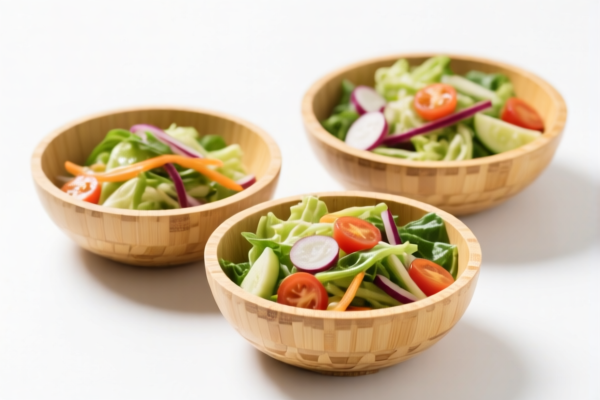
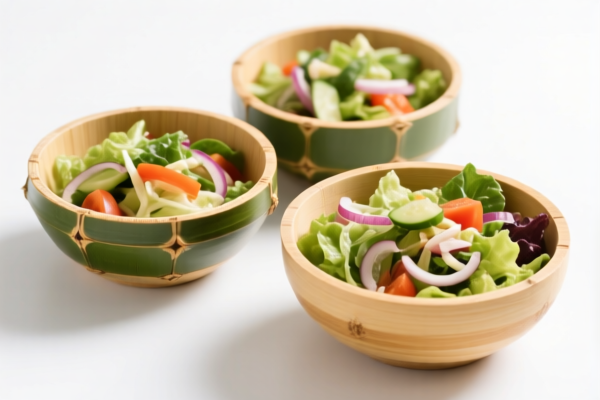
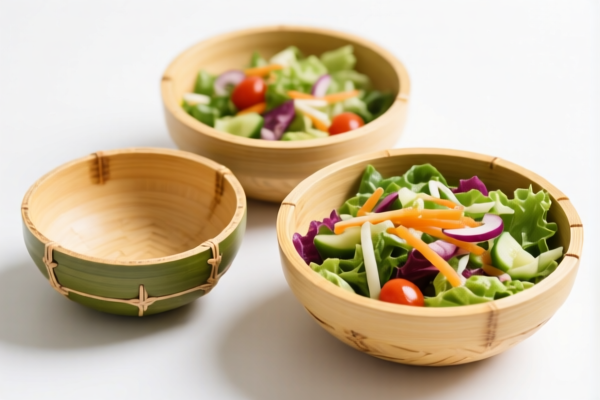
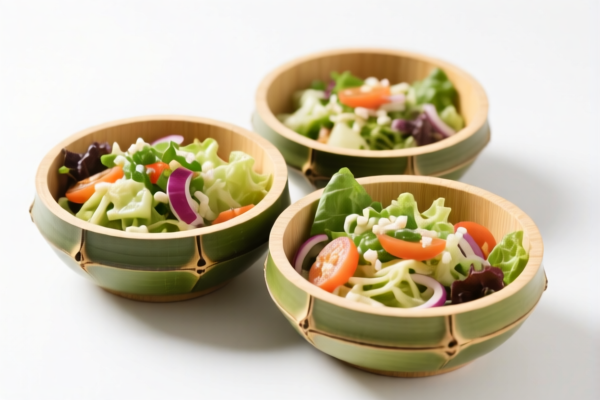
AI Analysis
🥗 Bamboo Salad Bowl: The Ultimate Guide to HS Code Classification & US Customs Clearance
🌐 HS Code Reference & Customs Clearance Guide | 2026 Latest Tariff Analysis | Professional Strategy
📌 一、Product Definition & Classification: What is a "Bamboo Salad Bowl"?
A Bamboo Salad Bowl is a kitchenware item made primarily from bamboo (a type of grass, treated as wood in tariff classifications). It is used for mixing or serving salads. In international trade, the classification depends heavily on the specific design and intended use:
- Kitchenware/Tableware (Chapter 44): If the item is primarily used as a serving bowl, mixing bowl, or general kitchen utensil, it falls under HS Heading 4419 ("Tableware and kitchenware, of wood").
- Basketwork/Wickerwork (Chapter 46): If the bowl is woven from strips of bamboo and has a structure resembling a basket or wickerwork, it might fall under HS Heading 4602. However, most solid or laminated bamboo bowls are considered "wooden tableware," not "basketwork."
⚠️ Key Distinction Point:
- If the bowl is solid, laminated, or turned wood → HS 4419 (Tableware/Kitchenware).
- If the bowl is woven/wicker-style → HS 4602 (Basketwork).
- Most standard "Bamboo Salad Bowls" on the market are classified as Tableware (4419).
📦 二、HS Code Classification Details (2026 Latest Tariff Authority)
Based on the provided data, here are the relevant HS Codes for Bamboo Tableware and Basketwork.
| HS Code | Product Description | Applicable Scenario | Material/Structure |
|---|---|---|---|
4419.11.00.00 |
Tableware and kitchenware, of wood: Of bamboo: Bread boards, chopping boards and similar boards | Bamboo cutting boards, serving platters, flat boards | ✅ Solid/Laminated Bamboo |
4419.19.90.00 |
Tableware and kitchenware, of wood: Of bamboo: Other: Other | Salad bowls, mixing bowls, napkin holders, non-chopping board wooden bamboo items | ✅ Solid/Laminated Bamboo |
4602.11.07.00 |
Basketwork...: Of vegetable materials: Of bamboo: Other baskets and bags...: Wickerwork | Woven bamboo baskets, wicker-style containers | ✅ Woven/Wicker Structure |
4602.11.09.00 |
Basketwork...: Of vegetable materials: Of bamboo: Other baskets and bags...: Other | Other non-woven bamboo baskets/bags | ✅ Non-Woven Vegetable Material |
🔍 Crucial Reminder:
- A standard smooth or slightly textured bamboo salad bowl is NOT "wickerwork." It is classified as4419.19.90.00(Other Wooden Tableware).
- Only if the bowl is explicitly woven from thin bamboo strips like a basket should you consider4602.11.07.00.
- Misclassification Risk: Declaring a solid bowl as "Basketwork" (4602) may lead to customs rejection because it doesn’t meet the definition of "made directly to shape from plaiting materials."
💰 三、2026 Latest Tariff Rate Breakdown (Including Additional Taxes)
✅ Applicable Country: United States (US)
✅ Country of Origin: China (CN)
✅ Effective Time: 2025/2026 (Current Trade Environment)
🎯 1. 4419.19.90.00 —— Bamboo Salad Bowl (Standard Kitchenware)
This is the most common classification for bamboo salad bowls.
| Item | Detail |
|---|---|
| Base Tariff Rate | 3.2% (Ad Valorem) |
| Additional Tariff (Section 301) | 0.0% |
| Total Effective Rate | 3.2% |
| Tax Calculation | CIF Value × 3.2% |
| De Minimis Exemption | ❌ Not Applicable (De Minimis is for packages < $800; commercial shipments are subject to full duty) |
| Legal Basis | HTSUS 4419.19.90 |
📌 Explanation:
- The base rate for "Other wooden tableware, of bamboo" is 3.2%.
- Crucially, unlike many electronics or steel products, bamboo tableware (4419) is NOT subject to the heavy 25% Section 301 tariffs (which often apply to other bamboo products like flooring or furniture).
- Total Tax = 3.2%. This is a low-cost item to import into the US.
🎯 2. 4419.11.00.00 —— Bamboo Cutting/Chopping Boards
If your product is marketed as a "Bamboo Cutting Board" rather than a salad bowl, it falls here.
| Item | Detail |
|---|---|
| Base Tariff Rate | 0.0% |
| Additional Tariff | 0.0% |
| Total Effective Rate | 0.0% |
| Tax Calculation | CIF Value × 0% |
📌 Note:
- If you can legally argue that the bowl is also used for chopping (e.g., a multi-purpose board), you might attempt to classify it under4419.11.00.00for 0% duty.
- However, if it has no cutting edge and is clearly a bowl, customs may reject this and reclassify to4419.19.90.00(3.2%).
🎯 3. 4602.11.07.00 —— Woven Bamboo Basket/Bowl (If Applicable)
If the bowl is strictly woven wickerwork.
| Item | Detail |
|---|---|
| Base Tariff Rate | 0.0% |
| Additional Tariff (Section 301) | 25.0% |
| Total Effective Rate | 25.0% |
| Tax Calculation | CIF Value × 25% |
📌 Warning:
- If your "salad bowl" is woven and classified under 4602, the 25% additional tariff applies!
- This is 8x more expensive than the standard kitchenware classification.
- Avoid this classification unless it is genuinely a decorative basket or explicitly marketed as such.
🎯 4. 4602.11.09.00 —— Other Woven Bamboo Articles
| Item | Detail |
|---|---|
| Base Tariff Rate | 10.0% |
| Additional Tariff | 25.0% |
| Total Effective Rate | 35.0% |
📌 Avoid: This is the highest tax rate in the provided dataset. Do not use unless necessary.
🛠️ 四、Customs Clearance Practical Advice (Real-World Pitfall Guide)
✅ 1. Documentation Checklist (Must-Haves)
| Document | Required | Notes |
|---|---|---|
| ✅ Commercial Invoice | ✔️ | Clearly state: "Bamboo Salad Bowl, Kitchenware, Solid Bamboo" |
| ✅ Packing List | ✔️ | List quantity, weight, and dimensions |
| ✅ Product Photos | ✔️ | Show the item clearly as a bowl, not a basket |
| ✅ Material Statement | ✔️ | Confirm: "100% Bamboo, Laminated/Wood, Not Wicker" |
| ✅ Fumigation Certificate (if applicable) | ⚠️ | Required if natural wood is used without processing. Bamboo usually does not require fumigation if processed/laminated. |
✅ 2. Declaration Tips (Key Mantras)
🔥 “Clarify Material, Define Use, Avoid Wicker Trap!”
| Scenario | Correct Declaration | Incorrect Declaration | Result |
|---|---|---|---|
| Solid/Laminated Bowl | HS 4419.19.90.00 |
HS 4602.11.07.00 |
Save 21.8% tax! (3.2% vs 25%) |
| Cutting Board | HS 4419.11.00.00 |
HS 4419.19.90.00 |
Save 3.2% tax! (0% vs 3.2%) |
| Woven Basket | HS 4602.11.07.00 |
HS 4419.19.90.00 |
Risk Penalty (Misclassification) |
✅ 3. Special Cases
| Situation | Handling Advice |
|---|---|
| Bamboo + Plastic Handle | Still classified under 4419 (wooden part is predominant). Tax: 3.2%. |
| Bamboo + Metal Base | If metal is decorative, still 4419. If metal is structural, may shift to 7323 (Metal Tableware). Check with customs. |
| Set of Bowls | Declare the principal material. If mostly bamboo, use 4419. |
| Gift Sets | If the basket is for packaging, declare the content (bamboo bowl) as 4419.19.90.00. Do not declare the packaging unless it’s the main item. |
🌍 五、Global Market Comparison (2026)
| Country/Region | Recommended HS Code | Tariff Rate | Notes |
|---|---|---|---|
| 🇺🇸 USA | 4419.19.90.00 |
3.2% | Low risk, no Section 301 tax on this code |
| 🇨🇳 China | 4419.19.90.00 |
10% | Import tax for non-FTA countries |
| 🇪🇺 EU | 4419.19.90.00 |
0% | Many wooden tableware items have 0% duty in EU |
| 🇬🇧 UK | 4419.19.90.00 |
0% | Post-Brexit tariffs often favor wood products |
| 🇯🇵 Japan | 4419.19.90.00 |
0% | FTA benefits may apply |
📌 Conclusion:
- USA is a favorable market for bamboo salad bowls due to the low 3.2% tariff.
- EU and Japan often offer 0% duty, making them highly competitive.
- Avoid Classifying as Basketwork (4602) for US Imports unless absolutely necessary, due to the 25% surcharge.
📌 六、Common Mistakes & Pitfalls (Lessons Learned)
❌ Mistake 1: Declaring a solid bamboo bowl as "Wicker Basket" (4602.11.07.00)
👉 Consequence: Pay 25% tariff instead of 3.2%. Overpay by 21.8%!
❌ Mistake 2: Using vague description "Bamboo Container"
👉 Consequence: Customs may reject and reclassify to the highest possible rate. Always specify "Salad Bowl" or "Kitchenware."
❌ Mistake 3: Assuming all bamboo products are taxed equally
👉 Consequence: Different HS codes have vastly different tax rates (0% to 35%). Precision saves money.
❌ Mistake 4: Ignoring the "Section 301" list
👉 Consequence: Some bamboo products (like flooring) are taxed at 25%. Tableware (4419) is not on this list. Verify your code!
✅ Correct Approach:
"Bamboo Salad Bowl, Kitchenware, Solid Laminated Bamboo, Model XYZ, For Food Service"
🎯 七、Conclusion: Professional Declaration, Cost Savings!
🎯 Key Takeaway:
🔹 Bamboo Salad Bowls are Tableware (4419), not Basketwork (4602).
🔹 Tax Rate in USA: 3.2% (Very Low).
🔹 Avoid 4602 Codes to escape the 25% Surcharge.
🔹 Documentation: Clear photos and material statements are essential.
📌 Pro Tip:
If you are exporting to the EU or Japan, ensure your bamboo is FSC-certified to meet sustainability requirements, even if duty is 0%.
📣 Action Plan:
📞 Confirm product structure (Solid vs. Woven)
📄 Use HS Code4419.19.90.00for standard bamboo salad bowls
🚀 Declare accurately to save 21.8% in taxes compared to misclassification.
✨ Customs Clearance Starts with Accurate Classification!
💼 Every percentage point matters in global trade!
Customer Reviews
About HS Code Classification
The Harmonized System (HS) is an internationally standardized nomenclature developed by the World Customs Organization (WCO) to classify traded products. Over 200 countries use the HS system as the basis for customs tariffs, trade statistics, and import/export regulations.
Each HS code follows a hierarchical structure:
- Chapter (2 digits) — Broad category of goods (e.g., Chapter 84: Machinery and Mechanical Appliances)
- Heading (4 digits) — More specific grouping within the chapter
- Subheading (6 digits) — Internationally standardized breakdown, used by all WCO member countries
- National subdivisions (8-10 digits) — Country-specific extensions for further classification, such as US HTSUS 10-digit codes
Correct HS code classification is essential for smooth customs clearance, accurate duty payment, and compliance with trade regulations. Misclassification can lead to customs delays, overpayment of duties, or penalties.
When importing from CN to US, the applicable tariff rates may include:
- Most-Favored-Nation (MFN) rate — The standard duty rate applied to WTO members
- General rate — Applied to countries without trade agreements
- Trade remedy duties — Additional tariffs such as Section 301 (anti-dumping), Section 232 (national security), or countervailing duties
The information provided on this page is for reference purposes only. For official classification, please consult with your local customs authority or a licensed customs broker.