Bamboo Screen
CN → US| HS Code | Tariff Rate | Origin | Destination | Doc |
|---|---|---|---|---|
| 9403893010 | 35.0% | CN | US | Official Doc |
| 4421913000 | 20.7% | CN | US | Official Doc |
| 4421914000 | 22.6% | CN | US | Official Doc |
| 4602114500 | 41.6% | CN | US | Official Doc |
| 9403820030 | 35.0% | CN | US | Official Doc |
Product Images
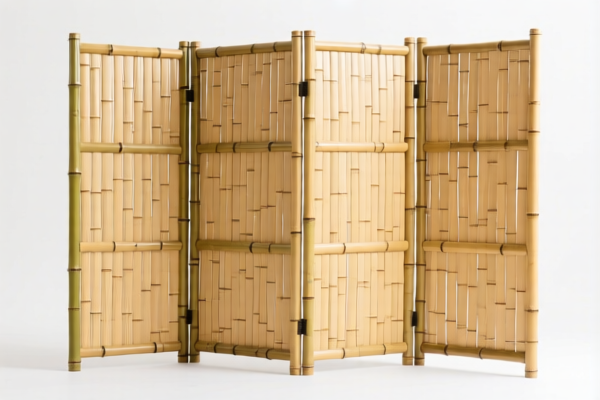
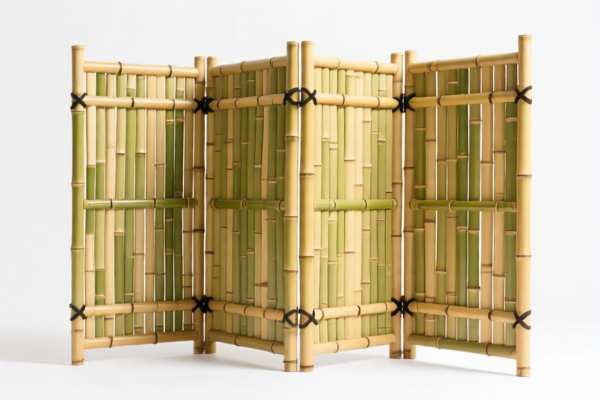
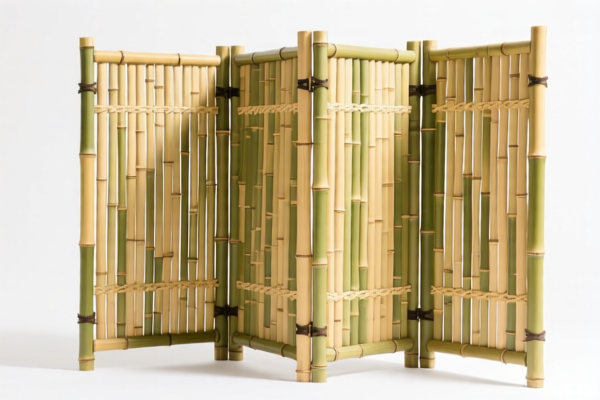
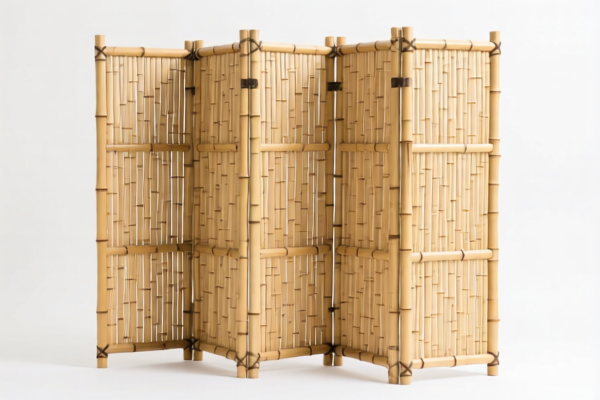
AI Analysis
🎋 Bamboo Screen (竹材屏)
🌐 HS Code Reference & Customs Clearance Guide | 2026 Latest Tariff Analysis | Professional通关 Strategy
📌 I. Product Definition & Classification: Is It Furniture or Craft?
A Bamboo Screen sits in a complex classification gray area in international trade. It can be viewed through two distinct lenses: 1. Furniture Category: As a room divider or decorative furnishing, it falls under "Furniture of other materials" (Chapter 94). 2. Craft/Article Category: As a woven or processed bamboo article, it falls under "Articles of bamboo" (Chapter 46 or 44).
⚠️ Key Distinction Point:
- If it is primarily a structural furniture item (e.g., heavy, standalone, used as a partition in a room) → Look at Chapter 94.
- If it is primarily a woven craft or lightweight panel → Look at Chapter 44 or 46.
📦 II. HS Code Classification Details (Based on Provided Data)
Below are the 5 valid HS Codes derived from the provided data, along with their specific logical justifications and tax breakdowns.
| HS Code | Summary/Logic | Total Tax Rate | Tax Detail Breakdown |
|---|---|---|---|
9403.89.30.10 |
Furniture Logic: Categorized as household furniture made of bamboo/similar materials. | 35.0% | Base: 0.0% Additional: 25.0% Section 301/122: 10% |
4421.91.30.00 |
Wood/Bamboo Article Logic: Fits the description of bamboo-made articles and screen forms. | 20.7% | Base: 10.7% Additional: 0.0% Section 301/122: 10% |
4421.91.40.00 |
Specific Product Logic: Fits the key limits of bamboo-made screens as specific products. | 22.6% | Base: 5.1% Additional: 7.5% Section 301/122: 10% |
4602.11.45.00 |
Weaving/Craft Logic: Treated as a woven or processed product under the "other" catch-all category. | 41.6% | Base: 6.6% Additional: 25.0% Section 301/122: 10% |
9403.82.00.30 |
Furniture Component/Decor Logic: Classified as other furniture or decorative furniture parts. | 35.0% | Base: 0.0% Additional: 25.0% Section 301/122: 10% |
🔍 Important Note:
- All these classifications assume the product originates from China (implied by the "122 Section" and additional tariffs typical of US-China trade contexts). - The "122 Section Tariff" (10%) is a constant across all options, representing specific trade remedy duties. - The Variable Component is either the Base Duty or the Additional Duty (Section 301), ranging from 0% to 25%.
💰 III. 2026 Latest Tariff Rate Breakdown (Detailed Analysis)
✅ Context: US Imports from China
✅ Structure: Base Tariff + Additional Tariffs (Section 301) + Special Tariffs (Section 122/301 Variants)
🎯 1. 9403.89.30.10 & 9403.82.00.30 — The "Furniture" Route
Total Rate: 35.0%
| Item | Content |
|---|---|
| Base Tariff | 0.0% (Ad Valorem) |
| Additional Tariff (Sec 301) | +25.0% |
| Section 122 Tariff | +10.0% |
| Total Tax | 35.0% |
| Calculation | CIF Value × 35% |
📌 Explanation:
- This is the high-cost furniture classification.
- Because the base duty is 0%, the entire burden falls on the 25% Additional Tariff (likely Section 301 List 4B or similar) and the 10% Special Tariff.
- Strategy: Avoid this unless the product is clearly defined as finished furniture with no other viable craft classification.
🎯 2. 4421.91.30.00 — The "Lowest Tax" Option
Total Rate: 20.7%
| Item | Content |
|---|---|
| Base Tariff | 10.7% (Ad Valorem) |
| Additional Tariff (Sec 301) | 0.0% |
| Section 122 Tariff | +10.0% |
| Total Tax | 20.7% |
| Calculation | CIF Value × 20.7% |
📌 Explanation:
- This is the most cost-effective classification among the provided options.
- The Additional Tariff is 0%, which is significant. The total cost is driven by the Base (10.7%) and the Special Tariff (10%).
- Strategy: If the screen can be convincingly argued as a "bamboo article" under Chapter 44 rather than furniture, this saves 14.3% compared to the furniture routes.
🎯 3. 4421.91.40.00 — The "Middle Ground"
Total Rate: 22.6%
| Item | Content |
|---|---|
| Base Tariff | 5.1% (Ad Valorem) |
| Additional Tariff (Sec 301) | +7.5% |
| Section 122 Tariff | +10.0% |
| Total Tax | 22.6% |
| Calculation | CIF Value × 22.6% |
📌 Explanation:
- A balanced approach. It has a low base but incurs a partial additional tariff (7.5%).
- Strategy: Use this if the product is a specific type of bamboo screen not fully covered by the 30.00 subheading but not fully woven like 4602.
🎯 4. 4602.11.45.00 — The "Woven Craft" High Tax
Total Rate: 41.6%
| Item | Content |
|---|---|
| Base Tariff | 6.6% (Ad Valorem) |
| Additional Tariff (Sec 301) | +25.0% |
| Section 122 Tariff | +10.0% |
| Total Tax | 41.6% |
| Calculation | CIF Value × 41.6% |
📌 Explanation:
- Highest Tax Rate.
- Even though the base is low (6.6%), the 25% Additional Tariff hits hard.
- Strategy: Avoid this classification unless it is strictly a woven basketry product. For screens, Chapter 94 or 44 is usually preferred to avoid this penalty.
🛠️ IV. Customs Clearance Practical Advice (Pitfall Avoidance Guide)
✅ 1. Preparation Checklist (Non-Negotiable)
| Document | Required? | Notes |
|---|---|---|
| Product Specifications | ✅ Yes | Must detail material (100% bamboo? bamboo + metal?), dimensions, and assembly method. |
| Photos (Front/Side/Detail) | ✅ Yes | Crucial for proving it is a "screen" (partition) vs. a "basket" (4602). |
| Commercial Invoice | ✅ Yes | Must clearly state "Bamboo Screen" and HS Code. |
| Packing List | ✅ Yes | Ensure weight and dimensions match the declared value. |
| Origin Certificate | ✅ Yes | If claiming any potential exemptions (though unlikely for China origin here). |
✅ 2. Classification Strategy (Key Tips)
🔥 "Furniture vs. Craft: Define Function First!"
| Scenario | Recommended HS Code | Reason |
|---|---|---|
| Heavy, standalone room divider | 9403.89.30.10 |
Clearly furniture. Accept 35% tax. |
| Lightweight, decorative panel | 4421.91.30.00 |
Best Option. Argue as "Article of Bamboo" to pay only 20.7%. |
| Woven, flexible bamboo mat | 4602.11.45.00 |
Only if it's clearly woven craft. High tax (41.6%). |
| Bamboo frame with fabric screen | 9403.82.00.30 |
Furniture logic applies. 35% tax. |
📌 Critical Warning:
- Do not mix classifications. Choose one consistent logic (Furniture OR Bamboo Article) for the entire shipment. - If you choose4421.91.30.00, ensure the product description emphasizes "Bamboo Article" and "Screen Form", not "Furniture."
✅ 3. Special Case Handling
| Situation | Advice |
|---|---|
| Mixed Materials (Bamboo + Steel) | If bamboo is the essential character, Chapter 44/46 may still apply. If steel is dominant, Chapter 73 might apply (not in list, but check!). |
| OEM Custom Screens | Provide design files to prove custom "screen" nature, not generic "furniture." |
| Sample Shipments | Even samples are subject to duty. Use 4421.91.30.00 for lowest cost. |
🌍 V. Global Market Comparison (2026 Context)
| Market | Recommended HS Code | Est. Total Tax (China Origin) | Notes |
|---|---|---|---|
| 🇺🇸 USA | 4421.91.30.00 |
20.7% | Lowest tax among options. Avoid 9403 if possible. |
| 🇨🇳 China | 4421.91.30.00 |
Varies (Import Duty ~5-10%) | No additional tariffs. Focus on domestic consumption. |
| 🇪🇺 EU | 4602.11 or 9403 |
0-4.5% (Standard) | No Section 301/122 equivalents. Standard WTO rates apply. |
| 🇬🇧 UK | 4421.91 |
0-5% | Post-Brexit tariff schedules similar to EU. |
📌 Conclusion:
- USA: The "Bamboo Article" (4421.91) is the strategic winner due to 0% Additional Tariff.
- Other Markets: Standard rates apply; focus on correct HS for duty-free benefits under FTAs.
📌 VI. Common Errors & Pitfalls (Lessons Learned)
❌ Error 1: Classifying a lightweight bamboo divider as "Furniture" (9403).
👉 Result: You pay 35% instead of 20.7%.
👉 Fix: Argue it is an "Article of Bamboo" (Chapter 44).
❌ Error 2: Describing it as a "Bamboo Basket" to use Chapter 46.
👉 Result: Classify as 4602.11.45.00 → 41.6% Tax.
👉 Fix: Screens are not baskets. Use Chapter 44.
❌ Error 3: Ignoring the "122 Section Tariff."
👉 Result: All options include a 10% special tariff. It is unavoidable for China-origin bamboo screens in this dataset.
👉 Fix: Budget for this 10% in all cost calculations.
✅ Correct Approach:
"Bamboo Screen, Decorative Room Divider, 100% Natural Bamboo, Sectional Panels, Model XYZ"
➡️ Declare under4421.91.30.00for optimal tax efficiency.
🎯 VII. Conclusion: Precise Classification, Maximum Savings!
🎯 Key Takeaway:
🔹 Lowest Tax:
4421.91.30.00(20.7%) — Choose "Bamboo Article."
🔹 Highest Tax:4602.11.45.00(41.6%) — Avoid "Woven Catch-all."
🔹 Furniture Route:9403...(35.0%) — Acceptable if product is clearly furniture.
📌 Pro Tip:
Always consult a customs broker to verify if your specific bamboo screen qualifies as an "Article of Bamboo" (Chapter 44) rather than furniture. The 14.3% difference between
4421.91.30.00and9403.89.30.10is significant!
✨ Professional Clearance Starts with Accurate Classification!
💼 Save 14.3% Tax by Choosing the Right HS Code!
Customer Reviews
About HS Code Classification
The Harmonized System (HS) is an internationally standardized nomenclature developed by the World Customs Organization (WCO) to classify traded products. Over 200 countries use the HS system as the basis for customs tariffs, trade statistics, and import/export regulations.
Each HS code follows a hierarchical structure:
- Chapter (2 digits) — Broad category of goods (e.g., Chapter 84: Machinery and Mechanical Appliances)
- Heading (4 digits) — More specific grouping within the chapter
- Subheading (6 digits) — Internationally standardized breakdown, used by all WCO member countries
- National subdivisions (8-10 digits) — Country-specific extensions for further classification, such as US HTSUS 10-digit codes
Correct HS code classification is essential for smooth customs clearance, accurate duty payment, and compliance with trade regulations. Misclassification can lead to customs delays, overpayment of duties, or penalties.
When importing from CN to US, the applicable tariff rates may include:
- Most-Favored-Nation (MFN) rate — The standard duty rate applied to WTO members
- General rate — Applied to countries without trade agreements
- Trade remedy duties — Additional tariffs such as Section 301 (anti-dumping), Section 232 (national security), or countervailing duties
The information provided on this page is for reference purposes only. For official classification, please consult with your local customs authority or a licensed customs broker.