Bamboo Shell Charcoal
CN → US| HS Code | Tariff Rate | Origin | Destination | Doc |
|---|---|---|---|---|
| 4402900100 | 35.0% | CN | US | Official Doc |
| 4402100000 | 35.0% | CN | US | Official Doc |
| 3926909989 | 22.8% | CN | US | Official Doc |
| 3801105090 | 35.0% | CN | US | Official Doc |
Product Images
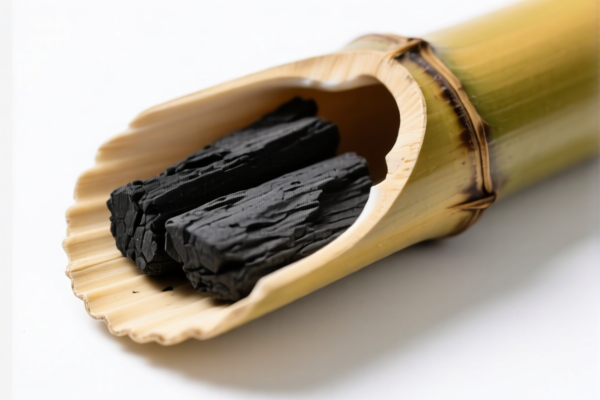
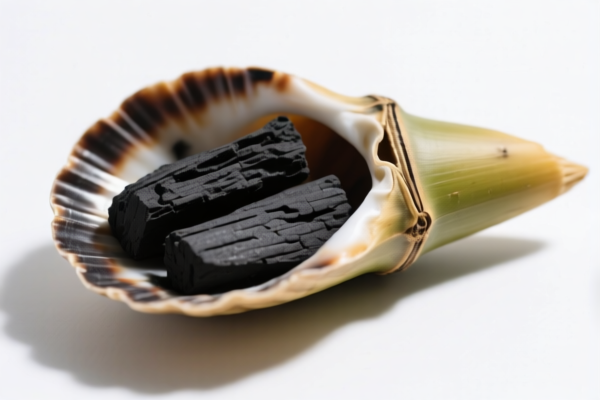
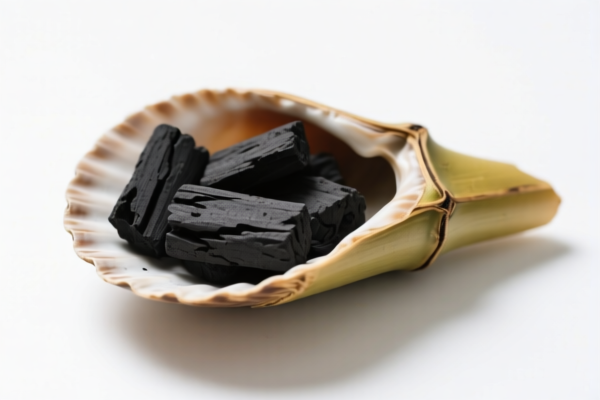
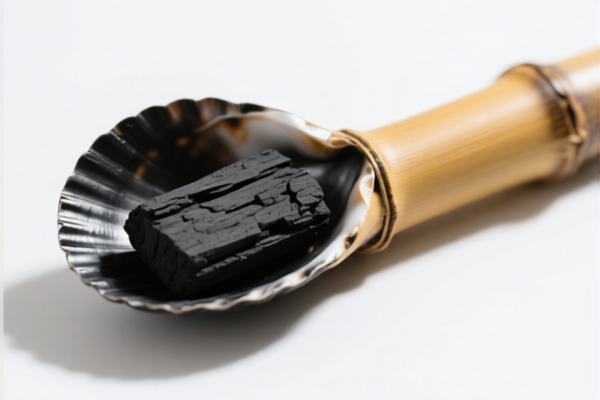
AI Analysis
🎋 Bamboo Shell Charcoal (Bamboo Charcoal Briquettes/Blocks)
🌐 HS Code Reference & Customs Clearance Guide | 2026 Latest Tariff Analysis | Professional Clearance Strategy
📌 I. Product Definition & Classification: Do You Really Understand "Bamboo Shell Charcoal"?
Bamboo Shell Charcoal, often referred to as bamboo charcoal blocks or briquettes, is a carbonized material derived primarily from bamboo culms and shells. In international trade, its classification hinges on whether it is viewed as a raw carbonized biomass product or a processed carbonaceous material.
Key Distinction Logic:
- If classified as "Charcoal from wood/bamboo" (biomass origin): Falls under Chapter 44 (Wood and articles of wood).
- If classified as "Carbonaceous materials" (processed carbon form): Falls under Chapter 38 (Chemical products).
- If classified as "Plastic/Other manufactured articles": Rare, but possible if heavily processed with binders not typical of standard charcoal, falling under Chapter 39.
⚠️ Critical Differentiator:
- Bamboo Charcoal (Raw/Basic Form): Matches "Charcoal (including shell or nut charcoal)" → HS 4402.
- Carbon Blocks/Briquettes (Processed): If considered "Other carbonaceous materials" → HS 3801.
- Misclassification Risk: Treating it as a plastic/artificial item → HS 3926 (Highly discouraged unless specific non-charcoal binders dominate).
📦 II. HS Code Classification Details (2026 Latest Tariff Authority Comparison)
| HS Code | Product Description | Application Scenario | Classification Logic |
|---|---|---|---|
4402.90.01.00 |
Charcoal from Bamboo (Other) | Standard bamboo charcoal blocks, briquettes for BBQ or air purification; made from carbonized bamboo culms/shells. | ✅ Match: "Charcoal" material + "Other" form. |
4402.10.00.00 |
Charcoal from Wood (Bamboo Carbon) | Products explicitly labeled as "Bamboo Charcoal" where bamboo is treated as a woody biomass source. | ✅ Match: "Bamboo" matches "Key Material: Bamboo Charcoal" in classification. |
3801.10.50.90 |
Other Carbonaceous Materials | Processed bamboo carbon blocks, activated carbon precursors, or industrial carbon forms not specifically "charcoal" under Ch. 44. | ✅ Match: "Carbonaceous material" + "Other" category logic. |
3926.90.99.89 |
Other Articles of Plastic/Other Materials | Misclassification Risk: If bamboo charcoal is mixed with plastics/binders and sold as a "plastic-like artifact." | ⚠️ Low Priority: Only if heavily bound with non-carbon resins. |
🔍 Key Reminder:
- Standard Bamboo Charcoal (BBQ, deodorizer, water filter) is most safely classified under Chapter 44 (4402) as it is fundamentally carbonized wood/bamboo.
- Industrial Carbon Forms may fall under 3801 if further processed beyond simple carbonization.
- Avoid 3926 unless the product is essentially a plastic composite with charcoal fillers, not pure carbonized bamboo.
💰 III. 2026 Latest Tariff Rate Details (Including Surtaxes & Policy Add-ons)
✅ Applicable Country: United States (US)
✅ Origin: China (CN)
✅ Effective Date: From November 10, 2025 (including subsequent imports)
🎯 1. 4402.90.01.00 —— Charcoal from Bamboo (Other)
| Item | Content |
|---|---|
| Base Tariff | 0% (ad valorem) |
| USITC Surtax | +25% (Under USITC Footnote 9903.88.01 / Section 301) |
| IEEPA Surtax | +10% (Against China/HK products, effective Nov 10, 2025) |
| Total Rate | 35.0% |
| Tax Calculation | CIF Value × 35% |
| De Minimis Eligibility | ❌ No (deny_de_minimis) |
| Legal Basis Path | IEEPA:9903.01.25 → IEEPA:9903.01.24 → USITC:4402.90.01.00 → FOOTNOTE:9903.88.01 |
📌 Explanation:
- "USITC Surtax 25%": From Section 301 of the Trade Act, targeting Chinese charcoal products.
- "IEEPA 10%": Additional tariff under the International Emergency Economic Powers Act for Chinese-origin goods.
- Total 35%: High tariff cost; must be factored into pricing.
🎯 2. 4402.10.00.00 —— Charcoal from Wood (Bamboo Carbon)
| Item | Content |
|---|---|
| Base Tariff | 0% |
| USITC Surtax | +25% |
| IEEPA Surtax | +10% |
| Total Rate | 35.0% |
| Tax Calculation | CIF × 35% |
| De Minimis Eligibility | ❌ No |
| Legal Basis Path | IEEPA:9901.25 → IEEPA:9903.01.24 → USITC:4402.10.00.00 → FOOTNOTE:9903.88.01 |
📌 Note:
- Same rate as above; "Bamboo" is often treated equivalently to "Wood" in charcoal classifications.
- Applies to all bamboo-based carbonized products unless specifically excluded.
🎯 3. 3801.10.50.90 —— Other Carbonaceous Materials
| Item | Content |
|---|---|
| Base Tariff | 0% |
| USITC Surtax | +25% |
| IEEPA Surtax | +10% |
| Total Rate | 35.0% |
| Tax Calculation | CIF × 35% |
| De Minimis Eligibility | ❌ No |
| Legal Basis Path | IEEPA:9903.01.25 → IEEPA:9903.01.24 → USITC:3801.10.50.90 → FOOTNOTE:9903.88.01 |
📌 Note:
- If customs determines the product is "processed carbon" rather than "charcoal," this code may apply.
- Rate remains 35% due to identical surtax structure.
🎯 4. 3926.90.99.89 —— Other Articles of Plastic/Other Materials
| Item | Content |
|---|---|
| Base Tariff | 5.3% |
| USITC Surtax | +7.5% |
| IEEPA Surtax | +10% |
| Total Rate | 22.8% |
| Tax Calculation | CIF × 22.8% |
| De Minimis Eligibility | ❌ No |
| Legal Basis Path | IEEPA:9901.25 → IEEPA:9903.01.24 → USITC:3926.90.99.89 → FOOTNOTE:9903.88.01 |
📌 Note:
- Lower rate (22.8%) but high classification risk.
- Only applicable if the product is primarily a plastic article with charcoal additives, not pure bamboo charcoal.
- Warning: Misclassification here may lead to penalties if customs detects it as charcoal.
🛠️ IV. Customs Clearance Practical Advice (Combat Pitfall Guide)
✅ 1. Required Documentation Checklist (Non-negotiable)
| Document | Must Provide | Description |
|---|---|---|
| ✅ Product Specification Sheet | ✔️ | Material: 100% Bamboo; Process: Carbonization; Form: Blocks/Briquettes |
| ✅ Product Photos (With Label) | ✔️ | Clear view of "Bamboo Charcoal," weight, dimensions, and brand |
| ✅ Certificate of Origin (CO) | ✔️ | Confirm Chinese origin to apply correct surtaxes |
| ✅ Commercial Invoice | ✔️ | Accurate description: "Bamboo Charcoal for [Use]" |
| ✅ Packing List | ✔️ | Details packaging to prevent "split shipment" accusations |
| ✅ Third-party Test Report | ✔️ | Ash content, moisture content (to prove it’s charcoal, not ash) |
✅ 2. Declaration Tips (Key Mantra)
🔥 "Pure Charcoal → Ch. 44; Processed Carbon → Ch. 38; Plastic Mix → Ch. 39 (Risky)!"
| Scenario | Correct Declaration | Wrong Practice |
|---|---|---|
| Standard Bamboo Charcoal Blocks | 4402.90.01.00 or 4402.10.00.00 |
Misdeclare as 3926 to save tax → Penalty! |
| Activated Carbon Powder (Processed) | 3801.10.50.90 |
Misdeclare as 4402 → Delay for verification |
| Bamboo Charcoal + Plastic Binders | 3926.90.99.89 (With proof) |
Claim as 4402 → Rejected by customs |
✅ 3. Special Case Handling
| Scenario | Handling Advice |
|---|---|
| BBQ Charcoal | Clearly state "BBQ Charcoal" in description; use 4402 codes. |
| Air Purification Blocks | Use 4402; provide adsorption rate data to prove functionality. |
| Water Filter Cartridges | If charcoal is inside a plastic housing, declare as Filter Element or Charcoal depending on primary purpose. |
| Mixed Products (Charcoal + Ash) | Provide ash content report; high ash % may change classification. |
🌍 V. Global Major Market Clearance Comparison (2026 Latest)
| Country/Region | Recommended HS Code | Tariff | Certification Requirements | Notes |
|---|---|---|---|---|
| 🇺🇸 United States | 4402.90.01.00 / 4402.10.00.00 |
35% (CN Origin) | No special cert | High tariff; plan cost accordingly |
| 🇨🇳 China | 4402.90.01.00 |
5% | No special cert | Low duty |
| 🇪🇺 European Union | 4402.90 |
0% (if FTA eligible) | CE (if applicable) | No surtaxes |
| 🇦🇺 Australia | 4402.90 |
5% | None | Moderate duty |
| 🇯🇵 Japan | 4402.90 |
0% | JIS (if applicable) | No surtaxes |
📌 Conclusion:
- US is the only major market with high surtaxes (35%) for bamboo charcoal from China.
- EU, Japan, Australia offer much better tariff conditions.
- Cost Optimization: Consider supply chain diversification (e.g., Vietnam, Indonesia) to avoid US surtaxes if targeting the US market.
📌 VI. Common Errors & Pitfall Guide (Blood & Tears Lessons)
❌ Error 1: Declaring "Bamboo Charcoal" as "Plastic Artifacts" (3926) to save tax
👉 Consequence: Customs inspects and finds it’s 100% carbon → Fines + Back Taxes + Delay!
❌ Error 2: Not distinguishing between "Charcoal" (4402) and "Activated Carbon" (3801)
👉 Consequence: Processing level determines code; incorrect declaration leads to customs audit.
❌ Error 3: Ignoring the 10% IEEPA surtax
👉 Consequence: Underpayment by 10% → Penalties + Interest.
❌ Error 4: Using vague descriptions like "Charcoal" without material specification
👉 Consequence: Customs may classify as "Other Carbon" (3801) or "Waste" → Unclear liability.
✅ Correct Practice:
"Bamboo Charcoal Blocks, 100% Carbonized Bamboo, For BBQ, Model XYZ, Weight 1kg per pack, HS 4402.90.01.00"
🎯 VII. Conclusion: Professional Declaration, Save Time, Reduce Cost!
🎯 Remember the Mantra:
🔹 "Bamboo Charcoal → 4402; Surtax 35% is Real; Don’t Gamble with 3926!"
🔹 "HS Code Determines Fate; 35% vs 22.8% is a Trap; Declare Accurately!"
📌 Pro Tip:
If your bamboo charcoal is originating from Indonesia, Malaysia, or Vietnam, you may avoid US IEEPA/Section 301 surtaxes, reducing the rate significantly.
Recommendation: Apply for a Pre-Ruling (Advance Ruling) with US Customs to confirm the HS code and tariff liability before shipment.
📣 Take Action Now:
📞 Contact Professional Customs Broker + Provide Product Photos + Apply for HS Code Pre-Ruling
🚀 Let Your Bamboo Charcoal Clear Customs Smoothly, Export Efficiently, Maximize Profits!
✨ Professional Customs Clearance Starts with Accurate Classification!
💼 Every Penny of Cost Deserves to be Precisely Calculated!
Customer Reviews
About HS Code Classification
The Harmonized System (HS) is an internationally standardized nomenclature developed by the World Customs Organization (WCO) to classify traded products. Over 200 countries use the HS system as the basis for customs tariffs, trade statistics, and import/export regulations.
Each HS code follows a hierarchical structure:
- Chapter (2 digits) — Broad category of goods (e.g., Chapter 84: Machinery and Mechanical Appliances)
- Heading (4 digits) — More specific grouping within the chapter
- Subheading (6 digits) — Internationally standardized breakdown, used by all WCO member countries
- National subdivisions (8-10 digits) — Country-specific extensions for further classification, such as US HTSUS 10-digit codes
Correct HS code classification is essential for smooth customs clearance, accurate duty payment, and compliance with trade regulations. Misclassification can lead to customs delays, overpayment of duties, or penalties.
When importing from CN to US, the applicable tariff rates may include:
- Most-Favored-Nation (MFN) rate — The standard duty rate applied to WTO members
- General rate — Applied to countries without trade agreements
- Trade remedy duties — Additional tariffs such as Section 301 (anti-dumping), Section 232 (national security), or countervailing duties
The information provided on this page is for reference purposes only. For official classification, please consult with your local customs authority or a licensed customs broker.