Bamboo Stackable Pallet
CN → US| HS Code | Tariff Rate | Origin | Destination | Doc |
|---|---|---|---|---|
| 4419110000 | 13.2% | CN | US | Official Doc |
| 4419199000 | 13.2% | CN | US | Official Doc |
| 9403820030 | 35.0% | CN | US | Official Doc |
| 9403820015 | 35.0% | CN | US | Official Doc |
| 4419199000 | 13.2% | CN | US | Official Doc |
Product Images
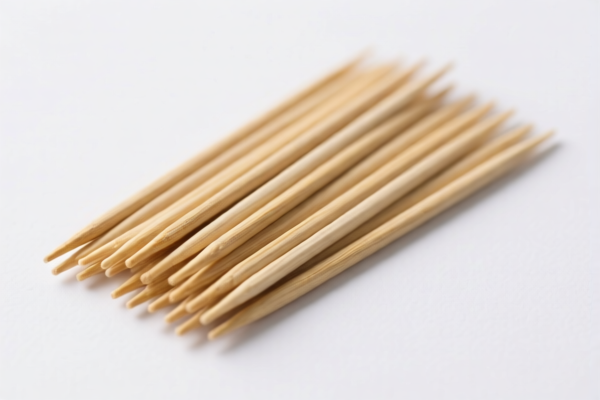
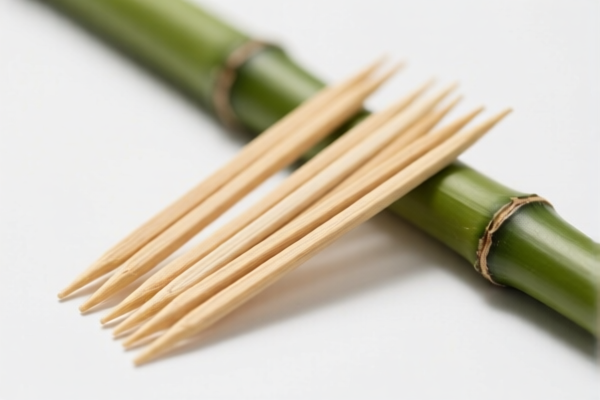
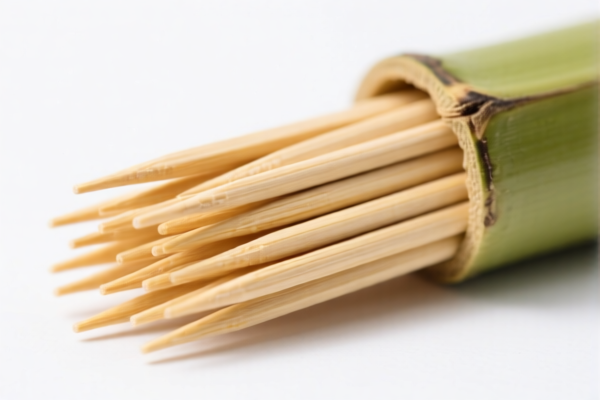
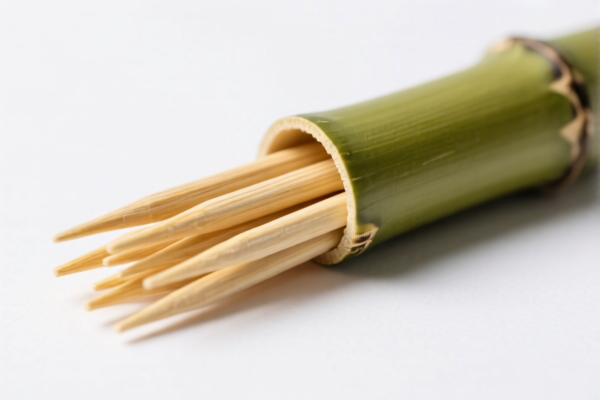
AI Analysis
🎋 Bamboo Stackable Pallets: HS Code Classification & US Customs Clearance Strategy (2026)
🌐 HS Code Reference & Clearance Guide | 2026 Latest Tariff Analysis | Professional Compliance Strategy
📌 I. Product Definition & Classification: What Exactly is a "Bamboo Stackable Pallet"?
Bamboo stackable pallets are versatile logistics tools made from engineered bamboo. In international trade, they are not universally classified under one single HS code. The classification depends entirely on their primary function, design complexity, and intended use.
There are two distinct categories for bamboo pallets:
-
Bamboo Cutlery/Kitchenware (Tableware):
If the pallet is designed primarily as a serving tray, platter, or dish for food presentation (even if stackable), it falls under Chapter 44 as "Wooden Tableware/Kitchenware." Bamboo is legally treated as wood in this context. -
Bamboo Furniture/General Household Items:
If the pallet is designed as a storage platform, decorative furniture piece, or general household container without specific tableware characteristics, it falls under Chapter 94 as "Furniture and Articles of Bedding."
⚠️ Key Distinction Point:
- If it holds food, has a rim, or is marketed as a "platter/tray" → Chapter 44 (Tableware)
- If it is a flat platform for stacking boxes, storage, or decorative furniture → Chapter 94 (Furniture/Other)
📦 II. HS Code Classification Details (2026 Latest Tariff Alignment)
Based on the provided data, here are the specific HS Codes applicable to bamboo stackable pallets depending on their design:
| HS Code | Product Description | Applicable Scenario | Tax Rate (Total) |
|---|---|---|---|
4419.11.00.00 |
Bamboo Tableware & Kitchenware: Bamboo trays or platters | ✅ Primary Fit for Food Pallets: Stackable serving trays, platters, or dinner plates | 13.2% |
4419.19.90.00 |
Other Bamboo Tableware/Kitchenware: Other bamboo trays or platters | ✅ Fit for Complex Food Pallets: Stackable trays with handles, non-standard shapes for food service | 13.2% |
9403.82.00.30 |
Bamboo Furniture & Household Articles: Bamboo trays or other household items | ❌ High Tariff Risk: If classified as general furniture/household storage pallets (non-food) | 35.0% |
9403.82.00.15 |
Other Bamboo Household Furniture/Articles: Other bamboo trays | ❌ High Tariff Risk: Similar to above; applies to non-tableware household bamboo platforms | 35.0% |
🔍 Critical Insight:
- "Stackable" does not determine the HS Code. Whether it’s for food or storage determines the chapter.
- Misclassification is costly: Classifying a food tray as "furniture" (9403) triggers a 35% tariff instead of 13.2%. This is a 16.8% difference that can erase profit margins.
- Bamboo = Wood: Under US Harmonized Tariff Schedule (HTSUS), bamboo is classified as wood (Chapter 44 or 94), not as a separate "bamboo" category.
💰 III. 2026 Latest Tariff Rate Breakdown (Including Surcharges & Policy Add-ons)
✅ Applicable Country: United States (US)
✅ Origin: China (CN)
✅ Effective Date: 2025 November 10 onwards (including subsequent imports)
🎯 1. 4419.11.00.00 / 4419.19.90.00 —— Bamboo Tableware & Kitchenware (The "Safe" Zone)
| Item | Details |
|---|---|
| Base Tariff | 3.2% |
| Section 301 Surtax | 0.0% (Note: Section 301 does not apply to these specific subheadings in this data set) |
| IEEPA Surcharge (Section 122) | +10.0% (Targeting China/HK products) |
| Total Tariff Rate | 13.2% |
| Tax Calculation | CIF Value × 13.2% |
| De Minimis Eligibility | ❌ No (Deny De Minimis for these codes under current rules) |
| Legal Basis Path | IEEPA:122 → USITC:4419.11.00.00 / 4419.19.90.00 |
📌 Explanation:
- The 10% IEEPA surcharge is applied to bamboo tableware from China.
- The base rate of 3.2% is standard for wooden/bamboo tableware.
- No Section 301 (25%) applies here, making this the preferred classification for food-related bamboo pallets/trays.
🎯 2. 9403.82.00.30 / 9403.82.00.15 —— Bamboo Furniture & Household Articles (The "Expensive" Zone)
| Item | Details |
|---|---|
| Base Tariff | 0.0% |
| Section 301 Surtax | +25.0% (Standard Section 301 tariff on bamboo furniture) |
| IEEPA Surcharge (Section 122) | +10.0% (Targeting China/HK products) |
| Total Tariff Rate | 35.0% |
| Tax Calculation | CIF Value × 35.0% |
| De Minimis Eligibility | ❌ No (Deny De Minimis) |
| Legal Basis Path | IEEPA:122 → USITC:9403.82.00.30 / 9403.82.00.15 |
📌 Warning:
- If customs determines your "stackable pallet" is not tableware but rather "furniture" or "household storage," you face a 35% tariff.
- This is a 21.8% higher cost than the tableware classification.
- Why? Furniture items are subject to Section 301 (25%) + IEEPA (10%).
🛠️ IV. Customs Clearance Practical Advice (Battle-Tested Pitfall Avoidance)
✅ 1. Documentation Checklist (Non-Negotiable)
| Document | Must Provide | Purpose |
|---|---|---|
| ✅ Product Specification Sheet | ✔️ | Must clearly state: "Bamboo Tray/Platter for Food Service" OR "Bamboo Storage Platform for Furniture." |
| ✅ Product Photos (Multiple Angles) | ✔️ | Show rims, handles, and usage context (e.g., food on tray vs. boxes stacked on pallet). |
| ✅ Commercial Invoice | ✔️ | Description must match HS code: "Bamboo Serving Tray, Stackable" or "Bamboo Household Storage Pallet." |
| ✅ Material Declaration | ✔️ | Confirm material is 100% Bamboo (treated as wood). |
| ✅ Fumigation Certificate | ✔️ | Required for wood/bamboo products entering the US to prevent pests. |
| ✅ Packaging List | ✔️ | Specify net/gross weight, dimensions, and unit count. |
✅ 2. Classification Strategy (Golden Rules)
🔥 “Food Use = Ch 44 (13.2%), Non-Food = Ch 94 (35%)! Don’t Get Caught in the Trap!”
| Scenario | Correct HS Code | Risk of Misclassification |
|---|---|---|
| Stackable Food Tray/Platter | 4419.11.00.00 or 4419.19.90.00 |
Low (13.2% is optimal) |
| Stackable Tray with Handles (Food) | 4419.19.90.00 |
Low (Still 13.2%) |
| Stackable Storage Platform (No Food) | 9403.82.00.30 or 9403.82.00.15 |
High (35% applies) |
| Decorative Bamboo Shelf/Pallet | 9403.82.00.30 |
High (35% applies) |
📌 Key Tip:
- If your pallet is used for both food and general storage, classify it as Tableware (Ch 44) if it has any food-serving characteristics (rims, depth, marketing as "serving tray").
- Do not call it a "Pallet" in the commercial invoice if it’s a food tray. Use "Tray," "Platter," or "Serving Dish." The term "Pallet" strongly suggests logistics/furniture (Ch 94).
✅ 3. Special Cases & Exceptions
| Situation | Advice |
|---|---|
| OEM Custom Pallets | Provide design drawings to prove if it’s a "tray" (Ch 44) or "furniture" (Ch 94). |
| Mixed Shipments (Food + Furniture) | Declare separately! Do not combine under one HS code. Misdeclaration leads to penalties. |
| Bamboo vs. Wood | Even if made of bamboo, it’s classified under Wood (Ch 44/94). Do not claim "Bamboo" as a separate tariff line. |
| Pre-Cutting/Finishing | If the bamboo is only rough-cut, it may fall under different subheadings, but for finished pallets/trays, Ch 44/94 applies. |
🌍 V. Global Market Comparison (2026 Latest)
| Country/Region | Recommended HS Code | Tariff (China Origin) | Certification Required | Notes |
|---|---|---|---|---|
| 🇺🇸 United States | 4419.11.00.00 (Tray) |
13.2% | Fumigation Certificate | Avoid Ch 94 (35%)! Use "Tray/Platter" terminology. |
| 🇪🇺 European Union | 4419.11.00 (Tray) |
~5-10% (varies) | FSC/PEFC Certification | Lower tariffs, but strict environmental compliance. |
| 🇨🇳 China | 4419.11.00 |
5-10% | N/A | Export-focused classification. |
| 🇬🇧 United Kingdom | 4419.11.00 |
~5-10% | FSC Certification | Post-Brexit rules similar to EU. |
📌 Conclusion:
- USA is the most critical market for accurate classification due to high tariffs.
- Terminology is key: Use "Tray" or "Platter" to stay in the 13.2% bracket. Avoid "Pallet" if it’s for food.
📌 VI. Common Errors & Pitfalls (Lessons Learned from Customs)
❌ Error 1: Using the word "Pallet" in the invoice for a food tray
👉 Consequence: Customs assumes Ch 94 (Furniture) → 35% tariff instead of 13.2%.
✅ Fix: Use "Bamboo Serving Tray" or "Bamboo Platter."
❌ Error 2: Classifying a food tray as 9403.82.00.30
👉 Consequence: Overpaying 21.8% in extra tariffs.
✅ Fix: Verify if the product is used for food service. If yes, use Ch 44.
❌ Error 3: Ignoring Fumigation Requirements
👉 Consequence: Cargo detained or returned due to pest control violations.
✅ Fix: Always provide an ISPM 15 Fumigation Certificate for bamboo products.
❌ Error 4: Combining Food and Non-Food Pallets in One Shipment
👉 Consequence: Customs may audit the entire shipment, delaying clearance.
✅ Fix: Separate shipments or clearly itemize with different HS codes and descriptions.
🎯 VII. Conclusion: Smart Classification, Maximize Profit!
🎯 Remember the Mantra:
🔹 "Food Tray = 13.2% (Ch 44), Storage Pallet = 35% (Ch 94). Terminology Saves Money!"
🔹 "Don’t Call It a Pallet If It’s a Tray! Avoid the 35% Trap!"
🔹 "HS Code Dictates Cost, Accuracy Ensures Speed, Documentation Prevents Delays!"
📌 Pro Tip:
If your product can be argued as either tableware or furniture, lean towards tableware (
4419) to save 21.8% in tariffs. Provide photos showing food usage and market it as a "Serving Tray" to justify Ch 44.
📣 Immediate Action:
📞 Consult a Customs Broker + Review Product Photos + Use Precise HS Code Descriptions
🚀 Ensure Smooth Clearance, Minimize Tariffs, and Maximize Your Bamboo Pallet Profits!
✨ Professional Classification Starts with Precision!
💼 Your Every Dollar Saved is a Dollar Earned!
Customer Reviews
About HS Code Classification
The Harmonized System (HS) is an internationally standardized nomenclature developed by the World Customs Organization (WCO) to classify traded products. Over 200 countries use the HS system as the basis for customs tariffs, trade statistics, and import/export regulations.
Each HS code follows a hierarchical structure:
- Chapter (2 digits) — Broad category of goods (e.g., Chapter 84: Machinery and Mechanical Appliances)
- Heading (4 digits) — More specific grouping within the chapter
- Subheading (6 digits) — Internationally standardized breakdown, used by all WCO member countries
- National subdivisions (8-10 digits) — Country-specific extensions for further classification, such as US HTSUS 10-digit codes
Correct HS code classification is essential for smooth customs clearance, accurate duty payment, and compliance with trade regulations. Misclassification can lead to customs delays, overpayment of duties, or penalties.
When importing from CN to US, the applicable tariff rates may include:
- Most-Favored-Nation (MFN) rate — The standard duty rate applied to WTO members
- General rate — Applied to countries without trade agreements
- Trade remedy duties — Additional tariffs such as Section 301 (anti-dumping), Section 232 (national security), or countervailing duties
The information provided on this page is for reference purposes only. For official classification, please consult with your local customs authority or a licensed customs broker.