Bamboo Stacking Pallet
CN → US| HS Code | Tariff Rate | Origin | Destination | Doc |
|---|---|---|---|---|
| 4419110000 | 13.2% | CN | US | Official Doc |
| 4419199000 | 13.2% | CN | US | Official Doc |
| 9403820030 | 35.0% | CN | US | Official Doc |
| 9403820015 | 35.0% | CN | US | Official Doc |
| 4419110000 | 13.2% | CN | US | Official Doc |
Product Images
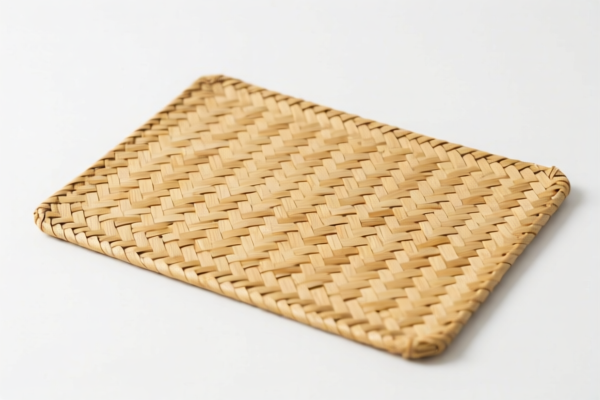
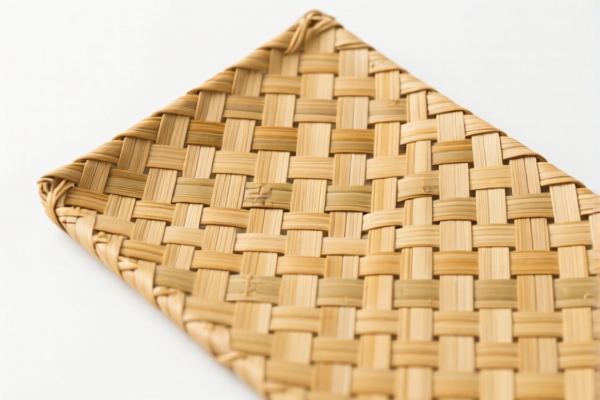
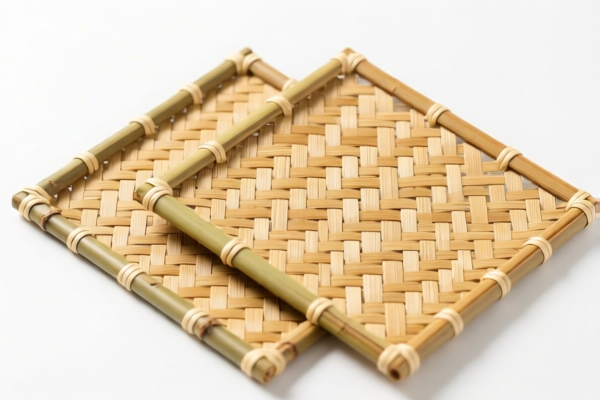
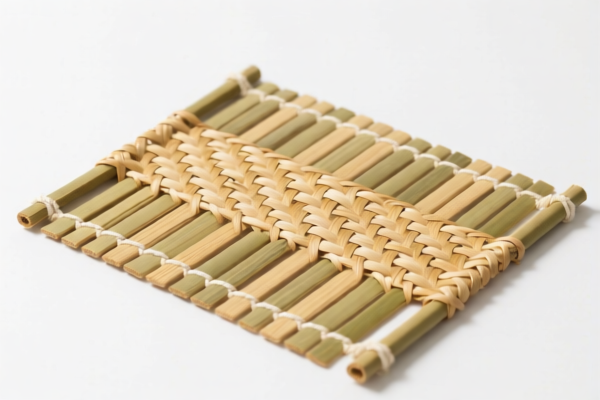
AI Analysis
🎋 Bamboo Stacking Pallet & Kitchenware (Bamboo Products)
🌐 HS Code Reference & Customs Clearance Guide | 2026 Latest Tariff Analysis | Professional Customs Strategy
📌 I. Product Definition & Classification: Do You Really Understand "Bamboo Stacking Pallets"?
The term "Bamboo Stacking Pallet" in international trade often refers to two distinct categories depending on its function and structure: 1. Bamboo Kitchenware/Tableware: Flat bamboo trays, stacking plates, or cutting boards designed for food service. These fall under Chapter 44 (Wood and articles of wood). 2. Bamboo Furniture: Rigid, assembled bamboo structures designed for household use (e.g., stacking trays that function as side tables or storage units). These fall under Chapter 94 (Furniture and furnishings).
⚠️ Critical Distinction:
- If the item is primarily used for serving food, holding dishes, or as a tray (even if it stacks), it is generally classified as Tableware/Kitchenware (HS 4419).
- If the item is a rigid, assembled piece of furniture (even if it stacks for storage), it may be classified as Furniture (HS 9403).
- Misclassification Risk: Declaring a "stacking tray" as furniture to avoid high tableware duties, or vice versa, can lead to significant penalties.
📦 II. HS Code Classification Details (2026 Latest Tariff Authority Comparison)
Based on the provided data, here is the precise mapping for bamboo products described as "stacking pallets/trays":
| HS Code | Product Description | Application Scenario | Total Tax Rate | Tax Breakdown |
|---|---|---|---|---|
4419.11.00.00 |
Bamboo Tableware & Kitchenware: Specifically applies to bamboo stacking trays or plates (e.g., serving trays, plate stacks). | Food service, home dining, kitchen use. | 13.2% | Base: 3.2% + Section 301: 0% + Section 122: 10% |
4419.19.90.00 |
Other Bamboo Tableware & Kitchenware: Includes other bamboo stacking trays/plates not specifically listed in 4419.11. | General bamboo kitchen tools, other stacking trays. | 13.2% | Base: 3.2% + Section 301: 0% + Section 122: 10% |
9403.82.00.30 |
Bamboo Furniture & Other Household Articles: Specifically applies to bamboo stacking trays classified as furniture/household articles. | Household storage, decorative stacking units, non-food-service rigid trays. | 35.0% | Base: 0.0% + Section 301: 25.0% + Section 122: 10% |
9403.82.00.15 |
Other Bamboo Household Furniture/Articles: Other bamboo household furniture/appliances. | General bamboo household furniture items. | 35.0% | Base: 0.0% + Section 301: 25.0% + Section 122: 10% |
🔍 Key Insight:
- Tableware (Ch 44): Total tax is 13.2%. The "Section 122" tariff (10%) is applied on top of the base rate.
- Furniture (Ch 94): Total tax is 35.0%. This includes a heavy 25% Section 301 tariff plus the 10% Section 122 tariff.
- Why the difference? Customs officers look at the primary use. If it’s for food, it’s 4419. If it’s for storage/decoration/furniture, it’s 9403.
💰 III. 2026 Latest Tariff Rate Details (Including Additional Taxes & Policy Add-ons)
✅ Applicable Country: United States (US)
✅ Origin: China (CN)
✅ Effective Time: 2025/2026 Tariff Schedule
🎯 1. 4419.11.00.00 & 4419.19.90.00 —— Bamboo Tableware/Kitchenware
| Item | Detail |
|---|---|
| Base Tariff Rate | 3.2% (Ad valorem) |
| Section 301 Tariff | 0.0% (Exempt or not applicable for this subheading) |
| Section 122 Tariff | 10.0% (Specific to bamboo products under this classification) |
| Total Tax Rate | 13.2% |
| Tax Calculation | CIF Value × 13.2% |
| De Minimis Exemption | ❌ Not Eligible (Section 122 tariffs typically negate de minimis exemptions for Chinese imports) |
| Legal Basis | HTSUS:4419.11/19 → Section 122 Tariff Order |
📌 Explanation:
- The 10% Section 122 tariff is a specific levy on certain bamboo articles imported from China.
- Unlike the 25% Section 301 tariff on many other goods, bamboo tableware only faces the 10% add-on, making it significantly cheaper to import than bamboo furniture.
- Total 13.2% is relatively low compared to other bamboo products.
🎯 2. 9403.82.00.30 & 9403.82.00.15 —— Bamboo Furniture
| Item | Detail |
|---|---|
| Base Tariff Rate | 0.0% |
| Section 301 Tariff | 25.0% (Standard USITC Footnote for Chinese furniture) |
| Section 122 Tariff | 10.0% (Additional levy on bamboo) |
| Total Tax Rate | 35.0% |
| Tax Calculation | CIF Value × 35.0% |
| De Minimis Exemption | ❌ Not Eligible |
| Legal Basis | HTSUS:9403.82 → Section 301 Tariff → Section 122 Tariff Order |
📌 Explanation:
- If customs classifies your "stacking pallet" as furniture (e.g., a heavy-duty stacking storage tray), the Section 301 tariff of 25% kicks in.
- Combined with the 10% Section 122 tariff, the total cost increases by 21.8 percentage points compared to tableware classification.
- Total 35.0% is a high-cost barrier.
🛠️ IV. Customs Clearance Practical Advice (Battle-Tested Pitfall Avoidance)
✅ 1. Preparation Checklist (Mandatory)
| Document | Must Provide | Description |
|---|---|---|
| ✅ Product Specifications | ✔️ | Detailed dimensions, weight, and primary intended use (e.g., "for serving food" vs. "for storage"). |
| ✅ Product Photos | ✔️ | Clear images showing the item in use. If used for food, show food on it. If used as furniture, show it holding other items. |
| ✅ Commercial Invoice | ✔️ | Must clearly describe the product as "Bamboo Kitchenware" or "Bamboo Tableware" if applicable. Avoid vague terms like "Pallet" if it’s for retail sale. |
| ✅ Bill of Lading | ✔️ | Ensure packaging matches the declared HS Code. |
| ✅ Origin Certificate | ✔️ | Prove China origin to apply correct Section 122/301 rates. |
✅ 2. Declaration Tips (Key Mantra)
🔥 "If it serves food, call it Tableware. If it stores things, call it Furniture."
| Scenario | Correct Declaration | Wrong Declaration | Consequence |
|---|---|---|---|
| Bamboo stacking tray used for serving appetizers | 4419.11.00.00 (Tableware) |
9403.82.00.30 (Furniture) |
Overpayment of ~21.8% tax |
| Bamboo stacking crate for storage | 9403.82.00.30 (Furniture) |
4419.11.00.00 (Tableware) |
Customs audit, penalty, back-taxes |
| "Bamboo Pallet" (Industrial) | Not in Data | 4419.11.00.00 |
Misclassification (Industrial pallets may fall under 4415) |
✅ 3. Special Cases Handling
| Case | Handling Advice |
|---|---|
| Product is "Tableware" but looks like "Furniture" | Provide usage instructions and marketing materials showing it as tableware. Emphasize "Food-Safe," "Kitchen Use." |
| Product is "Furniture" but used for Food | If it’s a large bamboo unit for storage that also holds plates, classify as Furniture (9403). Do not try to classify as tableware unless the primary function is clearly food service. |
| Mixed Shipment (Tableware + Furniture) | Split the shipment or declare separately. Mixing HS Codes in one line item can lead to 100% penalty on the entire value. |
| OEM Customization | Provide design specs showing the item’s intended end-use. Customs looks at design intent, not just how the importer uses it. |
🌍 V. Global Market Comparison (2026 Latest)
| Country/Region | Recommended HS Code | Tariff | Certification | Notes |
|---|---|---|---|---|
| 🇺🇸 USA | 4419.11.00.00 (Tableware) |
13.2% | FSC, FDA (if food contact) | Section 122 applies. Avoid 9403 (35%). |
| 🇨🇳 China | 4419.11.00.00 |
5-10% | FSC | No Section 122/301. |
| 🇪🇺 EU | 4419.11.00 |
0-5% | FSC, CE | No Section 122. Lower base duty. |
| 🇬🇧 UK | 4419.11.00 |
0-5% | FSC | Post-Brexit tariffs similar to EU. |
| 🇨🇦 Canada | 4419.11.00 |
0% (MFN) | FSC | Preferential rates under CUSMA. |
📌 Conclusion:
- USA is the most expensive market for bamboo products due to Section 122 and Section 301 tariffs.
- Critical Strategy: If your product is a "stacking pallet" that can be argued as tableware, classify it under 4419 to save 21.8% in duties.
- Do not declare food-use bamboo items as furniture to "save space" – the risk is not worth the penalty.
📌 VI. Common Errors & Pitfalls (Lessons Learned)
❌ Error 1: Calling a food tray a "Bamboo Pallet"
👉 Consequence: "Pallet" implies industrial/logistics use (HS 4415), which may have different duties or lack food-safety certification. Customs may reclassify it as furniture or tableware, causing delays.
👉 Fix: Use precise terms like "Bamboo Serving Tray" or "Bamboo Stacking Plate."
❌ Error 2: Classifying a small bamboo tray as 9403.82 (Furniture)
👉 Consequence: Paying 35% tax instead of 13.2%.
👉 Fix: If the item is < 30cm in height and used for food, use 4419.
❌ Error 3: Ignoring Section 122 Tariff
👉 Consequence: Assuming 3.2% base rate only.
👉 Fix: Always add 10% for bamboo products under 4419 and 9403 from China.
✅ Correct Practice:
"Bamboo Kitchenware, Stacking Serving Tray, Food-Safe Finish, Model XYZ, Designed for Hospitality Use"
🎯 VII. Conclusion: Professional Declaration, Save Costs!
🎯 Remember the Mantra:
🔹 "Tableware = 13.2% (Section 122 only). Furniture = 35% (Section 301 + 122)."
🔹 "Food Use = 4419. Storage Use = 9403."
🔹 "One product, one HS code. Mixing leads to audits."
📌 Pro Tip:
- If your product is primarily for food service (e.g., sushi trays, appetizer platters), always declare as 4419.11.00.00.
- If it’s a storage crate or decorative shelf, declare as 9403.82.00.30.
- Avoid the term "Pallet" unless it’s an industrial logistics pallet (HS 4415), which is not covered in this data.
📣 Take Action Now:
📞 Consult a licensed customs broker + Provide product photos + Request HS Code Pre-Ruling if unsure.
🚀 Clear customs smoothly, control costs, and maximize profits!
✨ Professional Customs Starts with Accurate Classification!
💼 Every percentage point counts in international trade!
Customer Reviews
About HS Code Classification
The Harmonized System (HS) is an internationally standardized nomenclature developed by the World Customs Organization (WCO) to classify traded products. Over 200 countries use the HS system as the basis for customs tariffs, trade statistics, and import/export regulations.
Each HS code follows a hierarchical structure:
- Chapter (2 digits) — Broad category of goods (e.g., Chapter 84: Machinery and Mechanical Appliances)
- Heading (4 digits) — More specific grouping within the chapter
- Subheading (6 digits) — Internationally standardized breakdown, used by all WCO member countries
- National subdivisions (8-10 digits) — Country-specific extensions for further classification, such as US HTSUS 10-digit codes
Correct HS code classification is essential for smooth customs clearance, accurate duty payment, and compliance with trade regulations. Misclassification can lead to customs delays, overpayment of duties, or penalties.
When importing from CN to US, the applicable tariff rates may include:
- Most-Favored-Nation (MFN) rate — The standard duty rate applied to WTO members
- General rate — Applied to countries without trade agreements
- Trade remedy duties — Additional tariffs such as Section 301 (anti-dumping), Section 232 (national security), or countervailing duties
The information provided on this page is for reference purposes only. For official classification, please consult with your local customs authority or a licensed customs broker.