Bamboo Tableware Gift Set
CN → US| HS Code | Tariff Rate | Origin | Destination | Doc |
|---|---|---|---|---|
| 4419199000 | 13.2% | CN | US | Official Doc |
| 4419110000 | 13.2% | CN | US | Official Doc |
| 4602110900 | 45.0% | CN | US | Official Doc |
| 4602114500 | 41.6% | CN | US | Official Doc |
| 3924104000 | 13.4% | CN | US | Official Doc |
| 3924102000 | 24.0% | CN | US | Official Doc |
Product Images
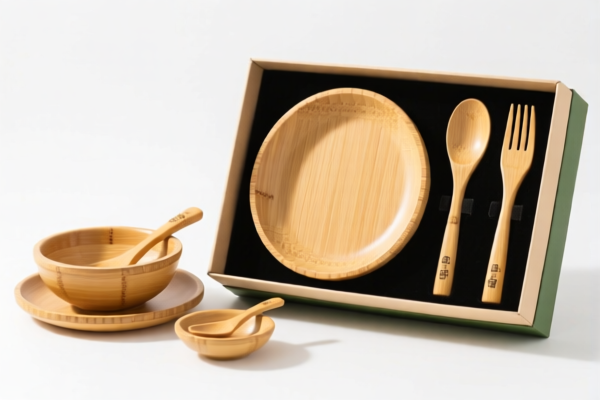
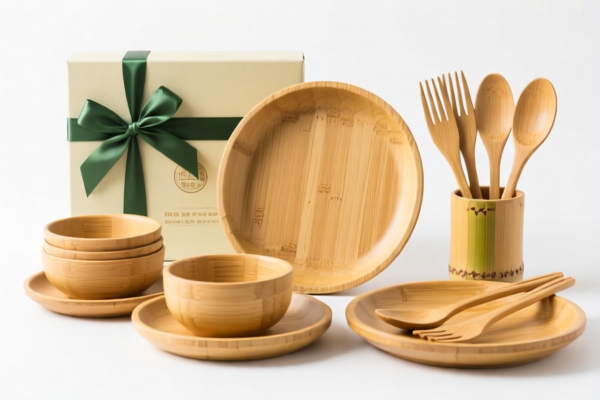
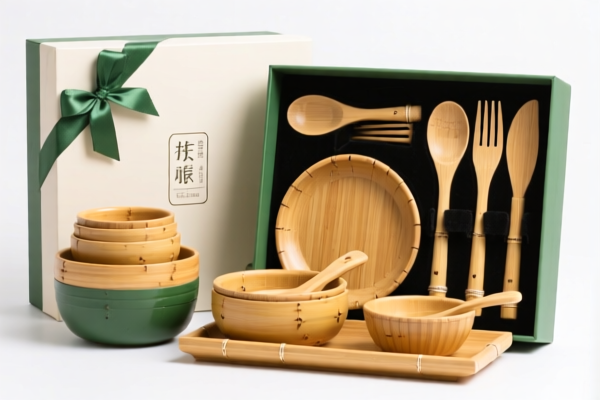
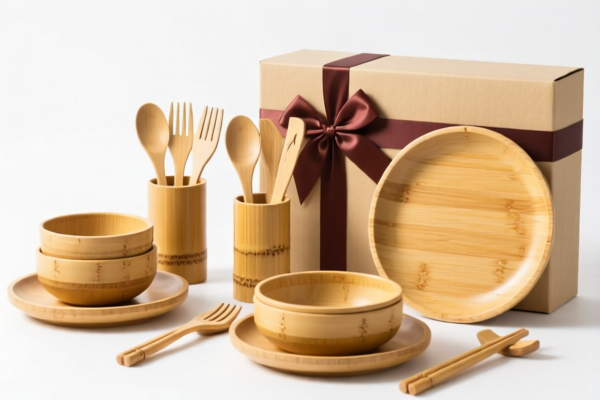
AI Analysis
🎋 Bamboo Tableware Gift Set (套装竹制餐具)
🌐 HS Code Classification & Customs Clearance Guide | 2024-2026 Tax Rule Analysis | Professional Strategy
📌 I. Product Definition & Classification: What Exactly is a "Bamboo Tableware Gift Set"?
A Bamboo Tableware Gift Set is a composite product typically consisting of various kitchen and dining utensils made primarily from bamboo wood. In international trade, the classification depends heavily on the specific items included and their primary function.
Unlike plastic sets, bamboo goods are classified under Chapter 44 (Wood and articles of wood). However, "Bamboo" is a specific sub-category within wood articles.
⚠️ Critical Distinction:
- If the set contains only bamboo cutting boards → 4419.11.00.00
- If the set contains only bamboo cups, chopsticks, spoons (no boards) → 4419.19.90.00
- Warning: Do NOT confuse these with Plastic (Chapter 39) or Wicker/Basketry (Chapter 46) items. Many "gift sets" mix materials. This guide strictly follows the provided data for Bamboo Wood and Plastic/Tableware distinctions.
📦 II. HS Code Classification Details (Based on Provided Data)
| HS Code | Product Description | Tax Rate (Total) | Key Characteristics |
|---|---|---|---|
4419.19.90.00 |
Tableware and kitchenware, of wood: Of bamboo: Other: Other | 3.2% | Chopsticks, spoons, forks, cups, bowls (excluding cutting boards). This is the most common code for general bamboo tableware. |
4419.11.00.00 |
Tableware and kitchenware, of wood: Of bamboo: Bread boards, chopping boards and similar boards | 3.2% | Specifically for cutting boards, bread boards, or serving boards made of bamboo. |
3924.10.40.00 |
Tableware, kitchenware... of plastics: Tableware and kitchenware: Other | 3.4% | ⚠️ Check Material: If your "gift set" contains plastic utensils (e.g., plastic knives with bamboo handles, or full plastic sets), this may apply. Strictly for plastic. |
3924.10.20.00 |
Tableware, kitchenware... of plastics: Plates, cups, saucers... | 14.0% | ⚠️ High Risk: If the set contains plastic plates, cups, or soup bowls, this higher tax rate applies. |
4602.11.09.00 |
Basketwork... Of vegetable materials: Of bamboo: Other baskets and bags... | 35.0% | ❌ Avoid: This is for baskets, bags, and containers, not tableware. If your gift set is just bamboo baskets holding food, it goes here, NOT in tableware. |
4602.11.45.00 |
Basketwork... Of vegetable materials: Of bamboo: Other: Other | 31.6% | ❌ Avoid: General bamboo woven goods (e.g., mats, trays not classified as tableware). |
🔍 Key Insight:
- Pure Bamboo Tableware (chopsticks, bowls, spoons) falls under 4419.19.90.00 (3.2% total tax).
- Bamboo Cutting Boards fall under 4419.11.00.00 (3.2% total tax).
- Mixed Sets: If a set includes both chopsticks (4419.19) and a bamboo board (4419.11), customs may require split classification or assign the code based on the essential character (usually the larger/more expensive item).
- Do NOT misclassify bamboo as "Wicker/Basketry" (4602) – the tax jumps from 3.2% to 35%!
💰 III. Detailed Tax Breakdown (2024-2026 Latest Tariffs)
✅ Applicable Countries: United States (US)
✅ Origin: China (CN)
✅ Effective Date: Current trade policies apply
🎯 1. 4419.19.90.00 – Bamboo Tableware (Other) & 4419.11.00.00 – Bamboo Cutting Boards
| Item | Content |
|---|---|
| Base Tariff (MFN) | 3.2% (ad valorem) |
| Section 301 / Additional Tariff | 0.0% (As per provided data) |
| Total Tax Rate | 3.2% |
| Tax Calculation | CIF Value × 3.2% |
| De Minimis Exemption? | ✅ Likely Eligible (For shipments < $800, depending on current CBP rules) |
| Legal Basis | HTSUS 4419.19.90 / 4419.11.00 |
📌 Explanation:
- Bamboo tableware enjoys a very low duty rate (3.2%) compared to plastic plates (14%) or bamboo baskets (35%).
- No additional Section 301 tariffs are listed for these specific bamboo wood products in the provided data, making them highly competitive for export to the US.
- Advantage: This is one of the most tariff-friendly bamboo categories.
🎯 2. 3924.10.40.00 & 3924.10.20.00 – Plastic Tableware (For Comparison)
| Item | Content |
|---|---|
| Base Tariff | 3.4% (Other plastic tableware) / 6.5% (Plates/Cups) |
| Additional Tariff | 0.0% (Other) / 7.5% (Plates/Cups) |
| Total Tax Rate | 3.4% (Other) / 14.0% (Plates/Cups) |
| De Minimis Exemption? | ✅ Likely eligible |
📌 Explanation:
- If your "Bamboo Gift Set" is actually 100% plastic, the tax is still low (3.4%-14%).
- Risk: Mislabeling plastic as bamboo can lead to fraud penalties. Always verify material composition.
🎯 3. 4602.11.09.00 & 4602.11.45.00 – Bamboo Wicker/Basketry (High Risk)
| Item | Content |
|---|---|
| Base Tariff | 10.0% (Baskets/Bags) / 6.6% (Other) |
| Additional Tariff | 25.0% (Both) |
| Total Tax Rate | 35.0% (Baskets/Bags) / 31.6% (Other) |
| De Minimis Exemption? | ❌ Often Blocked or subject to stricter scrutiny |
📌 Explanation:
- DO NOT classify a bamboo tableware set as a "basket" or "wicker article" to avoid tableware duties.
- Conversely, DO NOT classify actual bamboo baskets as tableware.
- Tax Difference: 3.2% vs. 35% – a 10x difference. Misclassification here is extremely costly.
🛠️ IV. Customs Clearance Practical Advice (Avoid Pitfalls)
✅ 1. Essential Documentation Checklist
| Document | Required | Notes |
|---|---|---|
| ✅ Product Composition Sheet | ✔️ | Clearly state: "100% Bamboo (Wood), not plastic, not wicker" |
| ✅ Product Photos | ✔️ | Show chopsticks, bowls, cutting boards individually |
| ✅ Commercial Invoice | ✔️ | Describe as "Bamboo Tableware Set" or "Bamboo Cutting Boards" – NOT "Gift Basket" |
| ✅ Material Declaration | ✔️ | Certify that no plastic coatings or metal parts dominate the essential character |
| ✅ HS Code Confirmation | ✔️ | Pre-ruling recommended if the set is mixed |
✅ 2. Classification Tips (Key Mnemonic)
🔥 "Chopsticks & Bowls = 4419.19 (3.2%)
🔥 "Cutting Boards = 4419.11 (3.2%)
🔥 "Plates/Cups (Plastic) = 3924.10 (14%)
🔥 "Baskets/Bags = 4602 (35%) – AVOID!"
| Scenario | Correct HS Code | Tax Rate |
|---|---|---|
| Set of chopsticks + bamboo spoons | 4419.19.90.00 |
3.2% |
| Set of bamboo bowls + cups | 4419.19.90.00 |
3.2% |
| Bamboo cutting board only | 4419.11.00.00 |
3.2% |
| Bamboo cutting board + chopsticks | 4419.19.90.00 (if chops are primary) or split |
3.2% |
| Plastic plates + bamboo forks (mixed set) | Consult customs – may be split or primary character applies | 3.4% - 14% |
| Bamboo basket holding fruit | 4602.11.09.00 |
35.0% |
✅ 3. Special Cases
| Case | Handling Advice |
|---|---|
| Mixed Material Set (e.g., Bamboo handle + Steel knife) | If steel is integral, it may fall under 7323 (Steel tableware). Check essential character. |
| Lacquered/Treated Bamboo | Still falls under 4419 if base material is bamboo. Declare finish type. |
| "Gift Set" Packaging | Packaging is excluded from value for duty purposes if separable. |
| Origin Marking | Clearly mark "Made in China" to avoid customs delays. |
🌍 V. Global Market Comparison (2024-2026)
| Country/Region | Recommended HS Code | Tariff Rate | Notes |
|---|---|---|---|
| 🇺🇸 USA | 4419.19.90.00 |
3.2% | No additional Section 301 tariff on this code. Best for bamboo tableware. |
| 🇨🇳 China | 4419.19.90.00 |
~5-10% | Import duty varies; export from China has no duty. |
| 🇪🇺 EU | 4419.19.00 |
0% | Free trade for wood tableware (under many FTAs). |
| 🇬🇧 UK | 4419.19.00 |
0% | Post-Brexit tariff remains favorable for wood products. |
📌 Conclusion:
- USA is a high-value market for bamboo tableware due to the low 3.2% tariff and no additional penalties in the provided data.
- Avoid misclassifying as 4602 (Baskets) due to the 35% tax.
- Plastic substitutes face higher taxes if they include plates/cups (14%).
📌 VI. Common Mistakes & Pitfalls
❌ Mistake 1: Calling a bamboo tableware set a "Bamboo Basket"
👉 Result: Tax jumps from 3.2% to 35% → Loss of competitiveness!
❌ Mistake 2: Mixing plastic and bamboo without clarification
👉 Result: Customs may split the shipment, leading to multiple duties and delays.
❌ Mistake 3: Not declaring "Bamboo" explicitly
👉 Result: Customs may misclassify as "Wood, not specified" (higher tax) or "Plastic" (14%).
✅ Correct Approach:
"Bamboo Tableware Gift Set (Chopsticks, Bowls, Spoons) – 100% Bamboo Wood – HTS 4419.19.90.00"
🎯 VII. Conclusion: Smart Classification, Higher Profits!
🎯 Remember:
🔹 "Bamboo Tableware = 4419 (3.2%)
🔹 "Bamboo Baskets = 4602 (35%)
🔹 "Plastic Plates = 3924 (14%)
🔹 Accuracy saves you 32% in taxes!"
📌 Pro Tip:
If you are exporting to the USA, ensure your bamboo products are free from excessive chemical coatings to comply with FDA and USDA regulations, even though the tariff is low.
📣 Action Item:
📞 Confirm HS Code with your customs broker before shipment.
📸 Provide clear photos of the set contents.
🚀 Leverage the 3.2% tariff to compete against plastic alternatives!
✨ Precise Classification, Efficient Clearance, Maximized Profit!
💼 Your bamboo goods deserve the lowest possible duty!
Customer Reviews
About HS Code Classification
The Harmonized System (HS) is an internationally standardized nomenclature developed by the World Customs Organization (WCO) to classify traded products. Over 200 countries use the HS system as the basis for customs tariffs, trade statistics, and import/export regulations.
Each HS code follows a hierarchical structure:
- Chapter (2 digits) — Broad category of goods (e.g., Chapter 84: Machinery and Mechanical Appliances)
- Heading (4 digits) — More specific grouping within the chapter
- Subheading (6 digits) — Internationally standardized breakdown, used by all WCO member countries
- National subdivisions (8-10 digits) — Country-specific extensions for further classification, such as US HTSUS 10-digit codes
Correct HS code classification is essential for smooth customs clearance, accurate duty payment, and compliance with trade regulations. Misclassification can lead to customs delays, overpayment of duties, or penalties.
When importing from CN to US, the applicable tariff rates may include:
- Most-Favored-Nation (MFN) rate — The standard duty rate applied to WTO members
- General rate — Applied to countries without trade agreements
- Trade remedy duties — Additional tariffs such as Section 301 (anti-dumping), Section 232 (national security), or countervailing duties
The information provided on this page is for reference purposes only. For official classification, please consult with your local customs authority or a licensed customs broker.