Bamboo Tag
CN → US| HS Code | Tariff Rate | Origin | Destination | Doc |
|---|---|---|---|---|
| 4821102000 | 35.0% | CN | US | Official Doc |
| 4821904000 | 35.0% | CN | US | Official Doc |
| 5609001000 | 37.9% | CN | US | Official Doc |
| 5609004000 | 38.9% | CN | US | Official Doc |
Product Images
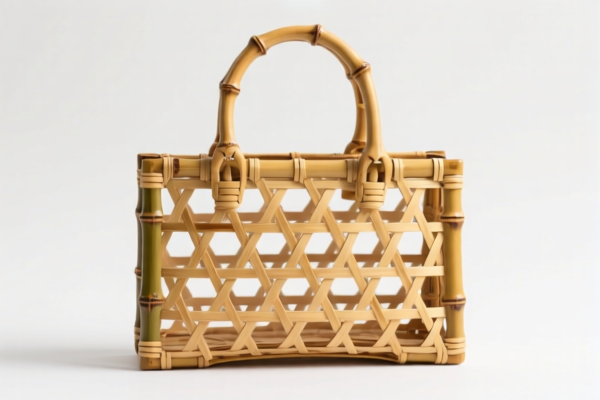
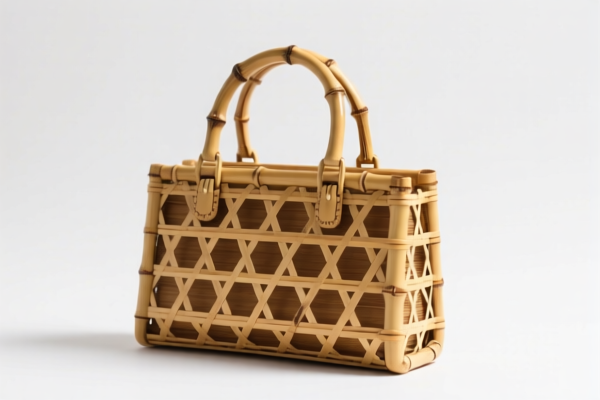
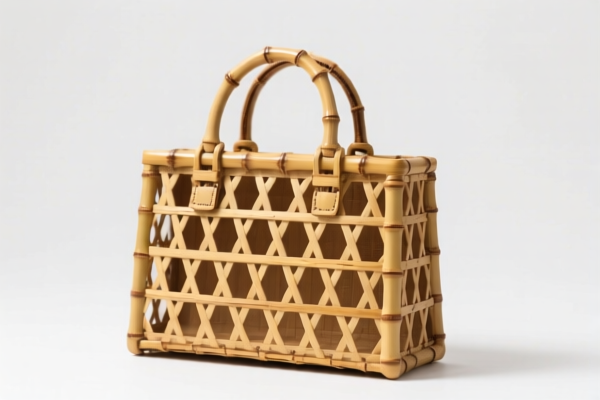
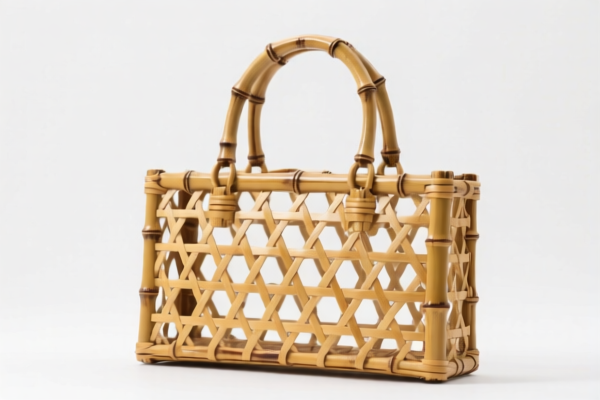
AI Analysis
🎋 Bamboo Tag (Hang Tags / Product Labels)
🌐 HS Code Reference & Customs Clearance Guide | 2026 Latest Tariff Analysis | Professional Clearance Strategy
📌 I. Product Definition & Classification: Do You Really Understand "Bamboo Tags"?
A Bamboo Tag (often referred to as a Hang Tag, Product Label, or Decorative Tag) is a small accessory attached to products (clothing, jewelry, handicrafts, gifts) via a string, hole, or adhesive. It serves as an identifier for brand, price, care instructions, or material composition.
In international trade, the classification is critical because it depends heavily on the material and form, even though "Bamboo" suggests a specific origin. However, based on the provided data, the classification logic focuses on functional similarity (tags/labels) rather than just raw material, or assumes specific manufacturing forms (paper/cardboard vs. textile/rope substitutes).
⚠️ Key Distinction Point:
- If the tag is made of paper/cardboard (even if printed with bamboo patterns) → It falls under Chapter 48 (Paper Products).
- If the tag is made of woven material, cords, or non-textile fibers acting as an accessory → It may fall under Chapter 56 (Other Made-Up Textile Articles).
- "Bamboo" does not automatically mean Chapter 46 (Basketry). In customs practice, flat tags are rarely classified as basketry unless they are woven mats or rigid structures.
📦 II. HS Code Classification Details (Based on Provided Data)
| HS Code | Product Description | Application Scenario | Material/Form Logic |
|---|---|---|---|
4821.10.20.00 |
Paper Labels, including Stickers (Not of Textile Materials) | Most Common: Bamboo-patterned paper tags, cardboard hang tags | ✅ Paper/Cardboard Form Logic: "Hang tags" are inferred as paper-based labels. No material conflict with paper classification. |
4821.90.40.00 |
Other Paper Labels, including Stickers | General Paper Tags: Standard paper hang tags, even if unspecified material, inferred as paper by common sense. | ✅ Paper/Cardboard Form Logic: Default to paper for "labels" unless proven otherwise. No obvious material conflict. |
5609.00.10.00 |
Articles of Yarn, Cordage, Rope, or Twine | Textile/Cord-like Tags: Tags made of woven bamboo fibers, cords, or textile-like accessories. | ✅ Non-specific Material Logic: "Catch-all" for non-specific accessories. Bamboo fiber/yarn forms are not in conflict with this category. |
5609.00.40.00 |
Other Made-up Articles of Yarn, Cordage, or Twine | Other Fiber Tags: Tags made of processed bamboo fibers treated as yarn/twine products. | ✅ Catch-all Principle Logic: Bamboo fibers processed into tags do not conflict with "yarn/cordage" categories logically. |
🔍 Key Reminder:
- Paper-based tags (even with bamboo printing/design) are strongly advised to be classified under 4821.xxxxxxx to avoid complex textile verification.
- Actual Bamboo Fiber Tags (woven, stiff) might be contested. If customs argues it's not paper, 5609 categories serve as the logical backup based on "fiber/yarn" inference.
- Do NOT classify as Chapter 46 (Basketry) unless the tag is a rigid, woven structure, which is rare for "tags."
💰 III. 2026 Latest Tariff Rate Details (Including Surtaxes & Policy Surcharges)
✅ Applicable Country: United States (US)
✅ Origin: China (CN)
✅ Effective Date: From November 10, 2025 (including subsequent imports)
🎯 1. 4821.10.20.00 & 4821.90.40.00 —— Paper Tags/Labels
| Item | Content |
|---|---|
| Base Duty Rate | 0% (ad valorem) |
| USITC Surcharge | +25% (Under USITC Footnote 9903.88.01 or related 301 Section) |
| IEEPA Surcharge | +10% (Targeting China/HK products, effective from Nov 10, 2025) |
| Total Duty Rate | 35.0% |
| Tax Calculation | CIF Value × 35% |
| De Minimis Eligibility | ❌ No (deny_de_minimis) |
| Legal Basis Path | IEEPA:9903.01.25 → IEEPA:9903.01.24 → USITC:4821.10.20.00 / 4821.90.40.00 → FOOTNOTE:9903.88.01 |
📌 Explanation:
- "USITC 25%": Additional tariff under Section 301 of the U.S. Trade Act.
- "IEEPA 10%": Tariff under the International Emergency Economic Powers Act targeting Chinese imports.
- Total 35%: This is a high duty rate for small accessories. Cost control is essential.
- Note: Both4821.10.20.00and4821.90.40.00share the same tax detail as per the data.
🎯 2. 5609.00.10.00 —— Articles of Yarn/Cordage (Textile-like Tags)
| Item | Content |
|---|---|
| Base Duty Rate | 2.9% |
| USITC Surcharge | +25% |
| IEEPA Surcharge | +10% |
| Total Duty Rate | 37.9% |
| Tax Calculation | CIF Value × 37.9% |
| De Minimis Eligibility | ❌ No (deny_de_minimis) |
| Legal Basis Path | IEEPA:9903.01.25 → IEEPA:9903.01.24 → USITC:5609.00.10.00 → FOOTNOTE:9903.88.01 |
📌 Note:
- If the bamboo tag is processed into a woven or cordage form, it falls here.
- The base rate is slightly higher (2.9% vs 0%), but the total remains 37.9%, still very high.
🎯 3. 5609.00.40.00 —— Other Made-up Articles of Yarn/Cordage
| Item | Content |
|---|---|
| Base Duty Rate | 3.9% |
| USITC Surcharge | +25% |
| IEEPA Surcharge | +10% |
| Total Duty Rate | 38.9% |
| Tax Calculation | CIF Value × 38.9% |
| De Minimis Eligibility | ❌ No (deny_de_minimis) |
| Legal Basis Path | IEEPA:9903.01.25 → IEEPA:9903.01.24 → USITC:5609.00.40.00 → FOOTNOTE:9903.88.01 |
📌 Note:
- This is the highest total rate (38.9%) among the options.
- Use this only if the product strictly fits "other made-up articles" and cannot be classified as paper or the specific yarn article in 5609.00.10.
🛠️ IV. Customs Clearance Practical Advice (Battle-Tested Pitfall Avoidance)
✅ 1. Document Checklist (All are Required)
| Document | Mandatory | Explanation |
|---|---|---|
| ✅ Product Spec Sheet | ✔️ | Must specify material (e.g., "Paper printed with bamboo design" vs. "Woven bamboo fiber"). |
| ✅ Product Photos | ✔️ | Clear image of the tag, showing material texture, hole/string attachment. |
| ✅ Commercial Invoice | ✔️ | Describe as "Bamboo-patterned Paper Hang Tags" OR "Bamboo Fiber Tags" consistently with HS Code. |
| ✅ Packing List | ✔️ | Detail quantity and weight. |
| ✅ Material Declaration | ✔️ | Explicitly state if it is Paper (Ch 48) or Fiber/Cord (Ch 56). |
✅ 2. Declaration Tips (Key Mantra)
🔥 "Material Dictates Code, Paper is King, Fiber is Backup, Be Precise to Save Money!"
| Scenario | Correct Declaration | Wrong Approach |
|---|---|---|
| Paper Tag with Bamboo Design | 4821.10.20.00 or 4821.90.40.00Desc: "Paper Hang Tags, Bamboo Print" |
Declare as "Bamboo Product" → May trigger Ch 46 scrutiny or rejection. |
| Woven Bamboo Fiber Tag | 5609.00.10.00Desc: "Bamboo Fiber Tag, Woven" |
Declare as "Paper" → Misclassification risk. |
| Mixed Material (Paper + Bamboo String) | Generally 4821 if paper is the main body. | Split declaration → Complexity and potential delays. |
| Small Quantity (De Minimis) | No Exemption for these codes from China. | Assuming $800 de minimis applies → Seizure Risk. |
✅ 3. Special Cases Handling
| Situation | Handling Advice |
|---|---|
| OEM Custom Tags | Provide design files to prove it's a "label/tag" and not a "product" itself. |
| Bamboo Charcoal Paper Tags | If made from bamboo pulp but structured as paper, definitely 4821. |
| Rigid Bamboo Card Tags | If rigid and woven, might be challenged. Provide proof it's not "basketry" (Ch 46). |
| Bulk Shipping | Ensure HS Code is consistent across all invoices to avoid audit flags. |
🌍 V. Global Main Market Clearance Comparison (2026 Latest)
| Country/Region | Recommended HS Code | Tariff Rate | Certification Requirements | Notes |
|---|---|---|---|---|
| 🇺🇸 USA | 4821.10.20.00 / 5609.00.10.00 |
35% - 38.9% | No special cert, but strict labeling | High Duty: 301 + IEEPA apply. No de minimis. |
| 🇨🇳 China | 4821.10.20.00 |
~5-10% | None | Lower duty, but focus on export. |
| 🇪🇺 EU | 4823.69.00 (Similar) |
0-2.9% | CE (if applicable), FSC (if eco-marketing) | No major surtaxes like US. |
| 🇬🇧 UK | 4821.10.00 |
0-2.9% | None | Post-Brexit rules similar to EU. |
| 🇯🇵 Japan | 4821.10.00 |
0-3% | None | Low duty, easy clearance. |
📌 Conclusion:
- The US market is significantly more expensive for Chinese-origin bamboo/paper tags due to the 35%+ total tariff.
- EU and Japan are much more favorable, with rates under 5%.
- Supply Chain Strategy: If targeting the US, consider pricing strategies to absorb the 35% duty, or explore third-country processing (if legally compliant) to change origin.
📌 VI. Common Errors & Pitfall Guide (Lessons Learned)
❌ Error 1: Classifying "Bamboo Tag" as Chapter 46 (Basketry)
👉 Consequence: Customs may reject it, demanding reclassification to Ch 48 or 56, causing delays and fines. Tags are rarely basketry.
❌ Error 2: Assuming De Minimis ($800) applies to small tags from China
👉 Consequence: Package Seized. IEEPA Section 321 exemptions are removed for goods from China for these categories.
❌ Error 3: Misdeclaring Material (e.g., calling woven fiber "Paper")
👉 Consequence: Misclassification Penalty. 5609 has a higher base rate (3.9% vs 0%). While total is similar, base rate affects other fees/duties.
✅ Correct Approach:
"Paper Hang Tags, Bamboo Pattern, for Clothing Accessories, Model XYZ, Made in China"
HS Code: 4821.10.20.00
🎯 VII. Conclusion: Professional Declaration, Cost Control, Efficiency!
🎯 Remember the Mantra:
🔹 "Paper is Best (35%), Fiber is Backup (37.9%+), No De Minimis, Pay Up!"
🔹 "HS Code Saves Money, Tax Difference is Real, Wrong Code Costs Thousands!"
📌 Pro Tip:
If your tags are small and low-value, consider bundling with higher-value items if legally permissible, but never under-declare value. For US imports, factor the 35% tax into your landed cost calculation immediately.
📣 Immediate Action:
📞 Contact a Professional Customs Broker
📄 Provide Clear Material Spec (Paper vs. Fiber)
🚀 Ensure Your Landed Cost includes the 35-39% Duty to protect margins.
✨ Professional Clearance Starts with Accurate Classification!
💼 Every Cent of Duty is Calculated Precisely!
Customer Reviews
About HS Code Classification
The Harmonized System (HS) is an internationally standardized nomenclature developed by the World Customs Organization (WCO) to classify traded products. Over 200 countries use the HS system as the basis for customs tariffs, trade statistics, and import/export regulations.
Each HS code follows a hierarchical structure:
- Chapter (2 digits) — Broad category of goods (e.g., Chapter 84: Machinery and Mechanical Appliances)
- Heading (4 digits) — More specific grouping within the chapter
- Subheading (6 digits) — Internationally standardized breakdown, used by all WCO member countries
- National subdivisions (8-10 digits) — Country-specific extensions for further classification, such as US HTSUS 10-digit codes
Correct HS code classification is essential for smooth customs clearance, accurate duty payment, and compliance with trade regulations. Misclassification can lead to customs delays, overpayment of duties, or penalties.
When importing from CN to US, the applicable tariff rates may include:
- Most-Favored-Nation (MFN) rate — The standard duty rate applied to WTO members
- General rate — Applied to countries without trade agreements
- Trade remedy duties — Additional tariffs such as Section 301 (anti-dumping), Section 232 (national security), or countervailing duties
The information provided on this page is for reference purposes only. For official classification, please consult with your local customs authority or a licensed customs broker.