Bamboo Woven Flat Bag
CN → US| HS Code | Tariff Rate | Origin | Destination | Doc |
|---|---|---|---|---|
| 4602110700 | 35.0% | CN | US | Official Doc |
| 4602110900 | 45.0% | CN | US | Official Doc |
Product Images
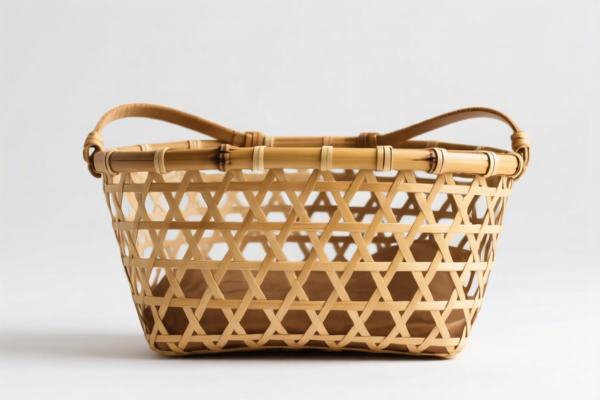
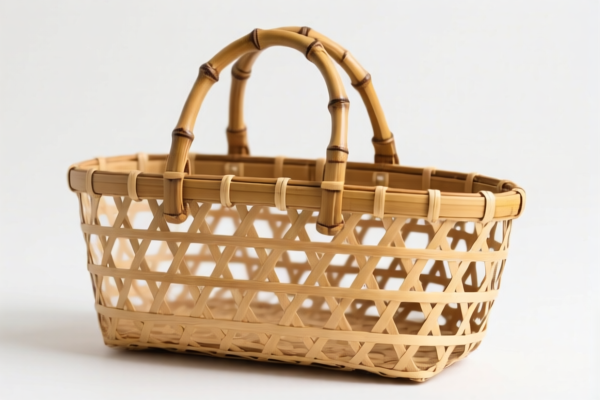
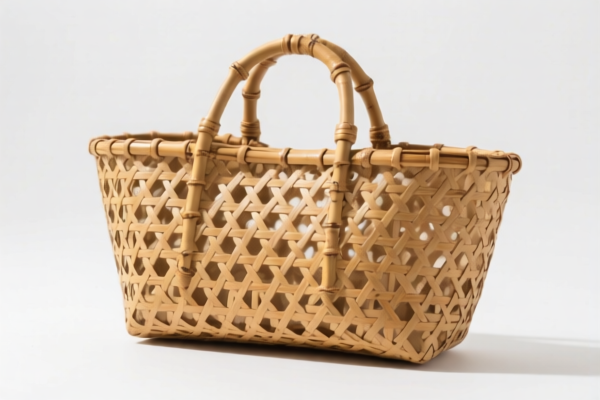
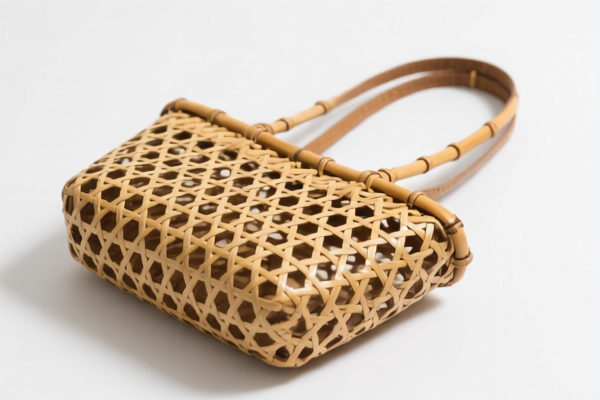
AI Analysis
🎒 Bamboo Woven Flat Bag (Wickerwork & Bamboo Articles)
🌐 HS Code Reference & Customs Clearance Guide | 2026 Latest Tariff Analysis | Professional Clearance Strategy
📌 Part I: Product Definition & Classification: Do You Really Know "Bamboo Woven Flat Bag"?
In international trade, "Bamboo Woven Flat Bag" falls under Chapter 46: Plaiting materials and articles of plaiting materials; basketwork and wickerwork. It is not considered a "bag" in the general textile sense (Chapter 42) but is classified as a wickerwork or basketwork article made directly to shape from plaiting materials.
Key Distinction:
Bamboo Woven Flat Bag: Made from plaited bamboo strips, shaped directly or assembled. → Heading 4602.
Textile Bag with Bamboo Trim: If the primary material is fabric with bamboo decorations. → Heading 4202 (Not applicable here).
⚠️ Critical Classification Point:
- If the bag is made directly to shape from bamboo plaiting materials → 4602.11
- If it is assembled from pre-made bamboo articles → 4602.19 (but typically flat bags are woven to shape).
- Material: Vegetable (Bamboo).
📦 Part II: HS Code Classification Details (2026 Latest Tariff Authority)
Based on the provided data, the "Bamboo Woven Flat Bag" is classified into two specific sub-categories depending on its specific finish or type (Wickerwork vs. Other).
| HS Code | Product Description | Applicability | Tax Rate (Total) |
|---|---|---|---|
4602.11.07.00 |
Wickerwork: Other baskets and bags, whether or not lined, of bamboo | For bags classified as "Wickerwork" style or specifically designated under this sub-heading | 25.0% |
4602.11.09.00 |
Other: Other baskets and bags, whether or not lined, of bamboo | For other bamboo woven bags not falling under the specific "Wickerwork" definition | 35.0% |
🔍 Key Insight:
- Both codes fall under 4602.11 (Of vegetable materials, of bamboo).
- The distinction between07(Wickerwork) and09(Other) depends on the specific manufacturing definition and how customs interprets the "wickerwork" vs. "other basketwork" structure.
- Warning: Misclassification can lead to a 10% tax difference (25% vs. 35%).
💰 Part III: 2026 Latest Tariff Rate Details (Detailed Tax Breakdown)
✅ Applicable Country: United States (US)
✅ Origin: China (CN)
✅ Effective Time: Current tariffs apply
🎯 1. 4602.11.07.00 —— Bamboo Wickerwork Bag
| Item | Content |
|---|---|
| Base Tariff | 0.0% (Ad Valorem) |
| Section 301 Additional Tariff | +25.0% |
| Total Tariff | 25.0% |
| Tax Calculation | CIF Value × 25% |
| De Minimis Exemption | ❌ Not Eligible (Subject to Section 301) |
| Legal Basis Path | HTSUS:4602.11.07.00 → Section 301 Footnote |
📌 Explanation:
- The Base Tariff is 0%, which might seem attractive.
- However, the 25% Section 301 tariff applies specifically to Chinese-origin basketwork and wickerwork.
- Total Cost Impact: You pay 25% of the CIF value as duty alone.
🎯 2. 4602.11.09.00 —— Other Bamboo Woven Bag
| Item | Content |
|---|---|
| Base Tariff | 10.0% (Ad Valorem) |
| Section 301 Additional Tariff | +25.0% |
| Total Tariff | 35.0% |
| Tax Calculation | CIF Value × 35% |
| De Minimis Exemption | ❌ Not Eligible (Subject to Section 301) |
| Legal Basis Path | HTSUS:4602.11.09.00 → Section 301 Footnote |
📌 Explanation:
- The Base Tariff is 10%, higher than the wickerwork category.
- Plus the 25% Section 301 tariff.
- Total Cost Impact: 35% of the CIF value. This is a significant cost increase compared to code07.⚠️ Critical Note:
- No Exemptions: Bamboo woven bags from China do not qualify for de minimis (Section 321) exemptions if subject to Section 301 tariffs.
- Documentation: Must clearly state "Bamboo Woven Bag" and material composition to avoid misclassification.
🛠️ Part IV: Customs Clearance Practical Advice (Pitfall Avoidance Guide)
✅ 1. Required Documentation Checklist
| Document | Must Provide | Description |
|---|---|---|
| ✅ Product Specification | ✔️ | Material: 100% Bamboo; Technique: Woven/Plaited; Lining: Yes/No |
| ✅ Product Photos | ✔️ | Front, back, inside (if lined), label, and packaging |
| ✅ Commercial Invoice | ✔️ | Must specify "Bamboo Woven Bag" and HS Code clearly |
| ✅ Packing List | ✔️ | Weight, dimensions, quantity |
| ✅ Origin Certificate | ✔️ | Proof of Chinese origin (triggers Section 301) |
✅ 2. Classification Strategy (Key Tips)
| Scenario | Correct Declaration | Incorrect Practice |
|---|---|---|
| Standard Bamboo Bag | 4602.11.09.00 (Other) |
❌ Misclassify as 4202 (Textile Bag) → Risk of penalty |
| Wickerwork Style Bag | 4602.11.07.00 (Wickerwork) |
❌ Using generic "Bag" description |
| Bag with Bamboo Trim (Fabric Base) | 4202.92 (Textile Bag) |
❌ Classifying as 4602 → Incorrect HS Code |
🔥 Golden Rule:
"If it's primarily bamboo plaited, it's 4602, not 4202. Wickerwork gets 25%, Other gets 35%."
✅ 3. Special Handling Tips
| Situation | Recommendation |
|---|---|
| Lined Bags | If lined with fabric, still classified under 4602 if bamboo is the primary structural material. |
| Mixed Materials | If bamboo is combined with leather or plastic, determine which material gives the essential character. |
| De Minimis Shipment | Do not use Section 321 (De Minimis) for direct shipments from China if you want to avoid Section 301. It will be seized or taxed. |
| Pre-clearance | Consider filing a Ruling Request with CBP if uncertain about "Wickerwork" vs. "Other" classification. |
🌍 Part V: Global Market Comparison (2026)
| Country/Region | Recommended HS Code | Total Tariff (China Origin) | Notes |
|---|---|---|---|
| 🇺🇸 USA | 4602.11.07.00 / 4602.11.09.00 |
25% / 35% | Section 301 tariffs apply heavily. |
| 🇨🇳 China | 4602.11.07.00 / 4602.11.09.00 |
0% - 5% | Low import duty, but export taxes may apply. |
| 🇪🇺 EU | 4602.11.00 |
0% - 3% | Generally low tariffs, no Section 301 equivalent. |
| 🇬🇧 UK | 4602.11.00 |
0% - 3% | Post-Brexit tariffs similar to EU for many goods. |
📌 Conclusion:
- The US market is the most challenging due to the 25% Section 301 tariff.
- EU and UK offer much lower duty rates, making them more competitive for bamboo products.
📌 Part VI: Common Errors & Pitfalls (Lessons Learned)
❌ Error 1: Classifying bamboo bags as Textile Bags (4202)
👉 Consequence: CBP may reassess and apply Section 301 tariffs retroactively + penalties.
❌ Error 2: Ignoring the "Wickerwork" vs. "Other" distinction
👉 Consequence: Overpaying 10% (35% vs. 25%) if 4602.11.07.00 is applicable.
❌ Error 3: Using De Minimis for large shipments
👉 Consequence: Shipment held at border, taxed at full rate, storage fees accrue.
✅ Correct Practice:
"Bamboo Woven Flat Bag, 100% Natural Bamboo, Hand-woven, Unlined, for Retail Use, Model XYZ, Origin: China"
🎯 Part VII: Conclusion: Professional Declaration, Save Costs, Ensure Smooth Clearance!
🎯 Remember the Golden Rules:
🔹 "Bamboo Plaited = 4602, Not 4202."
🔹 "Wickerwork = 25%, Other = 35%."
🔹 "No De Minimis for China Origin Section 301 Goods."
📌 Pro Tip:
- If your bamboo bags are imported to the US, consider supplier verification to ensure accurate HS Code classification.
- For high-volume shipments, consult a licensed customs broker to request a Pre-Ruling from CBP.
- Explore tariff engineering: Can the bag be designed as a "wickerwork" item to qualify for the 25% rate instead of 35%?
📣 Immediate Action:
📞 Contact a Professional Customs Broker + Provide Product Samples + Verify HS Code
🚀 Clear Customs Smoothly, Reduce Costs, Boost Profits!
✨ Professional Clearance Starts with Accurate Classification!
💼 Every Cent of Duty Is Worth Precise Calculation!
Customer Reviews
About HS Code Classification
The Harmonized System (HS) is an internationally standardized nomenclature developed by the World Customs Organization (WCO) to classify traded products. Over 200 countries use the HS system as the basis for customs tariffs, trade statistics, and import/export regulations.
Each HS code follows a hierarchical structure:
- Chapter (2 digits) — Broad category of goods (e.g., Chapter 84: Machinery and Mechanical Appliances)
- Heading (4 digits) — More specific grouping within the chapter
- Subheading (6 digits) — Internationally standardized breakdown, used by all WCO member countries
- National subdivisions (8-10 digits) — Country-specific extensions for further classification, such as US HTSUS 10-digit codes
Correct HS code classification is essential for smooth customs clearance, accurate duty payment, and compliance with trade regulations. Misclassification can lead to customs delays, overpayment of duties, or penalties.
When importing from CN to US, the applicable tariff rates may include:
- Most-Favored-Nation (MFN) rate — The standard duty rate applied to WTO members
- General rate — Applied to countries without trade agreements
- Trade remedy duties — Additional tariffs such as Section 301 (anti-dumping), Section 232 (national security), or countervailing duties
The information provided on this page is for reference purposes only. For official classification, please consult with your local customs authority or a licensed customs broker.