Bamboo Woven Floor Mat
CN → US| HS Code | Tariff Rate | Origin | Destination | Doc |
|---|---|---|---|---|
| 5705002090 | 38.3% | CN | US | Official Doc |
| 4421919880 | 38.3% | CN | US | Official Doc |
| 4421999880 | 38.3% | CN | US | Official Doc |
| 4602114500 | 41.6% | CN | US | Official Doc |
| 4602110700 | 35.0% | CN | US | Official Doc |
Product Images
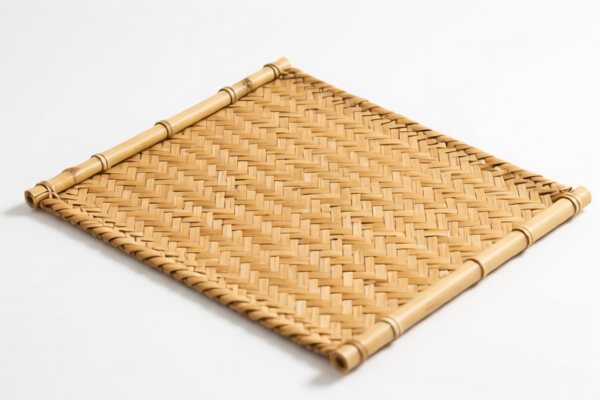
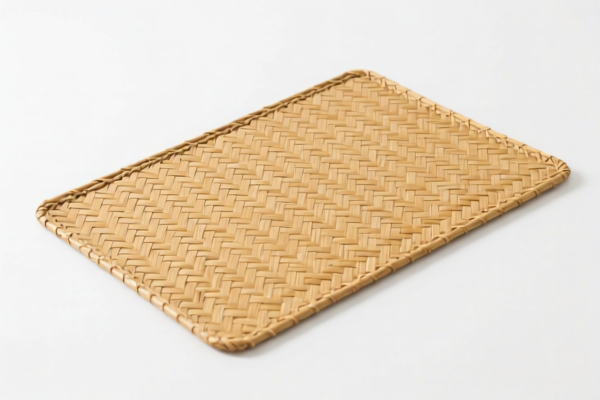
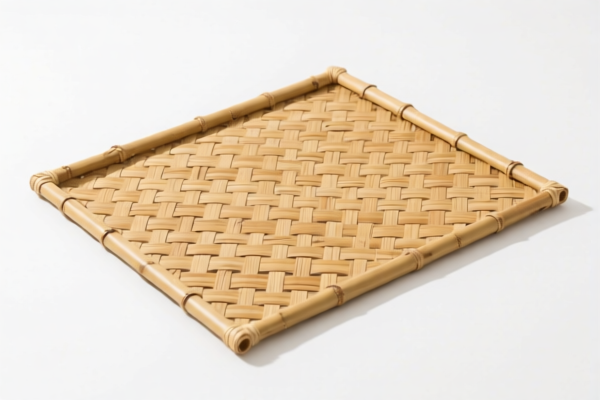
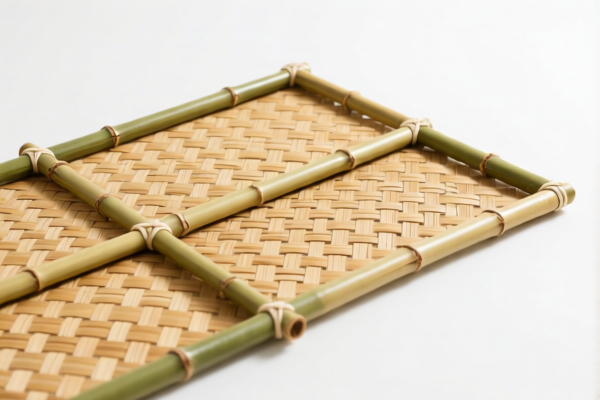
AI Analysis
🎋 Bamboo Woven Floor Mat (竹编地板垫)
🌐 HS Code Reference & Customs Clearance Guide | 2026 Latest Tariff Analysis | Professional Transit Strategy
📌 I. Product Definition & Classification: Do You Really Understand "Bamboo Floor Mats"?
Bamboo woven floor mats are versatile home decor and utility items used for flooring, decoration, or cushioning. In international trade, their classification depends heavily on material composition and primary function. While they appear similar, the regulatory treatment varies significantly between "textile-like" carpets and "woven bamboo" articles.
Key Distinction: * Textile/Carpet Category (HS 5705): If the product is primarily classified as a "floor covering" made of textile fibers (even if bamboo is involved in the yarn), it falls here. * Wooden/Bamboo Article Category (HS 4421): If the product is considered an "article of bamboo" (similar to wood products) rather than a textile floor covering, it falls under Chapter 44. * Woven Basket/Article Category (HS 4602): If the product is viewed as a woven craft article (basketry) made from vegetable plaiting materials (bamboo strips), it may fall under Chapter 46.
⚠️ Critical Note:
- Bamboo is legally classified under Chapter 44 (Wood and Articles of Wood) in many customs jurisdictions, NOT as a textile. This is a common pitfall. Misclassifying bamboo as textile can lead to severe penalties.
- However, some specific "bamboo fiber" textiles might fall under Chapter 57. The following analysis covers all plausible classifications based on the provided data.
📦 II. HS Code Classification Details (2026 Latest Tariff Authority对照)
| HS Code | Product Description | Application Scenario | Material Conflict? |
|---|---|---|---|
5705.00.20.90 |
Carpet & other textile floor coverings, knotted or not, whether or not made up | Textile Floor Covering | ❌ Conflict: Bamboo is usually not a "textile" in the legal sense unless processed into yarn/fiber. Verdict: Possible if "bamboo fiber" textile, but risky. |
4421.91.98.80 |
Other articles of bamboo | Woven Mat as Bamboo Article | ✅ No Conflict: Bamboo is explicitly allowed. Mat shape fits "other articles". |
4421.99.98.80 |
Other articles of wood (including bamboo) | Bamboo Mat as Generic Wood Art. | ✅ No Conflict: Bamboo is treated like wood. Mat fits "other articles"兜底 (catch-all). |
4602.11.45.00 |
Articles of basketware, wickerwork, etc. | Woven Bamboo Craft | ✅ No Conflict: "Bamboo weaving" fits basketware logic. |
4602.11.07.00 |
Other basketware, wickerwork, etc. | Bamboo Weaving (Bag/Mat like) | ✅ No Conflict: Extends to mats as woven items. |
🔍 Priority Analysis:
- HS 4421 codes are often the most accurate for solid bamboo strips/boards woven into mats.
- HS 4602 codes apply if the mat is made from thin, flexible bamboo strips (plaiting material), resembling basketry.
- HS 5705 is the least likely unless the product is explicitly certified as a "textile floor covering" made from bamboo fiber yarn, not strips. Risk: High if misused.
💰 III. 2026 Latest Tariff Rate Breakdown (Including Surtax & Policy Add-ons)
✅ Applicable Country: United States (US)
✅ Country of Origin: China (CN)
✅ Effective Time: 2025+ (Current Trade War Context)
🎯 1. 5705.00.20.90 – Textile Floor Coverings (Bamboo Fiber?)
| Item | Content |
|---|---|
| Base Rate | 3.3% (Ad valorem) |
| USITC Surtax (Section 301) | +25.0% |
| IEEPA Surtax (Section 122/EO) | +10.0% |
| Total Rate | 38.3% |
| Tax Calculation | CIF Value × 38.3% |
| De Minimis Eligibility | ❌ No (Deny de minimis) |
| Legal Path | USITC:5705.00.20.90 → Footnote: 9903.88.01 (25%) + IEEPA:9903.01.25 (10%) |
📌 Explanation:
- Even if classified as a textile, Section 301 and IEEPA surtaxes apply.
- Total 38.3% is still very high.
- Caution: Customs may reject this classification if the product is clearly bamboo strips and not textile yarn.
🎯 2. 4421.91.98.80 & 4421.99.98.80 – Articles of Bamboo/Wood
| Item | Content |
|---|---|
| Base Rate | 3.3% (Ad valorem) |
| USITC Surtax (Section 301) | +25.0% |
| IEEPA Surtax (Section 122/EO) | +10.0% |
| Total Rate | 38.3% |
| Tax Calculation | CIF Value × 38.3% |
| De Minimis Eligibility | ❌ No (Deny de minimis) |
| Legal Path | USITC:4421.91.98.80 → Footnote: 9903.88.01 (25%) + IEEPA:9903.01.25 (10%) |
📌 Explanation:
- Bamboo is treated as "Wood" under Chapter 44.
- Same high tariff burden as the textile option.
- Why this might be better: Legally more consistent for bamboo strip products.
🎯 3. 4602.11.45.00 – Woven Basketware (Bamboo Plaiting)
| Item | Content |
|---|---|
| Base Rate | 6.6% (Ad valorem) |
| USITC Surtax (Section 301) | +25.0% |
| IEEPA Surtax (Section 122/EO) | +10.0% |
| Total Rate | 41.6% |
| Tax Calculation | CIF Value × 41.6% |
| De Minimis Eligibility | ❌ No (Deny de minimis) |
| Legal Path | USITC:4602.11.45.00 → Footnote: 9903.88.01 (25%) + IEEPA:9903.01.25 (10%) |
📌 Explanation:
- Higher base rate (6.6%) makes this more expensive than Chapter 44 options.
- Only use if the product is clearly "basketware" and not a "mat" or "wood article".
🎯 4. 4602.11.07.00 – Other Woven Articles (Bamboo)
| Item | Content |
|---|---|
| Base Rate | 0.0% (Ad valorem) |
| USITC Surtax (Section 301) | +25.0% |
| IEEPA Surtax (Section 122/EO) | +10.0% |
| Total Rate | 35.0% |
| Tax Calculation | CIF Value × 35.0% |
| De Minimis Eligibility | ❌ No (Deny de minimis) |
| Legal Path | USITC:4602.11.07.00 → Footnote: 9903.88.01 (25%) + IEEPA:9903.01.25 (10%) |
📌 Explanation:
- Lowest Total Tax: 35.0% among all options.
- Crucial: This code has 0% base duty, saving 3.3% compared to Chapter 44/57.
- Condition: Must be convincingly classified as "other woven articles" (basketware logic) and not "floor covering" or "wood article".
- Risk: High scrutiny. If customs decides it's a "floor covering" (HS 5705) or "wood article" (HS 4421), you owe back taxes + penalties.
🛠️ IV. Customs Clearance Practical Advice (Real-World Pitfall Guide)
✅ 1. Documentation Checklist (Non-Negotiable)
| Document | Required | Explanation |
|---|---|---|
| ✅ Product Spec Sheet | ✔️ | Detail: Material (Bamboo strips vs. bamboo fiber yarn), weaving method, thickness, dimensions. |
| ✅ Product Photos | ✔️ | Show the weave pattern, edges, and any backing (if textile). |
| ✅ Commercial Invoice | ✔️ | Clearly state: "Bamboo Woven Mat, for flooring/decoration" or "Woven Bamboo Article". Avoid vague terms like "Carpet". |
| ✅ Certificate of Origin (CO) | ✔️ | Prove Chinese origin to apply surtaxes correctly. |
| ✅ Customs Ruling (Optional but Recommended) | ✔️ | Apply for an Advance Ruling to confirm HS Code 4602.11.07.00 eligibility. |
✅ 2. Classification Strategy & Keywords
🔥 "Material First, Weave Second, Use Third!"
| Scenario | Recommended HS Code | Reason |
|---|---|---|
| Bamboo STRIPS woven (rigid/flexible) | 4602.11.07.00 (Best Tax) or 4421.91.98.80 (Safest) |
4602 offers lowest tax (35%) if accepted. 4421 is safer if customs challenges basketware classification. |
| Bamboo FIBER/YARN (textile-like) | 5705.00.20.90 |
Only if it behaves like a fabric/carpet. Tax: 38.3%. |
| Mixed Material (Bamboo + Cotton backing) | 5705.00.20.90 |
If backing is dominant, may be considered textile. |
| Thin Bamboo Mat (like a scroll) | 4602.11.07.00 |
Fits "woven article" logic best. |
📌 Key Tip:
- Avoid calling it a "Carpet" or "Floor Covering" in documents if you want to use4602or4421.
- Use terms like "Woven Bamboo Mat", "Bamboo Weaving Art", or "Decorative Floor Pad".
✅ 3. Special Handling Cases
| Case | Handling Advice |
|---|---|
| De Minimis (Section 321) | ❌ NOT APPLICABLE. All listed HS codes for China-origin goods are excluded from de minimis (no tax-free entry under $800). |
| Anti-Dumping/Countervailing | Check if bamboo products have specific duties. Currently, surtaxes (301/IEEPA) are the main cost. |
| FSC Certification | If sustainability is a marketing point, ensure Bamboo is certified. Some customs officers may ask for FSC docs for wood/bamboo chapters. |
🌍 V. Global Market Comparison (2026 Update)
| Country/Region | Recommended HS Code | Total Tariff (China Origin) | Notes |
|---|---|---|---|
| 🇺🇸 USA | 4602.11.07.00 |
35.0% | Lowest rate in US data. |
| 🇺🇸 USA | 4421.91.98.80 |
38.3% | Safer, but slightly higher. |
| 🇺🇸 USA | 5705.00.20.90 |
38.3% | High risk of misclassification. |
| 🇨🇳 China | Any | Varies | Import duty ~5-10%, no 301 surtax. |
| 🇪🇺 EU | 4602.11.00 |
~5-10% | No major surtaxes like US. |
| 🇬🇧 UK | 4602.11.00 |
~5-10% | Post-Brexit tariffs apply. |
📌 Conclusion:
- USA is the most expensive market due to 301 and IEEPA surtaxes.
- HS 4602.11.07.00 offers the best cost-saving (35%) but requires strong justification.
- HS 4421 is the safest but costs 38.3%.
📌 VI. Common Mistakes & Pitfalls (Blood & Tears Lessons)
❌ Mistake 1: Classifying bamboo strip mats as "Textile Carpets" (5705) to avoid Section 301.
👉 Consequence: Customs audits will reclassify to 4421 or 4602, adding 38.3% and penalties. Do not do this.
❌ Mistake 2: Using "De Minimis" for bamboo mats from China.
👉 Consequence: Shipment held or destroyed. Bamboo products are explicitly excluded from $800 de minimis exemption under current US law.
❌ Mistake 3: Vague description "Bamboo Mat".
👉 Consequence: Customs officer uses worst-case scenario (higher tax or inspection delay). Always specify "Woven Bamboo Article" or "Bamboo Floor Covering".
❌ Mistake 4: Ignoring the "122 Clause" or IEEPA surtax.
👉 Consequence: Missing the 10% additional tax. Total tax becomes 35% vs 25% (if no IEEPA).
✅ Correct Approach:
"Woven Bamboo Mat, 5mm thick, made from dried bamboo strips, for indoor flooring decoration, No textile backing"
→ Supports HS 4602.11.07.00 or 4421.91.98.80.
🎯 VII. Conclusion: Professional Declaration for Cost & Compliance
🎯 Remember the Rule of Thumb:
🔹 "Bamboo is Wood, Not Textile." (Unless it's yarn/fiber)
🔹 "Woven Article" beats "Carpet" for Tax (35% vs 38.3% or 41.6%).
🔹 "De Minimis is Dead for Bamboo."
📌 Pro Tip:
If your bamboo mats are not from China (e.g., Vietnam, Indonesia), you may qualify for 0% Section 301 surtax, reducing total tax to Base Rate only (e.g., 0% for
4602.11.07.00→ 10% IEEPA only).
Diversify Supply Chain to mitigate US tariff risks.
📣 Immediate Action:
📞 Contact a Customs Broker to apply for a Pre-Ruling on HS 4602.11.07.00.
🚀 Declare Accurately to avoid audits and ensure smooth clearance.
✨ Professional Customs Clearance Starts with Accurate Classification!
💼 Every Percent Saved is Pure Profit!
Customer Reviews
About HS Code Classification
The Harmonized System (HS) is an internationally standardized nomenclature developed by the World Customs Organization (WCO) to classify traded products. Over 200 countries use the HS system as the basis for customs tariffs, trade statistics, and import/export regulations.
Each HS code follows a hierarchical structure:
- Chapter (2 digits) — Broad category of goods (e.g., Chapter 84: Machinery and Mechanical Appliances)
- Heading (4 digits) — More specific grouping within the chapter
- Subheading (6 digits) — Internationally standardized breakdown, used by all WCO member countries
- National subdivisions (8-10 digits) — Country-specific extensions for further classification, such as US HTSUS 10-digit codes
Correct HS code classification is essential for smooth customs clearance, accurate duty payment, and compliance with trade regulations. Misclassification can lead to customs delays, overpayment of duties, or penalties.
When importing from CN to US, the applicable tariff rates may include:
- Most-Favored-Nation (MFN) rate — The standard duty rate applied to WTO members
- General rate — Applied to countries without trade agreements
- Trade remedy duties — Additional tariffs such as Section 301 (anti-dumping), Section 232 (national security), or countervailing duties
The information provided on this page is for reference purposes only. For official classification, please consult with your local customs authority or a licensed customs broker.