Bamboo Woven Flower Pot
CN → US| HS Code | Tariff Rate | Origin | Destination | Doc |
|---|---|---|---|---|
| 4602110700 | 35.0% | CN | US | Official Doc |
| 4602110900 | 45.0% | CN | US | Official Doc |
| 6914908000 | 40.6% | CN | US | Official Doc |
| 6914108000 | 44.0% | CN | US | Official Doc |
| 3926909989 | 22.8% | CN | US | Official Doc |
| 3926909940 | 22.8% | CN | US | Official Doc |
Product Images
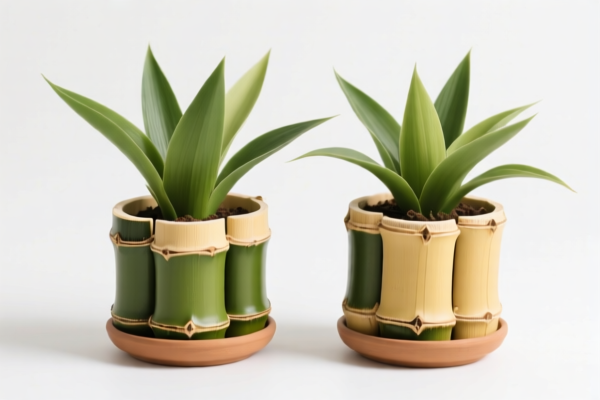


AI Analysis
🎋 Bamboo Woven Flower Pot (Basketwork)
🌐 HS Code Reference & Clearance Guide | 2026 Latest Tariff Breakdown | Expert Customs Strategy
📌 1. Product Definition & Classification: Do You Know Your "Flower Pot"?
The Bamboo Woven Flower Pot falls under the category of "Basketwork, wickerwork and other articles" made from vegetable plaiting materials. Specifically, it is classified under Heading 4602 (Articles made directly to shape from plaiting materials).
In international trade, bamboo flower pots are细分 (subdivided) based on their lining status and specific design:
- Wickerwork Flower Pots (Lined/Unlined): Typically classified under 4602.11.07.00 if they fall under "Other baskets and bags" where "Wickerwork" is specified.
- Other Bamboo Flower Pots: If the specific design does not fit the "Wickerwork" description strictly (e.g., open weave, non-bag structure), they may fall under 4602.11.09.00 ("Other").
⚠️ Key Distinction:
- If the pot is explicitly described or designed as "Wickerwork" (interlaced strips, often used for bags/baskets style) → 4602.11.07.00
- If the pot is a standard Bamboo basket/pot not explicitly labeled as "Wickerwork" or "Bags" → 4602.11.09.00
- Note: The presence of a liner (plastic/ceramic) does not change the primary material classification for bamboo wares unless the liner constitutes the main function.
📦 2. HS Code Classification Details (2026 Tariff Authority)
| HS Code | Product Description | Scenario / Application | Lining Status |
|---|---|---|---|
4602.11.07.00 |
Basketwork / Wickerwork: Of vegetable materials (Bamboo): Wickerwork | Woven bamboo pots explicitly categorized as "Wickerwork" or "Bags" (even if used for plants) | ✅ Often Lined or Unlined |
4602.11.09.00 |
Basketwork: Of vegetable materials (Bamboo): Other | Standard bamboo flower pots, non-wickerwork style, "Other" baskets | ✅ Any (Lined/Unlined) |
🔍 Critical Reminder:
- 4602.11.07.00 carries a 25.0% total tariff (US additional duty only);
- 4602.11.09.00 carries a 35.0% total tariff (US additional duty + Base duty);
- Never classify bamboo pots under ceramics (6914) unless the bamboo is merely an outer packaging for a ceramic pot. If the bamboo is the primary structure, it must be 4602.
💰 3. 2026 Tariff Rate Breakdown (US Import from China)
✅ Applicable Country: United States (US)
✅ Origin: China (CN)
✅ Effective Date: Current US Tariff Regime (Section 301)
🎯 A. 4602.11.07.00 — Bamboo Wickerwork Flower Pot (Wickerwork)
| Item | Details |
|---|---|
| Base Tariff | 0.0% (General Duty) |
| Additional Tariff (Section 301) | +25.0% (China-specific surcharge) |
| Total Tariff Rate | 25.0% |
| Tax Calculation | CIF Value × 25.0% |
| De Minimis Exemption | ❌ No (Section 301 does not apply to de minimis for these items) |
| Legal Reference | HTSUS: 4602.11.07.00 → USITC: 301 → Section 301 List |
📌 Explanation:
- Although the base duty is 0%, the 25% "Additional Tariff" (Section 301) applies immediately.
- This is a "Wickerwork" specific classification. If your product fits the "Wickerwork" definition, you pay 25%.
🎯 B. 4602.11.09.00 — Bamboo Flower Pot (Other)
| Item | Details |
|---|---|
| Base Tariff | 10.0% (General Duty) |
| Additional Tariff (Section 301) | +25.0% (China-specific surcharge) |
| Total Tariff Rate | 35.0% |
| Tax Calculation | CIF Value × 35.0% |
| De Minimis Exemption | ❌ No |
| Legal Reference | HTSUS: 4602.11.09.00 → USITC: 301 → Section 301 List |
📌 Critical Warning:
- If the海关 officer determines your product does not fit the "Wickerwork" definition (e.g., it's a simple woven basket), it falls into the "Other" category.
- The Base Duty jumps to 10%, plus the 25% Additional Duty = 35% Total.
- This is a 10% penalty compared to the "Wickerwork" classification.
🛠️ 4. Practical Customs Clearance Suggestions (Avoiding Pitfalls)
✅ 1. Document Preparation Checklist (Essential)
| Document | Must Provide | Description |
|---|---|---|
| ✅ Product Specification Sheet | ✔️ | Must explicitly state "Bamboo", "Woven", "Flower Pot", and dimensions. |
| ✅ Photos & Labeled Images | ✔️ | Show the weaving pattern. Is it "Wickerwork" (strip interlacing) or "Other" (twist/matte)? |
| ✅ Composition Report | ✔️ | Confirm 100% vegetable material (Bamboo) vs. synthetic mix. |
| ✅ Commercial Invoice | ✔️ | Clear description: "Bamboo Woven Flower Pot". Avoid vague terms like "Decor". |
| ✅ Packaging List | ✔️ | If the pot is lined (e.g., with plastic), state this clearly to support the HS Code choice. |
✅ 2. Declaration Strategy (The Golden Rule)
🔥 Rule of Thumb: "Define the weaving style clearly to target 0% Base Duty!"
| Situation | Correct Declaration | Wrong Practice |
|---|---|---|
| Interlaced, strip-style | Classify as "Wickerwork" → 4602.11.07.00 (25% total) |
Calling it "Bamboo Basket" → 4602.11.09.00 (35% total) |
| Simple open weave | Classify as "Other" → 4602.11.09.00 (35% total) |
Forcing "Wickerwork" tag → Risk of penalty + 35% |
| Pot + Ceramic Liner | Do not classify as Ceramic (6914). Keep as Bamboo (4602). | Classifying as Ceramic (6914.90.80.00) → 30.6% Tax |
⚠️ Important:
Even if the pot has a plastic liner, the primary material is bamboo. Do not classify under 6914 (Ceramics) or 3926 (Plastics) unless the bamboo is purely decorative packaging for a ceramic/plastic pot.
- Ceramic pot inside bamboo shell? → Classify as Ceramic (6914.90.80.00= 30.6%) or6914.10.80.00(0% if porcelain).
- Pure Bamboo pot? → Classify as 4602.
✅ 3. Special Scenarios
| Scenario | Strategy |
|---|---|
| Product Description Discrepancy | If the invoice says "Wicker Pot" but the shape is "Basket", customs may reclassify to 4602.11.09.00 (35%). Ensure "Wickerwork" is legally accurate. |
| Mixed Materials | If bamboo is mixed with rattan or willow, verify if "Bamboo" is still the dominant material (by weight/visibility). |
| Packaging | If the bamboo pot is just a gift box for a ceramic pot, declare the Ceramic (HS 6914). If it is the functional pot, declare Bamboo (HS 4602). |
🌍 5. Global Market Comparison (2026)
| Country/Region | Recommended HS Code | Total Duty | Notes |
|---|---|---|---|
| 🇺🇸 USA | 4602.11.07.00 |
25.0% | Target "Wickerwork" to avoid 10% base duty. |
| 🇺🇸 USA | 4602.11.09.00 |
35.0% | Avoid if possible; "Other" category is expensive. |
| 🇨🇳 China | 4602.11.07.00 |
0% (Export) | China export duty is 0% for bamboo. |
| 🇪🇺 EU | 4602.11.07.00 |
~3-5% | Generally lower tariffs than US. |
📌 Conclusion:
- USA is the high-risk market due to the 25% Section 301 surcharge.
- Classification Strategy is critical: "Wickerwork" (0% base + 25% add) = 25% vs "Other" (10% base + 25% add) = 35%.
- A simple wording change in your product description can save 10% on every shipment.
📌 6. Common Errors & Avoidance Guide (Lessons Learned)
❌ Error 1: Calling a bamboo flower pot "Ceramic Pot with Bamboo Cover"
👉 Consequence: If classified as Ceramic (6914.90.80.00), tax is 30.6%. If classified as Bamboo (4602.11.07.00), tax is 25%.
👉 Fix: Determine the primary function. If bamboo is the container, use 4602.
❌ Error 2: Using generic term "Bamboo Basket" without specifying "Wickerwork"
👉 Consequence: Customs defaults to 4602.11.09.00 (35.0%).
👉 Fix: Use "Bamboo Wickerwork Flower Pot" in invoice and description.
❌ Error 3: Mixing "Lined" and "Unlined" confusion
👉 Consequence: Both 4602.11.07.00 and 4602.11.09.00 allow lining, but the weaving style is the key determinant, not the liner.
👉 Fix: Focus on the weaving pattern description.
✅ Correct Practice:
"Bamboo Wickerwork Flower Pot, Unlined, 100% Natural Bamboo, Interlaced Strips, Handcrafted, Model BWP-100"
🎯 7. Final Verdict: Expert Clearance Advice
🎯 Remember the Strategy:
🔹 "Wickerwork First! 0% Base + 25% Add = 25% Total"
🔹 "Other Basket? 10% Base + 25% Add = 35% Total"
🔹 "Not Ceramic! Don't use 6914 unless it's a ceramic pot inside a shell!"
📌 Pro Tip:
If your bamboo pots are lined with plastic (for water retention), ensure the invoice states "Bamboo Wickerwork Pot with Plastic Liner". Do not declare as "Plastic Pot" (3926) as that would attract 12.8% (5.3% + 7.5%), but 4602 (25%) is still higher. The key is to stick to 4602 for the structural material.
📣 Immediate Action:
📞 Contact your customs broker with product photos showing the weaving pattern.
🚀 Request a Binding Ruling if you are unsure between "Wickerwork" vs "Other" to lock in the 25% rate.
✨ Smart Classification = Cost Savings!
💼 Every 10% counts in the bamboo trade!
Customer Reviews
About HS Code Classification
The Harmonized System (HS) is an internationally standardized nomenclature developed by the World Customs Organization (WCO) to classify traded products. Over 200 countries use the HS system as the basis for customs tariffs, trade statistics, and import/export regulations.
Each HS code follows a hierarchical structure:
- Chapter (2 digits) — Broad category of goods (e.g., Chapter 84: Machinery and Mechanical Appliances)
- Heading (4 digits) — More specific grouping within the chapter
- Subheading (6 digits) — Internationally standardized breakdown, used by all WCO member countries
- National subdivisions (8-10 digits) — Country-specific extensions for further classification, such as US HTSUS 10-digit codes
Correct HS code classification is essential for smooth customs clearance, accurate duty payment, and compliance with trade regulations. Misclassification can lead to customs delays, overpayment of duties, or penalties.
When importing from CN to US, the applicable tariff rates may include:
- Most-Favored-Nation (MFN) rate — The standard duty rate applied to WTO members
- General rate — Applied to countries without trade agreements
- Trade remedy duties — Additional tariffs such as Section 301 (anti-dumping), Section 232 (national security), or countervailing duties
The information provided on this page is for reference purposes only. For official classification, please consult with your local customs authority or a licensed customs broker.