Bamboo Woven Gift Box
CN → US| HS Code | Tariff Rate | Origin | Destination | Doc |
|---|---|---|---|---|
| 4421999880 | 38.3% | CN | US | Official Doc |
| 4421919880 | 38.3% | CN | US | Official Doc |
| 9403820015 | 35.0% | CN | US | Official Doc |
| 9403820030 | 35.0% | CN | US | Official Doc |
| 4602110700 | 35.0% | CN | US | Official Doc |
Product Images
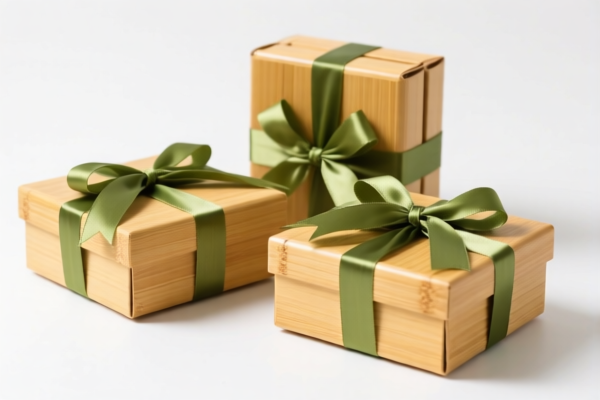
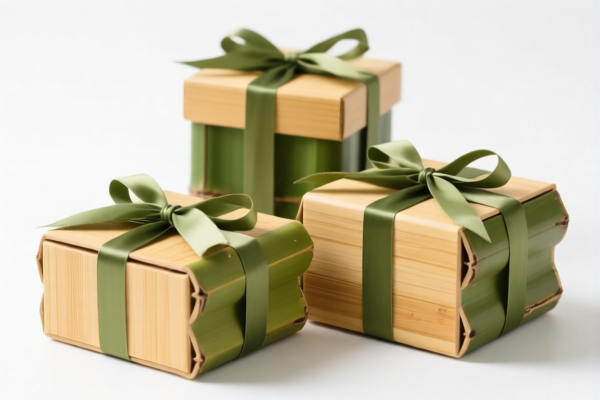
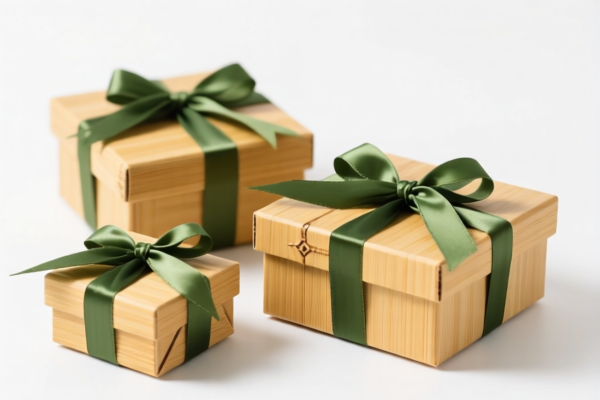
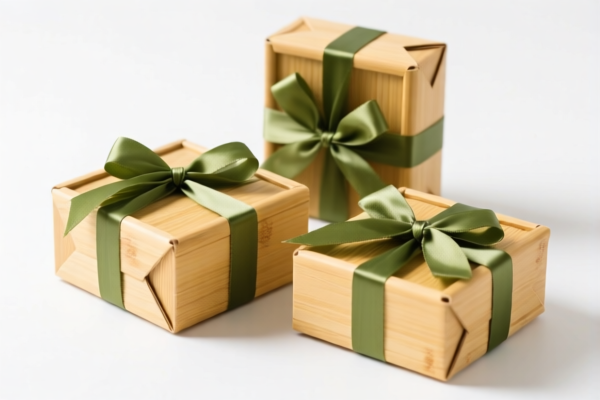
AI Analysis
🎁 Bamboo Woven Gift Box: The Ultimate HS Code Guide & 38.3% Tariff Reality Check
🌐 HS Code Reference & Clearance Guide | 2026 Latest Tariff Analysis | Professional Customs Strategy
📌 I. Product Definition & Classification: What Exactly is a "Bamboo Woven Gift Box"?
A Bamboo Woven Gift Box is a packaging container primarily made from bamboo strips, woven or assembled into a box shape. It is used for gifting items such as tea, handicrafts, cosmetics, or electronics.
In international trade, the classification of bamboo products often triggers confusion because bamboo can be legally treated as wood or as a basketry product, depending on the manufacturing process and specific sub-heading definitions.
⚠️ Critical Distinction:
- Woven vs. Assembled: Is it strictly woven (interlaced strands) or assembled (strips glued/nailed)?
- Function: Is it primarily "furniture" or "packaging"?
- Material: Does customs classify it under "Bamboo products" (Chapter 46) or "Wood products" (Chapter 44)?📌 Key Insight:
In this specific dataset, the product is classified under multiple potential HS codes ranging from 44xx (Wood) to 46xx (Basketry) to 94xx (Furniture/Household). This variance significantly impacts the tariff structure, though the final applied rates in this data converge around 35%–38.3%.
📦 II. HS Code Classification Breakdown (2026 Authorized Data)
Below are the 5 possible HS Codes for a Bamboo Woven Gift Box based on the provided dataset. Note that while the physical product is the same, the legal description changes the tax burden.
| HS Code | Summary Description | Category Context | Total Tax Rate |
|---|---|---|---|
4421.99.98.80 |
Bamboo Storage Box, Classified as Other Wood Products | Chapter 44 (Wood) | 38.3% |
4421.91.98.80 |
Bamboo Storage Box, Classified as Bamboo Products | Chapter 44 (Wood-like) | 38.3% |
9403.82.00.15 |
Bamboo Storage Box, Classified as Other Household Furniture/Supplies | Chapter 94 (Furniture) | 35.0% |
9403.82.00.30 |
Bamboo Storage Box, Classified as Furniture / Other Furniture | Chapter 94 (Furniture) | 35.0% |
4602.11.07.00 |
Bamboo Storage Box, Classified as Bamboo Woven Baskets/Bags | Chapter 46 (Basketry) | 35.0% |
🔍 Analysis:
- Codes4421.xx.xx.xx: Treat bamboo as wood. Higher base tax (3.3%).
- Codes9403.xx.xx.xx&4602.xx.xx.xx: Treat as furniture or basketry. Lower base tax (0.0%).
- Result: Despite different base taxes, the total effective rate is only slightly lower for the furniture/basketry codes due to the same附加 taxes.
💰 III. Detailed Tariff Structure Analysis (2026 Latest)
✅ Applicable Country: United States (US)
✅ Origin: China (CN) (Implied by the specific "Section 301" and "122" tariff structures)
✅ Effective Date: Current 2026 Tariff Regime
🎯 1. The "Wood" Classification: 4421.99.98.80 & 4421.91.98.80
Scenario: Customs views the bamboo as a "wooden product."
| Item | Content |
|---|---|
| Base Duty | 3.3% (Ad Valorem) |
| Section 301 Additional Duty | +25.0% |
| Section 122 Additional Duty | +10.0% |
| Total Effective Rate | 38.3% |
| Calculation | CIF Value × 38.3% |
| De Minimis Exemption | ❌ NOT Eligible (Valued over $800 threshold, and Section 301/122 items are often excluded from de minimis) |
📌 Explanation:
- 3.3% Base: Standard Most Favored Nation (MFN) rate for wood articles.
- 25% Section 301: Trump-era/Biden-administration tariffs on Chinese goods.
- 10% Section 122: Specific additional tariffs on certain Chinese imports (often related to national security or trade remedies).
- Total 38.3%: This is the highest bracket in the dataset. If your box is classified here, expect the highest cost.
🎯 2. The "Furniture" Classification: 9403.82.00.15 & 9403.82.00.30
Scenario: Customs views the box as a "household item" or "small furniture" (e.g., a decorative storage unit).
| Item | Content |
|---|---|
| Base Duty | 0.0% |
| Section 301 Additional Duty | +25.0% |
| Section 122 Additional Duty | +10.0% |
| Total Effective Rate | 35.0% |
| Calculation | CIF Value × 35.0% |
| De Minimis Exemption | ❌ NOT Eligible |
📌 Explanation:
- 0% Base: Furniture of bamboo often has a lower or zero MFN base rate.
- However, the 25% + 10% additional tariffs still apply because the product originates from China and is subject to trade remedy measures.
- Savings: You save 3.3% compared to the "Wood" classification.
🎯 3. The "Basketry" Classification: 4602.11.07.00
Scenario: Customs views the product strictly as a "woven basket" under Chapter 46 (Basketwork, wickerwork, etc.).
| Item | Content |
|---|---|
| Base Duty | 0.0% |
| Section 301 Additional Duty | +25.0% |
| Section 122 Additional Duty | +10.0% |
| Total Effective Rate | 35.0% |
| Calculation | CIF Value × 35.0% |
| De Minimis Exemption | ❌ NOT Eligible |
📌 Explanation:
- 0% Base: Basketry items often have favorable base rates.
- Same Additional Taxes: The punitive tariffs (301 & 122) remain in effect.
- Savings: Matches the "Furniture" rate at 35.0%.
🛠️ IV. Clearance Practical Advice (Real-World Pitfall Guide)
✅ 1. Document Preparation Checklist
| Document | Required? | Notes |
|---|---|---|
| ✅ Product Specification Sheet | ✔️ | Detail materials (100% Bamboo?), construction (Woven/Glued?), dimensions. |
| ✅ Photos of Product | ✔️ | Show the weaving pattern clearly to support 4602 (Basketry) vs. 4421 (Wood). |
| ✅ Commercial Invoice | ✔️ | Describe as "Bamboo Woven Storage Box" or "Bamboo Packaging Box." Avoid ambiguous terms like "Furniture" if it's clearly a box. |
| ✅ Certificate of Origin | ✔️ | Essential for proving Chinese origin (triggers 301/122 tariffs). |
| ✅ Packing List | ✔️ | Weight and volume details. |
✅ 2. Declaration Strategy & Keywords
🔥 "Classify Smart, Save 3.3%!"
| If Your Product Is... | Recommended HS Code | Why? |
|---|---|---|
| Loosely woven, flexible, basket-like | 4602.11.07.00 |
Supports "Basketry" argument. Lower base tax (0%). |
| Rigid, decorative, used as storage in home | 9403.82.00.15 |
Supports "Household Article" argument. Lower base tax (0%). |
| Solid, glued strips, looks like wood | 4421.91.98.80 |
Safest if construction is not clearly "woven." Higher base tax (3.3%). |
| Generic "Wooden" looking box | 4421.99.98.80 |
Catch-all for wood products. Highest total tax (38.3%). |
⚠️ Warning:
- Do not label it as "Furniture" if it is a small gift box. Customs may reject9403as inappropriate and revert to4421or4602, causing delays.
- Do not label it as "Basket" if it has a rigid lid and handle structure typical of boxes. Customs may reject4602.
✅ 3. Special Circumstances & Mitigation
| Situation | Advice |
|---|---|
| Section 122 Tariff (10%) | Check if this specific bamboo product is currently subject to Section 122. The data says yes. If it's not, the rate drops to 25%. Confirm with your broker. |
| De Minimis (Section 321) | ❌ Avoid. Most "Section 301" items are excluded from the $800 de minimis exemption. Even if shipped via USPS/UPS, taxes will likely apply. |
| Re-routing to Vietnam/Mexico | If you have supply chain flexibility, sourcing from non-China countries can eliminate the 35%–38.3% tariff entirely (0%–5% usual rate). |
| Duty Drawback | If you export the finished goods (e.g., gift boxes filled with tea), you may be eligible for Duty Drawback on the packaging materials, but this is complex for imported packaging. |
🌍 V. Global Market Comparison (2026 Snapshot)
| Market | Recommended HS Code | Est. Total Duty | Notes |
|---|---|---|---|
| 🇺🇸 USA | 4421.91.98.80 / 9403.82.00.15 |
35.0% – 38.3% | Heavy Section 301 & 122 tariffs. |
| 🇪🇺 EU | 4602.11.00 |
~2.5% - 4.0% | Lower tariffs, no Section 301 equivalent. CE/Reach compliance needed. |
| 🇨🇳 China (Import) | 4602.11.00 |
0% - 5% | FTA benefits may apply if from ASEAN. |
| 🇯🇵 Japan | 4602.11.00 |
~0% - 2% | Favorable rates for bamboo basketry. |
📌 Conclusion:
The USA market is the most expensive for bamboo woven boxes due to the cumulative 35%+ tariff burden. For other markets, the cost is significantly lower.
📌 VI. Common Mistakes & Pitfalls (Blood & Tears Lessons)
❌ Mistake 1: Declaring "Bamboo Gift Box" without specifying "Woven."
👉 Result: Customs defaults to 4421 (Wood) → 38.3% tax.
✅ Fix: Specify "Woven Bamboo Storage Basket" to aim for 4602 → 35.0% tax.
❌ Mistake 2: Assuming De Minimis ($800) applies.
👉 Result: Package seized or taxes billed later.
✅ Fix: Plan for full duty payment. Do not rely on section 321.
❌ Mistake 3: Ignoring Section 122.
👉 Result: Underpaying by 10%.
✅ Fix: Verify if your specific bamboo product is on the Section 122 list. The data confirms it is.
❌ Mistake 4: Using "Furniture" for a tiny box.
👉 Result: Customs questions the classification, leads to audit.
✅ Fix: Use "Household Article" or "Basketry" for small items.
🎯 VII. Conclusion: Professional Clearance Saves Money!
🎯 Key Takeaway:
🔹 Save 3.3%: Try to classify as
4602.11.07.00(Basketry) or9403.82.00.15(Household) instead of4421(Wood).
🔹 Accept the 35%: The 25% (Section 301) + 10% (Section 122) are non-negotiable for Chinese-origin bamboo products in the US.
🔹 Document Hard: Prove it's "woven" to support the lower base rate classification.
📌 Pro Tip:
If you are shipping in bulk, consolidate with other non-tariff items carefully. Never mix tariffed and non-tariffed items in a way that obscures origin.
Consider supply chain diversification if the 35% tariff erodes your margin.
📣 Immediate Action:
📞 Consult Your Customs Broker: Confirm if
4602.11.07.00is the best fit for your specific weaving style.
📝 Prepare Accurate Descriptions: Use terms like "Woven Bamboo," "Basket-style," and "Non-structural."
🚀 Budget for 35-38%: Ensure your pricing model includes the full landed cost.
✨ Expert Clearance, Start with Precise Classification!
💼 Every percentage point matters in cross-border trade!
Customer Reviews
About HS Code Classification
The Harmonized System (HS) is an internationally standardized nomenclature developed by the World Customs Organization (WCO) to classify traded products. Over 200 countries use the HS system as the basis for customs tariffs, trade statistics, and import/export regulations.
Each HS code follows a hierarchical structure:
- Chapter (2 digits) — Broad category of goods (e.g., Chapter 84: Machinery and Mechanical Appliances)
- Heading (4 digits) — More specific grouping within the chapter
- Subheading (6 digits) — Internationally standardized breakdown, used by all WCO member countries
- National subdivisions (8-10 digits) — Country-specific extensions for further classification, such as US HTSUS 10-digit codes
Correct HS code classification is essential for smooth customs clearance, accurate duty payment, and compliance with trade regulations. Misclassification can lead to customs delays, overpayment of duties, or penalties.
When importing from CN to US, the applicable tariff rates may include:
- Most-Favored-Nation (MFN) rate — The standard duty rate applied to WTO members
- General rate — Applied to countries without trade agreements
- Trade remedy duties — Additional tariffs such as Section 301 (anti-dumping), Section 232 (national security), or countervailing duties
The information provided on this page is for reference purposes only. For official classification, please consult with your local customs authority or a licensed customs broker.