Bamboo Woven Luggage
CN → US| HS Code | Tariff Rate | Origin | Destination | Doc |
|---|---|---|---|---|
| 9403820030 | 35.0% | CN | US | Official Doc |
| 4602110900 | 45.0% | CN | US | Official Doc |
| 4421999880 | 38.3% | CN | US | Official Doc |
| 4421919880 | 38.3% | CN | US | Official Doc |
| 9403820015 | 35.0% | CN | US | Official Doc |
Product Images
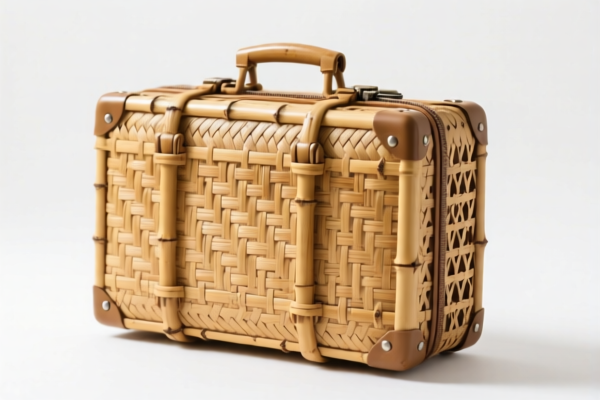
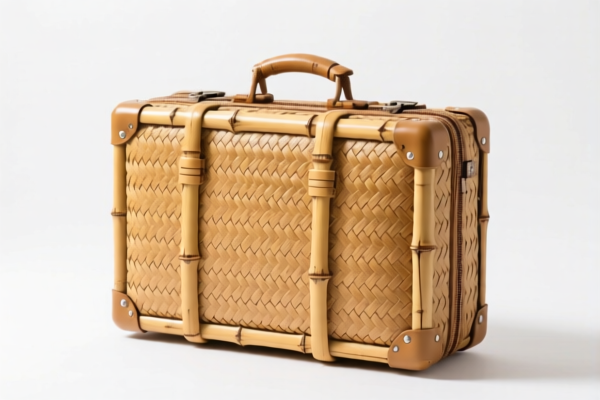
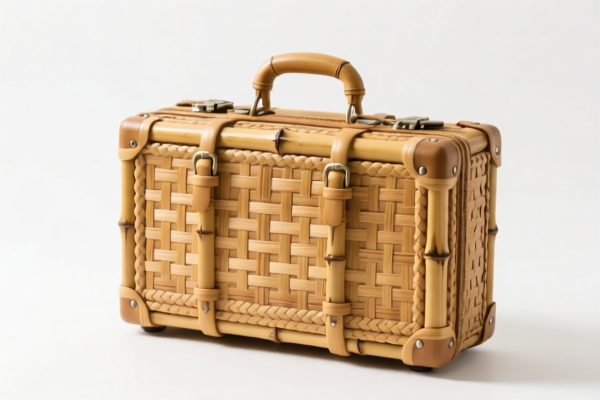
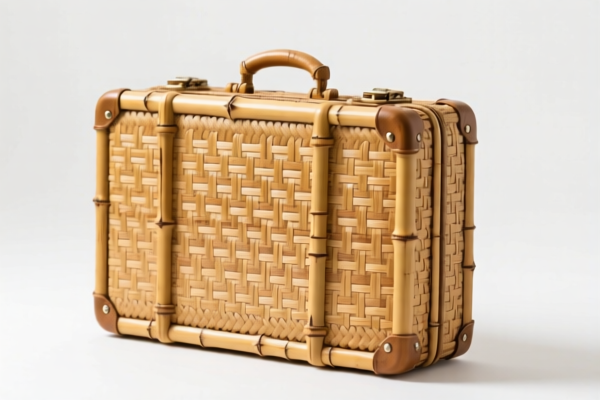
AI Analysis
🎒 Bamboo Woven Luggage: HS Code Classification & 2026 Tariff Strategy
🌐 HS Code Reference & Customs Clearance Guide | 2026 Latest Tariff Analysis | Professional Entry Strategy
📌 I. Product Definition: What Exactly Is "Bamboo Woven Luggage"?
Bamboo luggage is a niche but growing segment of travel goods, characterized by rigid or semi-rigid frames woven from bamboo strips. In international trade, its classification is tricky because it straddles the line between Furniture/Home Goods and Textile/Artifacts.
The key to accurate classification lies in the primary function and structural composition: 1. As Furniture/Storage: If it’s a rigid box used for storage in a home (e.g., a decorative trunk), it leans towards Chapter 94 (Furniture). 2. As Woven Artifact: If it’s a flexible basket or bag structure, it leans towards Chapter 46 (Woven Vegetables Materials). 3. As General Wooden/Bamboo Product: If it doesn't fit neatly into furniture or woven baskets, it falls under Chapter 44 (Wood/Bamboo Articles).
⚠️ Critical Distinction:
- If the item is primarily a container with a lid used for household storage → HS 9403.82
- If the item is a woven basket/bag structure → HS 4602.11
- If it is a solid wood/bamboo article not specified elsewhere → HS 4421.99 or 4421.91
📦 II. HS Code Classification Matrix (2026 Latest Tariff Authority)
Based on the provided data, here are the four most likely HS codes for "Bamboo Woven Luggage," along with their specific tax implications.
| HS Code | Product Description | Classification Rationale | Total Tax Rate |
|---|---|---|---|
| 9403.82.00.30 | Bamboo Storage Box, categorized under Furniture / Other Furniture | Treated as a rigid storage furniture piece (e.g., trunk, chest) rather than a soft bag. | 35.0% |
| 4602.11.09.00 | Bamboo Woven Product, categorized under Baskets / Bags | Treated as a woven vegetable material article (basket/bag structure). | 45.0% |
| 4421.99.98.80 | Other Wooden/Bamboo Articles, Finished Consumer Goods | Treated as a general bamboo finished good, not specifically furniture or woven basket. | 38.3% |
| 4421.91.98.80 | Bamboo Articles, Non-Specific Excluded Category | Treated as a general bamboo product not meeting specific furniture or woven criteria. | 38.3% |
🔍 Key Insight:
- HS 9403.82.00.30 and 4421.99.98.80 offer lower total tax rates (35% and 38.3%) compared to the woven classification (45%).
- The choice depends on whether customs views your "luggage" as a piece of furniture (storage box) or a woven bag. Rigid, lidded boxes are more likely to be classified as furniture.
💰 III. 2026 Tariff Rate Breakdown (Including Surtaxes)
✅ Applicable Country: United States (US)
✅ Origin: China (CN)
✅ Effective Date: November 10, 2025 (and subsequent imports)
🎯 1. 9403.82.00.30 —— Bamboo Storage Box (Furniture Category)
| Item | Details |
|---|---|
| Base Tariff | 0.0% (ad valorem) |
| USITC Surtax | +25.0% (Section 301 Duties) |
| 122 Clause Surtax | +10.0% (Specific policy surtax) |
| Total Tariff | 35.0% |
| Calculation | CIF Value × 35% |
| De Minimis Exemption | ❌ Not Eligible (deny_de_minimis) |
| Legal Basis | USITC:9403.82.00.30 → FOOTNOTE:301 → 122_CLAUSE:10% |
📌 Explanation:
- This code benefits from a 0% base tariff, which is advantageous.
- However, it is subject to both the 25% Section 301 surtax and an additional 10% surtax (122 Clause).
- Total Cost: 35% of the CIF value. This is the lowest total rate among the options provided.
🎯 2. 4602.11.09.00 —— Bamboo Woven Product (Basket/Bag Category)
| Item | Details |
|---|---|
| Base Tariff | 10.0% (ad valorem) |
| USITC Surtax | +25.0% (Section 301 Duties) |
| 122 Clause Surtax | +10.0% (Specific policy surtax) |
| Total Tariff | 45.0% |
| Calculation | CIF Value × 45% |
| De Minimis Exemption | ❌ Not Eligible (deny_de_minimis) |
| Legal Basis | USITC:4602.11.09.00 → FOOTNOTE:301 → 122_CLAUSE:10% |
📌 Explanation:
- This code has a 10% base tariff, which is already higher than the furniture option.
- With the same 25% + 10% surcharges, the total burden is 45%, the highest rate in the dataset.
- Risk: High risk of audit if declared as "woven" when it functions as storage furniture.
🎯 3. 4421.99.98.80 & 4421.91.98.80 —— Other Bamboo Articles (General Category)
| Item | Details |
|---|---|
| Base Tariff | 3.3% (ad valorem) |
| USITC Surtax | +25.0% (Section 301 Duties) |
| 122 Clause Surtax | +10.0% (Specific policy surtax) |
| Total Tariff | 38.3% |
| Calculation | CIF Value × 38.3% |
| De Minimis Exemption | ❌ Not Eligible (deny_de_minimis) |
| Legal Basis | USITC:4421.99.98.80 / 4421.91.98.80 → FOOTNOTE:301 → 122_CLAUSE:10% |
📌 Explanation:
- These codes have a 3.3% base tariff.
- With surcharges, the total is 38.3%, which is higher than the furniture classification (35%) but lower than the woven classification (45%).
- Use this if the item is a rigid bamboo box but doesn't strictly meet the "furniture" definition of HS 9403.
🛠️ IV. Customs Clearance Practical Advice (Avoiding Pitfalls)
✅ 1. Documentation Checklist (Must-Haves)
| Document | Required | Notes |
|---|---|---|
| ✅ Product Specifications | ✔️ | Detail dimensions, weight, and whether it has a lid/handles. |
| ✅ Material Composition | ✔️ | Specify "100% Bamboo" or "Bamboo with fabric lining." |
| ✅ Product Photos | ✔️ | Show the item as a box/trunk (for HS 9403) or as a woven bag (for HS 4602). |
| ✅ Commercial Invoice | ✔️ | Clearly state the HS Code and description. Avoid vague terms like "Bamboo Item." |
| ✅ Packing List | ✔️ | List contents clearly. |
✅ 2. Declaration Strategy (Key Tip)
🔥 “Define Function, Not Just Material!”
| Scenario | Recommended HS Code | Reason |
|---|---|---|
| Rigid Box with Lid (Used for storage in home/hotel) | 9403.82.00.30 | Functions as Furniture/Storage. Lowest tax (35%). |
| Flexible Woven Bag (No rigid structure) | 4602.11.09.00 | Functions as Woven Bag. Highest tax (45%). |
| Semi-Rigid Box (Not clearly furniture or woven) | 4421.99.98.80 | General Bamboo Article. Mid tax (38.3%). |
📌 Warning:
- Do NOT use "Luggage" as the primary descriptor if it’s not a standard suitcase with wheels/handles.
- If it’s a travel trunk (rigid box), insist on HS 9403.82.00.30 to save 10% vs. the woven code.
✅ 3. Special Considerations
| Situation | Advice |
|---|---|
| Item has Wheels/Handles | May be classified as Luggage (4202) in other countries, but for China-US trade, stick to the provided bamboo-specific codes if it’s primarily bamboo construction. |
| Mixed Materials (Bamboo + Fabric) | If bamboo is the essential character, use the bamboo HS codes above. If fabric dominates, consider Chapter 42 (Luggage). |
| De Minimis (Section 321) | ❌ Not Eligible. All listed codes are subject to de minimis denial due to surtaxes. |
🌍 V. Market Comparison (2026)
| Market | Recommended HS Code | Total Tariff | Notes |
|---|---|---|---|
| 🇺🇸 USA | 9403.82.00.30 |
35.0% | Lowest rate among bamboo options. |
| 🇨🇳 China | 9403.82.00.30 |
Varies | Check local import duties. |
| 🇪🇺 EU | 4602.11 or 4421 |
Low/0% | No Section 301 surtaxes. |
📌 Conclusion:
- For US Imports, HS 9403.82.00.30 is the most cost-effective choice if the product can be defined as furniture/storage.
- Avoid HS 4602.11.09.00 unless the item is clearly a woven bag, as the 45% tax rate is prohibitive.
📌 VI. Common Mistakes & Pitfalls
❌ Mistake 1: Declaring as "Bamboo Luggage" without specifying structure.
👉 Consequence: Customs may assign a default code with high duties or demand additional documentation.
❌ Mistake 2: Using HS 4602.11.09.00 for a rigid box.
👉 Consequence: Overpaying 10% in taxes (45% vs 35%).
❌ Mistake 3: Assuming De Minimis applies.
👉 Consequence: Shipment held at border, additional duties + penalties applied.
✅ Correct Approach:
"Bamboo Storage Trunk, Rigid, Lid-Enclosed, Used for Household Storage, Model XYZ"
🎯 VII. Conclusion: Optimize Your HS Code for Cost Efficiency
🎯 Key Takeaway:
🔹 "Rigid Box = Furniture (35%) vs. Woven Bag = Artifacts (45%)"
🔹 "Choose HS 9403.82.00.30 if possible to save 10%!"
🔹 "Always check if De Minimis is denied for China-origin goods."
📌 Pro Tip:
If your bamboo luggage is exported to Vietnam, Mexico, or Thailand, you may qualify for IEEPA Exemptions, reducing tariffs to 0-5%.
Consider Advance Rulings from US Customs (CBP) to secure your HS Code classification before shipping.
📣 Action Required:
📞 Contact a licensed customs broker
📸 Provide clear photos of your "luggage" (box vs. bag)
🚀 Ensure correct HS Code classification for maximum savings!
✨ Precision in Classification, Precision in Profit!
💼 Every percentage point matters in cross-border trade.
Customer Reviews
About HS Code Classification
The Harmonized System (HS) is an internationally standardized nomenclature developed by the World Customs Organization (WCO) to classify traded products. Over 200 countries use the HS system as the basis for customs tariffs, trade statistics, and import/export regulations.
Each HS code follows a hierarchical structure:
- Chapter (2 digits) — Broad category of goods (e.g., Chapter 84: Machinery and Mechanical Appliances)
- Heading (4 digits) — More specific grouping within the chapter
- Subheading (6 digits) — Internationally standardized breakdown, used by all WCO member countries
- National subdivisions (8-10 digits) — Country-specific extensions for further classification, such as US HTSUS 10-digit codes
Correct HS code classification is essential for smooth customs clearance, accurate duty payment, and compliance with trade regulations. Misclassification can lead to customs delays, overpayment of duties, or penalties.
When importing from CN to US, the applicable tariff rates may include:
- Most-Favored-Nation (MFN) rate — The standard duty rate applied to WTO members
- General rate — Applied to countries without trade agreements
- Trade remedy duties — Additional tariffs such as Section 301 (anti-dumping), Section 232 (national security), or countervailing duties
The information provided on this page is for reference purposes only. For official classification, please consult with your local customs authority or a licensed customs broker.