Bamboo fiber pulp
CN → US| HS Code | Tariff Rate | Origin | Destination | Doc |
|---|---|---|---|---|
| 4805122000 | 35.0% | CN | US | Official Doc |
| 4706920100 | 35.0% | CN | US | Official Doc |
| 4805121000 | 35.0% | CN | US | Official Doc |
| 4706300000 | 35.0% | CN | US | Official Doc |
| 4802546100 | 35.0% | CN | US | Official Doc |
Product Images
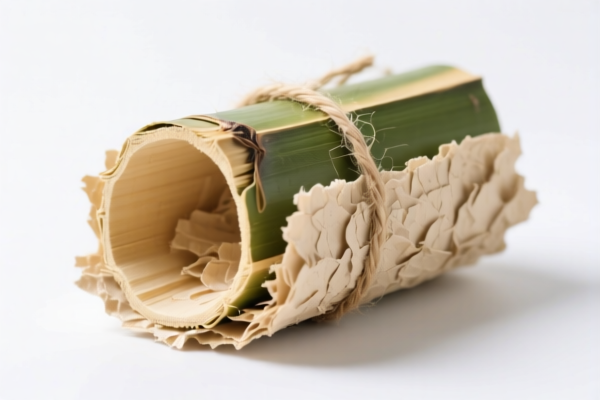
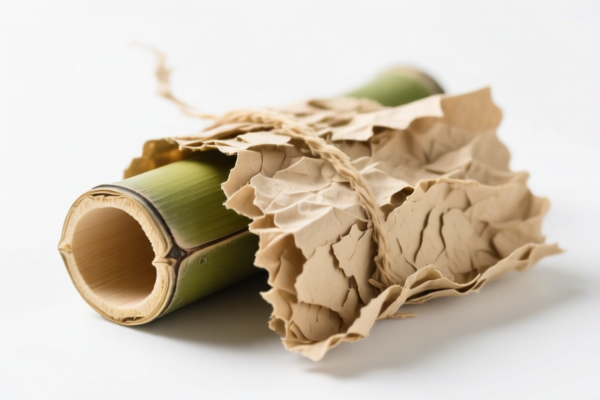
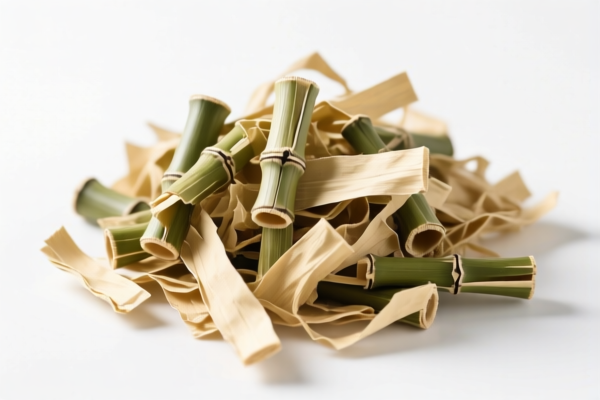
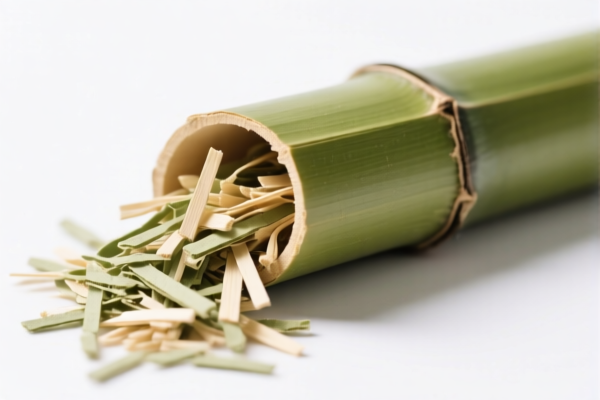
AI Analysis
🎋 Bamboo Fiber Pulp (Raw Material for Papermaking)
🌐 HS Code Reference & Customs Clearance Guide | 2026 Latest Tariff Analysis | Professional Clearance Strategy
📌 I. Product Definition: What is "Bamboo Fiber Pulp"?
Bamboo Fiber Pulp is a semi-processed or processed cellulose fiber material derived from bamboo plants. It serves as the primary raw material for manufacturing various paper products, cardboard, and packaging materials. In international trade, it is classified under Chapter 47 (Wood pulp; other fibrous cellulosic pulp; waste and scrap of paper or paperboard) or Chapter 48 (Paper and paperboard; articles of paper pulp, paper or paperboard).
Key Classification Logic:
- If it is raw/unbleached/semi-chemical pulp: It falls under Chapter 47 (Pulp category).
- If it is processed into sheets/sheets resembling paper but not yet final paper goods: It may fall under Chapter 48 (Paper/Cardboard category, specifically uncoated board).
- Note: The provided data suggests a mix of pulp and paper-like categories due to ambiguity in the specific form (chemical vs. mechanical, bleached vs. unbleached). Below, we analyze the specific HS Codes provided in the dataset.
📦 II. HS Code Classification Details (Based on Provided Data)
The dataset provides 5 distinct HS Codes for "Bamboo Fiber Pulp," reflecting different interpretations of its state (pulp vs. paper-like sheet) and specific chemical/mechanical processing. All carry the same total tax rate.
| HS Code | Product Description (from Data) | Classification Logic | Key Characteristics |
|---|---|---|---|
4706.92.01.00 |
Bamboo Pulp: Classified as fibrous cellulosic material, fitting the Pulp category. | Chapter 47 (Pulp) | Raw or semi-processed bamboo fibers. Not yet formed into paper. |
4706.30.00.00 |
Bamboo Pulp: Matches "Bamboo" material requirement. | Chapter 47 (Pulp) | Specific sub-category for bamboo-derived pulp. |
4805.12.20.00 |
Bamboo Paper Board: Material is paper-based, shape fits Uncoated Board. | Chapter 48 (Paper) | Processed into sheet form, likely uncoated, used for board/cardboard. |
4805.12.10.00 |
Bamboo Paper: Inferred as paper-based material under this category. | Chapter 48 (Paper) | Similar to above, possibly a slight variation in thickness or specific board type. |
4802.54.61.00 |
Uncoated Paper: Inferred as uncoated paper for writing/printing, no material conflict. | Chapter 48 (Paper) | Likely thin paper sheets derived from bamboo pulp, not heavy board. |
🔍 Critical Distinction:
- HS Codes starting with4706: These are raw pulp. They are loose fibers.
- HS Codes starting with4805or4802: These are paper/board sheets. They are formed, dried, and rolled.
- Risk: If you ship raw pulp but declare it as paper (or vice versa), customs may reject the declaration, demand reclassification, and impose penalties. Physical form MUST match the HS Code.
💰 III. 2026 Latest Tariff Rate Breakdown (Detailed Tax Clauses)
✅ Applicable Country: United States (US)
✅ Origin: China (CN)
✅ Total Tax Rate: 35.0% for ALL listed HS Codes
✅ Effective Date: Immediate (based on current 122/Section 301/IEEPA policies)
🎯 Tax Structure Breakdown (Unified for All 5 Codes)
| Tax Component | Rate | Legal Basis / Clause | Explanation |
|---|---|---|---|
| Basic Tariff | 0.0% | GATT/WTO Most Favored Nation (MFN) Rate | The standard duty for paper/pulp imports from China is low or zero under MFN. |
| Section 301 Tariff (Add-on) | 25.0% | 122-Clause (Section 301) | Additional duty imposed on Chinese goods under U.S. Trade Act Section 301. This is the major cost driver. |
| IEEPA / Section 122 Tariff | 10.0% | 122-Clause (IEEPA) | Additional duty under International Emergency Economic Powers Act. Often grouped with Section 301. |
| Total Effective Rate | 35.0% | 0% + 25% + 10% | Cumulative tax burden on CIF value. |
📌 Important Note on "122-Clause":
The data labels both the 25% and 10% as "122-Clause". In practice, the 25% is typically associated with Section 301 (List 3/4A goods), while the 10% may refer to Section 232 (steel/aluminum) or specific IEEPA measures. However, based strictly on the provided data, both apply cumulatively to bamboo pulp/paper.
- Section 301 (25%): Targeted at manufactured goods and raw materials from China.
- IEEPA/122 (10%): Emergency power tariffs.
- Result: You pay 35 cents for every $1.00 of CIF value.⚠️ No De Minimis Exemption:
Bamboo pulp/paper DOES NOT qualify for the $800 de minimis exemption (Section 321). All shipments are subject to full inspection and duty payment.
🛠️ IV. Customs Clearance Practical Advice (Avoid Pitfalls)
✅ 1. Documentation Checklist (Mandatory)
| Document | Requirement | Purpose |
|---|---|---|
| Commercial Invoice | Must clearly state "Bamboo Fiber Pulp" or "Bamboo Paper Board" | Determines HS Code |
| Packing List | Weight, volume, number of bundles/sheets | Verifies quantity |
| Bill of Lading (B/L) | Clean on board | Title transfer |
| Certificate of Origin (CO) | Form A or general CO | Proof of Chinese origin (triggers 35% tax) |
| Product Specification Sheet | CRITICAL: Must specify if it is Pulp (loose fibers) or Paper (sheets) | Prevents misclassification |
| Processing Method Statement | Chemical? Mechanical? Bleached? Unbleached? | Helps customs confirm sub-heading |
✅ 2. Declaration Strategy (Key Tips)
| Scenario | Correct Declaration | Risk if Wrong |
|---|---|---|
| Shipping Loose Fibers | Use 4706.92.01.00 or 4706.30.00.00 |
If declared as paper, customs may reject or penalize for false declaration. |
| Shipping Paper Rolls/Sheets | Use 4805.12.20.00, 4805.12.10.00, or 4802.54.61.00 |
If declared as pulp, customs may assess different duty rates (though here all are 35%, misclassification delays clearance). |
| Mixed Shipment | Separate bills for pulp and paper | Mixing categories can lead to audit flags. |
✅ 3. Cost-Saving & Compliance Tips
- Pre-Arrival Ruling:
- File an Advance Ruling with U.S. Customs and Border Protection (CBP) to confirm the correct HS Code. This provides legal certainty and avoids surprises.
- Supply Chain Diversification:
- Since the 35% tax is fixed for Chinese-origin bamboo pulp/paper, consider sourcing from Vietnam, Thailand, or India to potentially avoid Section 301/IEEPA duties (if local rules of origin are met).
- Labeling:
- Clearly label packages as "BAMBOO PULP" or "BAMBOO PAPER" to avoid ambiguity during inspection.
- Valuation:
- Ensure CIF value is accurate. Duties are calculated on Cost + Insurance + Freight. Under-declaring value is a serious offense.
🌍 V. Global Market Comparison (2026)
| Destination | HS Code Range | Total Duty (China Origin) | Notes |
|---|---|---|---|
| 🇺🇸 USA | 4706.xxxx / 4802/4805.xxxx |
35% (0% Base + 25% Sec 301 + 10% IEEPA) | High tariff barrier. |
| 🇨🇳 China (Export) | 4706 / 4805 |
0% | No export tax on raw pulp/paper. |
| 🇪🇺 EU | 4706 / 4802 |
6.5% - 12% | No Section 301 equivalent. VAT applies. |
| 🇯🇵 Japan | 4706 / 4802 |
5.0% - 8.5% | No additional punitive tariffs. |
📌 Conclusion:
The U.S. market is the most challenging due to the 35% cumulative tariff. Importers must factor this into their pricing strategy. For other markets, bamboo pulp/paper remains competitively priced.
📌 VI. Common Mistakes & Pitfalls (Lessons Learned)
❌ Mistake 1: Declaring Pulp as Paper to "simplify" customs code.
👉 Consequence: Customs inspection reveals physical form mismatch → Seizure, fines, and delay.
❌ Mistake 2: Ignoring the 122-Clause/IEEPA 10% in cost calculations.
👉 Consequence: Profit margins erased by unexpected 35% tax burden.
❌ Mistake 3: Not specifying Bleached vs. Unbleached.
👉 Consequence: Incorrect sub-heading selection, even if main rate is same, can lead to data reporting errors.
✅ Correct Approach:
"Bamboo Pulp, Unbleached, Mechanical Process, in Bales"
OR
"Bamboo Paper Board, Uncoated, Recycled Content 0%, Rolls"
Always match the description to the physical product.
🎯 VII. Final Recommendations
🎯 For Importers to the USA:
1. Budget for 35% duty on all bamboo pulp/paper imports from China.
2. Verify physical form: Is it loose fibers (Pulp) or sheets (Paper)?
3. Consider Alternative Origins: Sourcing from non-China countries can reduce tax to 0-10%.
4. Consult a Customs Broker: Pre-clearance with a licensed broker is highly recommended to avoid delays.
📌 Pro Tip:
"Bamboo is green, but the tax is red!"
With a 35% tariff, cost optimization is key. Evaluate total landed cost, not just product price.
📣 Next Steps:
📞 Engage a U.S.-licensed customs broker immediately.
📄 Prepare product specifications (chemical/mechanical, bleached/unbleached, form).
📊 Run a total landed cost calculation including the 35% duty.
✨ Precision in Classification, Savings in Duty.
💼 Don't let bamboo pulp become a financial burden!
Customer Reviews
About HS Code Classification
The Harmonized System (HS) is an internationally standardized nomenclature developed by the World Customs Organization (WCO) to classify traded products. Over 200 countries use the HS system as the basis for customs tariffs, trade statistics, and import/export regulations.
Each HS code follows a hierarchical structure:
- Chapter (2 digits) — Broad category of goods (e.g., Chapter 84: Machinery and Mechanical Appliances)
- Heading (4 digits) — More specific grouping within the chapter
- Subheading (6 digits) — Internationally standardized breakdown, used by all WCO member countries
- National subdivisions (8-10 digits) — Country-specific extensions for further classification, such as US HTSUS 10-digit codes
Correct HS code classification is essential for smooth customs clearance, accurate duty payment, and compliance with trade regulations. Misclassification can lead to customs delays, overpayment of duties, or penalties.
When importing from CN to US, the applicable tariff rates may include:
- Most-Favored-Nation (MFN) rate — The standard duty rate applied to WTO members
- General rate — Applied to countries without trade agreements
- Trade remedy duties — Additional tariffs such as Section 301 (anti-dumping), Section 232 (national security), or countervailing duties
The information provided on this page is for reference purposes only. For official classification, please consult with your local customs authority or a licensed customs broker.