Bamboo fiber pulp for paper photo albums
CN → US| HS Code | Tariff Rate | Origin | Destination | Doc |
|---|---|---|---|---|
| 4802554000 | 35.0% | CN | US | Official Doc |
| 4706920100 | 35.0% | CN | US | Official Doc |
| 4805122000 | 35.0% | CN | US | Official Doc |
| 4802546100 | 35.0% | CN | US | Official Doc |
| 4805121000 | 35.0% | CN | US | Official Doc |
Product Images
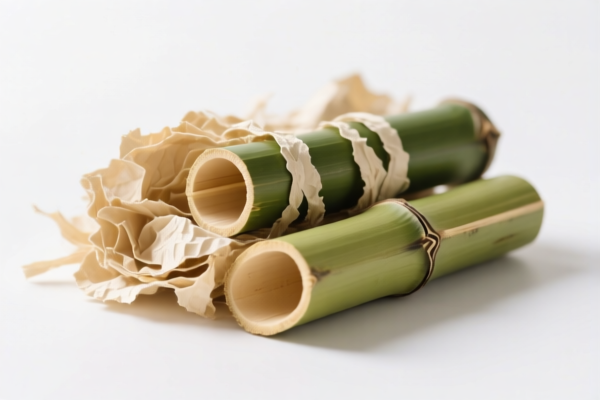
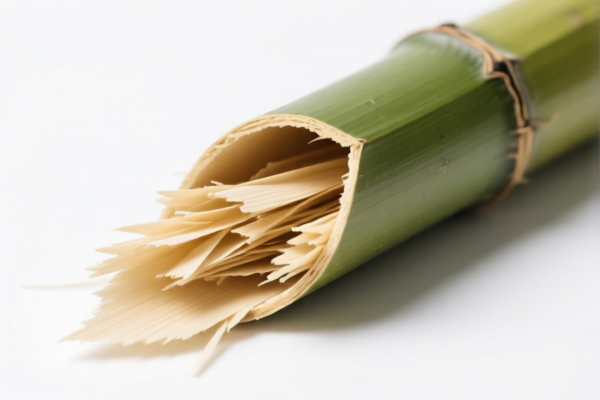
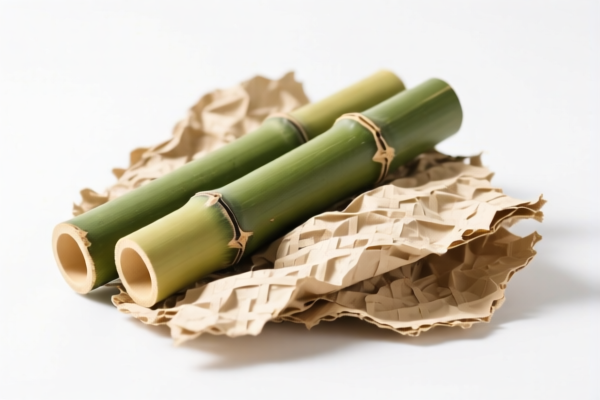
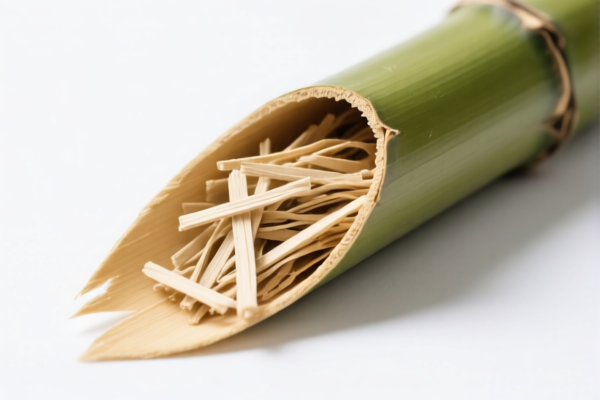
AI Analysis
🎋 Bamboo Fiber Pulp for Paper Photo Albums
🌐 HS Code Reference & Customs Clearance Guide | 2026 Latest Tariff Full Analysis | Professional Entry Strategy
📌 I. Product Definition & Classification: What Exactly is "Bamboo Fiber Pulp"?
Bamboo fiber pulp is a crucial raw material for paper manufacturing, particularly for high-quality, eco-friendly packaging and specialty papers like photo albums. In international trade, it is distinguished by its source (bamboo) and form (pulp).
Key Distinction:
- Raw Material Form: If it is in a fibrous, semi-refined, or unrefined state, it falls under Chapter 47 (Wood pulp; other fibrous cellulosic pulp).
- Finished/Processed Paper Form: If it has been processed into sheets, rolls, or specific paper types (like uncoated paper for printing/writing), it falls under Chapter 48 (Paper and paperboard).
⚠️ Critical Note for Photo Album Pulp:
- If the pulp is raw/semi-processed (e.g., bagasse-like or refined pulp ready for mixing): → 4706.92.01.00
- If the pulp is processed into specific paper grades (e.g., uncoated paper for albums): → 4802.55.40.00, 4805.12.20.00, 4802.54.61.00, or 4805.12.10.00
- All listed HS Codes in the data carry a 35% Total Tax Rate.
📦 II. HS Code Classification Details (2026 Latest Tariff Authoritative Comparison)
| HS Code | Product Description | Application Scenario | Key Characteristics |
|---|---|---|---|
4706.92.01.00 |
Bamboo pulp, fibrous cellulosic material | Raw material for paper mills; semi-refined bamboo pulp | ✅ Raw/Semi-Processed Pulp |
4802.55.40.00 |
Bamboo pulp paper, plant fiber-based | Uncoated paper for photo albums, low mechanical fiber (<10%) | ✅ Finished Paper (Uncoated) |
4805.12.20.00 |
Uncoated board/paper, bamboo fiber | Paperboard form for album covers or thick stock | ✅ Paperboard Category |
4802.54.61.00 |
Uncoated paper, writing/printing grade | General-purpose uncoated paper for album interiors | ✅ Uncoated Paper (Writing/Print) |
4805.12.10.00 |
Uncoated paper, general inference | General uncoated paper with no material conflict | ✅ General Uncoated Paper |
🔍 Key Takeaway:
- If importing raw bamboo pulp (bags of fibers), use 4706.92.01.00.
- If importing finished paper sheets/rolls made from bamboo pulp (for photo albums), use 4802 or 4805 series codes.
- All 5 HS Codes listed in the source data have the SAME tax rate structure.
💰 III. 2026 Latest Tariff Rate Details (Including Surtaxes & Policy Additions)
✅ Applicable Country: United States (US)
✅ Origin: China (CN)
✅ Effective Date: Ongoing (based on current 2025/2026 policy framework)
🎯 1. All Listed HS Codes (4706.92.01.00, 4802.55.40.00, 4805.12.20.00, 4802.54.61.00, 4805.12.10.00)
| Item | Content |
|---|---|
| Base Tariff | 0.0% |
| Section 301 Surcharge | +25.0% |
| Section 122 Tariff | +10.0% |
| Total Tax Rate | 35.0% |
| Tax Calculation | CIF Value × 35% |
| De Minimis Exemption | ❌ Not Eligible (Section 301 and 122 tariffs are generally not waived for small shipments from China) |
| Legal Basis Path | USITC:4706.92.01.00 → FOOTNOTE:301 → IEEPA:122 |
| Legal Basis Path | USITC:4802.55.40.00 → FOOTNOTE:301 → IEEPA:122 |
| (Same path for all 5 codes) |
📌 Explanation:
- "Base Tariff 0%": The standard MFN (Most Favored Nation) duty for these pulp/paper products is 0%.
- "Section 301 Surcharge +25%": Imposed on Chinese imports under the Trade Act of 1974, Section 301.
- "Section 122 Tariff +10%": Additional duty under Section 122 of the Trade Act of 1962 for national security reasons.
- Total 35%: This is a high-cost entry barrier. Importers must factor this into their landed cost.
🛠️ IV. Customs Clearance Practical Advice (Battle-Tested Pitfall Avoidance)
✅ 1. Required Documentation Checklist (Non-Negotiable)
| Document | Mandatory? | Explanation |
|---|---|---|
| ✅ Product Specification Sheet | ✔️ | Must detail: Fiber source (Bamboo), form (Pulp/Sheet), basis weight, moisture content, mechanical fiber % (<10% for 4802.55.40.00) |
| ✅ Commercial Invoice | ✔️ | Clearly state: "Bamboo Fiber Pulp for Paper" or "Uncoated Bamboo Paper for Photo Albums" |
| ✅ Packing List | ✔️ | Detail weight, volume, and packaging type (bags for pulp, reels/rolls for paper) |
| ✅ Certificate of Origin (CO) | ✔️ | Essential for proving Chinese origin to apply correct tariffs |
| ✅ Bill of Lading (B/L) | ✔️ | Standard shipping document |
| ✅ Pre-Shipment Inspection (if applicable) | ✔️ | Some buyers require third-party quality certs |
✅ 2. Declaration Tips (Key Mnemonics)
🔥 "Specify Form! Pulp vs. Paper, Tax Same but Docs Differ!"
| Scenario | Correct Declaration | Wrong Practice |
|---|---|---|
| Raw Bamboo Pulp | "Bamboo Pulp, Refine Grade, for Paper Making" → 4706.92.01.00 |
Calling it "Paper" → Misclassification risk |
| Finished Paper Sheets | "Uncoated Bamboo Paper, for Photo Albums, <10% Mech Fiber" → 4802.55.40.00 |
Calling it "Pulp" → Delay |
| Paperboard for Covers | "Uncoated Bamboo Paperboard, for Album Binding" → 4805.12.20.00 |
Vague "Paper Products" → Audit flag |
| General Uncoated Paper | "Uncoated Bamboo Paper, Writing/Print Grade" → 4802.54.61.00 |
Omitting "Uncoated" → Wrong subheading |
✅ 3. Special Cases Handling
| Situation | Handling Advice |
|---|---|
| Mixed Shipment (Pulp + Finished Paper) | Split Declaration! Declare pulp under 4706 and paper under 4802/4805 separately. Mixing leads to confusion and potential penalties. |
| "Bamboo Fiber" vs. "Bamboo Pulp" | "Pulp" is the technical term for Chapter 47. "Fiber" may be used for Chapter 53. Use "Bamboo Pulp" for 4706.92.01.00. |
| Low Mechanical Fiber Claim | For 4802.55.40.00, you must prove mechanical fiber content ≤10%. Provide lab test reports if requested by CBP. |
| Origin Labeling | Clearly mark "Made in China" on packaging to ensure correct tariff application. |
🌍 V. Global Market Comparison (2026 Latest)
| Country/Region | Recommended HS Code | Tariff | Certification | Notes |
|---|---|---|---|---|
| 🇺🇸 USA | 4706.92.01.00 or 4802/4805 Series |
35% (CN Origin) | No special certs | High tariff due to 301 + 122 |
| 🇨🇳 China | 4706.92.01.00 or 4802/4805 Series |
0-5% (Import Duty) | N/A | Domestic production is common |
| 🇪🇺 EU | 4706.92.00 or 4802/4805 Series |
0-5% | FSC/PEFC (if eco-labeling) | No Section 301/122 equivalent |
| 🇬🇧 UK | 4706.92.00 or 4802/4805 Series |
0-5% | N/A | Post-Brexit tariffs apply |
| 🇯🇵 Japan | 4706.92.00 or 4802/4805 Series |
0-2.5% | FSC/PEFC | Low tariffs, high quality standards |
📌 Conclusion:
- USA is the most expensive market for Chinese bamboo pulp/paper due to the 35% total tariff.
- EU, UK, Japan offer significantly lower duty rates, making them more competitive for pricing.
- Consider supply chain diversification if targeting the US market to mitigate tariff impacts.
📌 VI. Common Mistakes & Pitfalls (Blood & Tears Lessons)
❌ Mistake 1: Declaring "Bamboo Paper" as "Wood Pulp"
👉 Consequence: Misclassification, potential fines, and delayed clearance.
Fix: Clearly state Bamboo in the description.
❌ Mistake 2: Not specifying "Uncoated" for 4802/4805 codes
👉 Consequence: Wrong subheading, possible underpayment or overpayment.
Fix: Always include "Uncoated" in the product name.
❌ Mistake 3: Ignoring the "Mechanical Fiber <10%" requirement for 4802.55.40.00
👉 Consequence: If mechanical fiber is >10%, it should be classified elsewhere, leading to audit issues.
Fix: Provide lab reports confirming fiber content if requested.
❌ Mistake 4: Assuming "Pulp" and "Paper" are the same for customs
👉 Consequence: Wrong HS Code, wrong documentation.
Fix: Pulp = 4706, Paper = 4802/4805. Declare based on physical state.
✅ Correct Declaration Example:
"Uncoated Bamboo Pulp Paper, for Photo Album Production, Plant Fiber Based, Mechanical Fiber Content <10%, Model: BAM-UNCOATED-100GSM"
🎯 VII. Conclusion: Professional Declaration, Save Time & Money!
🎯 Remember the Key Points:
🔹 "Pulp is 47, Paper is 48, Both are 35% in US!"
🔹 "Specify 'Uncoated' and 'Bamboo' clearly!"
🔹 "Check mechanical fiber % for 4802.55.40.00!"
📌 Pro Tip:
If your bamboo pulp/paper is originating from Vietnam, Thailand, or Malaysia, you may avoid the 35% US tariffs (subject to local content rules and anti-circumvention checks).
Consider applying for an Advance Ruling from US CBP to confirm your specific HS code and tariff liability before shipment.
📣 Immediate Action:
📞 Contact a licensed customs broker + Provide Product Specs + Apply for Advance Ruling if unsure.
🚀 Ensure your photo album pulp/paper clears customs smoothly, avoiding costly delays!
✨ Professional Clearance Starts with Accurate Classification!
💼 Every dollar of tariff paid should be justified and minimized!
Customer Reviews
About HS Code Classification
The Harmonized System (HS) is an internationally standardized nomenclature developed by the World Customs Organization (WCO) to classify traded products. Over 200 countries use the HS system as the basis for customs tariffs, trade statistics, and import/export regulations.
Each HS code follows a hierarchical structure:
- Chapter (2 digits) — Broad category of goods (e.g., Chapter 84: Machinery and Mechanical Appliances)
- Heading (4 digits) — More specific grouping within the chapter
- Subheading (6 digits) — Internationally standardized breakdown, used by all WCO member countries
- National subdivisions (8-10 digits) — Country-specific extensions for further classification, such as US HTSUS 10-digit codes
Correct HS code classification is essential for smooth customs clearance, accurate duty payment, and compliance with trade regulations. Misclassification can lead to customs delays, overpayment of duties, or penalties.
When importing from CN to US, the applicable tariff rates may include:
- Most-Favored-Nation (MFN) rate — The standard duty rate applied to WTO members
- General rate — Applied to countries without trade agreements
- Trade remedy duties — Additional tariffs such as Section 301 (anti-dumping), Section 232 (national security), or countervailing duties
The information provided on this page is for reference purposes only. For official classification, please consult with your local customs authority or a licensed customs broker.