Bamboo pulp paper notebooks
CN → US| HS Code | Tariff Rate | Origin | Destination | Doc |
|---|---|---|---|---|
| 4706920100 | 35.0% | CN | US | Official Doc |
| 4805122000 | 35.0% | CN | US | Official Doc |
| 4802546100 | 35.0% | CN | US | Official Doc |
| 4706300000 | 35.0% | CN | US | Official Doc |
| 4805121000 | 35.0% | CN | US | Official Doc |
Product Images
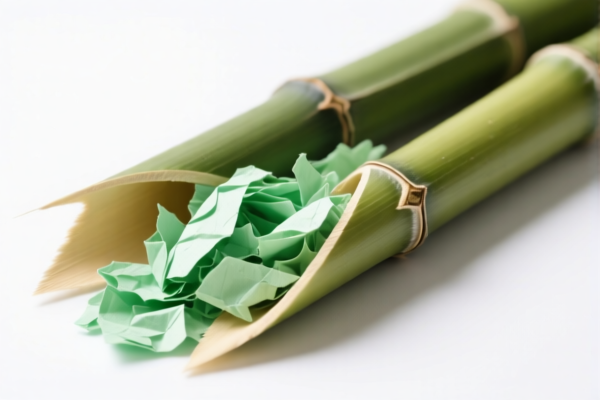

AI Analysis
🎒 Bamboo Pulp Paper Notebooks
🌐 HS Code Reference & Customs Clearance Guide | 2026 Latest Tariff Analysis | Professional Clearance Strategy
📌 I. Product Definition & Classification: Do You Really Understand "Bamboo Pulp Paper"?
Bamboo pulp paper notebooks are eco-friendly stationery items made from bamboo fibers processed into paper, bound into notebook form. In international trade, the classification of these products can be ambiguous because they straddle the line between raw materials (pulp), semi-finished paper products, and finished stationery.
Key Distinction:
- If the product is viewed primarily as Bamboo Pulp (Raw Material): It falls under Chapter 47 (Wood pulp; paper and paperboard waste).
- If the product is viewed as Uncoated Paper/Board (Intermediate Material): It falls under Chapter 48 (Paper and paperboard articles).
⚠️ Critical Note:
- The provided data suggests classifications ranging from Pulp (4706) to Uncoated Paper (4802/4805).
- Do not confuse "Notebooks" (finished stationery, typically 4820) with "Bamboo Pulp Paper" (material focus). The data provided strictly categorizes the material aspect (pulp/paper sheet) rather than the finished notebook binding.
- All listed HS codes in the source data attract a 35% Total Tax Rate.
📦 II. HS Code Classification Details (Source Data Analysis)
The following HS Codes are extracted directly from the provided data. Each code reflects a different interpretive angle of "Bamboo Pulp Paper."
| HS Code | Summary/Justification from Data | Tax Rate |
|---|---|---|
4706.92.01.00 |
Bamboo Pulp (Fibrous Material): Bamboo pulp belongs to fibrous cellulose materials, fitting the category of paper pulp products. | 35.0% |
4805.12.20.00 |
Uncoated Paperboard: Bamboo pulp paper is considered paper, with a form matching uncoated paperboard categories. | 35.0% |
4802.54.61.00 |
Writing/Printing Paper: Material fits uncoated paper, usage fits writing or printing articles. | 35.0% |
4706.30.00.00 |
Bamboo Material Requirement: Product name includes "bamboo," meeting the requirement for bamboo-based material. | 35.0% |
4805.12.10.00 |
Paper Material Attribute: Based on paper material attributes, reasonably inferred under this category. | 35.0% |
4802.55.40.00 |
Plant Fiber Source: Bamboo pulp is plant-fiber based, fitting paper fiber characteristics. | 35.0% |
🔍 Analysis:
- The data provides 6 possible HS Codes, all resulting in the same 35% Total Tax Rate.
- The variation lies in whether the customs officer classifies the item as Pulp (Ch 47) or Paper (Ch 48).
- Consistency: Regardless of the specific subheading, the total tax burden is identical.
💰 III. 2026 Latest Tariff Rate Breakdown (Detailed Tax Clauses)
✅ Applicable Country: USA (US)
✅ Origin: China (CN)
✅ Total Tax Rate: 35.0%
🎯 Tax Structure for ALL Listed HS Codes
| Tax Component | Rate | Source / Legal Basis | Description |
|---|---|---|---|
| Base Tariff | 0.0% | HTSUS General Rate | No standard ad valorem duty for these paper/pulp categories. |
| Section 301 Tariff | 25.0% | USITC Footnote 9903.88.01 | Additional duty imposed on Chinese-origin goods under Section 301. |
| IEEPA Tariff (List 122) | 10.0% | IEEPA:9903.01.24/25 | Additional duty under International Emergency Economic Powers Act (Section 122). |
| TOTAL TAX RATE | 35.0% | Sum of above | 0% + 25% + 10% = 35% |
📌 Explanation:
- Base Tariff (0%): Paper and pulp products generally have low base duties.
- Section 301 (25%): This is the primary punitive tariff on Chinese manufactured goods, including paper products.
- IEEPA (10%): An additional surcharge applied specifically to Chinese-origin items under recent emergency powers.
- No De Minimis Exemption: These goods cannot benefit from the $800 de minimis exemption if they fall under these specific high-tariff classifications.
🛠️ IV. Customs Clearance Practical Advice
✅ 1. Documentation Checklist (Mandatory)
| Document | Required? | Notes |
|---|---|---|
| Product Description | ✔️ | Must explicitly state "Bamboo Pulp Paper" or "Bamboo Fiber Paper." Avoid vague terms like "Eco-Notebook." |
| Composition Analysis | ✔️ | Proof that the paper is derived from bamboo (e.g., lab report showing cellulose source). |
| Commercial Invoice | ✔️ | Clearly list HS Code and Country of Origin (China). |
| Bill of Lading/Air Waybill | ✔️ | Ensure origin is declared correctly. |
| Packaging List | ✔️ | Include quantity, weight, and dimensions. |
✅ 2. Classification Strategy & Pitfalls
🔥 “Clarify Material, Not Just End Use”
| Scenario | Recommended Approach | Risk if Incorrect |
|---|---|---|
| Raw Bamboo Pulp Sheets | Use 4706.92.01.00 or 4706.30.00.00 |
Misclassifying as finished stationery (4820) may lead to lower duty, but customs may reclassify and penalize. |
| Uncoated Paper Sheets (for notebooks) | Use 4805.12.20.00 or 4805.12.10.00 |
If classified as coated paper, rates may differ. |
| Finished Notebooks (Bound) | ⚠️ Caution: The provided data does NOT include Chapter 4820 (Notebooks). If you ship bound notebooks, you may need a different HS Code (e.g., 4820.10.20) which might have different tariffs. Verify if the 35% applies to bound notebooks or just paper sheets. | If you ship bound notebooks but declare as "pulp sheets," customs may seize goods for misdeclaration. |
| Mixed Shipments | Declare separately | Do not mix bamboo pulp with wood pulp if origins or classifications differ. |
✅ 3. Cost Calculation Example
Assume an import value of $10,000 CIF (Cost, Insurance, Freight):
| Item | Amount |
|---|---|
| CIF Value | $10,000 |
| Base Duty (0%) | $0 |
| Section 301 Duty (25%) | $2,500 |
| IEEPA Duty (10%) | $1,000 |
| Total Duty Payable | $3,500 |
| Effective Tax Rate | 35% |
🌍 V. Global Market Comparison (2026)
| Country/Region | Typical HS Code for Bamboo Paper | Tariff Rate | Notes |
|---|---|---|---|
| 🇺🇸 USA | 4805.12.20.00 / 4706.92.01.00 |
35% | High due to Section 301 + IEEPA. |
| 🇨🇳 China | 4802.55.40.00 |
~6-10% | Import duty for raw materials. |
| 🇪🇺 EU | 4802.55 |
~0% (MFN) | No Section 301 equivalent. Check for anti-dumping. |
| 🇯🇵 Japan | 4802.55 |
~0% | FTA benefits may apply if applicable. |
📌 Conclusion:
- The USA is the most expensive market for bamboo pulp/paper products due to layered tariffs.
- Ensure your export documents accurately reflect the Chinese origin to avoid unexpected penalties.
📌 VI. Common Mistakes & Pitfalls
❌ Mistake 1: Declaring "Notebooks" as "Bamboo Pulp" to avoid higher taxes on finished goods.
👉 Consequence: Customs may reject entry if the product is clearly bound and ready for use.
Correction: If shipping bound notebooks, ensure the HS Code matches finished goods (Chapter 4820) unless you are specifically shipping blank paper sheets.
❌ Mistake 2: Ignoring the IEEPA 10% surcharge.
👉 Consequence: Underpayment of duties, leading to audits and penalties.
Correction: Always include the 10% IEEPA in your landed cost calculation.
❌ Mistake 3: Using generic terms like "Paper" without specifying "Bamboo."
👉 Consequence: Customs may classify as wood pulp, leading to different tariff treatments or delays.
Correction: Always specify "Bamboo Fiber" or "Bamboo Pulp" in the description.
🎯 VII. Final Recommendations
🎯 Key Takeaway:
🔹 “Bamboo Pulp Paper” faces a flat 35% tax in the USA, regardless of whether it’s classified as pulp (Ch 47) or paper (Ch 48).
🔹 “Notebooks” (bound) are NOT explicitly listed in the provided data. Verify if your product is raw paper sheets or finished notebooks.
🔹 “Total Cost = CIF Value × 35%” is a safe baseline for US imports.
✅ Action Plan:
1. Confirm Product Form: Are you importing raw bamboo paper sheets or bound notebooks?
2. Select HS Code:
- For sheets/pulp: Use 4805.12.20.00 or 4706.92.01.00.
- For bound notebooks: Research Chapter 4820 (not in provided data) to ensure compliance.
3. Calculate Landed Cost: Include the 35% duty in your pricing model.
4. Document Origin: Ensure all paperwork clearly states "Made in China" to avoid surprises.
📣 Immediate Action:
📞 Consult a licensed customs broker if shipping bound notebooks to ensure the correct HS Code is applied.
📄 Prepare a Certificate of Origin and Product Composition Report to support the "Bamboo" classification.
🚀 Avoid costly delays by being precise about material vs. finished good status!
✨ Professional Clearance Starts with Accurate Classification!
💼 Your Bottom Line Depends on Getting the HS Code Right!
Customer Reviews
About HS Code Classification
The Harmonized System (HS) is an internationally standardized nomenclature developed by the World Customs Organization (WCO) to classify traded products. Over 200 countries use the HS system as the basis for customs tariffs, trade statistics, and import/export regulations.
Each HS code follows a hierarchical structure:
- Chapter (2 digits) — Broad category of goods (e.g., Chapter 84: Machinery and Mechanical Appliances)
- Heading (4 digits) — More specific grouping within the chapter
- Subheading (6 digits) — Internationally standardized breakdown, used by all WCO member countries
- National subdivisions (8-10 digits) — Country-specific extensions for further classification, such as US HTSUS 10-digit codes
Correct HS code classification is essential for smooth customs clearance, accurate duty payment, and compliance with trade regulations. Misclassification can lead to customs delays, overpayment of duties, or penalties.
When importing from CN to US, the applicable tariff rates may include:
- Most-Favored-Nation (MFN) rate — The standard duty rate applied to WTO members
- General rate — Applied to countries without trade agreements
- Trade remedy duties — Additional tariffs such as Section 301 (anti-dumping), Section 232 (national security), or countervailing duties
The information provided on this page is for reference purposes only. For official classification, please consult with your local customs authority or a licensed customs broker.