Bamboo strip woven mats
CN → US| HS Code | Tariff Rate | Origin | Destination | Doc |
|---|---|---|---|---|
| 4601218000 | 35.0% | CN | US | Official Doc |
| 4601214000 | 38.3% | CN | US | Official Doc |
| 4602114500 | 41.6% | CN | US | Official Doc |
| 4602110700 | 35.0% | CN | US | Official Doc |
| 4602110900 | 45.0% | CN | US | Official Doc |
Product Images
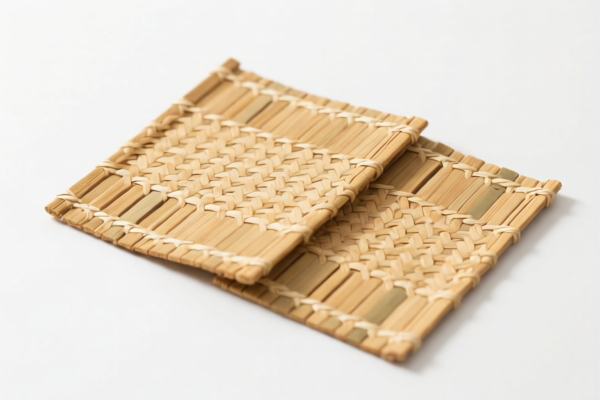
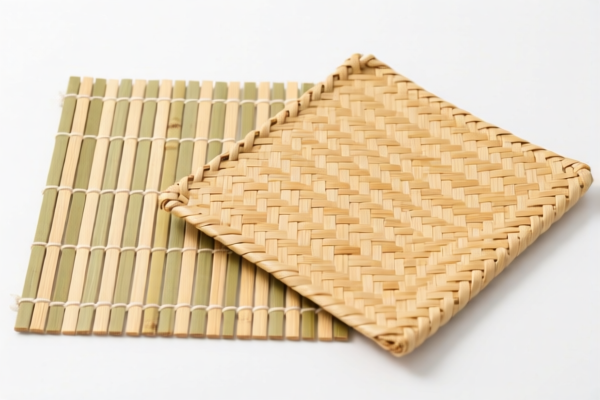
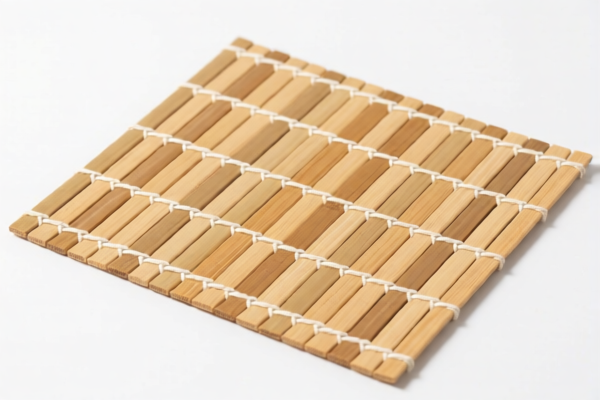
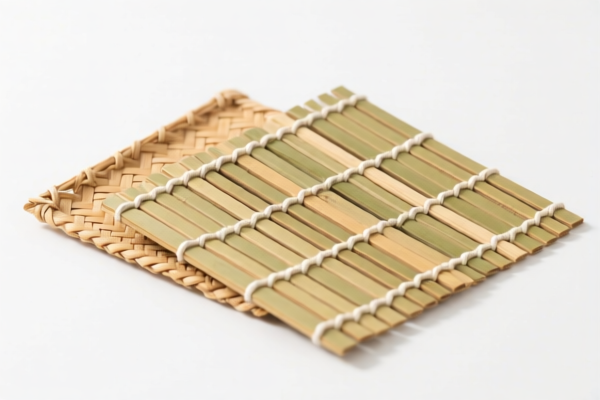
AI Analysis
🎋 Bamboo Strip Woven Mats (Bamboo Mats)
🌐 HS Code Reference & Customs Clearance Guide | 2024 Latest Tariff Analysis | Professional Entry Strategies
📌 I. Product Definition and Classification: Do You Really Understand "Bamboo Mats"?
Bamboo strip woven mats are household or decorative items made from processed bamboo strips, woven together. In international trade, the classification depends heavily on the specific form, finish, and intended use of the mat. Are they raw woven sheets, finished bedding mats, or decorative basket-like items? The distinction determines the HS Code and, consequently, the tariff burden.
⚠️ Key Distinction Point:
- If the item is a simple woven sheet without specific finishing for bedding → May fall under 4601.21 (Plaiting materials).
- If the item is a finished woven product (like a mat, bag, or basket) → Falls under 4602.11 (Woven articles).
- Critical Detail: The presence of specific finishes (e.g., varnished, colored) or structural integrity (rigid vs. flexible) shifts the code significantly.
📦 II. HS Code Classification Details (2024/2026 Latest Tariff Authority Reference)
| HS Code | Product Description | Applicable Scenario | Key Classification Criteria |
|---|---|---|---|
4601.21.80.00 |
Woven mats, bamboo material, woven form | Raw/semi-finished woven bamboo sheets; simple weaving, no specific bedding finish | ❌ Not a finished article; falls under "plaiting materials" |
4601.21.40.00 |
Woven bamboo mats, material: bamboo, form: woven, classified as mats | Finished mats fitting material, craft, and use limits | ✅ Specific sub-heading for "mats" within woven materials |
4602.11.45.00 |
Bamboo woven products, material: bamboo, form: woven | Directly woven bamboo articles; fits the characteristic of being woven directly from material | ✅ Finished woven article, specific to certain bamboo products |
4602.11.07.00 |
Bamboo woven products, material: bamboo, form: woven/covering | Covering-type bamboo woven items; fits the category of bamboo woven products | ✅ General bamboo woven articles, often for covering/decorative use |
4602.11.09.00 |
Bamboo other baskets and bags, material: bamboo, form: woven | Basket/bag category; used for flower pots, storage, etc. | ✅ If the mat has basket-like structure or is used as a container/pot cover |
🔍 Key Reminder:
- "4601" vs. "4602": 4601 is for plaiting materials and products thereof (often raw or semi-finished sheets), while 4602 is for woven articles (finished goods like baskets, mats, bags).
- Specificity Matters: If the mat is clearly a "mat" for floor/bed use, 4601.21.40.00 or 4602.11.45.00 are more precise than generic "woven products."
- If it’s a basket shape: Even if made of bamboo strips, if it holds things (like a flower pot), it may fall under 4602.11.09.00.
💰 III. 2024/2026 Latest Tariff Rate Details (Including Surcharges, Policy Add-ons)
✅ Applicable Country: United States (US)
✅ Origin: China (CN)
✅ Effective Time: Ongoing (Section 301 & IEEPA tariffs apply)
🎯 1. 4601.21.80.00 —— Woven Bamboo Mats (Plaiting Materials Category)
| Item | Content |
|---|---|
| Base Tariff | 0% (ad valorem) |
| Section 301 Surcharge | +25% (USITC Footnote 9903.88.01) |
| IEEPA Surcharge | +10% (Targeting China/HK products, effective from 2025-11-10) |
| Total Tariff | 35.0% |
| Tax Calculation | CIF Value × 35% |
| De Minimis Exemption? | ❌ No (deny_de_minimis) |
| Legal Basis Path | IEEPA:9903.01.25 → IEEPA:9903.01.24 → USITC:4601.21.80.00 → FOOTNOTE:9903.88.01 |
📌 Explanation:
- "Base Tariff 0%": Bamboo plaiting materials often have low base duties.
- "Section 301 25%": Standard tariff on many bamboo products from China.
- "IEEPA 10%": Additional surcharge for Chinese-origin goods.
- Total 35%: High tariff burden. Must be factored into pricing.
🎯 2. 4601.21.40.00 —— Woven Bamboo Mats (Specific "Mat" Sub-heading)
| Item | Content |
|---|---|
| Base Tariff | 3.3% |
| Section 301 Surcharge | +25% |
| IEEPA Surcharge | +10% |
| Total Tariff | 38.3% |
| Tax Calculation | CIF Value × 38.3% |
| De Minimis Exemption? | ❌ No |
| Legal Basis Path | IEEPA:9903.01.25 → IEEPA:9903.01.24 → USITC:4601.21.40.00 → FOOTNOTE:9903.88.01 |
📌 Note:
- Slightly higher base rate (3.3%) compared to 4601.21.80.00 (0%).
- Applies to mats that meet specific material, craft, and use criteria.
- Total burden is 38.3%, higher than the generic plaiting material category.
🎯 3. 4602.11.45.00 —— Bamboo Woven Products (Directly Woven)
| Item | Content |
|---|---|
| Base Tariff | 6.6% |
| Section 301 Surcharge | +25% |
| IEEPA Surcharge | +10% |
| Total Tariff | 41.6% |
| Tax Calculation | CIF Value × 41.6% |
| De Minimis Exemption? | ❌ No |
| Legal Basis Path | IEEPA:9903.01.25 → IEEPA:9903.01.24 → USITC:4602.11.45.00 → FOOTNOTE:9903.88.01 |
📌 Note:
- This code applies to finished woven articles made directly from bamboo.
- Base rate is higher (6.6%), leading to a 41.6% total tariff.
- Suitable for mats that are clearly "woven articles" rather than "plaiting materials."
🎯 4. 4602.11.07.00 —— Bamboo Woven Products (Covering/General)
| Item | Content |
|---|---|
| Base Tariff | 0% |
| Section 301 Surcharge | +25% |
| IEEPA Surcharge | +10% |
| Total Tariff | 35.0% |
| Tax Calculation | CIF Value × 35.0% |
| De Minimis Exemption? | ❌ No |
| Legal Basis Path | IEEPA:9903.01.25 → IEEPA:9903.01.24 → USITC:4602.11.07.00 → FOOTNOTE:9903.88.01 |
📌 Note:
- Despite being a "woven article" (4602), the base tariff is 0%.
- Total tariff is 35%, same as4601.21.80.00.
- Good option if the product fits "covering" or general bamboo woven category.
🎯 5. 4602.11.09.00 —— Bamboo Baskets and Bags (Other)
| Item | Content |
|---|---|
| Base Tariff | 10.0% |
| Section 301 Surcharge | +25% |
| IEEPA Surcharge | +10% |
| Total Tariff | 45.0% |
| Tax Calculation | CIF Value × 45.0% |
| De Minimis Exemption? | ❌ No |
| Legal Basis Path | IEEPA:9903.01.25 → IEEPA:9903.01.24 → USITC:4602.11.09.00 → FOOTNOTE:9903.88.01 |
📌 Note:
- Highest tariff at 45%.
- Only apply if the "mat" is structurally a basket, bag, or used for container purposes (e.g., flower pot cover).
- Avoid this code for flat mats unless they are specifically designed as baskets.
🛠️ IV. Customs Clearance Practical Advice (Battle-Tested Pitfall Avoidance Guide)
✅ 1. Document Checklist (None can be omitted)
| Document | Mandatory | Description |
|---|---|---|
| ✅ Product Specification Sheet | ✔️ | Includes dimensions, weave pattern, material type (whole vs. split bamboo), finish (varnish, dye) |
| ✅ Product Photos (with label) | ✔️ | Clear images of the mat, showing texture, edges, and any tags |
| ✅ Commercial Invoice | ✔️ | Must clearly state "Bamboo Woven Mat" and HS Code |
| ✅ Packing List | ✔️ | Details package composition, weight, dimensions |
| ✅ Certificate of Origin (CO) | ✔️ | Essential for proving Chinese origin (triggers tariffs) or non-China origin (potential exemption) |
✅ 2. Declaration Tips (Key Mantra)
🔥 "Define Form, Specify Use, Match Code, Avoid Penalty!"
| Scenario | Correct Declaration | Wrong Practice |
|---|---|---|
| Flat, simple woven mat | 4601.21.80.00 or 4602.11.07.00 |
Misreport as "baskets" → 45% tariff |
| Finished bed/floor mat | 4601.21.40.00 |
Report as "plaiting material" → 35% (if 4601.80 is used) vs 38.3% (4601.40) |
| Basket-shaped bamboo item | 4602.11.09.00 |
Report as "mat" → Risk of misclassification + penalty |
| Raw bamboo weaving sheets | 4601.21.80.00 |
Report as "finished article" → May trigger higher base duty |
💡 Tip:
- If the mat is flat and flexible, lean towards 4601.21 or 4602.11.07.
- If the mat has rigid sides or is used to hold things, consider 4602.11.09 (but expect 45% tariff).
- Best Value:4601.21.80.00and4602.11.07.00both result in 35% total tariff, which is lower than4601.21.40.00(38.3%) and4602.11.45.00(41.6%).
✅ 3. Special Situation Handling
| Situation | Handling Advice |
|---|---|
| OEM Custom Mats | Provide customer orders + design specs to avoid "non-standard" labeling. |
| Mats with Fabric Backing | If backing is significant, may no longer be "bamboo" but "textile" → Different HS Code! |
| Treated/Varnished Mats | Ensure the finish doesn’t change the nature to a "covered" item, which might fall under different chapters. |
| Origin Switching | If shipped from Vietnam/Malaysia/Thailand, check for IEEPA exemptions (potentially 0-5% tariff). |
🌍 V. Global Market Customs Comparison (2024/2026 Latest)
| Country/Region | Recommended HS Code | Tariff | Certification Requirement | Notes |
|---|---|---|---|---|
| 🇺🇸 USA | 4601.21.80.00 / 4602.11.07.00 |
35% (CN origin) | None typically | High tariff due to Section 301 + IEEPA |
| 🇨🇳 China | 4601.21.80.00 / 4602.11.07.00 |
0-10% | N/A | No additional surcharges |
| 🇪🇺 EU | 4601.21 / 4602.11 |
0-5% (if FTA) | CE (if applicable) | Generally low duty |
| 🇬🇧 UK | 4601.21 / 4602.11 |
0-5% | UKCA | Post-Brexit rules apply |
| 🇦🇺 Australia | 4601.21 / 4602.11 |
0-5% | N/A | No special surcharges |
📌 Conclusion:
- USA is the most expensive market for bamboo mats from China due to 35-45% total tariffs.
- EU/UK/Australia offer significantly better tariff conditions.
- Strategy: Consider sourcing from or transshipping through Southeast Asia (Vietnam, Indonesia) to avoid US surcharges, but ensure substantial transformation to qualify for new origin.
📌 VI. Common Mistakes & Pitfall Guide (Lessons Learned the Hard Way)
❌ Mistake 1: Declaring a basket-shaped bamboo item as a "mat" to avoid the 45% tariff of 4602.11.09.00.
👉 Consequence: Customs audit reveals incorrect classification → Back taxes + fines + shipment delay.
❌ Mistake 2: Using "Plaiting Material" for a finished, decorated mat.
👉 Consequence: Misclassification → Customs may reclassify to 4602 with higher base duty → Higher total cost.
❌ Mistake 3: Ignoring IEEPA 10% surcharge in cost calculations.
👉 Consequence: Profit margin erosion → Unexpected losses on high-value shipments.
❌ Mistake 4: Failing to specify material composition (e.g., bamboo vs. bamboo-fiber blend).
👉 Consequence: Customs may classify under "textile" or "plastic" → Different HS Code & potential duty spikes.
✅ Correct Practice:
"Bamboo Woven Mat, 24x36 inch, 100% Natural Bamboo, Flat Woven, Unvarnished, for Floor Use, Model: BM-001"
🎯 VII. Conclusion: Precise Classification Saves Money!
🎯 Remember the Mantra:
🔹 "Flat mat, 35% tariff; Basket shape, 45% nightmare!"
🔹 "Choose 4601.21.80 or 4602.11.07 for best rate (35%)!"
🔹 "Check origin! Vietnam/Thailand shipment = Potential 0-5% tariff!"
📌 Pro Tip:
- If your bamboo mats are shipped from Vietnam, Thailand, or Indonesia, you may qualify for IEEPA exemptions, reducing the tariff to 0-5%.
- Ensure substantial transformation occurs in those countries to avoid "transshipment" accusations.
- Consider applying for a Binding Ruling from US Customs if unsure about classification.
📣 Immediate Action:
📞 Contact your customs broker + Provide product photos + Verify origin rules
🚀 Let your bamboo mats clear smoothly, minimize costs, and maximize profit!
✨ Professional clearance starts with accurate classification!
💼 Every percent of duty saved is pure profit!
Customer Reviews
About HS Code Classification
The Harmonized System (HS) is an internationally standardized nomenclature developed by the World Customs Organization (WCO) to classify traded products. Over 200 countries use the HS system as the basis for customs tariffs, trade statistics, and import/export regulations.
Each HS code follows a hierarchical structure:
- Chapter (2 digits) — Broad category of goods (e.g., Chapter 84: Machinery and Mechanical Appliances)
- Heading (4 digits) — More specific grouping within the chapter
- Subheading (6 digits) — Internationally standardized breakdown, used by all WCO member countries
- National subdivisions (8-10 digits) — Country-specific extensions for further classification, such as US HTSUS 10-digit codes
Correct HS code classification is essential for smooth customs clearance, accurate duty payment, and compliance with trade regulations. Misclassification can lead to customs delays, overpayment of duties, or penalties.
When importing from CN to US, the applicable tariff rates may include:
- Most-Favored-Nation (MFN) rate — The standard duty rate applied to WTO members
- General rate — Applied to countries without trade agreements
- Trade remedy duties — Additional tariffs such as Section 301 (anti-dumping), Section 232 (national security), or countervailing duties
The information provided on this page is for reference purposes only. For official classification, please consult with your local customs authority or a licensed customs broker.