Bamboo woven door curtains
CN → US| HS Code | Tariff Rate | Origin | Destination | Doc |
|---|---|---|---|---|
| 4602114500 | 41.6% | CN | US | Official Doc |
| 4601218000 | 35.0% | CN | US | Official Doc |
| 4601219000 | 43.0% | CN | US | Official Doc |
| 4602113500 | 35.0% | CN | US | Official Doc |
| 6303910010 | 27.8% | CN | US | Official Doc |
Product Images
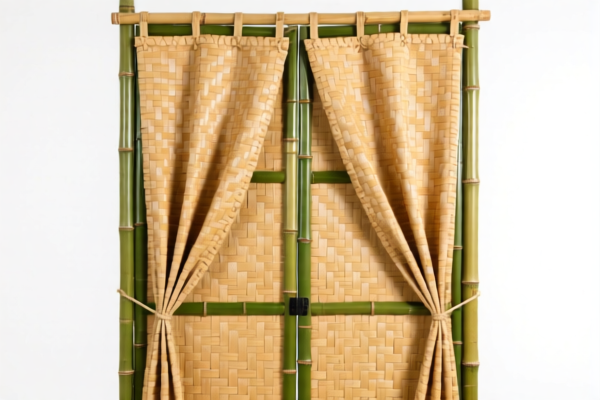
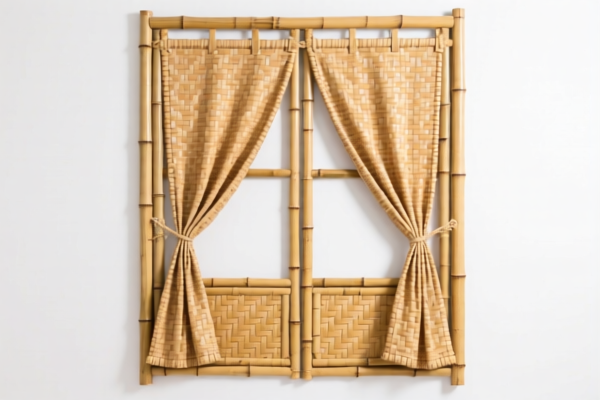
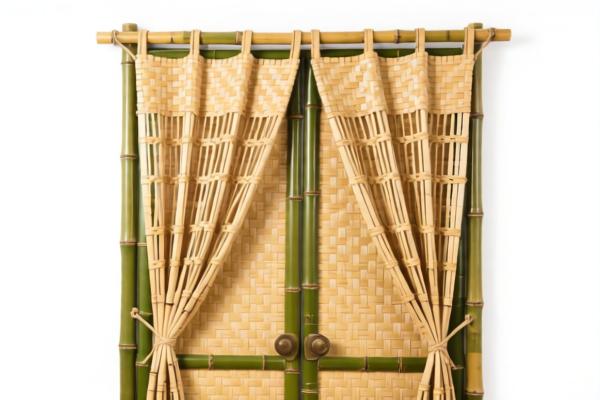
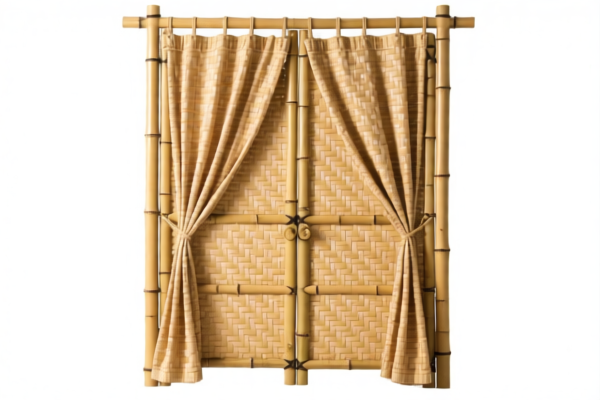
AI Analysis
🎋 Bamboo Woven Door Curtains (Bamboo Bead/Cane Screens)
🌐 HS Code Reference & Customs Clearance Guide | 2026 Latest Tariff Analysis | Professional Clearance Strategy for US Imports from China
📌 I. Product Definition & Classification: Do You Really Understand "Bamboo Curtains"?
Bamboo woven door curtains are decorative or functional screens used for privacy, windbreaks, or aesthetic enhancement in residential and commercial spaces. In international trade, their classification depends heavily on manufacturing process (woven vs. crafted) and structural form.
Key distinctions in US Customs classification:
- Woven Mats/Plaits (4601): Products made by weaving bamboo strips into a flat sheet or mat structure.
- Crafted/Basketry Articles (4602): Products crafted into specific shapes (like curtains or screens) using weaving techniques, often considered "articles of basketry."
- Textile Door Curtains (6303): If the product is made of cotton, polyester, or other fibers (not bamboo), it falls under textile categories. Note: Pure bamboo products do NOT fall here.
⚠️ Critical Distinction:
- If the bamboo strips are woven into a flat mat first, then cut/shaped into a curtain → Often classified under 4601.
- If the bamboo is directly woven into a curtain/screen structure (e.g., bead curtains, cane weaving) → Often classified under 4602.
- If misclassified as textile (6303) despite being bamboo → High risk of penalty and reclassification.
📦 II. HS Code Classification Details (2026 Latest Tariff Authoritative Comparison)
| HS Code | Product Description | Application Scenario | Material/Structure |
|--------|--------------------------|--------------------------|
| 4602.11.45.00 | Bamboo woven mats & similar products, specifically classified as bamboo curtains | Decorative bamboo bead curtains, crafted screen panels | ✅ Bamboo, crafted into curtain form |
| 4601.21.80.00 | Bamboo woven products, mats in the form of curtains | Flat woven bamboo mats cut into curtain shape | ✅ Bamboo, woven into mat then shaped |
| 4601.21.90.00 | Curtains made of other vegetable plaiting materials (includes bamboo if not specifically listed elsewhere) | General bamboo/vegetal fiber curtains not specified in 4601.21.80 | ✅ Bamboo/Vegetal, woven curtain |
| 4602.11.35.00 | Bamboo & rattan woven articles, including curtain forms | Crafted bamboo/rattan screens, decorative woven curtains | ✅ Bamboo/Rattan, crafted weaving |
| 6303.91.00.10 | Door curtains, likely cotton or other textile fibers | NOT APPLICABLE unless mixed with textiles | ❌ Non-bamboo textile |
🔍 Key Reminder:
- Pure bamboo curtains must be classified under Chapter 46 (Articles of vegetation).
- If the product contains >50% textile by weight, it may fall under 6303, but pure bamboo is strictly 4601/4602.
- Misdeclaring bamboo as "textile" (6303) leads to incorrect tax calculation and potential customs detention.
💰 III. 2026 Latest Tariff Rate Breakdown (Including Additional Duties & Policy Add-ons)
✅ Applicable Country: United States (US)
✅ Country of Origin: China (CN)
✅ Effective Date: From November 10, 2025 onwards (including subsequent imports)
🎯 1. 4602.11.45.00 —— Bamboo Woven Curtains (Crafted Form)
| Item | Content |
|---|---|
| Base Duty Rate | 6.6% (ad valorem) |
| Section 301 Additional Duty | +25.0% (USITC Footnote 9903.88.01) |
| IEEPA Additional Duty | +10.0% (Targeting China/HK products, effective Nov 10, 2025) |
| Total Effective Rate | 41.6% |
| Tax Calculation | CIF Value × 41.6% |
| De Minimis Eligibility | ❌ Not Eligible (deny_de_minimis) |
| Legal Basis Path | IEEPA:9903.01.25 → IEEPA:9903.01.24 → USITC:4602.11.45.00 → FOOTNOTE:9903.88.01 |
📌 Explanation:
- The 25% Section 301 duty is the base additional tariff for Chapter 46 goods from China.
- The 10% IEEPA duty is an extra layer imposed on Chinese-origin goods since Nov 2025.
- Total 41.6% is a significant cost factor. Importers must factor this into landed cost calculations.
🎯 2. 4601.21.80.00 —— Bamboo Woven Mats (Curtain Form)
| Item | Content |
|---|---|
| Base Duty Rate | 0.0% (ad valorem) |
| Section 301 Additional Duty | +25.0% |
| IEEPA Additional Duty | +10.0% |
| Total Effective Rate | 35.0% |
| Tax Calculation | CIF Value × 35.0% |
| De Minimis Eligibility | ❌ Not Eligible (deny_de_minimis) |
| Legal Basis Path | IEEPA:9901.25 → IEEPA:9903.01.24 → USITC:4601.21.80.00 → FOOTNOTE:9903.88.01 |
📌 Note:
- Although the base rate is 0%, the additional duties remain 35%.
- This classification often applies if the product is technically a "woven mat" cut to size.
- 35% is lower than4602.11.45.00(41.6%), so accurate classification can save 6.6% on CIF value.
🎯 3. 4601.21.90.00 —— Other Vegetable Plaiting Materials (Curtains)
| Item | Content |
|---|---|
| Base Duty Rate | 8.0% (ad valorem) |
| Section 301 Additional Duty | +25.0% |
| IEEPA Additional Duty | +10.0% |
| Total Effective Rate | 43.0% |
| Tax Calculation | CIF Value × 43.0% |
| De Minimis Eligibility | ❌ Not Eligible (deny_de_minimis) |
| Legal Basis Path | IEEPA:9903.01.25 → IEEPA:9903.01.24 → USITC:4601.21.90.00 → FOOTNOTE:9903.88.01 |
📌 Warning:
- This is the highest tariff bracket among bamboo classifications.
- Use only if the product does not fit neatly into4601.21.80.00or4602.11.45.00.
- 43% makes this category expensive; avoid if possible through better classification.
🎯 4. 4602.11.35.00 —— Bamboo & Rattan Woven Articles
| Item | Content |
|---|---|
| Base Duty Rate | 0.0% (ad valorem) |
| Section 301 Additional Duty | +25.0% |
| IEEPA Additional Duty | +10.0% |
| Total Effective Rate | 35.0% |
| Tax Calculation | CIF Value × 35.0% |
| De Minimis Eligibility | ❌ Not Eligible (deny_de_minimis) |
| Legal Basis Path | IEEPA:9901.25 → IEEPA:9903.01.24 → USITC:4602.11.35.00 → FOOTNOTE:9903.88.01 |
📌 Note:
- Like4601.21.80.00, this has a 0% base rate but 35% total due to add-ons.
- Applicable if the product is a mix of bamboo and rattan, or specifically crafted rattan-bamboo weave.
🎯 5. 6303.91.00.10 —— Door Curtains (Textile) ⚠️ Only if Non-Bamboo
| Item | Content |
|---|---|
| Base Duty Rate | 10.3% (ad valorem) |
| Section 301 Additional Duty | +7.5% (Note: Lower than 301 on bamboo) |
| IEEPA Additional Duty | +10.0% |
| Total Effective Rate | 27.8% |
| Tax Calculation | CIF Value × 27.8% |
| De Minimis Eligibility | ❌ Not Eligible (deny_de_minimis) |
| Legal Basis Path | IEEPA:9901.25 → IEEPA:9903.01.24 → USITC:6303.91.00.10 → FOOTNOTE:9903.88.01 |
📌 Critical Warning:
- Do NOT use this code for pure bamboo curtains.
- This code is for cotton, polyester, or other textile door curtains.
- Using this code for bamboo products is misdeclaration and will result in penalties, back taxes, and seizure.
- 27.8% is lower than bamboo rates, but only applies to textiles.
🛠️ IV. Customs Clearance Practical Advice (Battle-Tested Pitfall Guide)
✅ 1. Required Documentation Checklist (All Mandatory)
| Document | Mandatory? | Description |
|---|---|---|
| ✅ Product Specifications | ✔️ | Include dimensions, number of beads/strands, weight, closure type |
| ✅ Material Composition Statement | ✔️ | Must explicitly state "100% Bamboo" or blend percentages |
| ✅ Product Photos | ✔️ | Clear images of front, back, and close-up of weave structure |
| ✅ Commercial Invoice | ✔️ | Describe as "Bamboo Woven Curtain" or "Bamboo Bead Screen" |
| ✅ Packing List | ✔️ | Show gross/net weight, number of units per carton |
| ✅ Origin Certificate | ✔️ | Required for US origin verification; if non-China, may exempt tariffs |
✅ 2. Declaration Tips (Key Mantras)
🔥 “Be Specific, Be Bamboo, Avoid Textile Trap!”
| Scenario | Correct Declaration | Incorrect Practice |
|---|---|---|
| Pure bamboo bead curtain | 4602.11.45.00 – “Bamboo Woven Curtain” |
Declare as “Curtain” → Risk 6303 |
| Woven bamboo mat cut to size | 4601.21.80.00 – “Bamboo Woven Mat, Curtain Form” |
Omit “Mat” → Risk 4602 |
| Mixed bamboo/rattan screen | 4602.11.35.00 – “Bamboo & Rattan Woven Article” |
Declare as “Wooden Screen” → 4421 (wrong chapter) |
| Cotton/Polyester Curtain | 6303.91.00.10 – “Textile Door Curtain” |
Declare as “Bamboo” → Misdeclaration |
✅ 3. Special Case Handling
| Scenario | Handling Advice |
|---|---|
| OEM Custom Bamboo Curtains | Provide design drawings and material specs to avoid “general article” classification |
| Mixed Material Curtains | If >50% bamboo by weight, still Chapter 46; if textile dominant, Chapter 63 |
| Bamboo + Wood Frame | If frame is integral, may be classified as composite; consult with customs broker |
| Small Sample Imports | Even samples are subject to 35-41.6% duty; no de minimis exemption for CN origin |
🌍 V. Global Market Comparison (2026 Latest)
| Country/Region | Recommended HS Code | Tariff (China Origin) | Certification | Notes |
|---|---|---|---|---|
| 🇺🇸 USA | 4602.11.45.00 |
41.6% | None specific | High duty due to 301 + IEEPA |
| 🇨🇳 China | 4602.11.45.00 |
5% (Import) | None | Low domestic tax |
| 🇪🇺 EU | 4602.11.45.00 |
0% (if FTA) | CE (if applicable) | No additional duties |
| 🇦🇺 Australia | 4602.11.45.00 |
5% | None | Moderate duty |
| 🇯🇵 Japan | 4602.11.45.00 |
0% | None | Low tariff environment |
📌 Conclusion:
- USA is the most expensive market for bamboo curtains from China due to dual additional tariffs.
- Consider third-country manufacturing (Vietnam, Thailand) for US exports to potentially qualify for IEEPA exemptions or lower 301 rates.
- EU and Japan offer more favorable tariff environments for bamboo products.
📌 VI. Common Errors & Pitfall Guide (Lessons from Real Cases)
❌ Error 1: Declaring bamboo curtains as “Home Decor” without specific HS Code
👉 Consequence: Customs queries, delays, potential reclassification to highest duty rate.
❌ Error 2: Using 6303 (Textile) for bamboo products
👉 Consequence: Seizure, penalties, and back taxes of ~27.8% vs actual 41.6%.
❌ Error 3: Not disclosing material composition
👉 Consequence: Customs lab tests required, holding inventory, demurrage fees.
❌ Error 4: Ignoring IEEPA 10% add-on for China-origin goods
👉 Consequence: Underpayment of duties, leading to 20% penalty on underpaid taxes.
✅ Correct Approach:
“Bamboo Woven Bead Curtain, 48x72 inches, 100% Natural Bamboo, No Textile Components, Made in China”
🎯 VII. Conclusion: Precision Classification Saves Money!
🎯 Remember the Mantra:
🔹 “Bamboo is 4602/4601, not 6303!
🔹 35-41.6% Duty is Real, Plan Your Landed Cost!
🔹 De Minimis is Denied for CN, No Free Pass!”
📌 Pro Tip:
If your bamboo curtains are originating from Vietnam, Mexico, or Thailand, you may qualify for IEEPA exemption or lower Section 301 rates.
Consider Advance Ruling with US Customs to lock in favorable classification.
📣 Immediate Action Required:
📞 Engage a licensed US Customs Broker
📄 Provide detailed material specs and photos
🚀 Calculate landed cost with 41.6% max duty for China-origin goods
✨ Professional Clearance Starts with Accurate Classification!
💼 Every Percent of Duty Counts in Your Profit Margin!
Customer Reviews
About HS Code Classification
The Harmonized System (HS) is an internationally standardized nomenclature developed by the World Customs Organization (WCO) to classify traded products. Over 200 countries use the HS system as the basis for customs tariffs, trade statistics, and import/export regulations.
Each HS code follows a hierarchical structure:
- Chapter (2 digits) — Broad category of goods (e.g., Chapter 84: Machinery and Mechanical Appliances)
- Heading (4 digits) — More specific grouping within the chapter
- Subheading (6 digits) — Internationally standardized breakdown, used by all WCO member countries
- National subdivisions (8-10 digits) — Country-specific extensions for further classification, such as US HTSUS 10-digit codes
Correct HS code classification is essential for smooth customs clearance, accurate duty payment, and compliance with trade regulations. Misclassification can lead to customs delays, overpayment of duties, or penalties.
When importing from CN to US, the applicable tariff rates may include:
- Most-Favored-Nation (MFN) rate — The standard duty rate applied to WTO members
- General rate — Applied to countries without trade agreements
- Trade remedy duties — Additional tariffs such as Section 301 (anti-dumping), Section 232 (national security), or countervailing duties
The information provided on this page is for reference purposes only. For official classification, please consult with your local customs authority or a licensed customs broker.